
Every houseplant has an origin story, and Arrowhead Vine (Syngonium podophyllum) tells a particularly good one. Imagine a nimble understory climber starting life in the dappled shade of tropical America—Mexico to Bolivia, with a cameo in the West Indies—sending out aerial roots, hugging mossy bark, and reshaping its leaves as it ascends. Fast-forward a century or two, and that same shape-shifting vine is cascading from apartment shelves in hanging baskets or marching skyward on indoor moss poles. How did a jungle opportunist become a living-room classic? By leaning into what it already did best.
Born in the understory: a traveler from Mexico to Bolivia and the West Indies
- Native range: Tropical America, from Mexico through Central America to Bolivia, and across the West Indies.
- Lifestyle: Evergreen aroid vine built for warm, humid, lightly shaded forests. It starts life compact, then trails or climbs once it finds support.
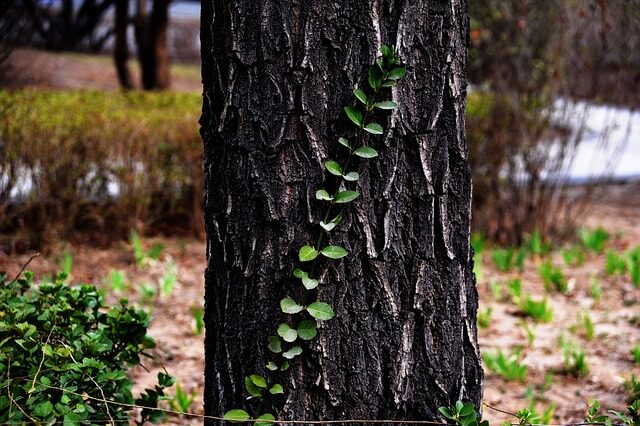
- Strategy: Aerial roots sprout at the nodes, anchoring into tree bark and moss. As it climbs, its famously “arrowhead” juvenile leaves often become more lobed—an elegant, built-in response to changing light and position.
- Global hop: Widely cultivated and naturalized in many warm regions (think parts of the Caribbean and Pacific, Florida and Hawaii, and tropical Australia), it proved astonishingly adaptable beyond its birthplace.
In other words, Syngonium didn’t have to learn indoor life from scratch. Our homes—bright, indirect light; steady warmth; even the humidity of kitchens and bathrooms—aren’t so different from a forest understory when you get the details right.
Why this climber thrives indoors
- Shade savvy: It’s happiest in bright, indirect light but tolerates partial shade—made for set-back sills and filtered windows.
- Growth you can steer: Keep it pinched for a neat mound, let it spill for drama, or give it a pole for tidy vertical lift.
- Built-in backup plan: Aerial roots make propagation child’s play. Snip, root in water or mix, and you’ve got clones in weeks.
- Evergreen interest: Grown for foliage, not flowers; many cultivars flash creamy-white and green variegation.
The growth habit that made it perfect for moss poles and hanging baskets
Think of Syngonium as a plant with two perfectly good careers.
The moss-pole mountaineer
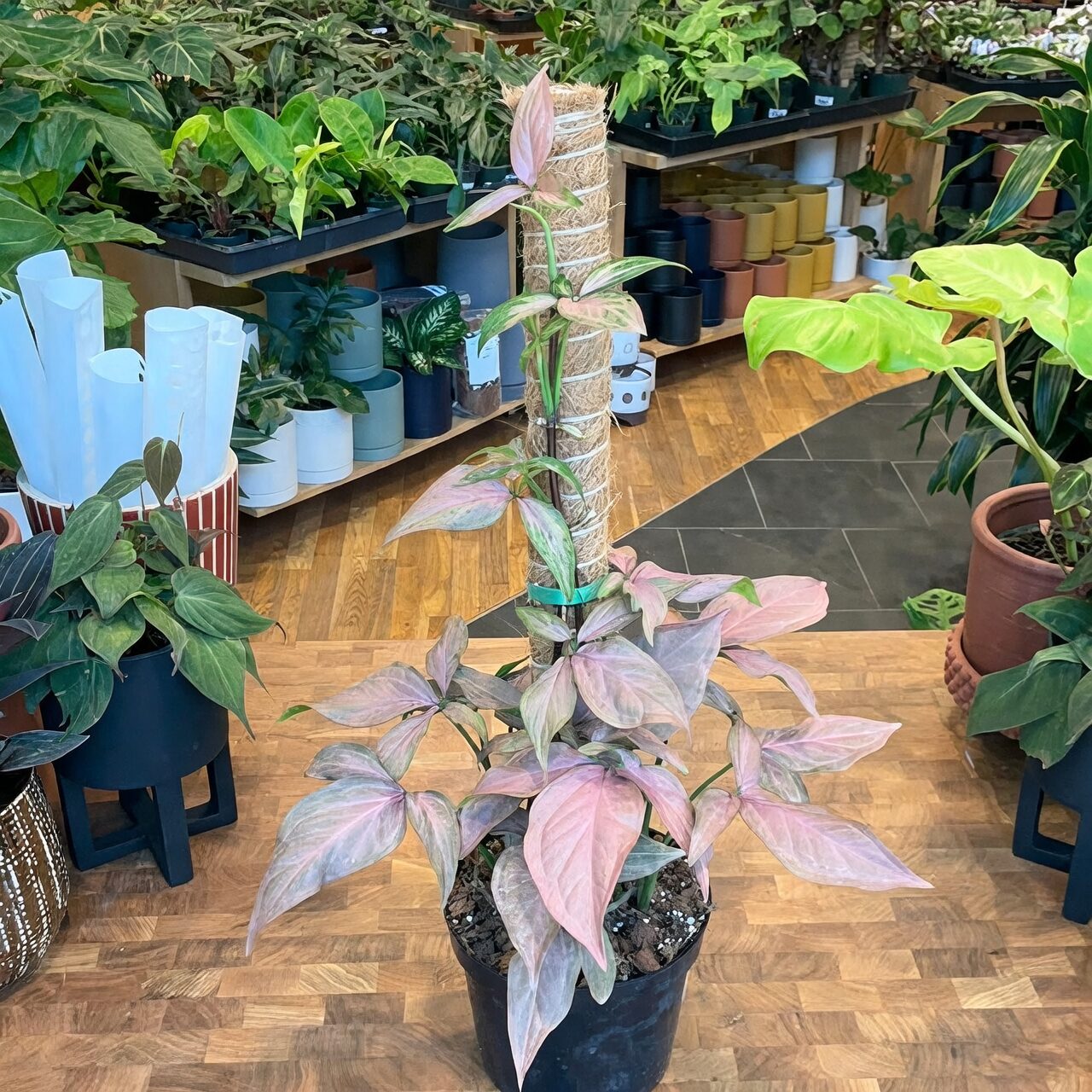
- Natural fit: Those aerial roots are basically climbing hooks. Wrap them into a moist, fibrous pole and watch the plant stand tall.
- Payoff: Climbing often yields larger, more mature (sometimes more lobed) leaves and a tidier, architectural silhouette.
- How-to nudge upward:
- Place a sturdy moss pole when the plant is still compact.
- Tie or clip the vine gently as it grows; keep the pole lightly moist for root contact.
- Rotate the pot for even light and straight growth.
The cascading charmer
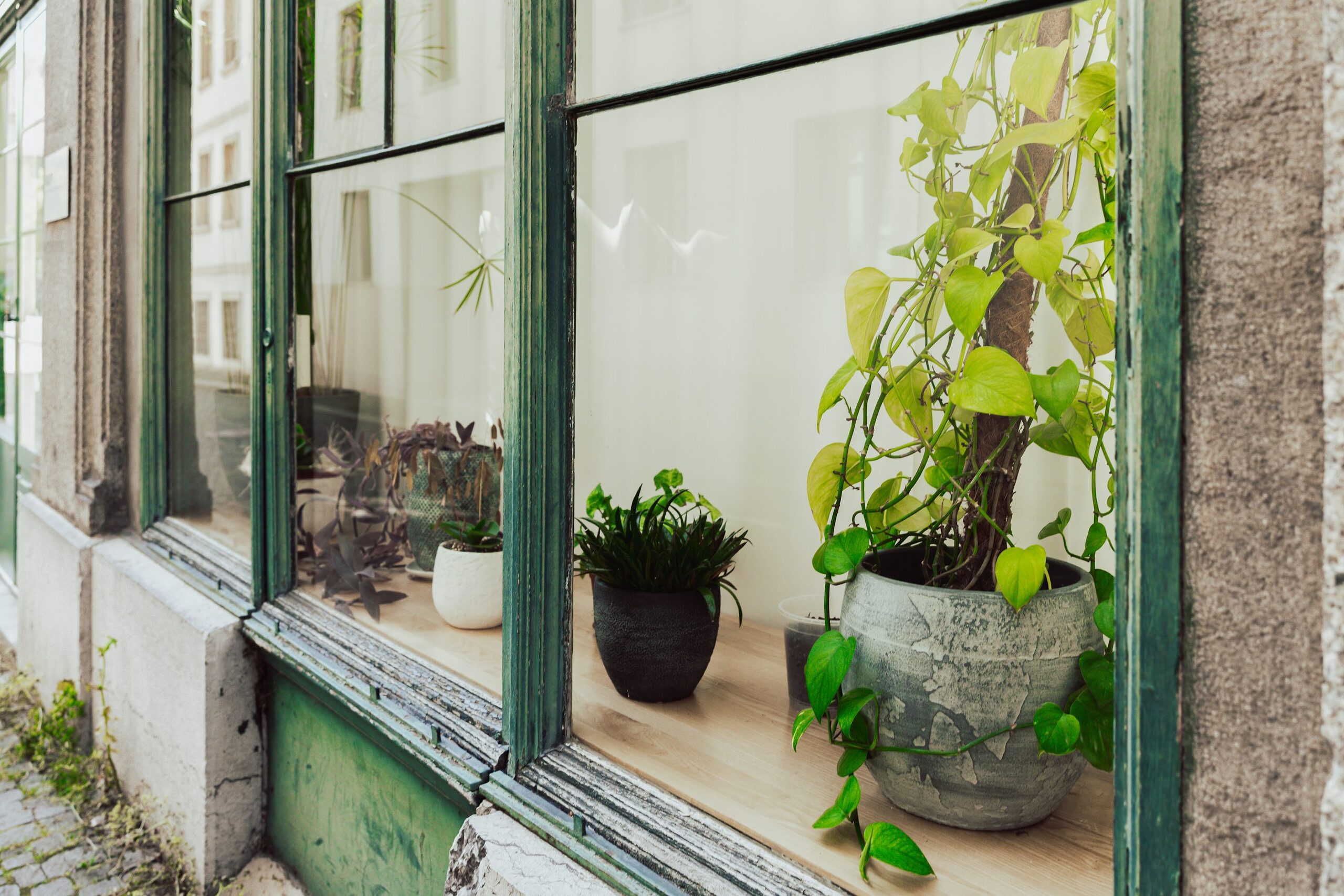
- In hanging baskets, stems elongate and drape, showing off the classic arrowhead leaves in a waterfall of green (and cream, if variegated).
- Pinch tips to keep the canopy full and encourage branching along the hang.
The tabletop tuft
- For a compact, bushy plant, pinch at 15–20 cm (6–8 in). It will mound up handsomely in 10–15 cm (4–6 in) pots, or go fuller in 15–20 cm (6–8 in).
Care, at a glance
- Light: Bright, indirect light is ideal; avoid harsh direct sun. Variegated forms want a brighter spot than solid-green plants.
- Temperature: Best around 15–23°C (59–73°F); tolerates roughly 15–29°C (59–84°F). Keep above ~12°C (54°F) to avoid chilling; below ~5°C (41°F) risks yellowing and leaf drop.
- Humidity: Prefers moderate to high. Bathrooms and kitchens are great; otherwise, try a humidifier, pebble tray, or occasional morning mist.
- Water: Spring to autumn, water when the top layer dries (often weekly in warm rooms). Keep evenly moist, never soggy. In winter, reduce (often about every 2 weeks).
- Soil: Loose, airy aroid mix—peat or coco blended with perlite and/or bark, plus a little compost/leaf mold for richness. Aim for moist but free-draining.
- Feeding: During active growth (roughly May–August), feed every 2 weeks with a balanced liquid fertilizer at half strength. Ease off in winter.
- Pruning: Pinch tips to branch; cut back leggy stems in spring. A harder rejuvenation every 2–3 years can reset older plants.
- Repotting: Spring is best. Move up a size when rootbound, or refresh the top 2–3 cm (1–1.2 in) of mix annually if you like the current pot.
- Hardiness: Not frost-hardy; treat as a houseplant unless you live in a frost-free zone (about USDA 10–12).
- Safety: Toxic if chewed; sap may irritate skin/eyes. Keep away from pets and kids.
Propagation: fast friends in 10–15 days

- Season: Best from May–October in warmth above 15°C (59°F).
- Method:
- Take tip or stem cuttings with 2–3 nodes.
- Root in water or in moist sand/vermiculite/peat-based mix; roots often appear in 10–15 days when warm.
- Pieces with aerial roots can be potted directly.
- Pro tip: For a lush, pole-trained specimen, root several short sections together, pot them around a pole, and tie in as they grow.
Seasonal rhythm for effortless success
- Spring: Repot or top-dress, prune for shape, restart regular feeding, and resume steady watering.
- Summer: Bright filtered light, consistent moisture, higher humidity; prime time for propagation.
- Autumn: Nudge it to a slightly brighter spot as days shorten; reduce watering a touch.
- Winter: Keep warm (above 12°C/54°F), water sparingly, pause or reduce feeding; shield from drafts and dry blasts of heat.
Troubleshooting the shape-shifter
- Yellowing and leaf drop: Often low light, overwatering/root trouble, or temperature stress. Brighten the light, let the top mix dry slightly between waterings, and check roots if the pot stays wet.
- Smaller, rougher leaves: Common from prolonged dryness; adjust watering rhythm.
- Crispy edges: Usually low humidity or underwatering—raise humidity and check soil moisture.
- Pests: Spider mites (dry air magnets), mealybugs, scale, whiteflies, and aphids. Prevent with regular leaf-wiping and good airflow; treat early with insecticidal soap or horticultural oil.
- Diseases: Leaf spot and gray mold (Botrytis) can appear where foliage stays wet and air is stagnant. Remove affected tissue, improve ventilation, and avoid late-day misting.
Flowering? A quiet side plot
Indoors, flowering is sporadic and uncommon. When it does happen—most often in summer and sometimes into early autumn—you’ll see a pale spathe embracing a spadix, the typical aroid inflorescence. Lovely in botany-speak, but this plant is a foliage star.
Variegation and light: keeping the cream
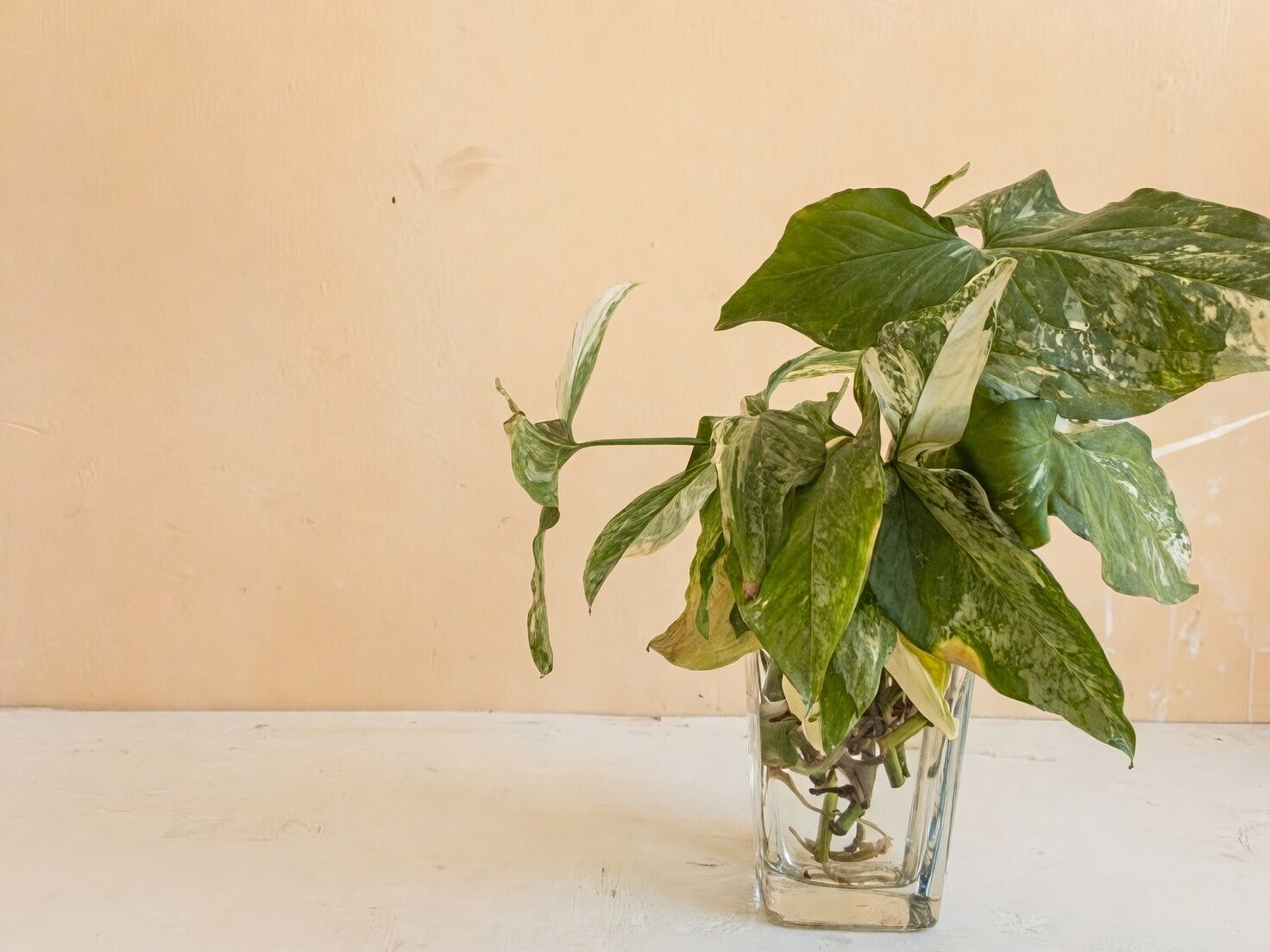
Many beloved cultivars carry creamy-white strokes or mottling. To preserve pattern:
- Give brighter indirect light than you would a solid-green Syngonium.
- Avoid direct midday sun, which can scorch pale tissue.
- Feed modestly; overdoing nitrogen encourages soft, leggy green growth over pattern.
Styling ideas: from jungly to refined
- East window with a sheer curtain: gentle morning sun, perfect for variegates.
- Moss-pole column by a bright window: turn weekly for straight growth.
- Hanging basket in a bright nook: pair with trailing ferns for layered texture.
- Bathroom shelf: humidity boost for glossy leaves.
- Bottle gardens/terrariums: young plants and compact forms adapt well in lightly pruned setups.
Symbolism: growth, adaptability, fresh starts
In contemporary plant culture, Arrowhead Vine symbolizes adaptability and new beginnings—fitting for a species that morphs leaf shape as it climbs, roots at every node, and thrives in diverse settings from terrariums to tall poles. While not rooted in a classical “flower language,” its modern meaning stems from lived experience: it’s a forgiving, fast plant that visually narrates progress.
Fun facts
- Leaves often change with age—mature foliage can become more lobed than the crisp juvenile arrowhead.
- Climbing a pole often coaxes larger leaves; trailing gives a soft, cascading look.
- Stem cuttings root fast in warmth—often in about 10–15 days.
- It can be propagated in water, or you can pot stems that already show aerial roots.
- Indoor flowers are rare and usually modest; it’s grown almost entirely for foliage.
Choosing a plant and getting it home
- Look for glossy, clean leaves; firm stems; and no sour, waterlogged smell.
- Check undersides for pests.
- If you plan a pole-grown look, pick a fuller plant and add support early; protect the nodes and leaves from bending during transport.
From rainforest understory to city-side windowsill, Syngonium podophyllum didn’t change its nature—it simply found kindred conditions indoors. Give it bright, filtered light, airy soil, a sip of humidity, and a direction to grow, and it will happily write a vertical (or cascading) chapter in your own home jungle.