

Think of Syngonium podophyllum as the friendly shape-shifter of the plant world—compact and cute when young, then eager to trail or climb as it matures. With a few simple routines, your Arrowhead Vine will repay you with fresh, glossy foliage and lively growth all year.
Meet Syngonium podophyllum (Arrowhead Vine)
- Origin: Tropical America (Mexico to Bolivia and the West Indies)
- Habit: Evergreen aroid that starts bushy, then trails or climbs with age; great in hanging baskets or on a moss pole
- Looks: Arrow-shaped juvenile leaves that can become more lobed as the plant matures; many cultivars sport creamy-green variegation
- Indoors size: Commonly kept compact by pinching (about 15–20 cm / 6–8 in). Left to climb or trail, it can reach roughly 90 × 60 cm (35 × 24 in)
The Friendly Care Checklist
Light: Bright and indirect, please

- Place near an east or bright north window, or set back from a south/west window with a sheer curtain.
- Avoid harsh direct sun that can scorch foliage.
- Variegated types generally appreciate brighter indirect light to keep their pattern crisp.
- Dim room? A small grow light works wonders without overdoing intensity.
Water: When the top layer is dry (weekly in warm months)
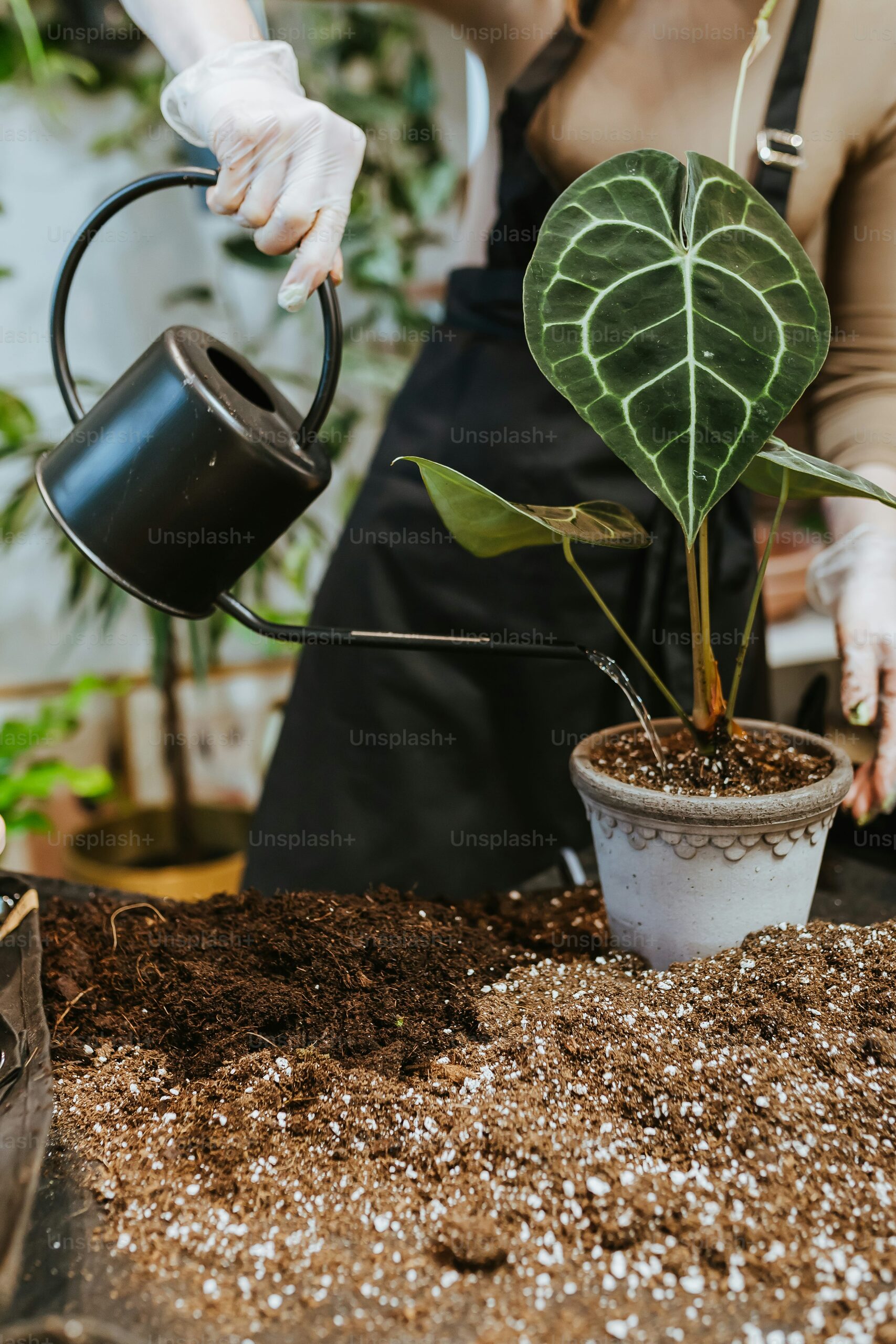
- Spring through autumn: Water when the top layer of potting mix dries—often about once a week in warm weather.
- Winter: Stretch the interval—often every two weeks—letting the top of the mix dry slightly before watering again.
- Always use a pot with drainage. Never let the pot sit in water.
- Aim for evenly moist, never soggy. Constant wetness can cause stem or root rot.
- Quick read of signals:
- Slight droop that perks up after watering = mild thirst.
- Leaves yellowing while soil stays wet = likely overwatering or low light—adjust both and check drainage.
Humidity: Easy boosts you can do today
- Prefers moderate to high humidity.
- Simple helpers:
- Set on a pebble tray with water (pot above the waterline).
- Run a small humidifier nearby.
- Mist lightly in the morning so leaves dry by evening.
- Group with other plants and wipe leaves to keep pores clear.
- Kitchens and bathrooms often provide naturally friendlier humidity.
Temperature: Keep it cozy, not hot
- Sweet spot: 15–23°C (59–73°F)
- Tolerates roughly 15–29°C (59–84°F)
- Key thresholds:
- Try to keep above 12°C (54°F) to avoid chilling damage.
- New growth usually begins once temps rise above ~10°C (50°F).
- Growth may slow if temps climb above ~30°C (86°F).
- Below ~5°C (41°F) can trigger yellowing and leaf drop.
- Keep away from cold drafts, heat blasts, and hot, sunbaked windows.
Soil & Pot: Airy, aroid-friendly mix
- Use a loose, well-draining mix: peat or coco plus perlite and/or bark; a little leaf mold or compost adds gentle richness.
- Goal: slightly acidic, airy, evenly moist—not heavy or waterlogged.
- Typical indoor pot sizes:
- 10–15 cm (4–6 in) for small plants
- 15–20 cm (6–8 in) for fuller specimens
- Hanging baskets: 15–18 cm (6–7 in)
Feeding: Light, regular fuel in growing season
- Spring–summer (often May–August): Feed every 2 weeks with a balanced liquid fertilizer at half strength (e.g., 20-20-20).
- Pause or reduce in winter.
- Avoid overdoing nitrogen (can cause lanky, weak growth).
Style & Shape: Pinch, prune, and train
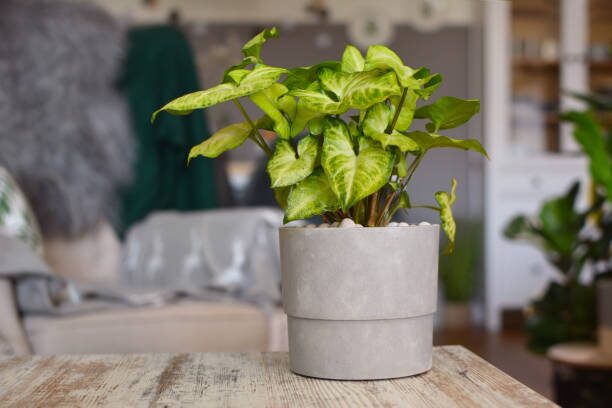
- Pinch tips at 15–20 cm (6–8 in) tall to encourage branching and a dense, bushy look.
- In spring, cut back leggy stems to tidy and thicken growth.
- Train up a moss pole for a taller, tidier plant and often larger leaves—or let it trail from a basket for a cascading look.
- Rejuvenation: Every 2–3 years, a harder cut-back can refresh an older, congested plant.
Repotting: A spring refresh
- Repot in spring annually or whenever roots crowd the pot.
- If you’re happy with the size, skip upsizing—just replace the top 2–3 cm (1–1.2 in) of potting mix each spring.
- When repotting, it’s fine to trim a few older roots and shorten extra-long trails for balance.
Propagation: Foolproof from cuttings
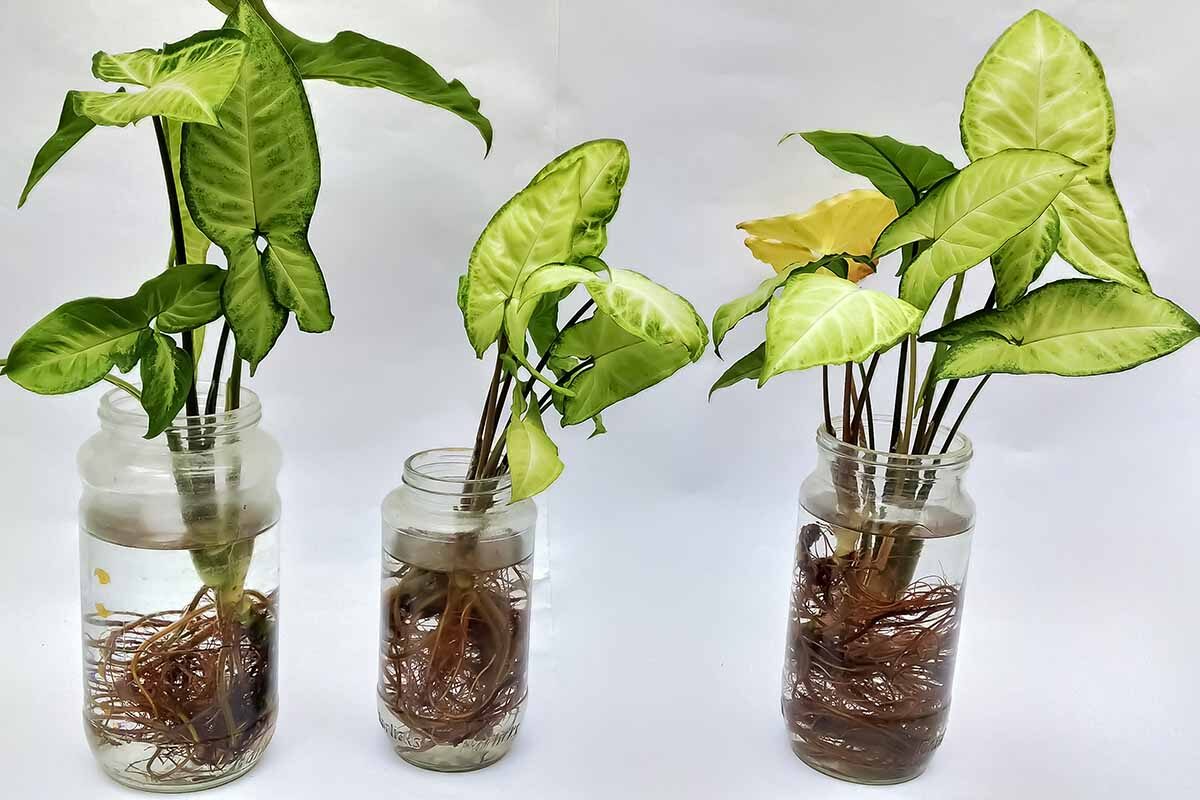
- Best from May–October when temps are above 15°C (59°F).
- How-to:
- Take a tip cutting with 2–3 nodes (or divide a long stem into sections with 2–3 nodes).
- Root in water or in moist sand/vermiculite/peaty mix.
- Keep warm and bright (indirect light).
- Expect roots in about 10–15 days under good conditions.
- Stems with aerial roots can often be potted straight into mix.
- Bonus: It can be grown in water for a time. Change water regularly and move to soil when roots are well formed for sturdier long-term growth.
Your Season-by-Season Playbook
Spring
- Increase watering as you see new growth; keep the top layer rule.
- Repot or refresh the topsoil; start feeding every 2 weeks.
- Prune to shape and add a support pole if you’d like a vertical look.
- Great time to take cuttings.
Summer
- Bright, filtered light and steady moisture are key.
- Boost humidity (pebble tray, humidifier, light morning mists).
- Check more often for pests (warmth invites spider mites, mealybugs).
- Propagate freely; cuttings root fast in the warmth.
Autumn
- Light levels fall—move a touch closer to a bright window.
- Slightly reduce watering frequency but don’t let the plant fully dry out.
- Keep feeding lightly until growth clearly slows, then taper off.
Winter
- Keep warm and draft-free; ideally above 12°C (54°F).
- Water sparingly—often about every 2 weeks—following the top-layer-dry rule.
- Pause or greatly reduce fertilizer.
- Avoid misting late in the day; improve airflow to prevent gray mold.
Quick Troubleshooting
- Yellowing leaves and drop:
- Common causes: low light, overwatering/poor drainage, cold stress, or disease.
- Fixes: move to brighter indirect light; let the top layer dry between waterings; check roots and drainage; protect from drafts.
- Crispy edges/brown tips:
- Usually low humidity or underwatering. Boost humidity and water when the top layer dries.
- Scorched patches:
- Too much direct sun—pull back or diffuse the light.
- Pests (spider mites, mealybugs, scale, whiteflies, aphids):
- Prevent with regular leaf wiping and steady humidity.
- Treat early with insecticidal soap or horticultural oil; repeat as needed.
- Leaf spots or gray mold (Botrytis):
- Improve airflow, remove affected leaves, and avoid wet foliage late in the day.
Safety Note
- Toxic if chewed or ingested (insoluble calcium oxalate crystals). Sap may irritate skin and eyes.
- Keep away from pets and children; use gloves if you’re sensitive.
Styling Ideas and Fun Bits
- Train it up a moss pole for larger, tidier leaves—or let it trail from shelves and baskets for a relaxed cascade.
- Leaves change shape with age—juvenile “arrowheads” can become more lobed as the plant matures.
- Indoors, flowers are rare and small; grow this one for its foliage charisma.
Symbolism: Growth you can see
Often linked with adaptability, fresh starts, and steady growth—fitting for a plant that quickly shifts from compact to climbing. This symbolism is modern houseplant lore rather than classical “flower language,” but it resonates: give it the right support and it responds with visible momentum—new leaves, longer trails, and a greener corner of home.
Ready to begin? Think “bright indirect, top layer dry, airy mix, and cozy humidity.” Do those four, and your Arrowhead Vine will happily do the rest.