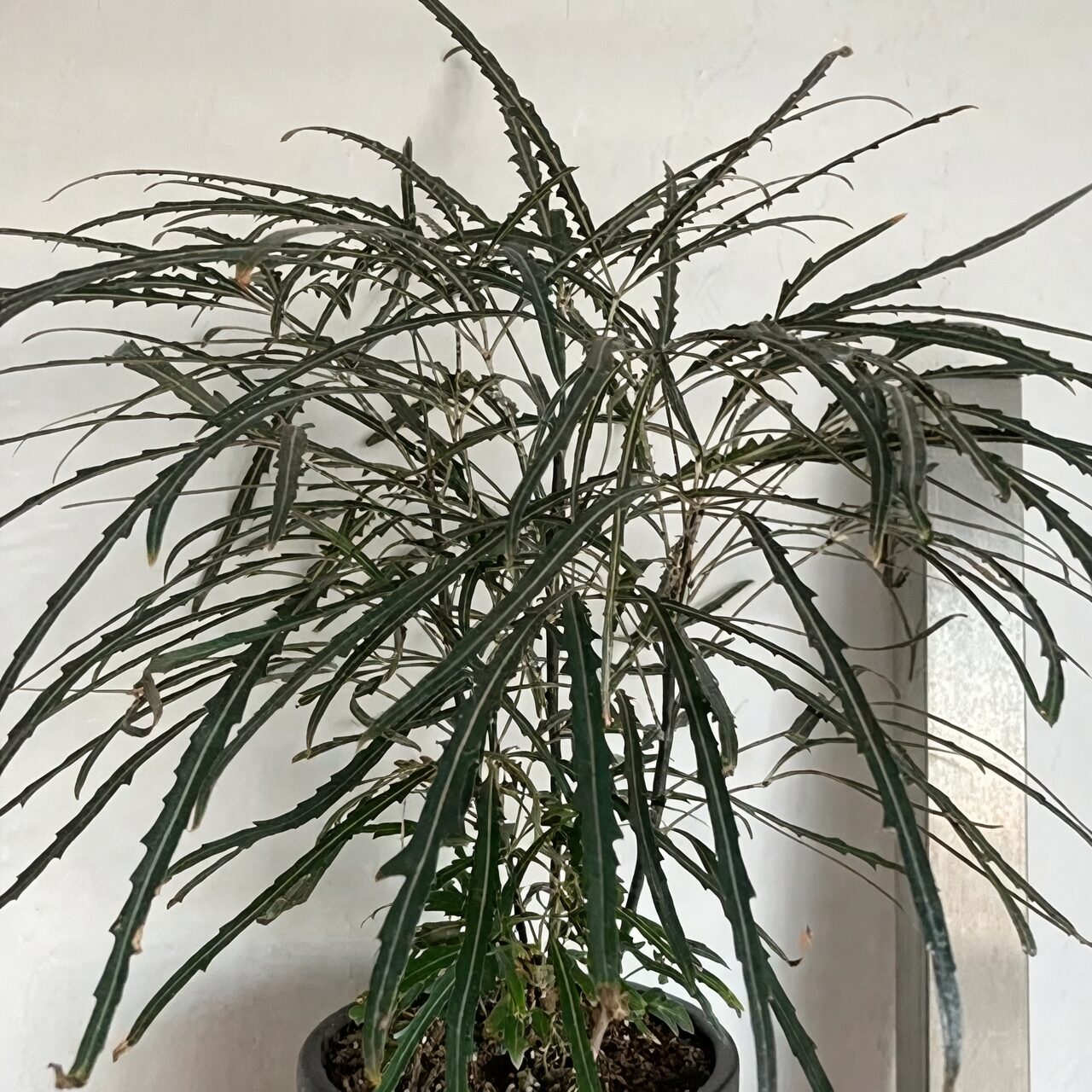
False aralia’s lacey silhouette is famously elegant—until it stretches into a lanky, see‑through tower. The fix is simple and surprisingly fun: a timed shaping game plan built around early-summer reductions, repeated in short, confident rounds. Do this right and Polyscias elegantissima transforms into a dense, architectural showpiece that looks professionally trained.
Meet false aralia (Polyscias elegantissima)
- Origins and vibe: A Madagascar native in the ginseng family (Araliaceae), cherished indoors for its fine, feathery leaves and calming, tropical feel. Also grown outdoors in frost-free gardens as a shade-tolerant ornamental.
- Size:
- Indoors: usually 1–2 m (3–6.5 ft), easy to keep smaller with pruning.
- Outdoors (frost-free): about 3–6 m (10–20 ft).
- Light and look: Bright, filtered light keeps the foliage crisp; harsh sun can scorch. Without shaping, it grows fast and can get leggy.
Common names and lookalikes: False aralia, Aralia Elegantissima, Ming aralia, and Schefflera Elegantissima are all used for this plant.
The shaping game plan: one-third reductions in early summer
Dense branching comes from a rhythm: prune, wait for new shoots, prune again. Two to three rounds produce a full, layered crown.
The timing sweet spot
- Best window: Early summer, right as growth is active.
- Why it works: Cuts made during vigorous growth push new buds to break quickly, filling gaps before stems stretch again.
Tools and prep
- Clean, sharp pruners or snips; sterilize between cuts.
- Hydrate the plant the day before you prune.
- Bright, filtered light ready for recovery (no harsh midday sun).
- Hold off on strong feeding for a week after each pruning round; then resume a modest monthly routine.
Step-by-step: 2–3 shaping rounds
- Round 1 (early summer):
- Reduce long stems by about one-third.
- Cut just above an outward-facing node to direct new shoots into space and light.
- Remove weak or spindly side shoots entirely.
- Wait and watch (2–4 weeks):
- New buds will swell and shoot. Keep moisture steady—slightly and evenly moist, never soggy.
- Round 2:
- Again, take back fresh extensions by roughly one-third, favoring symmetry and light penetration.
- Optional Round 3:
- Repeat once more if you want even tighter branching or a more compact outline.
- Finishing touches:
- Pinch soft tips lightly to nudge side shoots.
- Rotate the pot weekly so new growth doesn’t lean.
Pro tip: In summer, provide roughly 70% shade outdoors or a sheer-curtained window indoors. Bright, filtered light fuels recovery and dense leafing without scorch.
Aftercare essentials
- Light: East-facing light in spring/autumn; gentler north-facing light in summer; brightest indoor spot in winter (often south-facing).
- Water: Keep the mix evenly, slightly moist. Avoid big swings between very dry and very wet—those cause leaf drop.
- Humidity: Aim for 60%+. Mist during dry spells and lightly dampen nearby surfaces to boost local humidity.
- Feeding: Once per month in the growing season with a balanced fertilizer; pause in winter.
Mistakes to avoid
- Heavy pruning in winter or when cold: Recovery is slow, and leaf drop can follow.
- Full sun scorch: Those fine leaflets can crisp quickly.
- Overwatering in cool rooms: Cold + wet roots = leaf drop and disease risk.
Maintenance for older, over‑tall plants
Mature, top-heavy false aralias tolerate stronger reductions. Rejuvenate them thoughtfully so they bounce back lush rather than sulk.
- Staggered height reduction:
- Reduce overall height by up to half, but do it in stages across 2–3 sessions in early summer rather than all at once.
- Work cane by cane: cut some stems harder, others lighter so the plant keeps photosynthesizing while new shoots form.
- Where to cut:
- Make heading cuts just above low, healthy nodes. This encourages fresh breaks lower down and rebalances the silhouette.
- Rescue for bare “umbrella” tops:
- Air-layer a tall, bare stem to create a new, rooted top; once rooted, sever and pot it, then cut the original stump to a promising node to spark back-budding.
- Support and refresh:
- Stake temporarily if you’ve shortened the canopy.
- If rootbound, repot in spring (next pot size only) into a loose, well-drained mix of peat/leaf mold with coarse sand.
Train for fullness without over-pruning
- Light strategy:
- Indoors: bright, filtered light; avoid strong direct sun. Rotate weekly for symmetry.
- Outdoors in frost-free zones: partial shade with protection from midday sun.
- Temperature:
- Ideal 20–30°C (68–86°F). Keep above 13°C (55°F) in winter; around 8°C (46°F) or below can cause damage and leaf drop. Avoid drafts.
- Soil and pots:
- Use a loose, well-drained potting mix (peat/leaf mold + coarse sand). Common indoor pot sizes: 15–20 cm (6–8 in), then step up as needed. Repot in spring roughly every two years.
- Water and humidity:
- Evenly, slightly moist in growth; a touch drier in winter. Mist in dry weather and raise ambient humidity.
- Feeding:
- Monthly in spring–autumn with a balanced fertilizer. Pause in winter.
Propagation: turn prunings into plants
- Stem cuttings (spring):
- Take 10–12 cm (4–5 in) semi-ripe tip cuttings; remove lower leaves.
- Root in very free-draining media (coarse sand works well) at about 25°C (77°F) with high humidity. Rooting typically in 3–4 weeks.
- Water-rooting also works for many growers; pot up once roots are substantial.
- Air layering:
- Ideal for leggy, woody stems you’d like to shorten and clone simultaneously.
- From seed:
- Sow immediately or in spring at 19–24°C (66–75°F). Germination in about 3–4 weeks; transplant at around 10 cm (4 in) tall.
Pests, diseases, and quick fixes
- Pests: Scale and aphids are the usual suspects.
- Treat early with insecticidal soap or horticultural oil; repeat as needed.
- Leaf spot:
- Remove affected leaves, improve airflow, avoid wetting foliage late in the day; use an appropriate fungicide if necessary.
- Leaf drop triggers:
- Cold drafts, strong sun scorch, or erratic watering. Restore steady warmth, filtered light, and consistent moisture.
Safety note: Toxicity isn’t consistently confirmed across major references. Treat as potentially irritating if chewed. Keep away from children and pets and wash hands after pruning.
Seasonal checklist
- Spring:
- Repot (every ~2 years). Take cuttings or start seeds. Position near an east-facing window.
- Early summer:
- Begin the one-third reduction plan; repeat after new shoots. Maintain bright, filtered light and ~70% shade outdoors.
- Spring–autumn:
- Keep slightly moist, feed monthly, and raise humidity in dry spells.
- Winter:
- Keep above 13–15°C (55–59°F). Water less, stop feeding, and move to the brightest indoor position.
Good‑luck leaves: symbolism and story
In parts of China, false aralia is cherished as 福禄桐—a name that echoes prosperity and well-being. While it doesn’t promise riches, its serene, ferny poise has long symbolized a thriving home atmosphere. That symbolic “fullness” pairs beautifully with the shaping plan above: as branching increases and the canopy thickens, the plant visually amplifies the very abundance it’s associated with.
Fast answers
- How do I make false aralia bushier?
- In early summer, cut stems back by about one-third. When new shoots appear, prune again. Repeating this 2–3 times encourages dense branching and a much fuller look.
- How do I pick a good plant—and what next?
- Choose sturdy stems, balanced shape, and dense, glossy, undamaged leaves free of pests. Place in bright filtered light, keep temperatures at or above 15°C (59°F), keep the mix slightly moist, lift humidity to ~60%+, and feed lightly once you see fresh growth.
Final thought: Consistency beats heroics. A few well-timed, one-third trims—plus warm, bright, humid comfort—will keep Polyscias elegantissima compact, feathery, and gloriously full year after year.