
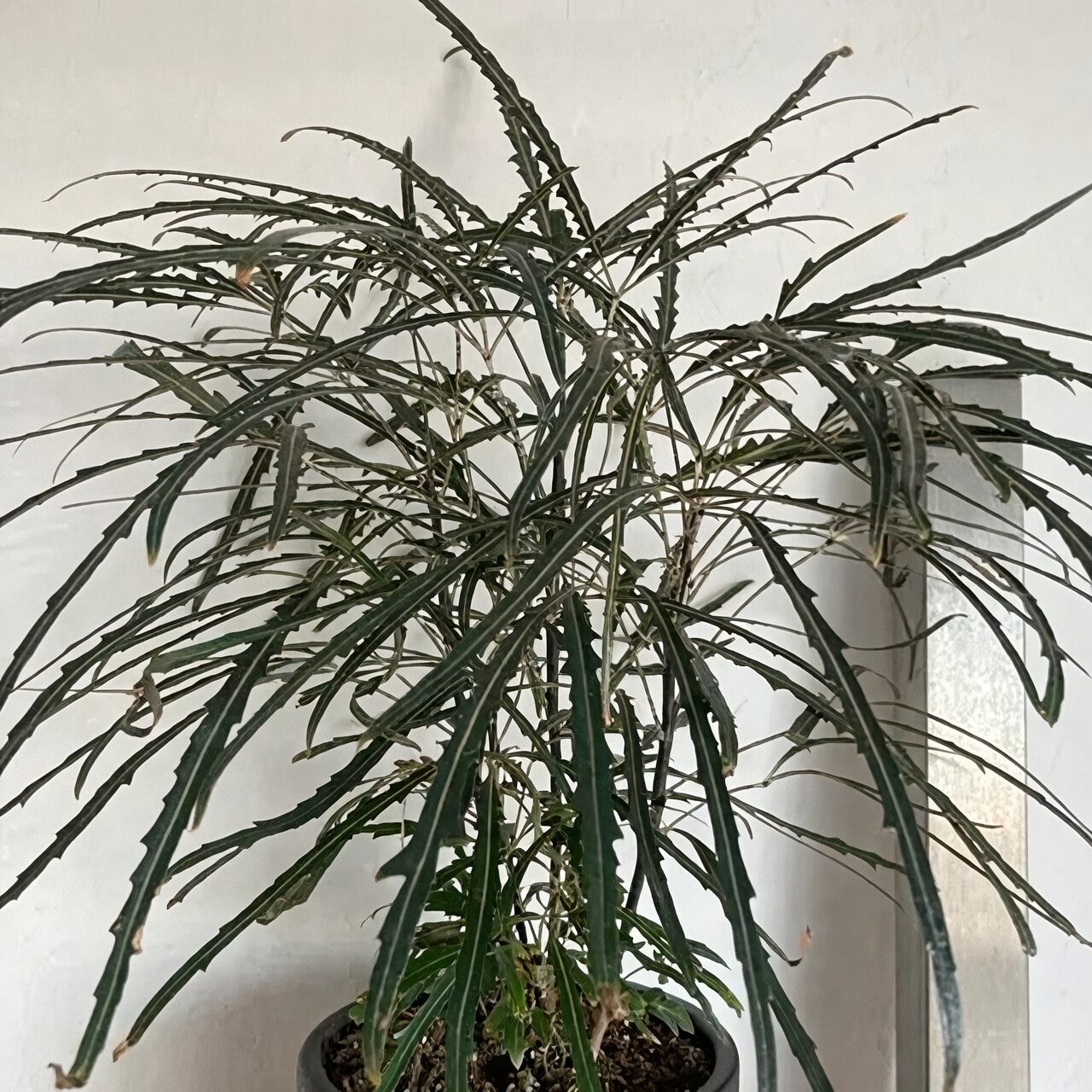
If your home has a tall, narrow nook that never quite “works,” False Aralia (Polyscias elegantissima) is the feathered exclamation point you’ve been waiting for. With its finely cut, lace-like leaves and crisp vertical stance, it slips elegantly into slim footprints, softens hard edges, and brings a calm, tropical mood—without needing harsh sun. Pair it with light woods, matte ceramics, and the right backdrop color, and you’ll have a space that looks curated, not crowded.
Why Polyscias elegantissima shines in tall, narrow spaces
- A natural column: Indoors it typically reaches 1–2 m (3–6.5 ft), giving you height without bulk. Perfect for flanking a doorway, anchoring a staircase landing, or punctuating the end of a corridor.
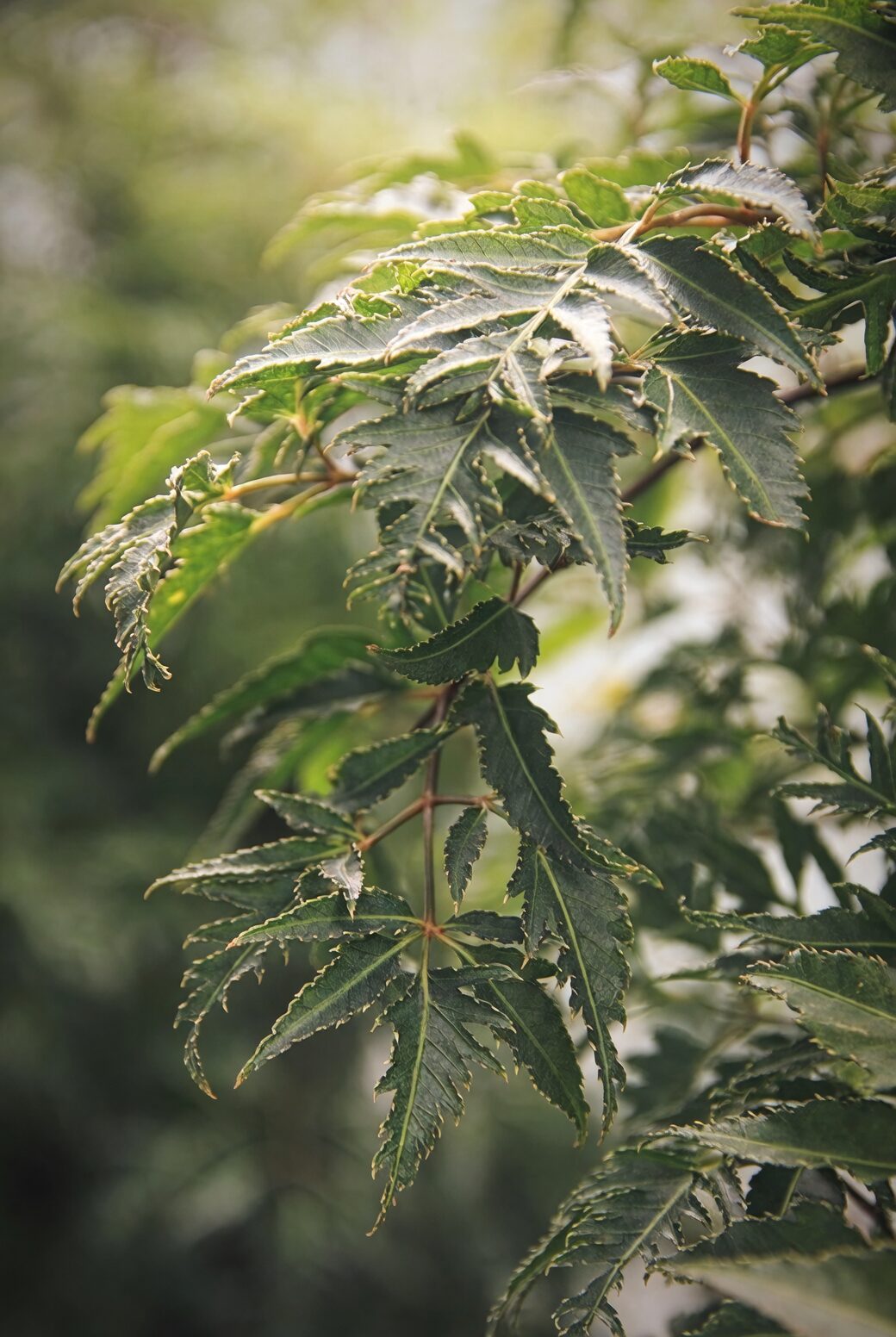
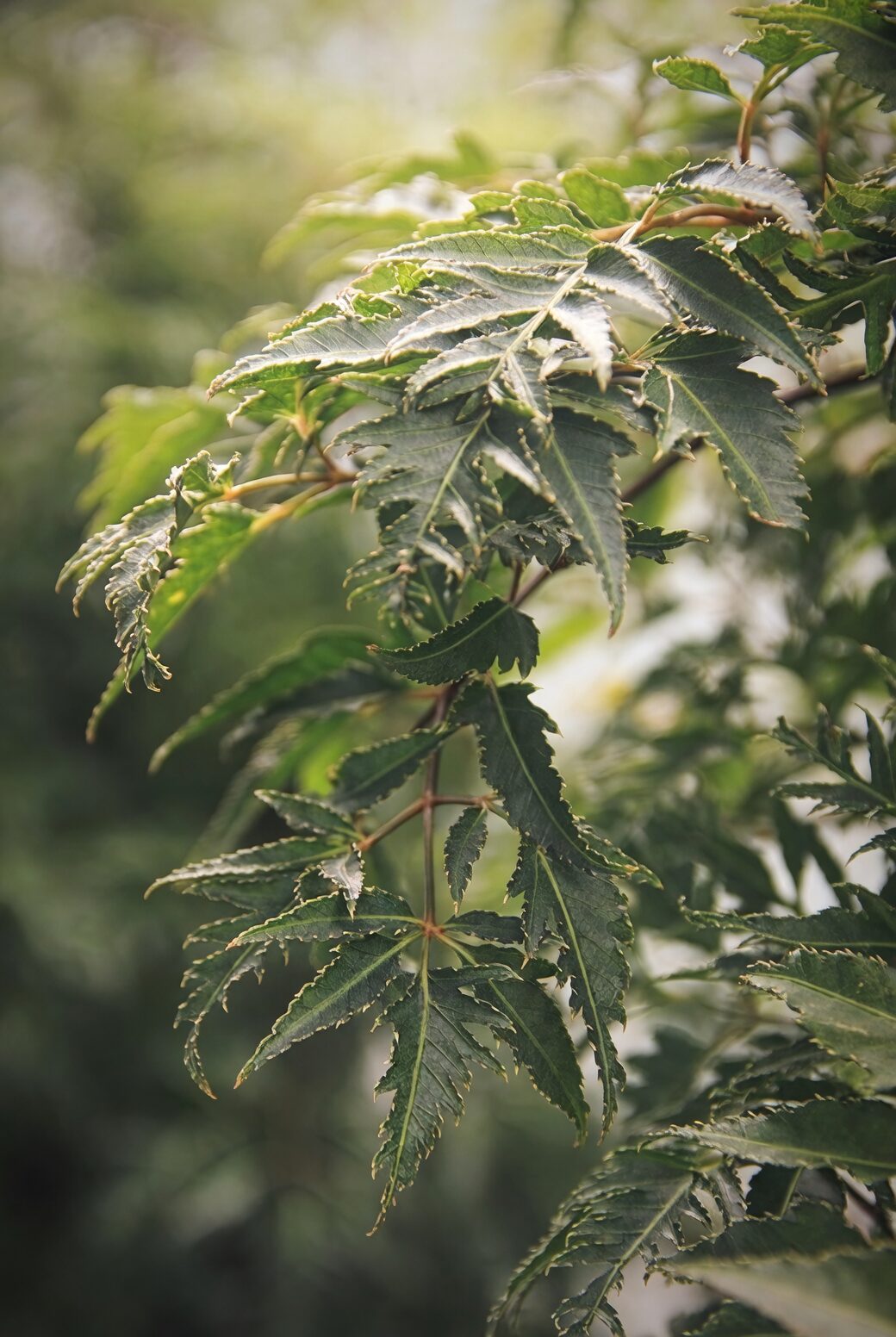
- Feather-light texture: Deeply cut, narrow leaflets read as elegant “lace,” adding softness where architecture feels boxy.
- Calm, tropical presence: It creates that lush, relaxed vibe bright rooms crave—without demanding full sun. Native to Madagascar, it’s an evergreen shrub to small tree and grows quickly, so it can get leggy unless you shape it.
Light—bright and filtered, not fierce
Think luminous, not scorching. Strong, harsh sun can crisp the delicate leaf edges; bright, filtered light keeps them glossy and defined.
- Seasonal placement (easy rule of thumb):
- Spring/Autumn: East-facing light with a sheer or screen is ideal.
- Summer: Move to gentler north-facing light or provide about 70% shade (a sheer curtain or a lightly frosted window works wonders).
- Winter: Give it the brightest indoor spot you have—often a south-facing window—still filtered.
- For tall, narrow rooms:
- Hallways with side windows: Place the plant 0.5–1.5 m (1.5–5 ft) back from glass behind a sheer; it stays bright without direct beams.
- Stair landings: Position on the turn of the stairs where daylight reflects off pale walls—no midday scorch from skylights.
- Alcoves beside sliding doors: Use double sheers or a slatted screen to break midday intensity.
- Designer’s trick: Rotate the pot a quarter turn every few weeks to keep the column even and prevent leaning toward the light.
The perfect partners: light woods and matte ceramics
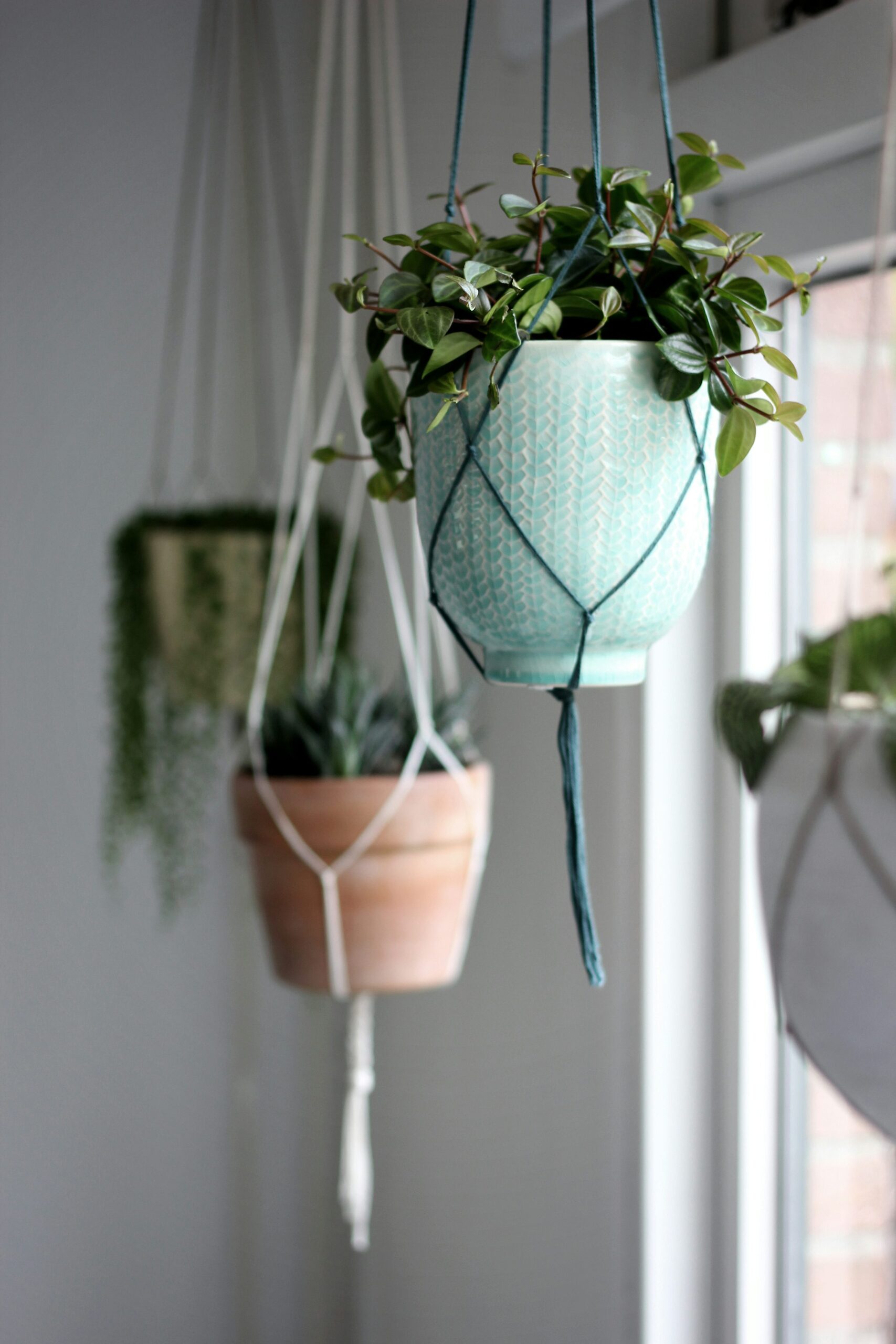
Polyscias elegantissima looks incredible when its dark, feathery leaves contrast with pale, tactile materials.
Light woods that flatter
- Ash, birch, beech, or pale oak echo the plant’s fine leaf serrations with warm, quiet grain.
- Ideas:
- A slim ash console with the plant at one end to visually “cap” the piece.
- A pale wood slat panel behind the plant to emphasize vertical lines.
- A light wood bench with the plant in a footed pot tucked just beside the seat for height layering.
Matte ceramics that ground the look
- Choose tall, cylindrical or softly tapered forms in matte finishes—think oatmeal, putty, mushroom, or charcoal.
- Subtle textures like ribbed, sanded, or lightly grooved glazes mirror the leaflets without stealing the show.
- Keep the footprint modest in narrow spaces: a sleek, weighty planter stabilizes height without visual clutter.
Scale and proportion in slim rooms
- Start many indoor specimens in 15–20 cm (6–8 in) pots and step up as the plant grows; a tall stand with a small base keeps floor space free.
- Aim for the “rule of thirds”: place the top of the plant about two-thirds up the wall height to pull the eye upward.
Backdrop color play
Choose wall colors that let the foliage read as refined texture rather than a dark mass.
- Soft contrasts:
- Foggy gray or chalky greige makes the fine leaf edges pop.
- Misty sage creates a layered, botanical-on-botanical calm.
- Confident drama:
- Charcoal or inky blue behind the plant reads gallery-chic; keep the planter and wood pale to balance.
- Warm modern:
- Muted terracotta or pale clay pairs with ash wood and an off-white matte pot for cozy minimalism.
- Keep patterns quiet near the plant; crisp, solid backgrounds showcase the feathery silhouette best.
Styling scenarios to steal
- Entry nook: A matte oat cylinder planter on a slim black stand, backed by greige walls and a birch peg rail. Place near an east window with a sheer for bright, kind light.
- Stair landing: Footed putty-toned planter on the outer corner of the landing. North light all summer; move closer to a south window in winter, still filtered.
- Home office corner: Charcoal accent wall, pale oak desk, matte mushroom pot. Position 1 m (3 ft) off a bright window behind a voile curtain to avoid hotspots on leaves.
- Bedroom window bay: Pair with a low pale wood bench; plant stands to one side so fronds curtain the corner without touching the glass.
Care that keeps the look crisp
Healthy care = couture foliage.

- Watering and humidity:
- Keep the potting mix evenly, slightly moist during active growth—never boggy. Avoid big swings from very dry to very wet; both can trigger leaf drop.
- Prefers warm, humid air; ~60%+ humidity keeps tips pristine. In dry spells, mist the foliage and lightly dampen nearby surfaces.
- In winter, water less; slightly drier soil is safer than staying cold and wet.
- Light recap:
- Bright, filtered light to partial shade. Avoid harsh direct sun; in summer, think ~70% shade.
- Temperature:
- Ideal 20–30°C (68–86°F). Keep above 13°C (55°F) in winter; avoid drafts and vents.
- Feeding:
- Feed monthly spring through autumn with a balanced fertilizer (e.g., 20-20-20) or a well-diluted organic liquid. Pause in winter.
- Pruning for shape:
- Fast growers can turn leggy. In early summer, cut stems back by about one-third to encourage branching; when new shoots appear, prune again. Repeating 2–3 times creates a dense, elegant column perfect for narrow rooms. Remove weak or spindly shoots as they emerge.
- Soil and repotting:
- Use a loose, well-drained mix such as peat- or leaf-mold-based potting mix amended with coarse sand.
- Repot in spring about every 2 years, stepping up one pot size.
- Quick health watch:
- Scale insects and aphids can appear; treat early with insecticidal soap or horticultural oil.
- Leaf spot: remove affected leaves, improve airflow, avoid wetting foliage late in the day.
Safety and family-friendly positioning
Toxicity isn’t consistently confirmed across major references, so treat this plant as potentially irritating if chewed. Keep it out of reach of children and pets and wash hands after pruning. In narrow spaces, a tall stand helps deter curious paws.
Quick design checklist
- Bright, filtered light; shield from scorching sun (use sheers/screens).
- Pair with pale woods (ash, birch, beech) and matte ceramics in soft neutrals.
- Choose solid, low-contrast backdrops; try greige, sage, or charcoal for drama.
- Keep soil slightly moist; boost humidity to ~60%+.
- Prune in early summer by one-third, 2–3 rounds for a fuller column.
- Avoid cold drafts; keep above 13°C (55°F) in winter.
A quiet note on symbolism
Often considered a good-luck foliage plant in parts of China, False Aralia is linked with prosperity and a thriving home atmosphere. While it doesn’t have a formal “flower language” lineage (its small flowers are rarely the focus indoors), the association likely springs from its vigorous, upright growth and evergreen poise—visual cues of continuity and success. In interiors, that symbolism pairs beautifully with its refined shape: a living totem of calm abundance in the slimmest of spaces.
Bring one into that tricky tall corner, give it luminous, filtered light, and let the feathered fronds do their quiet, architectural magic.