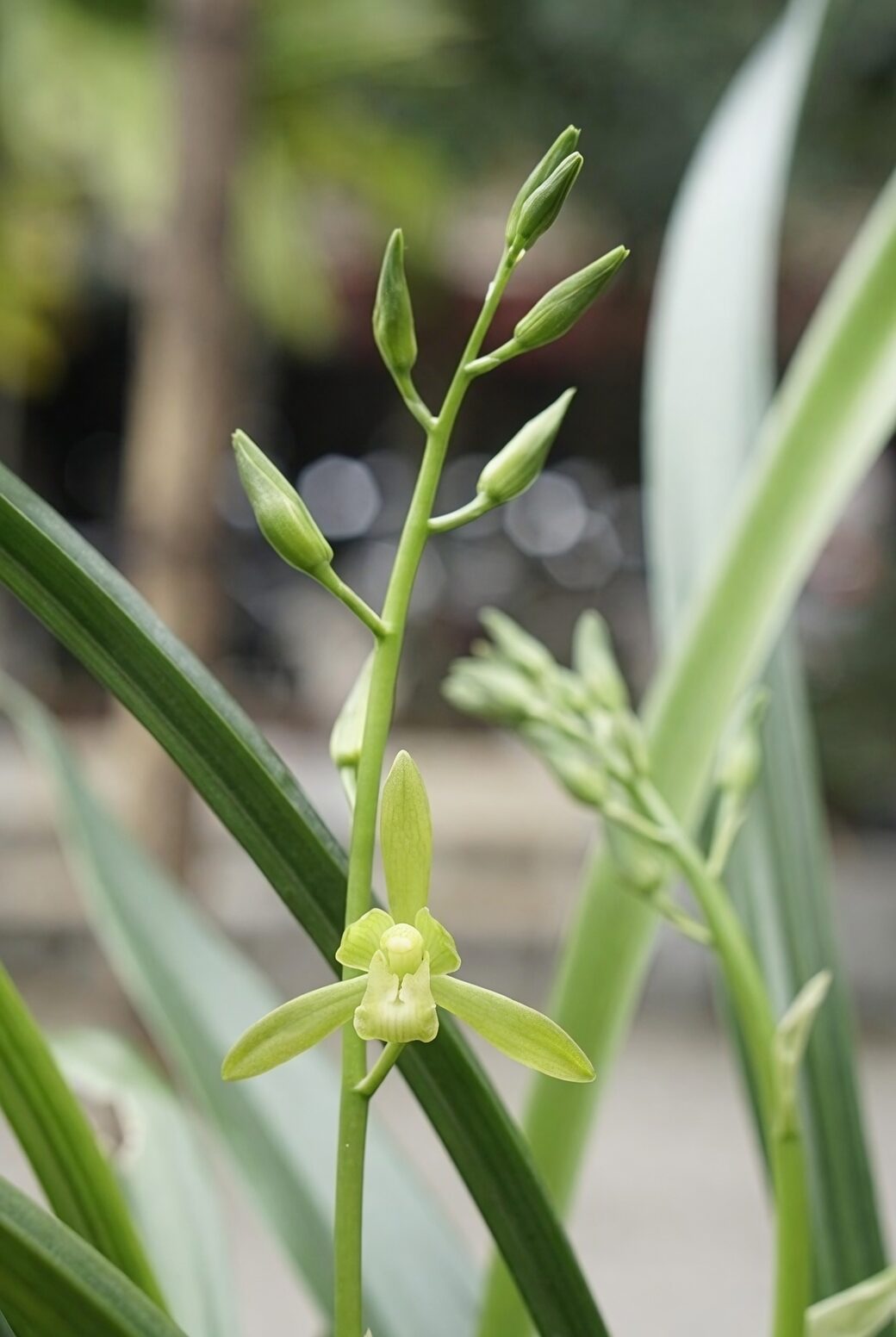
Imagine lifting a Cymbidium spray to your nose on a cool late-winter morning: the petals feel like polished porcelain, the scent drifts between citrusy-lily and warm honey, and the colors—greens with apple-fresh clarity or reds that glow like lacquer—seem to hold light inside them. Welcome to a curious gardener’s tour of the Cymbidium Orchid, where fragrance chemistry meets pigments, waxy texture, and the modern breeder’s palette.
Meet Cymbidium: elegance engineered by nature
- What they are: Cymbidium spp., the classic Boat Orchid, beloved for evergreen, strap-like leaves and long, arching sprays of waxy blooms.
- Native arc: From the Himalayas across Myanmar, Thailand, and Southeast Asia, stretching to Australia and New Guinea.
- Home habits: Cool-growing as orchids go—bright light (filtered in strong sun), fresh airflow, and steady moisture without sogginess. Most flower from late winter into spring, filling rooms and conservatories just when we need beauty most.
- Why they’re gift-worthy: Flowers are long-lasting and often pleasantly to strongly fragrant—built to travel and to linger.
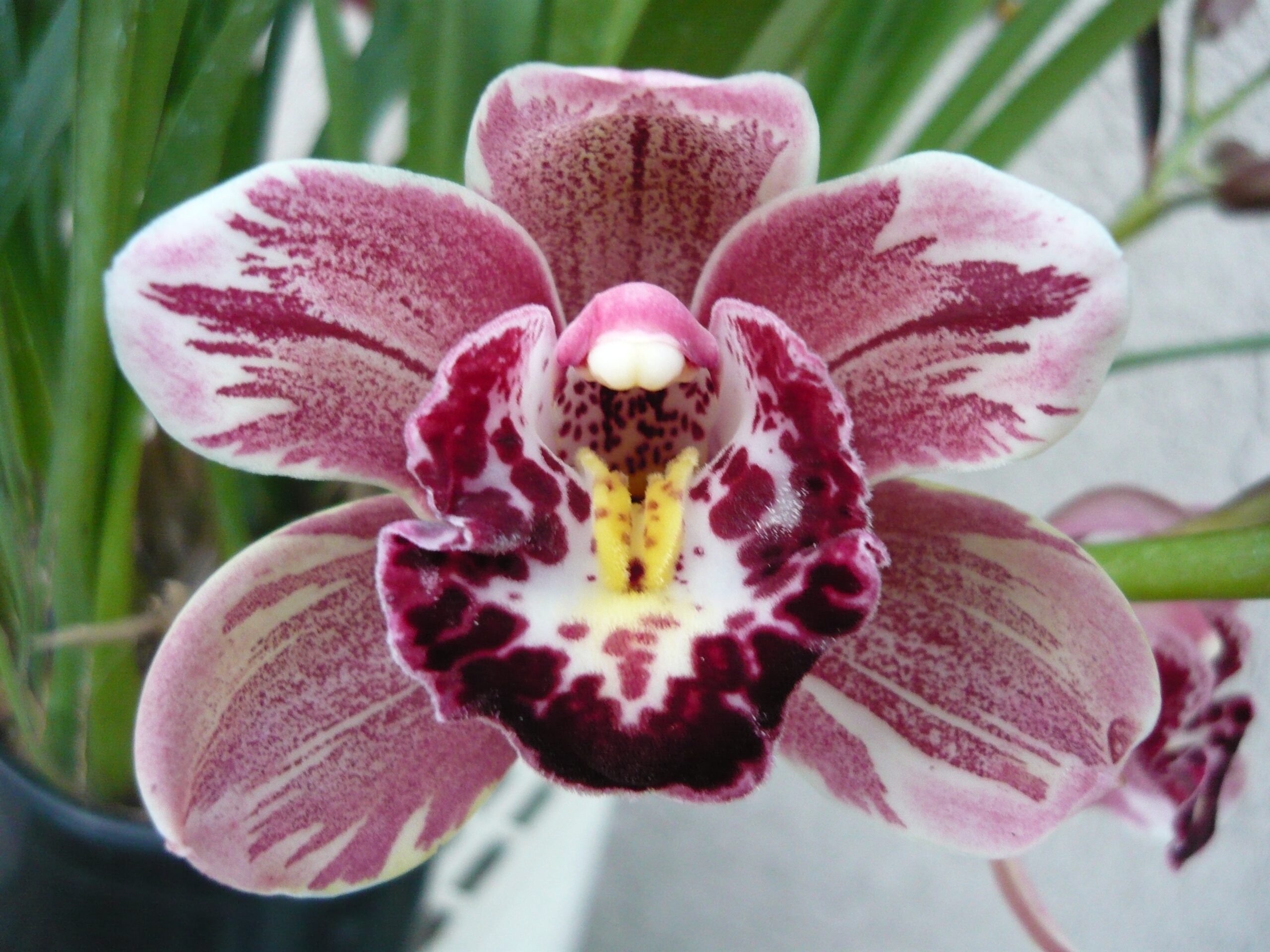
A nose-to-petal tour of fragrance
What you might smell
Cymbidium scents are varied but often:
- Bright and floral-citrus (think linalool-like notes: lily-of-the-valley with a squeeze of lime)
- Green and jasmine-leaning (methyl jasmonate gives that leafy-floral lift)
- Honeyed, woody, or slightly spicy undertones (acacia alcohol and friends add warmth)
Some cultivars whisper; others sing. Species such as Cymbidium ensifolium and C. goeringii have been cultivated for centuries in East Asia largely for their refined perfume, and many modern hybrids borrow that charm.
Where the perfume comes from
- Scent molecules: Cymbidium flowers commonly produce terpenoids and related volatiles. Research in C. ensifolium has highlighted linalool, methyl jasmonate, and acacia alcohol among abundant components.
- Form meets function: Waxy, long-lasting petals shield fragile scent glands from drying, helping a flower project fragrance over many days.
How to keep the scent singing
- Light and air: Bright filtered light and good ventilation help fragrance disperse. Avoid hot, stuffy rooms.
- Cool-to-mild temperatures: Aim for about 10–25°C (50–77°F); cool nights are particularly helpful for flowering.
- Humidity: Cymbidiums appreciate 70–80% humidity paired with airflow. Use trays or humidifiers; mist lightly if needed (don’t leave water in the crown).
The glow of pigments and pattern
How Cymbidiums paint themselves
Cymbidium colors span white, green, yellow, pink, red, and brown, often with freckles, stripes, or a contrasting lip—like a silk kimono’s lining peeking out.
- Greens often come from chlorophyll held in the petals (a Cymbidium specialty).
- Yellows and golden tones suggest carotenoids.
- Reds, pinks, and chestnut browns commonly lean on anthocyanins—sometimes concentrated as rich barring or velvety suffusion.
Pro tip: Good autumn light (bright but airy) supports spike formation and helps flowers develop crisp color and pattern.
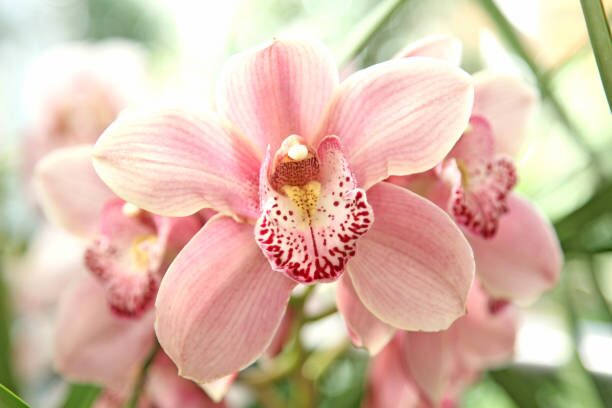
That irresistible waxy finish
Run a fingertip over a Cymbidium bloom and you feel it: a smooth, waxy sheen that’s more than just beautiful.
- Built-in durability: Thick, cuticle-rich petals slow water loss and resist bruising—one reason Cymbidiums excel as cut flowers and as long-lasting pot displays.
- Color amplifier: The satiny surface refracts light, making pigments appear deeper and more luminous.
- Disease buffer: That polish plus strong ventilation helps leaves and flowers dry quickly, discouraging leaf spots and other maladies.
Breeders’ palette: blending ensifolium, goeringii, and friends
Modern Cymbidiums are symphonies composed from multiple species, each adding a distinct “instrument.”
- Cymbidium ensifolium (Jianlan):
- Adds refined perfume, graceful carriage, and classic greens and yellows.
- Contributes to compact, elegant habits well-suited to bright, cool windows.
- Genomic insights in this species have mapped key scent pathways—useful for selecting richly fragrant parents.
- Cymbidium goeringii (the spring orchid):
- Famed for delicate, early-season blooms and a clean, sweet fragrance.
- Brings compact stature, fine floral form, and cool tolerance to hybrids.
- Other influences (the spice rack):
- Species like C. tracyanum are prized for dramatic striping and a warm, spicy scent, enriching the pattern and fragrance library breeders can draw from.
What breeders chase today:
- Expanded colors: From icy apple-greens and clear lemons to lacquer reds and smoky browns, often with crisp bars and bicolors.
- Texture and longevity: Firm, waxy substance for travel- and vase-worthiness.
- Compact, home-ready plants: Strong spikes on manageable clumps for windowsills and balconies.
- Genetic clarity: Modern marker tools (microsatellites/SSR) have revealed gene flow among Cymbidium species and even sub-division within C. goeringii and C. ensifolium—helping breeders confirm parentage and stack traits like fragrance, color, and durability with precision.
Care cues that unlock color, scent, and staying power
Think balance: light, temperature, water, humidity, and air.

- Light:
- Bright light to bright filtered sun; gentle morning sun is welcome.
- Provide about 50–60% shade in hot summers; brighten up with good airflow in autumn to support spike initiation.
- Temperature:
- Aim for 10–25°C (50–77°F). Keep winter above 10°C (50°F).
- Cool nights are especially helpful for flowering.
- Water & humidity:
- Keep the orchid medium evenly moist but never soggy.
- In spring and autumn, water roughly twice a week; more often in hot summers (morning, and again in the evening if needed).
- In winter, keep slightly moist—often every 4–5 days.
- Maintain 70–80% humidity with airflow; avoid water sitting in the crown.
- Feeding:
- During active new growth, use a dilute orchid fertilizer weekly.
- As spikes initiate and buds swell, continue light feeding (some growers keep weekly; others ease to monthly if growth slows).
- Stop feeding in winter or whenever growth markedly slows.
- Smart shopping and grooming:
- Choose plants with several open flowers (tightly budded spikes sometimes drop buds after a move).
- After flowering, cut the spent spike to tidy the plant.
- Repot after bloom (often annually) into a fresh, free-draining barky mix; divide into sections of 3–4 pseudobulbs if you want more plants.
Symbolism: why a Cymbidium feels like good fortune
Cymbidiums have long symbolized elegance, refinement, and good fortune—values nurtured in centuries of East Asian cultivation. Their winter-to-spring bloom adds a layer of meaning: poise and promise in the year’s leanest light. As with many “flower language” traditions, the symbolism crystallized from cultural admiration—scholars, poets, and gardeners elevating the orchid’s restraint and grace into a living emblem of taste and auspicious beginnings.
A brief “tasting flight” for your nose
- Citrus-lily and green tea: Linalool- and jasmonate-leaning notes that feel fresh and buoyant.
- Honeyed floral: Warm, welcoming, and room-filling on bright days.
- Spicy-woody undertones: A quiet hum that gives depth to otherwise airy florals.
Tip: To experience fragrance best, enjoy blooms in bright, airy conditions—scent often reads clearer when the room is fresh and cool rather than warm and stale.
For the curious: the science steering tomorrow’s blooms
- Genomics of scent: Work in C. ensifolium has mapped genes tied to major floral volatiles such as linalool, methyl jasmonate, and acacia alcohol—giving breeders a molecular compass for fragrance-forward lines.
- Hybrid maps: Newly developed microsatellite markers (SSR) have helped detect gene flow among Cymbidium species and revealed sub-structuring within C. goeringii and C. ensifolium—tools that help confirm crosses, conserve diversity, and refine breeding goals.
—
If you love fragrance with grace notes, colors that look lit from within, and blooms that last through late winter into spring, Cymbidium orchids are an endlessly rewarding canvas. Tend the balance—bright filtered light, cool nights, evenly moist roots, high humidity with airflow—and let those waxy petals, clear pigments, and nuanced perfumes do the rest.