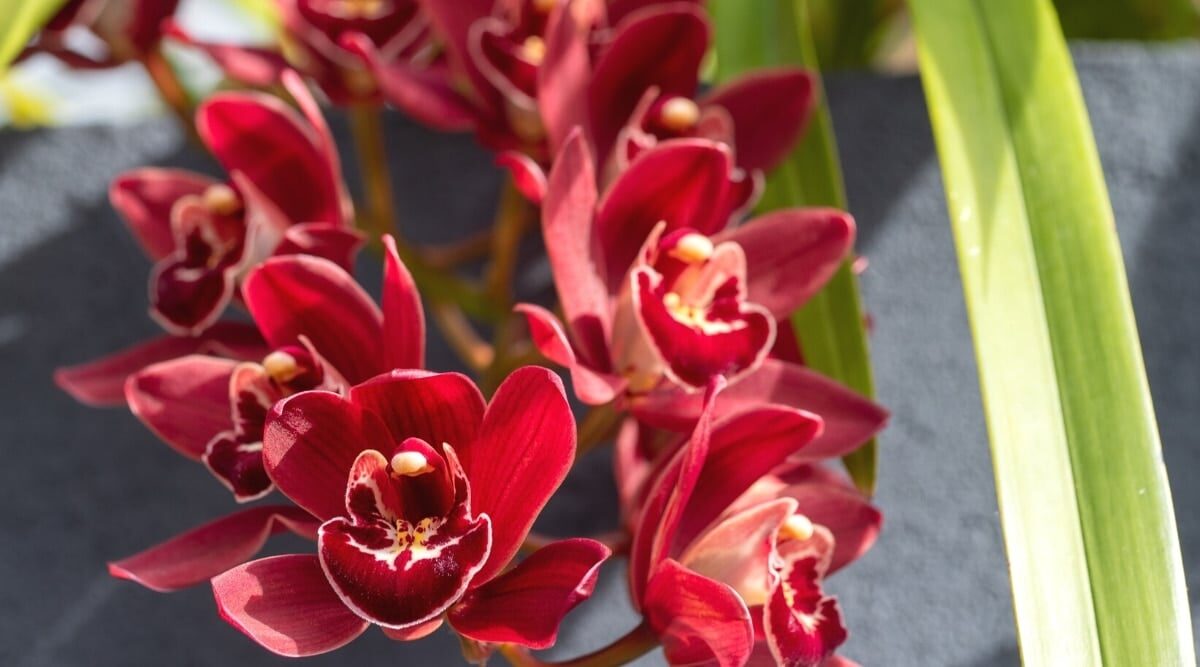
If you love orchids but crave something sturdier than a diva Phalaenopsis, Cymbidium orchids are your cool-headed companions. Strap-like leaves, waxy blooms, and perfume that lingers—these plants reward you when you sync care with the seasons. Think of this as your year-round playbook: how often to water, when to shade, when to brighten things up for spike set, how to feed (or pause), and why steady airflow is the best disease insurance you’ll ever “buy.”
Cymbidium at a glance
- Botanical: Cymbidium spp. (Cymbidium Orchid; Boat Orchid; Tiger-Head Orchid), Orchidaceae
- Origin: Himalayas, Southeast Asia, Australia, New Guinea
- Habit: Clump-forming, sympodial orchids with water-storing pseudobulbs
- Bloom time: Late winter to spring
- Comfort zone: Bright filtered light, cool-to-mild temps, high humidity with airflow
The Cymbidium rhythm: a year-round calendar
Late winter to early spring: bloom time and new growth begins
- Light: Bright filtered light (gentle morning sun is great). Avoid hot, stuffy rooms.
- Water: Keep the mix slightly moist—typically every 4–5 days in winter. As spring gains pace, you’ll move toward roughly twice a week.
- Feed: If growth is moving (spikes swelling, new leaves extending), give a very dilute orchid feed about once weekly. If growth is sluggish, pause until you see active extension.
- Temperature: Keep above 10°C/50°F; cool nights are helpful for flower longevity and future spikes.
- Humidity and airflow: Aim for 70–80% humidity paired with gentle, constant ventilation; lightly mist surrounding air 1–2 times daily if indoor air is dry, avoiding water in the crown.
- After flowering: Cut spent spikes to tidy and conserve energy. This is the prime window for repotting or division once blooms are done—often around April.
Spring: rebuild energy and roots
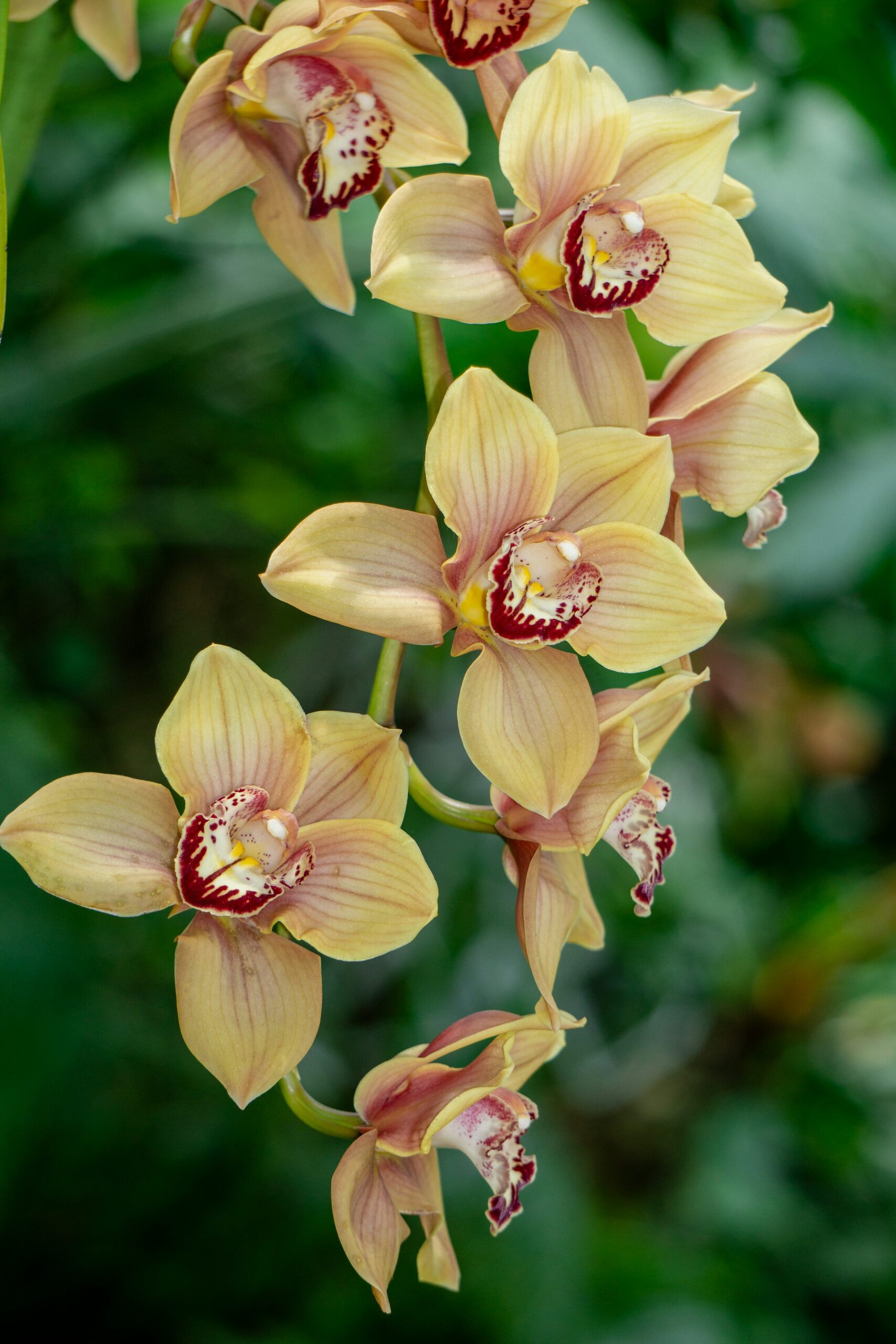
- Water: About 2 times per week for evenly moist, airy media (never waterlogged).
- Feed: Weekly, dilute orchid fertilizer during active new growth.
- Airflow: Keep a fan or natural breeze moving. Good ventilation prevents leaf spots and keeps roots lively.
- Repot/divide: Best done after flowering, before new roots and shoots get large. Use a free-draining bark-based mix; a tall pot (around 15 cm wide x 20 cm deep) suits the root system well.
Summer: shade, drink, breathe
- Light: Provide 50–60% shade in summer heat—dappled light or bright shade, never harsh midday sun.
- Water: In hot, sunny weather, water thoroughly in the morning and again in the evening as needed. Fast drainage is non-negotiable.
- Humidity: 70–80% if possible. In heat waves, brief misting to cool the air is fine—always pair with airflow.
- Feed: Continue dilute weekly feeding while growth is active.
- Ventilation: Prioritize strong, continuous airflow to thwart fungal disease.
- Grooming: Remove weak late-summer shoots that won’t mature; this helps channel strength into growths likely to flower.
Autumn: turn up the brightness for spike set
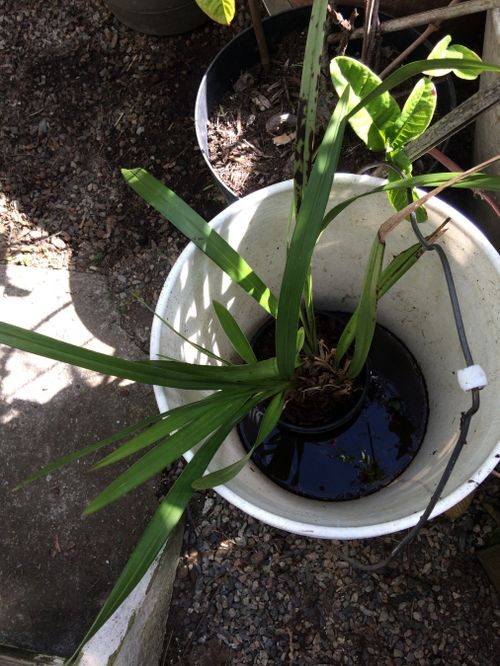
- Light: Move your Cymbidium to a brighter, airy spot (still filtered if sun is intense). Bright, fresh air is the spark for spike initiation.
- Water: About 2 times per week to keep the medium evenly moist.
- Feed: Continue light feeding to support spike initiation; many growers still feed weekly if plants are actively growing, while others reduce to around monthly if growth slows—let the plant’s pace guide you.
- Temperature: Cool, fresh nights are especially helpful for spike development. Keep things bright, cool, and well-ventilated.
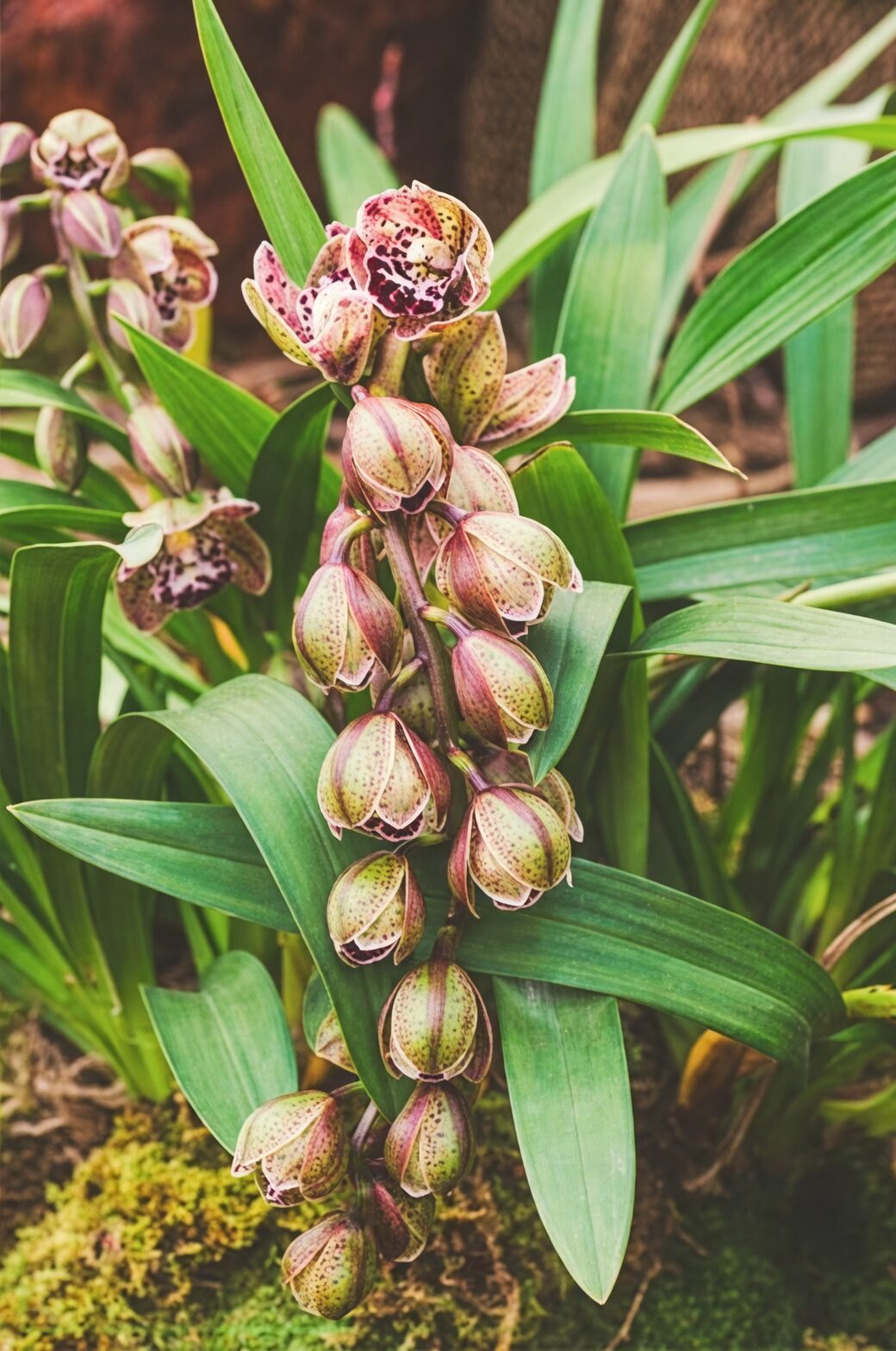
Winter: coast, don’t coast to a stop
- Light: Bright filtered sun near an east or south window (use a sheer if intense).
- Water: Keep slightly moist; typically water every 4–5 days, avoiding sogginess.
- Feed: Stop fertilizing in winter or any time growth slows markedly.
- Temperature: Stay above 10°C/50°F; avoid hot, stagnant rooms. Fresh air movement matters as much as warmth.
Ventilation: your no-spray disease insurance
Fresh air is the easiest path to clean leaves and flawless flowers.
- Keep air moving: An oscillating fan indoors, a breezy balcony, or a well-ventilated greenhouse keeps foliage dry and discourages fungi.
- Pair humidity with airflow: High humidity without movement invites anthracnose, rust, and leaf/black spot. High humidity with movement helps plants thrive.
- Water timing: Water early in the day so leaves dry promptly; avoid water pooling in the crown and between leaf sheaths.
- Space smartly: Give leaves elbow room; avoid crowding that traps stale air.
- Early action: Remove spotted tissue, isolate problem plants; for pests like scale, whiteflies, and aphids, use horticultural oil or insecticidal soap and repeat to catch hatchlings.
Watering cheat sheet
- Spring and autumn: about 2 times per week; aim for evenly moist, airy media.
- Summer: in heat, water thoroughly mornings and again evenings as needed; never let pots sit in water.
- Winter: keep slightly moist—typically every 4–5 days; be cautious not to overwater.
- Humidity help: Mist surrounding air/foliage lightly 1–2 times daily if dry—never leave water sitting in the crown—and always ensure gentle airflow.
Feeding: when to feed or pause
- Active growth (spring through summer): weekly, dilute orchid fertilizer.
- Spike/bud initiation (autumn): continue light feeding; if growth is brisk, weekly works well; if growth slows, reduce toward monthly.
- Swelling and flowering: a dilute liquid feed (even a light foliar mist) about once weekly can be used if growth is active.
- Pause feeding: in winter or whenever growth slows markedly.
Light through the seasons
- Year-round: bright light to bright filtered sun; some gentle morning sun is fine.
- Summer: provide about 50–60% shade to prevent leaf scorch and overheating.
- Autumn: move to a brighter, airy position to support spike development.
- Placement tips:
- Indoors: bright east- or south-facing window with a sheer curtain if intense; keep air fresh.
- Outdoors in warm seasons: bright shade with 50–60% shading and strong airflow; shift to a brighter, well-ventilated spot in autumn.
Repotting and division, without the drama
- Best timing: right after flowering (often April), before new roots and shoots get large.
- How often: about once a year or when crowded.
- Technique:
- Let the mix dry slightly so roots flex without snapping.
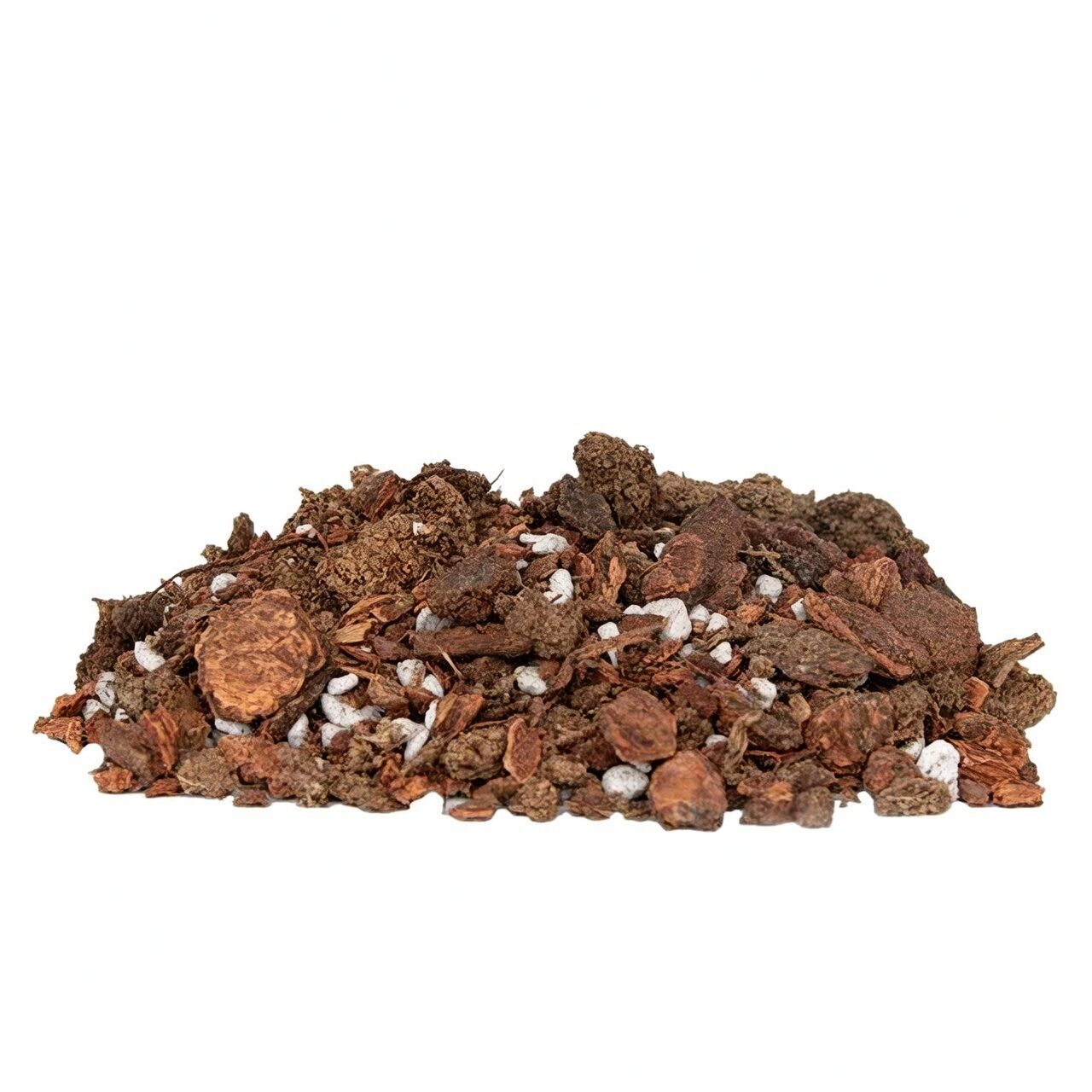
- Use a very free-draining orchid medium: bark base with bits of sphagnum (in moderation), charcoal, fern fiber, and porous minerals like zeolite/perlite.
- Remove dead/rotten roots and yellowing leaves with sterile tools.
- Division: sections of 3–4 pseudobulbs are the sweet spot; remove the old spike first so divisions don’t weaken.
Buying smart
- Choose a compact to medium plant that fits your light and space.
- Pick a plant with several open flowers rather than mostly tight buds—buds can drop when conditions shift at home.
Troubleshooting quick guide
- Bud blast or buds shriveling: light too low, heat too high/stuffy, or sudden environment change; improve light, steady temps, and airflow.
- Leaves dark green and floppy growth: light is probably too low; brighten gradually.
- Leaves scorched or yellow with crisp tips: too much direct summer sun; increase to 50–60% shade and water more consistently.
- Wrinkled pseudobulbs: chronic underwatering or stale, compacted mix; water more deeply, refresh media, check roots.
- Leaf spots (anthracnose, rust, black spot): improve ventilation, water early, avoid wet crowns; prune affected tissue promptly and keep foliage dry overnight.
- Pests (scale, whiteflies, aphids): isolate, then treat with horticultural oil or insecticidal soap; repeat to break life cycles.
A note on meaning and why it endures
Cymbidiums have long symbolized elegance, refinement, and good fortune—one reason they’re treasured as celebratory gifts in the winter-to-spring season. In East Asian culture, orchids (including Cymbidium, the classic “lan”) are associated with noble character and cultivated taste. Much modern “flower language” is marketing shorthand, but here it echoes a genuine cultural legacy: enduring grace, quiet strength, and hospitality that lasts—just like a Cymbidium spike in bloom.
At-a-glance seasonal calendar
- Late winter to early spring: slightly moist (every 4–5 days, then easing toward 2×/week), bright filtered light, light feeding only if growth is active; cut spikes after bloom; repot/divide post-flower.
- Spring: water ~2×/week; feed weekly; maintain 70–80% humidity with airflow.
- Summer: 50–60% shade; water morning (and evening as needed); keep breezy; continue dilute weekly feed; remove weak late-summer shoots.
- Autumn: move brighter and airy for spike set; water ~2×/week; continue light feeding adjusted to growth; enjoy the anticipation.
- Winter: above 10°C/50°F; bright filtered light; slightly moist (every 4–5 days); stop fertilizing; keep air moving.
Get these rhythms right—steadily moist but never soggy roots, 50–60% shade in summer, bright and airy autumns for spike set, feeding in step with growth, and faithful ventilation—and your Cymbidium will repay you with weeks of luminous, fragrant bloom right when the year needs it most.