
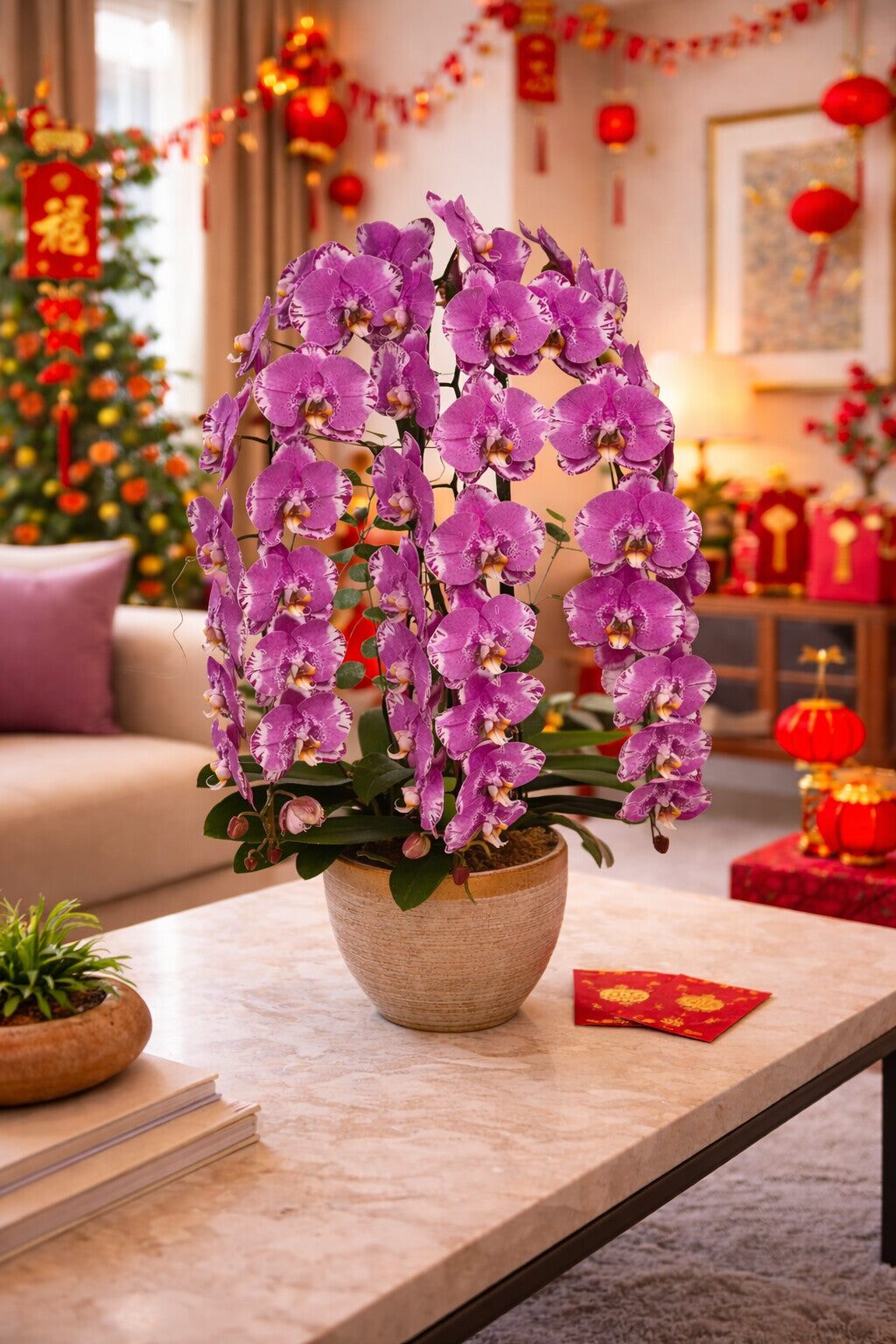
Step into a scholar’s studio: an ink-wash scroll unfurls, and a few fine strokes summon an orchid—leaves like calligraphy, flowers quiet yet sure of their fragrance. Now step into a modern doorway during Lunar New Year: a tall pot of Cymbidium Orchid sends up arching sprays of waxy blooms, elegant as a silk qipao. Across a thousand years, these scenes are in conversation. This is the world of Cymbidium spp.—the Cymbidium Orchid, “boat orchid,” or in Chinese, 大花蕙兰 in its modern, large-flowered forms—whose flower language (hua yu) was born in poetry and painting and lives on in feng shui and gifting culture today.
The orchid among the Four Gentlemen
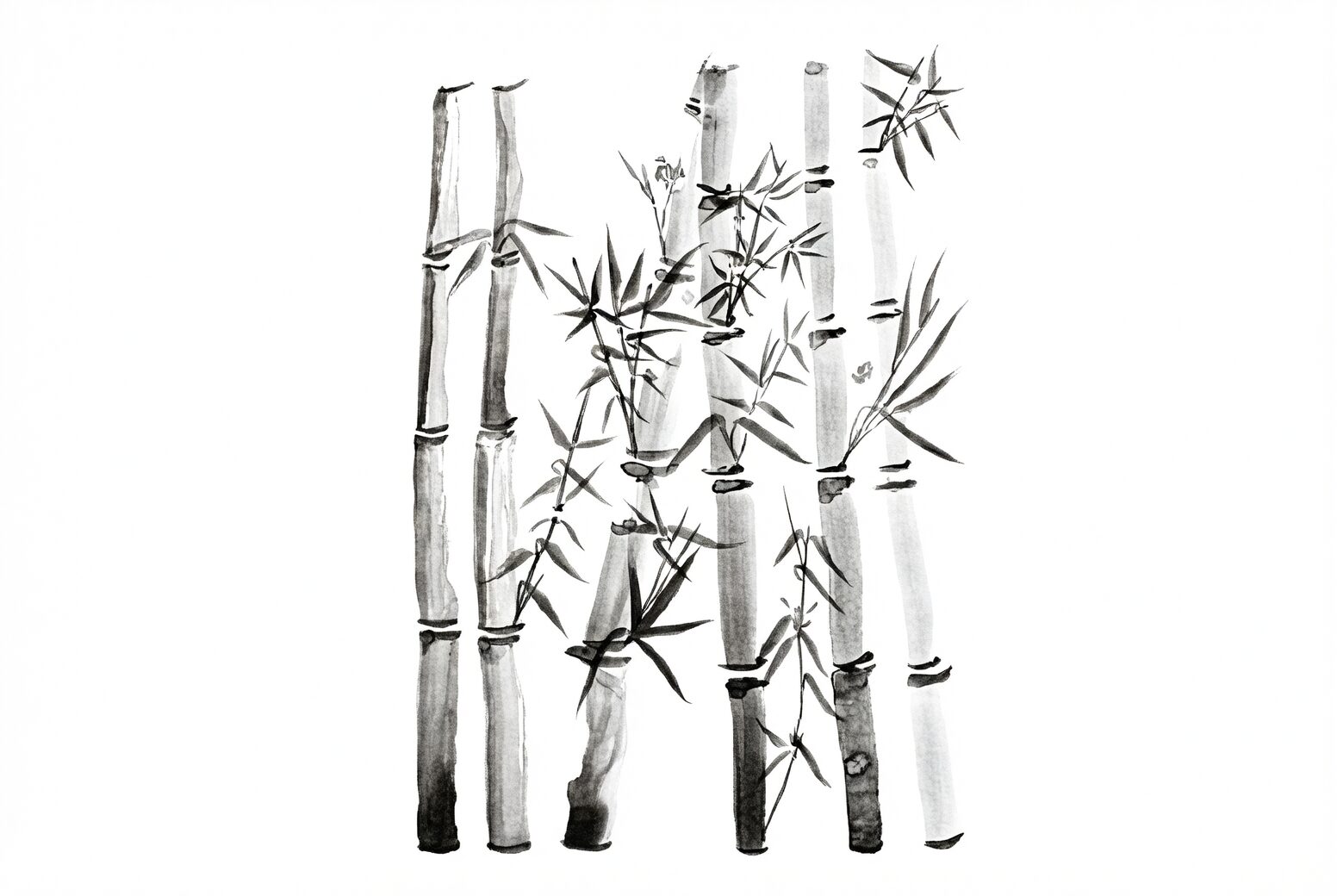
In classical Chinese art, the orchid stands with the plum, bamboo, and chrysanthemum as the Four Gentlemen (四君子)—four plants that model Confucian virtues and mark the turning of the seasons. The orchid is spring’s gentleman: refined, upright, modest in appearance but carrying a memorable scent.
- In literati ink painting, wild cymbidiums—especially species native to East Asia—were sketched with spare brushwork. Their slender leaves and delicate fragrance came to embody humility, cultivated character, and scholarly elegance.
- The orchid’s strength is quiet. Unlike the plum that braves winter or bamboo that proclaims integrity, the orchid whispers: it perfumes the air even when unseen. That subtlety is precisely its virtue in classical aesthetics.
How “flower language” (花语) took root
Chinese flower language isn’t a rigid codebook the way Victorian floriography tried to be. It grew organically from centuries of poetry, aphorism, and painting practice.
- Poets used “lan” (orchid) as a metaphor for noble friends and inner cultivation—something you “wear at the waist” not for show, but as a reminder of virtue.
- Painters practiced orchids as moral calligraphy: to paint a leaf well demanded the same discipline required to cultivate one’s character.
- Over time, these images congealed into a shared cultural reading: the orchid equals elegance, refinement, loyalty to principle—and, by auspicious extension in popular culture, good fortune and graceful beginnings (fitting for spring).
Today’s gift-ready Cymbidiums—often large-flowered hybrids called 大花蕙兰—are direct heirs to that symbolism. While the classical references often pointed to smaller-flowered species, the meaning migrated effortlessly: whether wild and willowy or lavish and waxy, an orchid still says “cultivated grace.”
What the Cymbidium still says: elegance, refinement, and good fortune
- Elegance: The arching, fountain-like clumps of evergreen leaves and poised, long-lasting blooms read as composed, not ostentatious—elegance as restraint.
- Refinement: Their fragrance is present but not domineering, a mark of taste and self-possession prized by scholars and modern minimalists alike.
- Good fortune: Blooming from late winter into spring, Cymbidiums arrive with the year’s renewal. Multiple spikes suggest abundance; sturdy, long-lasting flowers signal steady prosperity.
From scroll to space: Cymbidium in feng shui
Feng shui treats living plants as carriers of fresh, rising qi. Cymbidium’s “gentlemanly” character and spring association make it a favorite for elevating spaces without overwhelming them.
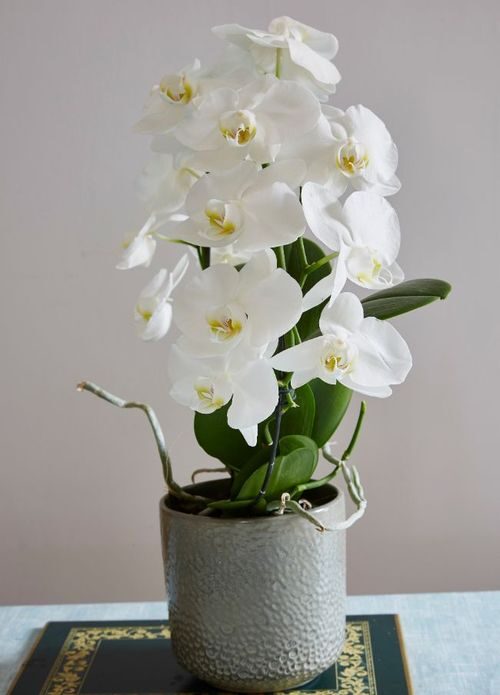
- Where to place
- East or southeast rooms to support the Wood element and the feeling of growth, study, and new ventures.
- Entryways and living rooms to invite cultured, uplifting qi for guests.
- Studies and workspaces to evoke scholarly clarity and refined focus.
- How to harmonize
- Light: Bright, filtered light is both auspicious and plant-correct; morning sun works beautifully.
- Air: Gentle airflow prevents stagnation (good feng shui) and helps the plant avoid fungal troubles (good horticulture).
- Vessel: A tall, stable pot suits Cymbidium’s roots and visually “grounds” the graceful leaves and spikes—poise above, steadiness below.
Note: Feng shui is a cultural practice about atmosphere and intention. Let the symbolism guide placement—then let sound care keep those virtues flourishing.
The gift of a gentleman: modern Cymbidium gifting culture
Cymbidiums are premium celebratory gifts because they’re both meaningful and reliably showy.
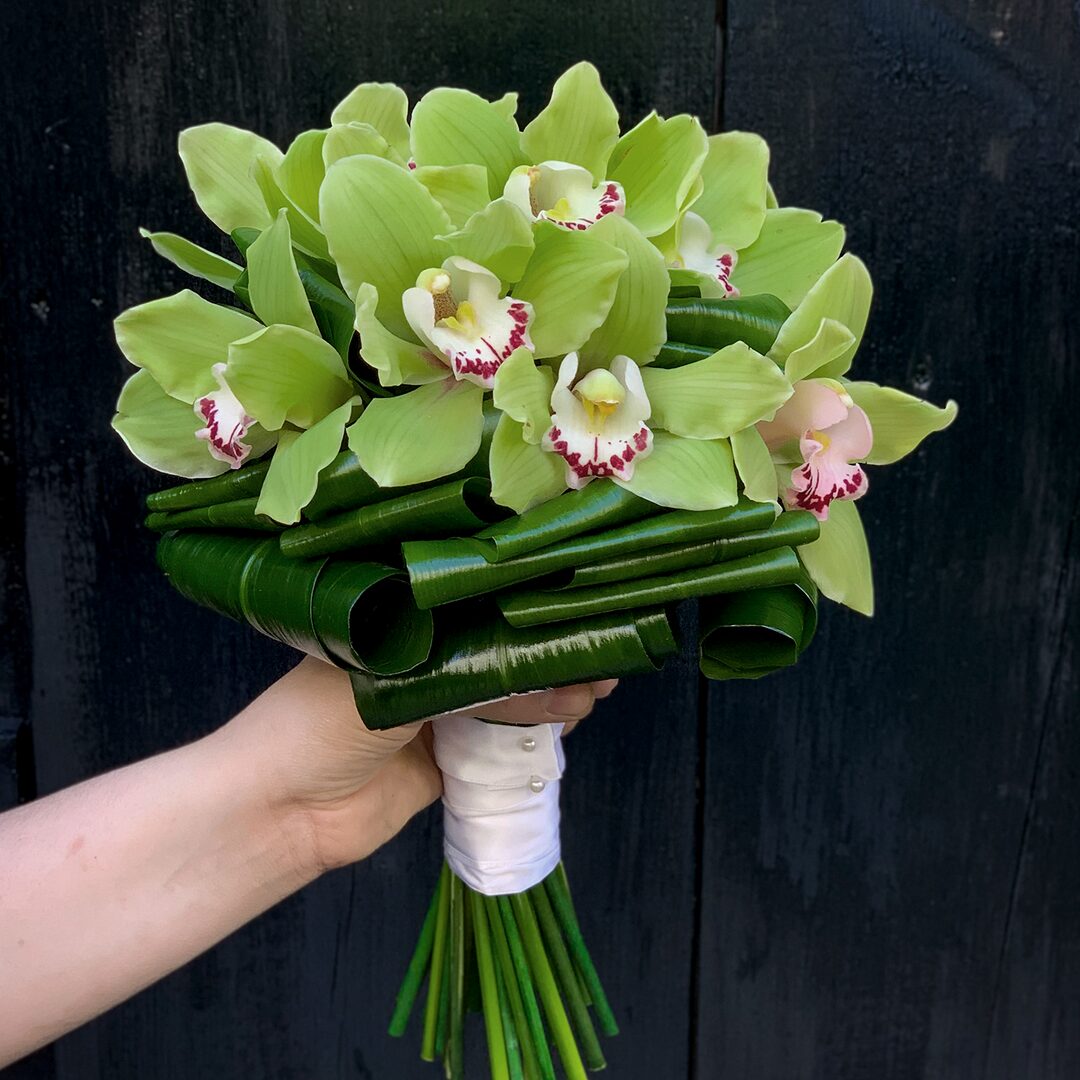
- Perfect occasions
- Lunar New Year and spring festivals (they bloom right on cue)
- Housewarmings and new offices (refinement and steady prosperity)
- Promotions, retirements, and academic milestones (the scholar’s orchid)
- Weddings and anniversaries (lasting beauty and loyalty)
- Choosing well
- Pick plants with several open flowers rather than mostly tight buds; in home conditions, tight buds can sometimes drop.
- Color notes: verdant greens and golds feel especially auspicious; reds and pinks are festive; snowy whites read as modern-luxe in many settings.
- How long will it shine?
- In cool, bright rooms with good airflow, each spike can look superb for weeks. Cut Cymbidium sprays are also prized in the floral trade for their durability.
A quick grower’s guide (so the symbolism actually blooms)
Cymbidiums are cool-growing orchids native from the Himalayas across Southeast Asia to Australia and New Guinea. Modern gift plants are bred for generous, long-lasting displays.
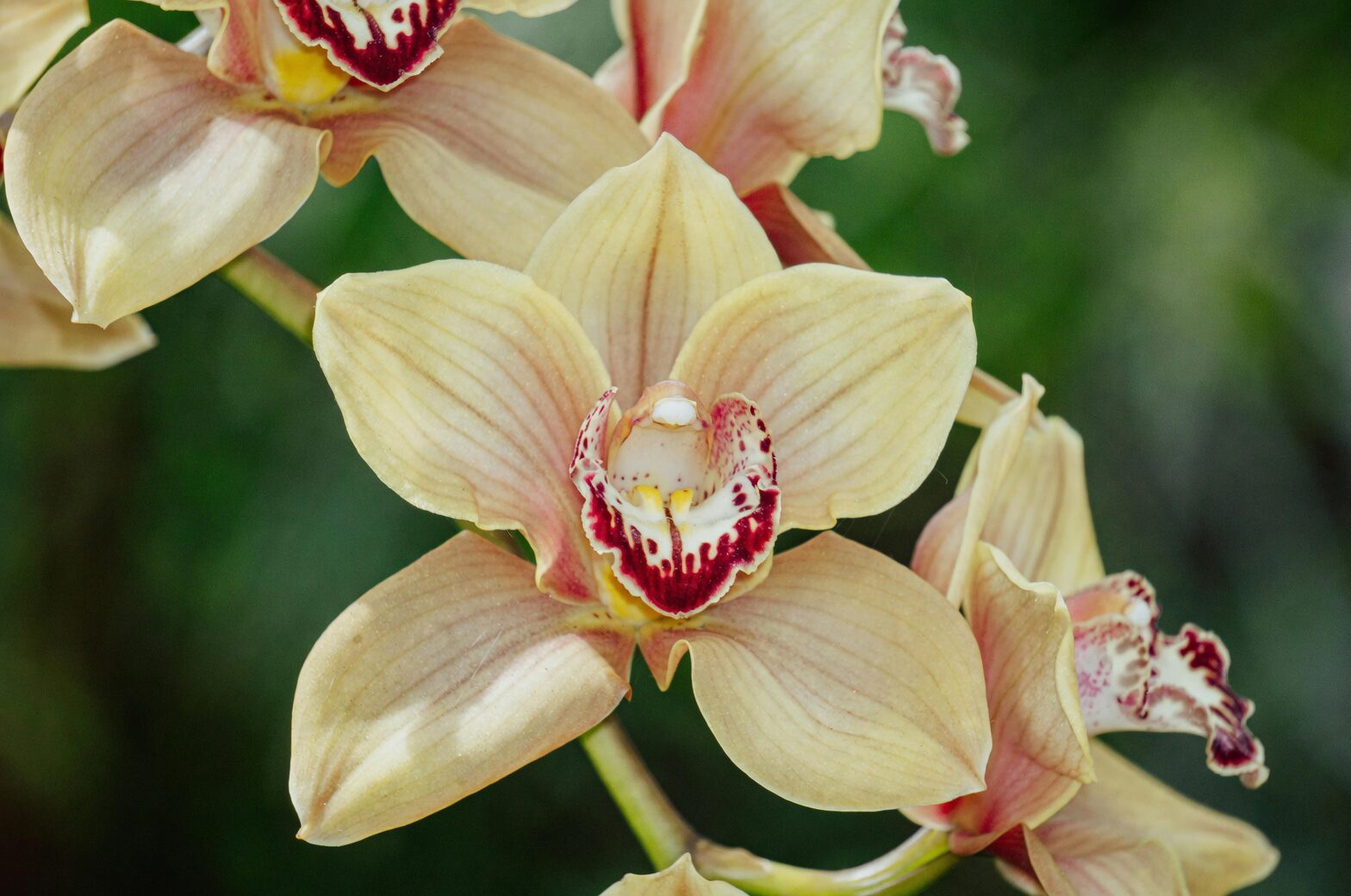
- Light
- Bright light to bright filtered sun; gentle morning sun is welcome. In summer heat, give about 50–60% shade.
- Temperature
- Ideal 10–25°C (50–77°F). Cool nights help flower initiation. Avoid hot, stuffy rooms.
- Water and humidity
- Keep the mix evenly moist but never soggy.
- Spring/autumn: ~2×/week. Summer heat: thorough morning watering (and again in the evening if needed); ensure fast drainage. Winter: slightly moist, about every 4–5 days.
- Likes higher humidity (around 70–80%) paired with gentle airflow; light misting of the surrounding air is fine—don’t leave water sitting in the crown.
- Medium and pot
- Free-draining orchid mix (bark-based with porous additions). Avoid regular potting soil. A tall pot suits the root system.
- Feeding
- During active growth, feed weekly with a dilute orchid fertilizer.
- During spike/bud initiation, continue light feeding; if growth slows, reduce toward monthly.
- Pause feeding in winter or whenever growth markedly slows.
- After flowering
- Cut spent spikes promptly; repot or divide right after bloom if needed. Divisions with 3–4 pseudobulbs establish best.
- Health and safety
- Watch for leaf spots/rust in stale, wet air; improve ventilation. Treat scale, whiteflies, or aphids with horticultural oil/soap if they appear.
- Generally non-toxic to people and pets, though nibbling can cause minor tummy upset.
Poetry that perfumed the air
While specific lines vary across dynasties and commentaries, a few enduring ideas shaped the orchid’s hua yu:
- The orchid is a friend to the noble-minded—something worn close (as a token) and cultivated daily (as a practice).
- Its scent is chaste and pervasive yet never clamorous: virtue that influences quietly.
- Painted freehand, the orchid is a test of both wrist and will; to perfect its leaf is to practice self-restraint.
These ideas were inked and re-inked through the Song and beyond, nesting the Cymbidium within a tradition of character and springtime renewal. That is why, centuries later, when a pot of Cymbidium greets guests in a bright foyer, it still feels like good company—tasteful, composed, and quietly auspicious.
Bringing the tradition home
- If you want a plant that “behaves like a gentleman,” choose a compact or medium Cymbidium suited to bright windows and cool nights.
- Give it what both poetry and horticulture agree it deserves: brightness without scorch, fresh air, steady moisture, and time.
- Then let it do what it has always done—grace your space, elevate the mood, and whisper spring’s refined promise of good fortune.