
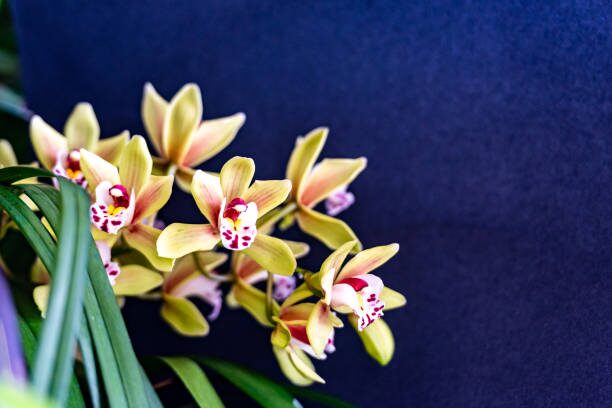
If you like your orchids with personality, Cymbidium orchids (Cymbidium spp.) bring it in spades: glossy, long-lasting flowers, elegant fountain-like leaves, and a cool-season rhythm that makes winter-to-spring feel festive. Think of them as living sculptures that also know how to throw a subtle perfume party.
The Quick-Hit Hit List: 5 Reasons Cymbidiums Are Addictive
1) Pseudobulbs = built-in storage tanks
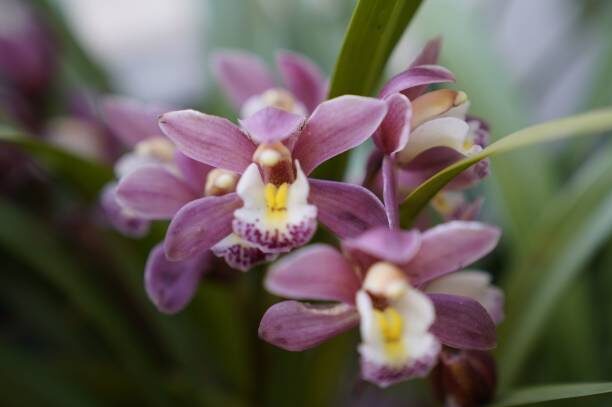
- Those plump “bulbs” at the base of the leaves are water-and-nutrient reservoirs—nature’s hydration canteens.
- They buy you grace during short dry spells and fuel flower spikes from mature growths.
- Pro tip: when dividing, keep 3–4 pseudobulbs per division for stronger, faster rebounds.
2) Waxy blooms that stay showy for weeks
- Flower spikes carry multiple, sculptural, waxy flowers in white, green, yellow, pink, red, and earthy browns—often patterned or bicolored.
- In cool, bright conditions, a single spike keeps its poise for weeks on end; well-grown plants can stage multiple spikes.
- Buy smart: pick a plant with several open flowers—not mostly tight buds—to avoid at-home bud drop.
3) Fragrance surprises (from whisper to wow)
- Many cultivars are lightly to strongly fragrant; others lean visual over scented.
- Expect perfume to ebb and flow with light and temperature—often most noticeable on bright, mild days.
- If fragrance is your jam, sniff before you buy (cultivar scents vary widely).
4) Tall-pot roots that like room to roam
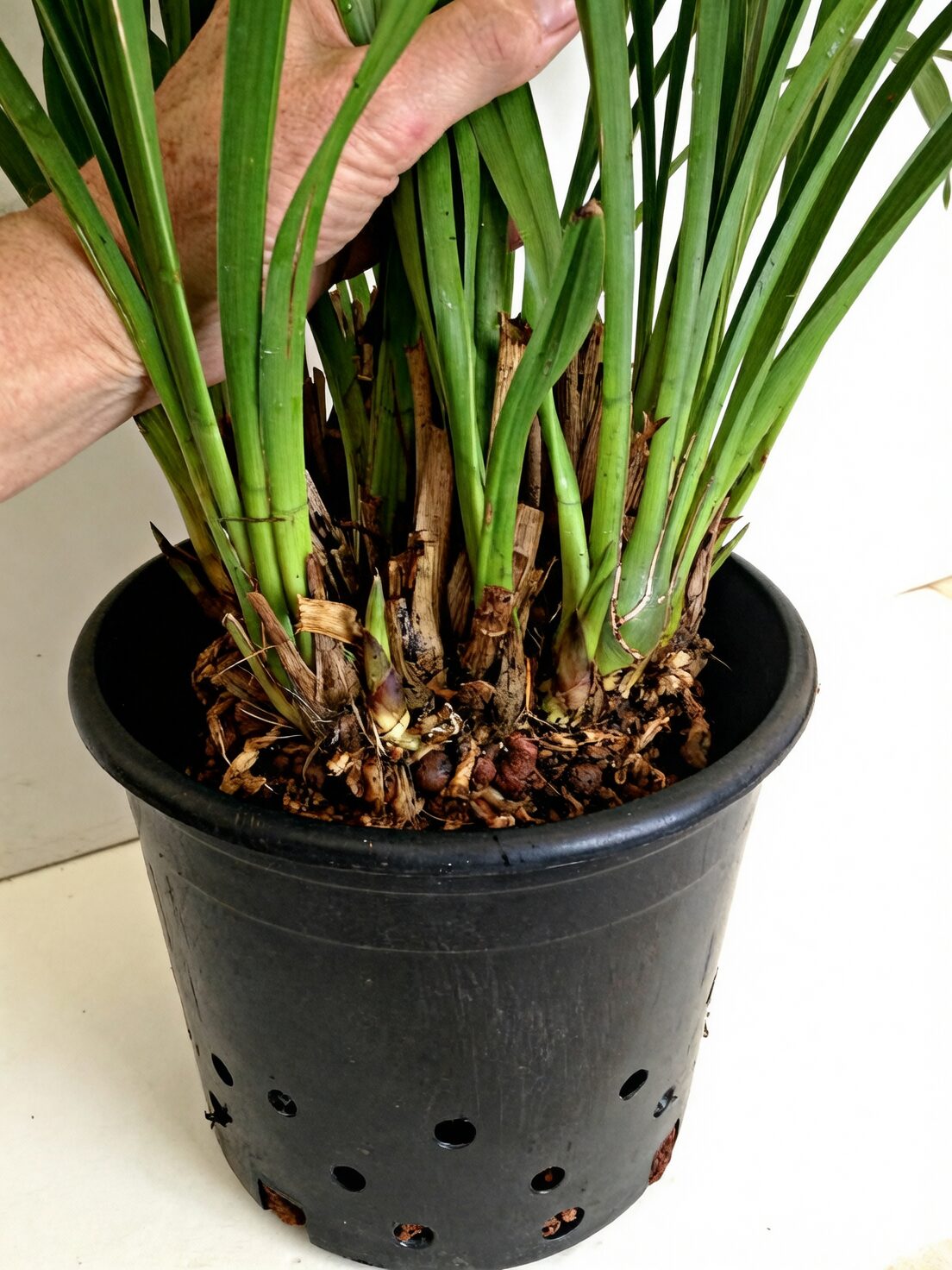
- Cymbidium roots appreciate depth and air. A classic fit is a tall pot about 15 cm (6 in) wide and 20 cm (8 in) deep.
- Use a free-draining orchid mix (bark-based with extras like a little sphagnum, charcoal, fern fiber, and porous minerals such as perlite/zeolite). No regular potting soil.
- Let the mix dry slightly before repotting so roots flex, not snap.
5) Ventilation: the secret superpower
- Fresh air keeps leaves dry, reduces fungal issues (leaf spots, rust, anthracnose), and helps spikes develop cleanly.
- Pair humidity with airflow—think gentle, constant movement, not gusts.
- Good ventilation is the simplest upgrade most home growers can make.
Where They Come From—and What They Want
- Native range: The Himalayas through Myanmar, Thailand, Southeast Asia, New Guinea, and Australia.
- Light: Bright light to bright filtered sun. Morning sun is welcome; shade lightly (about 50–60%) in hot summers. In autumn, move brighter to support spike initiation.
- Temperature: Cool-to-mild suits them best—roughly 10–25°C (50–77°F). Keep winter above 10°C (50°F) and avoid hot, stuffy rooms. Cool nights help flower spikes.
- Humidity: Happiest around 70–80% with steady, gentle airflow. Use trays/humidifiers; you can mist lightly 1–2× daily—avoid water sitting in the crown.
- Placement: Indoors, a bright east or filtered south window; outdoors (warm seasons) bright shade with strong airflow. Year-round outdoors mainly in USDA Zones 10–12.
Water, Feed, and Timing (A Smooth Season-by-Season Rhythm)
- Watering:
- Spring and autumn: about 2×/week—aim for evenly moist, never soggy.
- Summer: in heat, water thoroughly in the morning and again in the evening as needed; provide 50–60% shade and fast drainage.
- Winter: slightly moist, typically every 4–5 days; avoid waterlogged media.
- Feeding (dilute orchid fertilizer):
- Active new growth: feed weekly, lightly.
- Bud/spike initiation: keep feeding light; many growers stay weekly if growth is steady, others ease to about monthly if growth slows.
- Pseudobulb swelling and flowering: continue a dilute weekly feed (a light foliar mist is fine).
- Pause feeding in winter or whenever growth markedly slows.
Potting, Repotting, and Division (Starring the Tall Pot)
- Repot cadence: About once a year or when crowded, often right after flowering (many schedules hit April).
- Medium: Refresh airy, bark-forward mixes; clear out dead roots and yellow leaves.
- Division: After bloom, remove the old spike. Slice between pseudobulbs with a sterile blade; aim for 3–4 pseudobulbs per new clump. Pot into fresh mix and keep bright, cool, and evenly moist to encourage quick re-rooting.
Bloom Better: Spike Secrets and Bud-Safe Moves
- Spike initiation thrives on:
- Bright, airy autumn conditions.
- Cool nights above 10°C (50°F) but decidedly not hot days in stuffy rooms.
- Bud blast insurance:
- Avoid sudden changes in light, temperature, or watering.
- Keep steady humidity with airflow.
- When buying, favor plants with several open flowers rather than mostly buds.
Ventilation in Action: Fewer Spots, Happier Spikes
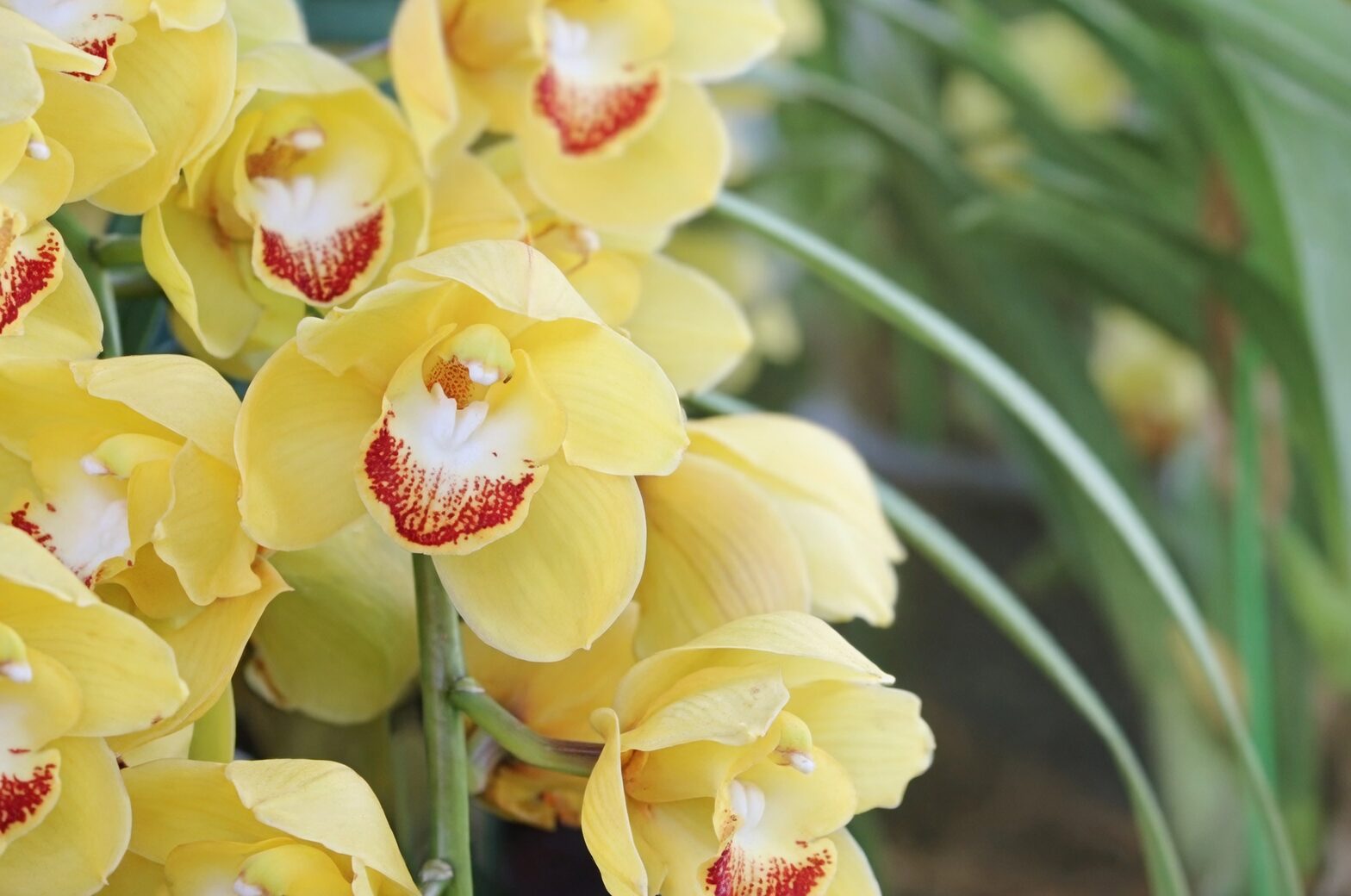
- Why it works: Moving air dries leaf surfaces, keeps temperatures more even around buds, and slows pathogen buildup.
- Easy upgrades:
- Crack a window near the plant (avoid cold drafts on leaves).
- Run a small, gentle fan to keep air fresh without flapping the foliage.
- Space plants so leaves aren’t crammed together.
Fast Facts and Safety
- Size: Typically 40–90 cm (16–35 in) tall in pots; clumps spread about 30–60 cm (12–24 in) over time.
- Habit: Clump-forming, sympodial orchid with water-storing pseudobulbs; new “leads” arise from the base; flower spikes emerge from mature growths.
- Pet friendly: Generally considered non-toxic to people and pets (chewing can still cause mild tummy upset).
Common Slip-Ups (and How to Dodge Them)
- Soggy media: Switch to a freer-draining mix and a tall pot; water thoroughly, then let excess drain fast.
- Too little light: Leaves go dark green and flowering stalls. Nudge brighter (filter strong sun).
- Hot, still air: Buds sulk and spots spread. Boost ventilation and modulate temperature.
- Late weak shoots: Remove weak late-summer growths unlikely to mature; this focuses energy on strong, bloom-ready leads.
Pests and Leaf Blemishes
- Usual suspects: Scale insects, aphids, and whiteflies.
- Response plan: Isolate, then treat with horticultural oil or insecticidal soap; repeat to catch hatchlings.
- Leaf diseases: Anthracnose, rust, and leaf spots thrive in stale, wet conditions—prune affected tissue early and upgrade airflow.
Flower Language and Cultural Meaning

- Meaning: In East Asia, Cymbidiums symbolize elegance, refinement, and good fortune—fitting for their poised blooms and winter-to-spring timing.
- Context check: While modern “flower language” (花语) charts often assign simple one-liners, Cymbidium’s reputation predates that trend by centuries of cultivation and appreciation in Asia. The deeper message is not just romance but cultivated grace and auspicious beginnings—one reason they’re beloved as celebratory gifts.
Quick Start Recipe
- Light: Bright filtered, morning sun welcome; summer shade 50–60%.
- Temps: 10–25°C (50–77°F); cool nights encourage spikes.
- Water: Evenly moist, never soggy; adjust seasonally.
- Humidity + Air: 70–80% with gentle, constant airflow.
- Pot/Medium: Tall pot; bark-based, very free-draining mix.
- Feed: Dilute and regular in active growth; ease off in winter.
Grow them where the light is kind, the air moves, and the mix breathes, and your Cymbidium will repay you with glossy leaves, sturdy pseudobulbs, and those unforgettable, waxy blooms that linger like good company.