

Step into a bright, high-elevation forest at dawn: cool air slips between strap-like leaves, and waxy flowers catch the first light like lacquered lanterns. That’s the world Cymbidium orchids evolved to love—from the Himalayas through Myanmar and Thailand into Southeast Asia, stretching east to Australia and New Guinea. Today, they stride from mountain mist to florist’s spotlight, earning fame as long-lasting, fragrance-kissed cut flowers and winter-to-spring showstoppers on windowsills and in conservatories worldwide.
From mountain paths to modern floristry
- Origins and range: Cymbidiums (Cymbidium spp.), often called Boat Orchids or Tiger-Head Orchids, trace their roots to cool-to-mild, bright habitats across the Himalayas and Southeast Asia, with outliers in Australia and New Guinea. Those cool nights and airy, filtered light still define their comfort zone.
- A scholar’s favorite to a global crop: For centuries in Asia, Cymbidiums symbolized elegance and refinement, cherished for poise and perfume. In the 19th century, explorers and plant collectors carried them to Europe, where breeding accelerated—especially after the arrival of the large-flowered Himalayan species that offered tall, stately spikes and enduring blooms. A pivotal milestone was the use of Cymbidium insigne in breeding programs, which helped unleash the modern palette and form we prize today.
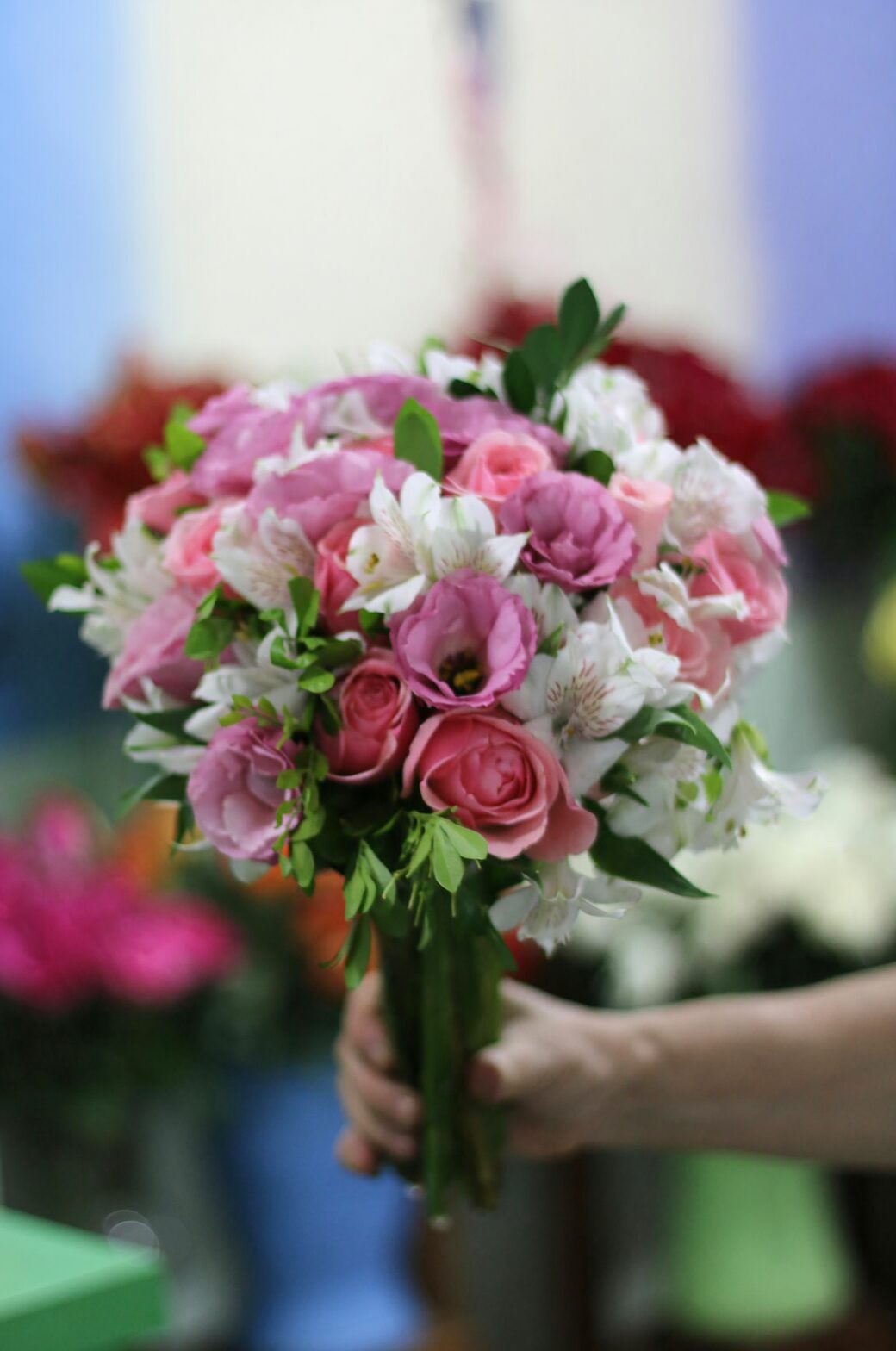
- The cut-flower moment: With sturdy, waxy blossoms and remarkable staying power, Cymbidium spikes became a florist’s dream—travel-ready, reliably elegant, and seasonally abundant from late autumn through spring.
Cool-growing by design: the Cymbidium toolkit
- Pseudobulbs as canteens: These water-storing structures stockpile moisture and nutrients, helping plants ride out short dry spells and support flower spikes. Think of them as green batteries powering future blooms.
- Strap-like, evergreen leaves: Arching fans form dense, fountain-like clumps that look lush even out of bloom.
- Bright light, cool nights: Flowering thrives with strong light that’s filtered from harsh summer sun, plus cool nights—an echo of their montane heritage. In autumn, brighter light and crisp evenings help initiate spikes.
- Air on the move: Fresh, steady airflow is Cymbidium’s best friend, keeping leaves dry and fungal issues at bay while supporting healthy gas exchange.
How a Cymbidium grows: sympodial choreography
Unlike a single-stem orchid that simply gets taller, Cymbidiums spread sideways in clumps—a growth habit called sympodial.

- New leads: Each season, a mature pseudobulb sends up new growths (“leads”) from its base. These mature into the next generation of pseudobulbs.
- Where flowers happen: Flower spikes arise from mature growths, not from baby shoots—so each year’s maturity matters.
- Division-friendly: Clumps can be split after flowering. A typical division keeps 3–4 healthy pseudobulbs so the plant rebounds quickly.
The bloom experience
- Season: Late winter to spring, just when interiors most need color.
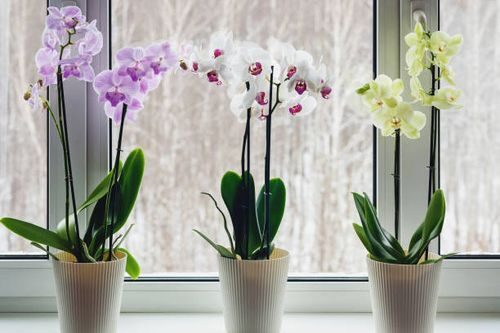
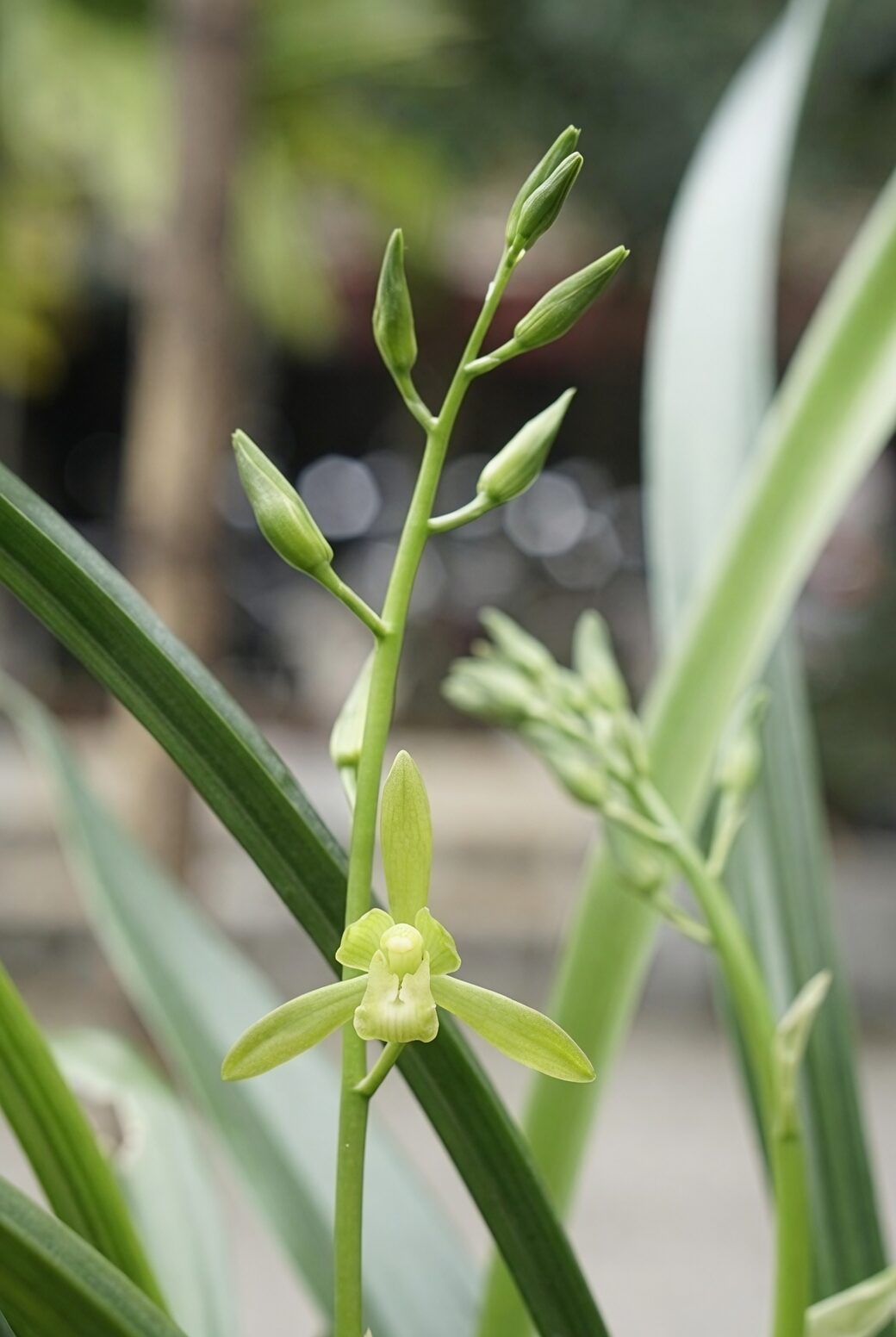
- Style and form: Upright to arching spikes hold multiple, waxy flowers that last for weeks. Colors span white, green, yellow, pink, red, and brown, including bicolors and patterned selections. Many cultivars are lightly to strongly fragrant.
- Smarter shopping: Choose plants with several open flowers rather than mostly tight buds. Buds are more likely to drop if home conditions differ sharply from the nursery or shop.
From heritage to hybrids: milestones on the trail
- Classical esteem: Cymbidiums were celebrated in East Asia for grace and purity—lauded by scholars and artists, and long cultivated for refined leaf and flower forms.
- The hybrid bloom boom: Introduction of large-flowered Himalayan species—most notably Cymbidium insigne—catalyzed modern breeding, yielding improved flower form, higher counts per spike, extended color range, and staggered bloom seasons. Recent breeding has also selected for compact sizes ideal for homes and improved tolerance to a wider range of household conditions.
- Why florists adore them: Strong spikes, transport resilience, and a naturally polished look make Cymbidiums a top cut-flower from late autumn into spring.
A grower’s guide (cool, bright, beautifully balanced)
Think “mountain morning”: bright but filtered, cool-to-mild temperatures, even moisture, and moving air.
Light
- Bright light to bright filtered sun. Morning sun is welcome; protect from scorching summer rays.
- In summer heat, provide about 50–60% shade. In autumn, shift to a brighter, airy spot to support spike development.
Temperature
- Ideal: about 10–25°C (50–77°F). Keep winter temperatures above 10°C (50°F).
- Cool nights especially help flower initiation; avoid hot, stuffy rooms.
Water and humidity
- Evenly moist, never soggy. Use a free-draining orchid mix.
- Typical rhythm:
- Spring and autumn: water around 2× per week.
- Summer heat: water thoroughly in the morning (and again in the evening as needed); pair with shade and brisk airflow.
- Winter: keep slightly moist; often every 4–5 days, avoiding saturated media.
- Humidity: likes it high—roughly 70–80% if possible. Raise humidity with trays or humidifiers and light misting 1–2× daily, but keep water out of the crown and ensure gentle airflow.
Potting mix and containers
- Use a fast-draining, bark-based orchid medium with optional additions like a touch of sphagnum, charcoal, fern fiber, and porous minerals (perlite/zeolite). Avoid regular potting soil.
- Many growers prefer a tall pot about 15 cm (6 in) wide and 20 cm (8 in) deep to suit the root system.
Feeding
- During active new growth, feed weekly with a dilute orchid fertilizer.
- During spike/bud initiation, continue light feeding; many growers keep weekly applications when growth is steady, pulling back toward monthly if growth slows.
- Stop fertilizing in winter or any time growth tapers markedly.
Repotting and division
- Best right after flowering (often around April). Refresh the mix yearly or when crowded.
- Let the mix dry slightly before repotting so roots flex rather than snap.
- For divisions, remove the spent spike first, then separate clumps into sections with 3–4 pseudobulbs; trim dead or rotten roots and pot in fresh medium.
Placement
- Indoors: bright east- or south-facing exposure with filtered light and good ventilation.
- Outdoors in warm seasons: bright shade with about 50–60% shading and strong airflow; move to brighter conditions in autumn to aid spike formation.
- Hardiness: frost-tender. Outdoors year-round mainly in USDA Zones 10–12; elsewhere, grow as a bright, cool houseplant or in a greenhouse/conservatory.
A simple year-round rhythm
- Spring: enjoy blooms; water ~2×/week; feed weekly; keep humidity and airflow steady.
- After flowering: prime time for repotting and division.
- Summer: shade 50–60%; water more often; mist to cool if needed; maximize ventilation; remove weak late-summer shoots unlikely to mature.
- Autumn: brighter and airy; water ~2×/week; steady care to support spike initiation.
- Winter: keep above 10°C (50°F); stop feeding; maintain slight moisture and avoid sogginess.
Health, pests, and a quick rescue kit
- Common issues: Anthracnose, leaf/black spot, and rust thrive in stale, damp air—improve ventilation, keep foliage dry, and remove affected tissue early.
- Pests: Scale, whiteflies, and aphids. Isolate and treat with horticultural oil or insecticidal soap; repeat to catch new hatchlings.
- Good news: Cymbidiums are generally non-toxic to people and pets, though nibbling any houseplant can cause mild stomach upset—keep spikes and leaves out of reach of determined chewers.
Cutting to the chase: tips for cut spikes
- Harvest when several flowers are open.
- Recut stems on a slant, place in fresh water, and keep arrangements cool with bright, indirect light.
- Change water frequently and avoid ethylene sources (like ripening fruit) to extend vase life.
Symbolism and the “language of flowers”
Cymbidiums carry a long cultural pedigree as emblems of elegance, refinement, and good fortune—associations nurtured by centuries of appreciation in Asia. While “flower language” is a poetic tradition rather than science, its roots run deep here: graceful carriage, winter-to-spring blooms, and refined fragrance made Cymbidiums the floral shorthand for cultivated taste and auspicious beginnings. Displaying one at New Year or gifting a spiking plant isn’t just decor—it’s a wish for dignity, prosperity, and beauty that lasts.
Why this orchid wins hearts (and winter windowsills)
- Cool-friendly: Many cultivars actually prefer cool nights, making them naturals for bright, lightly heated rooms and unheated conservatories.
- Long-lasting: A single spike can stay showy for weeks; a well-grown clump may carry multiple spikes.
- Forgiving, not fussy: Keep the balance right—bright filtered light, cool-to-mild temperatures, evenly moist airy media, and fresh air—and Cymbidium will meet you more than halfway.
From misty ridgelines to chic florist vases, Cymbidiums prove that mountain wisdom—stay cool, drink steadily, and stand in a good breeze—can look astonishingly glamorous.