
In a world of fussy cuttings, Pelargonium graveolens (the wonderfully rosy, citrusy “Scented Geranium”) is the friend who practically volunteers to clone itself—if you give it the right start. Think semi-ripe stems, a quick callus, ultra-draining grit, bright light, and a light hand with water. Here’s your propagation masterclass—from the perfect stem to post-rooting polish, with all the fixes when things go sideways.
The propagation sweet spot: stem maturity and timing
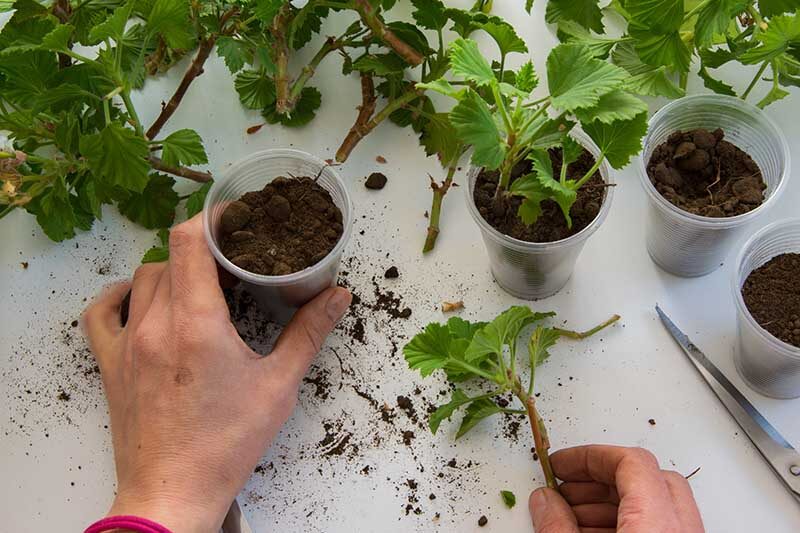
- Ideal cutting stage: Take non-flowering, semi-ripe shoots—the firm, green tips that aren’t yet woody. Avoid flower buds and very soft, sappy growth.
- Length and nodes: About 7–8 cm (2.8–3.1 in) long with 3–4 nodes. Keep 1–2 small leaves at the top; remove the rest.
- Best seasons:
- Spring to early summer: fast rooting under bright conditions.
- Late summer to early autumn: great just after shaping/pruning, before cool-season indoor life.
- Avoid extreme midsummer heat: this plant can go semi-dormant then; rooting slows and rot risk rises if media stay wet.
What to cut (and how to prepare it)
- Choose a healthy, sun-grown parent with firm, aromatic foliage.
- Use sterilized snips. Cut just below a node (where roots are most likely to form).
- Strip lower leaves and any flower buds. Leave a small top canopy (1–2 small leaves) to drive photosynthesis without over-transpiring.
- Optional precision: A tiny shallow slice on the underside just below a node can stimulate rooting—but keep it neat and minimal.
Callusing like a pro
Pelargonium cuttings root more cleanly when the cut end briefly dries to a matte finish.
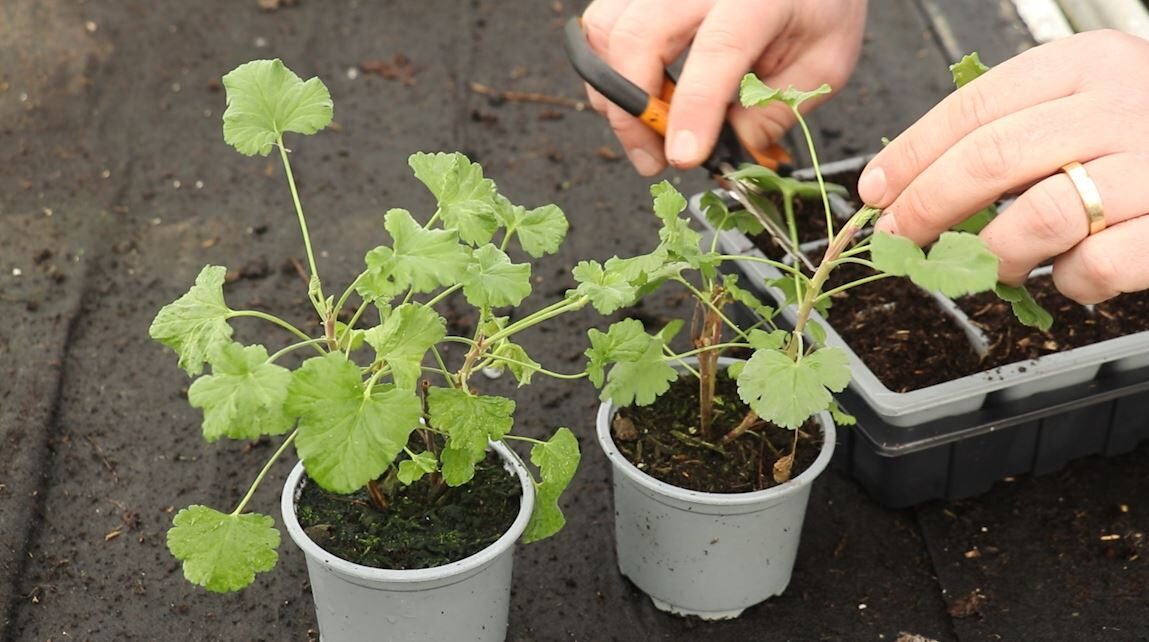
- Where: Bright shade with good airflow.
- How long: Typically 2–12 hours; up to overnight in very humid conditions. You’re aiming for “dry to the touch, not crusty.”
- Why it matters: A light callus reduces the chance of basal rot once inserted into the medium.
Ultra-draining rooting media (grit is your friend)
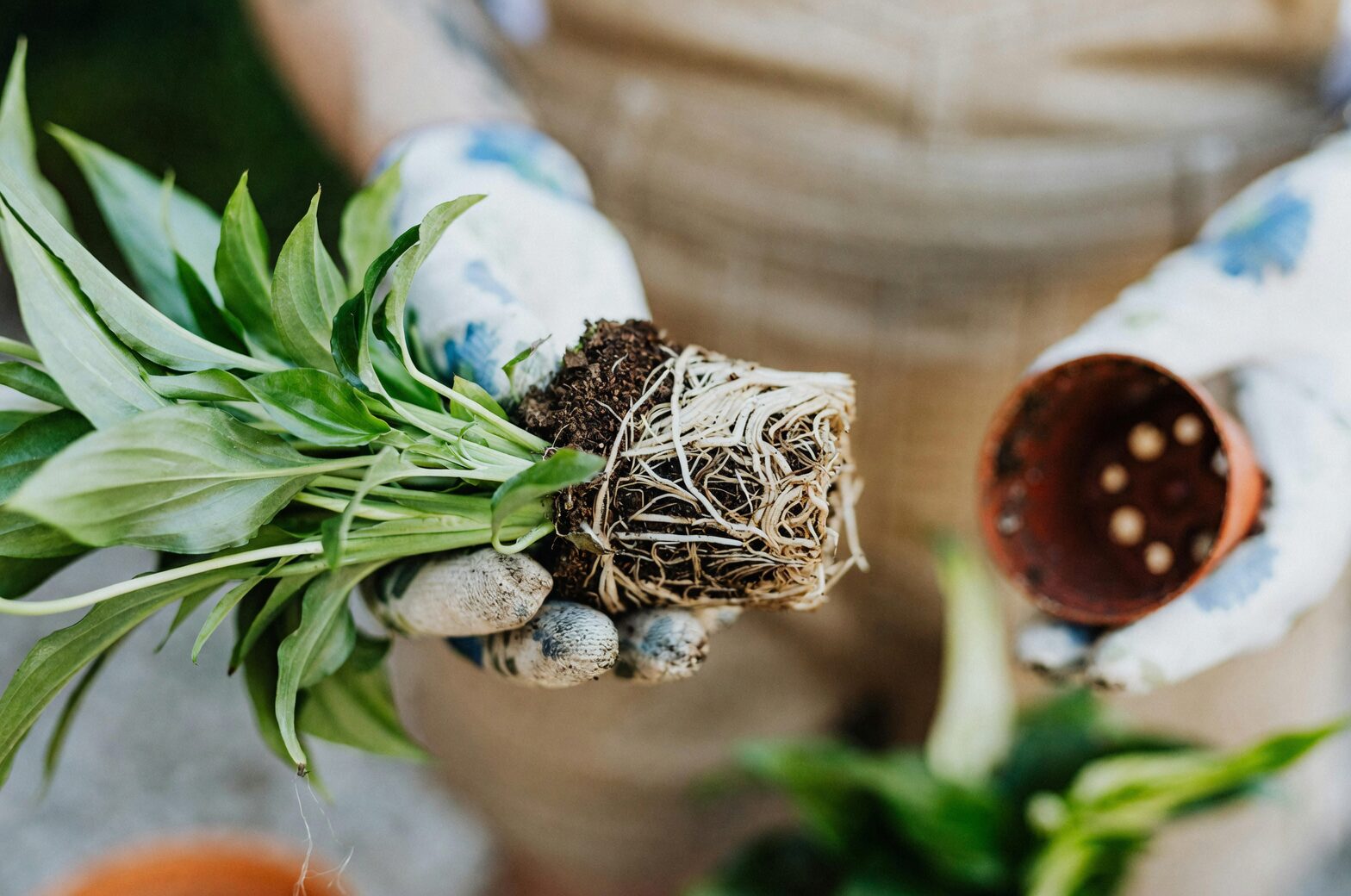
The single biggest success lever? Drainage. Choose sterile, airy media that resist staying wet.
- Reliable recipes:
- Straight coarse sand, or
- 1:1 perlite and coarse sand, or
- 2 parts perlite : 1 part fine bark or coir
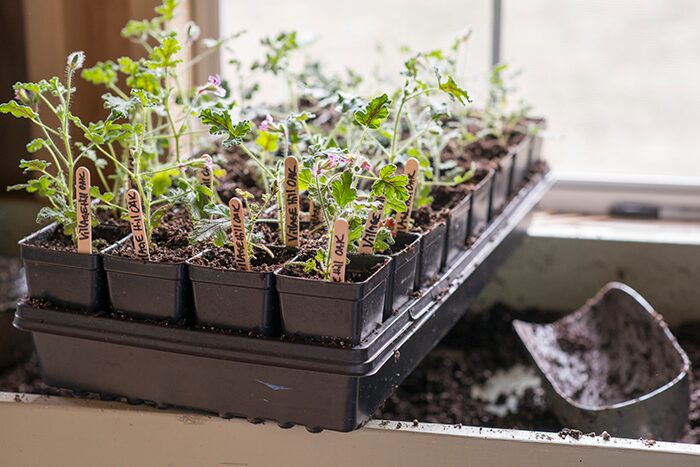
- Pre-moisten so it’s barely damp, not soggy. Use small pots or modular trays with excellent drainage.
- Bonus hygiene: Use clean containers and label each cultivar.
Light, temperature, humidity, airflow: hit these targets
- Light: Bright, indirect light or very bright shade. Avoid hot, direct midday sun on unrooted cuttings.
- Temperature: Mild is best—around 15–20°C (59–68°F). Warm and stable, not hot. Keep above about 7°C (45°F).
- Humidity: Moderate (roughly 50–65%) with airflow. A loose humidity dome or bag with vents can help early on—no dripping condensation.
- Airflow: Gentle movement deters Botrytis and leaf spot. Avoid misting foliage; this plant dislikes staying wet.
Rooting hormone: when and how to use it
Rooting hormone is optional but helpful, especially for slightly older or thicker stems.
- Use a softwood-strength product (e.g., IBA powder/gel). Lightly moisten the cut end, dip, then tap off excess.
- Don’t overdo it—the goal is a whisper of hormone, not frosting.
- Always follow label directions and local regulations.
Sticking the cuttings
- Use a dibber (chopstick/pencil) to make a hole so the hormone doesn’t rub off.
- Insert to bury at least one node; firm the medium gently around the stem.
- Water once to settle, then let the surface just barely dry before the next sip.
The waiting window: 2–4 weeks to roots
- Expect roots in about 3 weeks under good light and mild temperatures.
- Signs of success: Fresh leaf growth, resistance to a gentle tug, or tiny roots visible at drainage holes (if in clear cells).
- Resist frequent tugging; it breaks fine new roots.
Potting-on and post-rooting care
When roots are 2–4 cm long and branching:
- Pot size: Start small—7–9 cm (3–3.5 in) pots. Gradually size up.
- Growing mix: Very free-draining. A light potting mix cut with coarse sand or perlite works well. Loam-based growers can use 2 parts garden loam : 1 part leaf mold/compost : 2 parts coarse sand.
- Light: Step up to strong light or full sun gradually over 7–10 days.
- Watering rhythm: Water thoroughly, then allow the top of the mix to dry before watering again. Never leave pots standing in water.
- Feeding: Begin once established and pushing new growth (often 2–3 weeks after potting). Feed during active growth every 10–14 days with a balanced liquid fertilizer. Pause during winter or heat-induced slowdowns.
- Pinching: When plants reach 12–15 cm (5–6 in), pinch tips to encourage branching.
- Placement: Sunniest window indoors; outdoors, full sun to bright light with airflow. In extreme summer heat, offer bright shade and water early in the morning.
Special notes on seasonal behavior
- Heat pause: In peak heat, scented geraniums often slow down. Reduce watering and feeding; keep them airy and bright-shaded. Overwatering during this semi-dormancy triggers root troubles and leaf drop.
- Cold sensitivity: Frost tender. Keep above about 7°C (45°F) in winter.
Troubleshooting clinic
- Base turns black/mushy or cutting collapses:
- Likely causes: No callus time, medium too wet/heavy, stagnant air.
- Fix: Recut, re-callus, switch to sand/perlite, water less often, increase airflow.
- Leaves yellow or drop:
- Causes: Not enough sun, overwatering, heat stress, exhausted/compacted mix, or swings between very dry and very wet.
- Fix: Brighter light, let mix dry a bit between waterings, ensure free drainage, refresh into airy mix.
- Gray fuzz (Botrytis) or spots:
- Causes: Humid, stagnant air and wet foliage.
- Fix: Ventilate, avoid overhead watering, remove affected leaves promptly.
- No roots after 5+ weeks:
- Causes: Too cool, too dark, cutting too woody, medium waterlogged.
- Fix: Move to brighter conditions, keep 15–20°C (59–68°F), refresh the cut below a node, use a touch of hormone, lighten the medium further.
- Persistent wilting:
- Causes: Too many leaves/buds draining energy, light too intense for an unrooted cutting, humidity too low.
- Fix: Reduce leaf area, shift to bright shade, use a vented dome early on (no condensation).
- Pests (aphids, spider mites, whiteflies, mealybugs):
- Manage early with a firm rinse, insecticidal soap, or horticultural oil; isolate heavy infestations and follow label directions.
Variations that work
- Single-node (leaf-bud) cuttings: Economical and surprisingly effective. Bury the node; keep conditions as above.
- Water rooting: Possible, but success rates are often lower than in gritty media and stems can go slimy. If you try it, change the water regularly and pot into a free-draining mix as soon as roots form.
Repotting rhythm for young plants
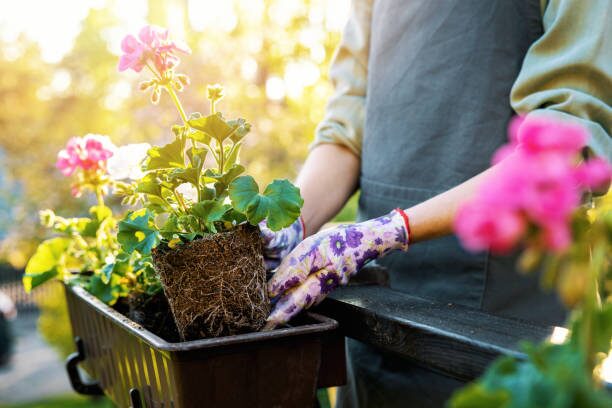
- Repot about yearly, often after a shaping prune in late winter or in late summer. Refresh roughly half the old mix, trim long fibrous roots lightly, and step up only one pot size at a time.
- After heavy pruning/repotting, give bright shade/partial shade to recover before returning to full sun.
Why grow (and propagate) Scented Geraniums?
- Origin: Southern Africa’s Cape region; sun-loving, aromatic, and delightful in containers and bright windows.
- Uses: Leaves scent rooms and sachets; they also infuse sugars, syrups, teas, jams, and dairy with a rose-citrus lift. “Geranium oil” in perfumery often comes from Pelargonium species like this one.
- “Mosquito plant” marketing: Real-world repellency varies by cultivar and conditions—enjoy the fragrance first, and consider any insect-deterring effect a bonus.
A quick word on symbolism (flower language)
Scented geraniums are often linked with admiration, comfort, happiness, love, and the hope of reunion. Like much Victorian “flower language,” these meanings grew from cultural associations rather than botany—fragrance evoking memory and consolation, and the plant’s generous, easily shared cuttings standing in for friendship and affectionate regard. Take it as poetic shorthand: when you gift a rooted sprig, you’re sending a scented promise of care and connection.
—
With the right stem at the right time, a short callus pause, gritty media, bright light, and restrained watering, Pelargonium graveolens roots with cheerful reliability. Multiply your favorite rose-scented cultivar, fill a sunny balcony or windowsill, and pinch your way to bushy, fragrant abundance—season after season.