Imagine a gray afternoon in January. The garden sleeps, the streets exhale cold, and on your windowsill a little begonia throws open a carnival of color—petals like sugared confetti, leaves tidy and emerald, a buoyant defiance of winter. That small miracle traces back to a single, unlikely spark: an island begonia that bloomed when the rest of the plant world shut its eyes.
The island secret that changed winter
In the late 19th century, begonia breeders met a botanical revelation: Begonia socotrana, native to the otherworldly island of Socotra in the Arabian Sea, insisted on blooming in the shortest days of the year. That “winter-bloom” impulse was gold in an era when indoor plants were status symbols and winter flowers were rare treasures.
Breeders crossed B. socotrana with their sumptuous tuberous begonias (Begonia × tuberhybrida, itself a complex hybrid). The results were jaw‑dropping: compact plants bursting with color right through winter. The new class earned a Latin nod to its season—×hiemalis, “of winter”—and by the 1880s names like ‘John Heal’ were already making waves in parlor windows.
Two winter lines, two personalities
Victorian ingenuity quickly split along two related paths:
- ×hiemalis: B. socotrana × B. ×tuberhybrida produced semi-double to double blossoms and vibrant palettes. Early plants could be finicky—sometimes even forming a small tuber—but the promise was undeniable.
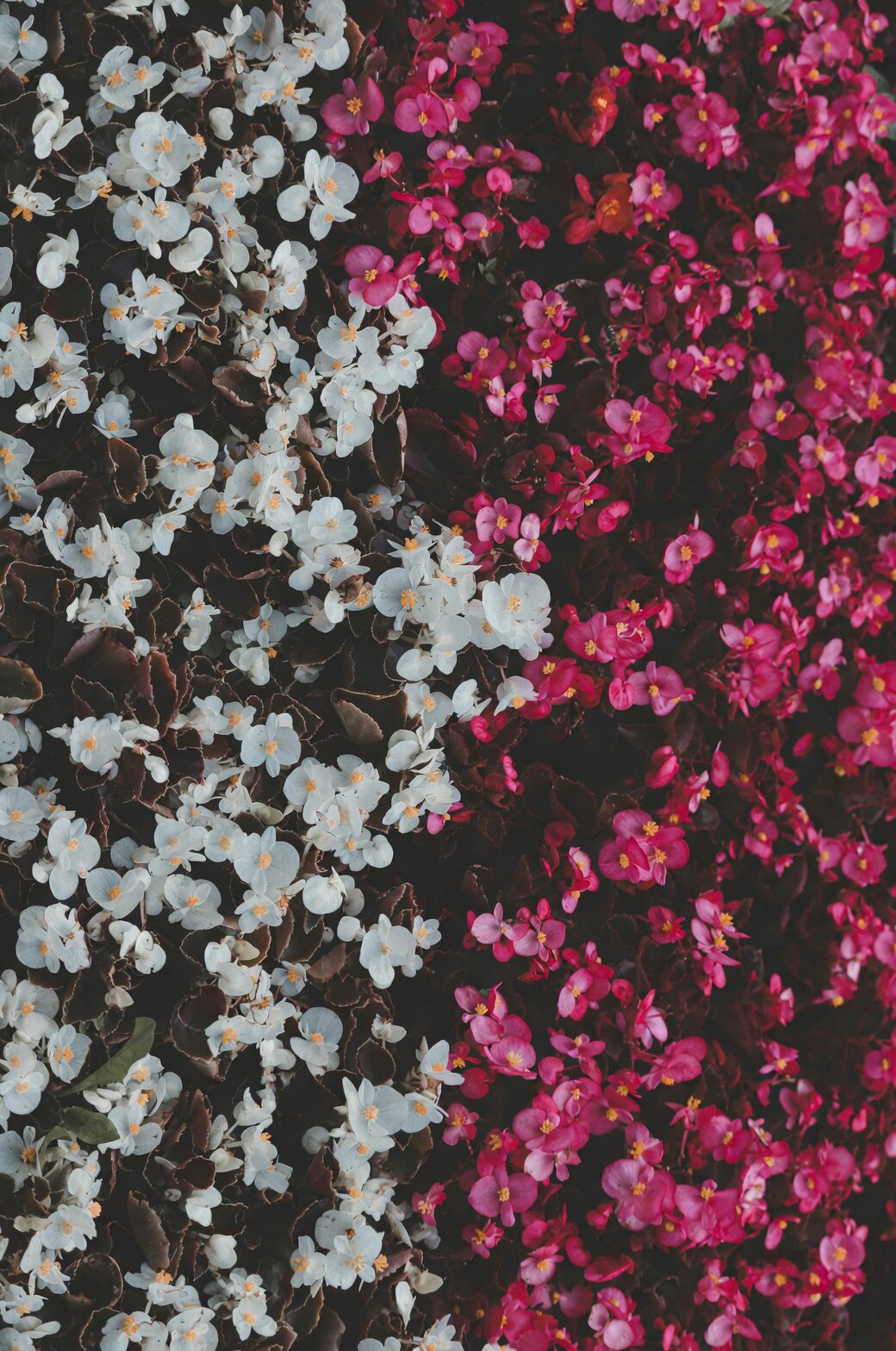
- ×cheimantha: B. socotrana crossed with B. dregei yielded daintier plants with single flowers in soft pinks and whites. Victor Lemoine’s famed 1891 ‘Gloire de Lorraine’ made this branch a sensation.
The market kept the two groups conceptually tidy for a while, but history prefers a tangle. Breeding crisscrossed for decades, polishing form, color, and timing.
From Elatior to Rieger: the 20th‑century refit
A breakthrough landed in 1906 when ‘Elatior’ debuted—neater growth, better poise. Then mid‑century, German breeder Otto Rieger championed a new wave of stronger, more reliable winter bloomers. So popular were these introductions that “Elatior begonia” and “Rieger begonia” became the everyday names we still use.
Botanically speaking, today’s plants are best called Begonia × hiemalis (Elatior Group). In shops, you’ll also see “Begonia elatior”—a handy label, but less precise. Either way, these are wholly man‑made, refined for modern indoor life rather than discovered in the wild.
What lives inside an Elatior begonia
Think of Begonia × hiemalis (Elatior Group) as a well-edited duet between its ancestors:
- From B. socotrana: the winter-blooming rhythm—short days and cool-warm indoor temperatures coax long flowering runs from late autumn through spring.
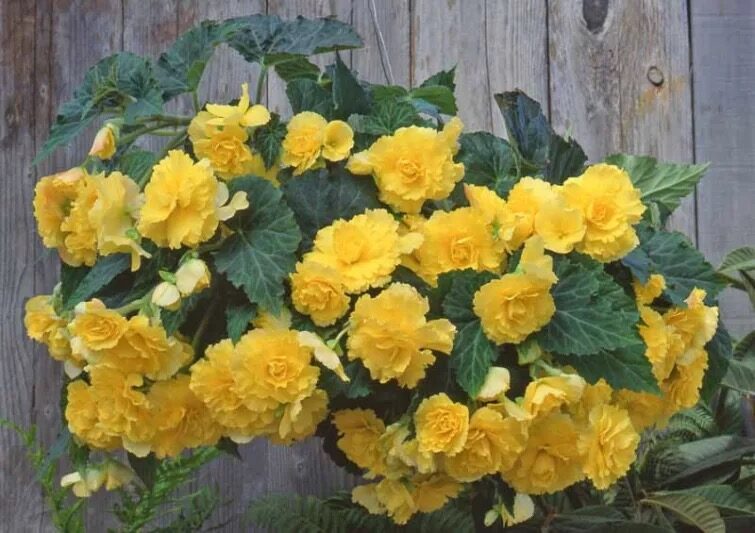
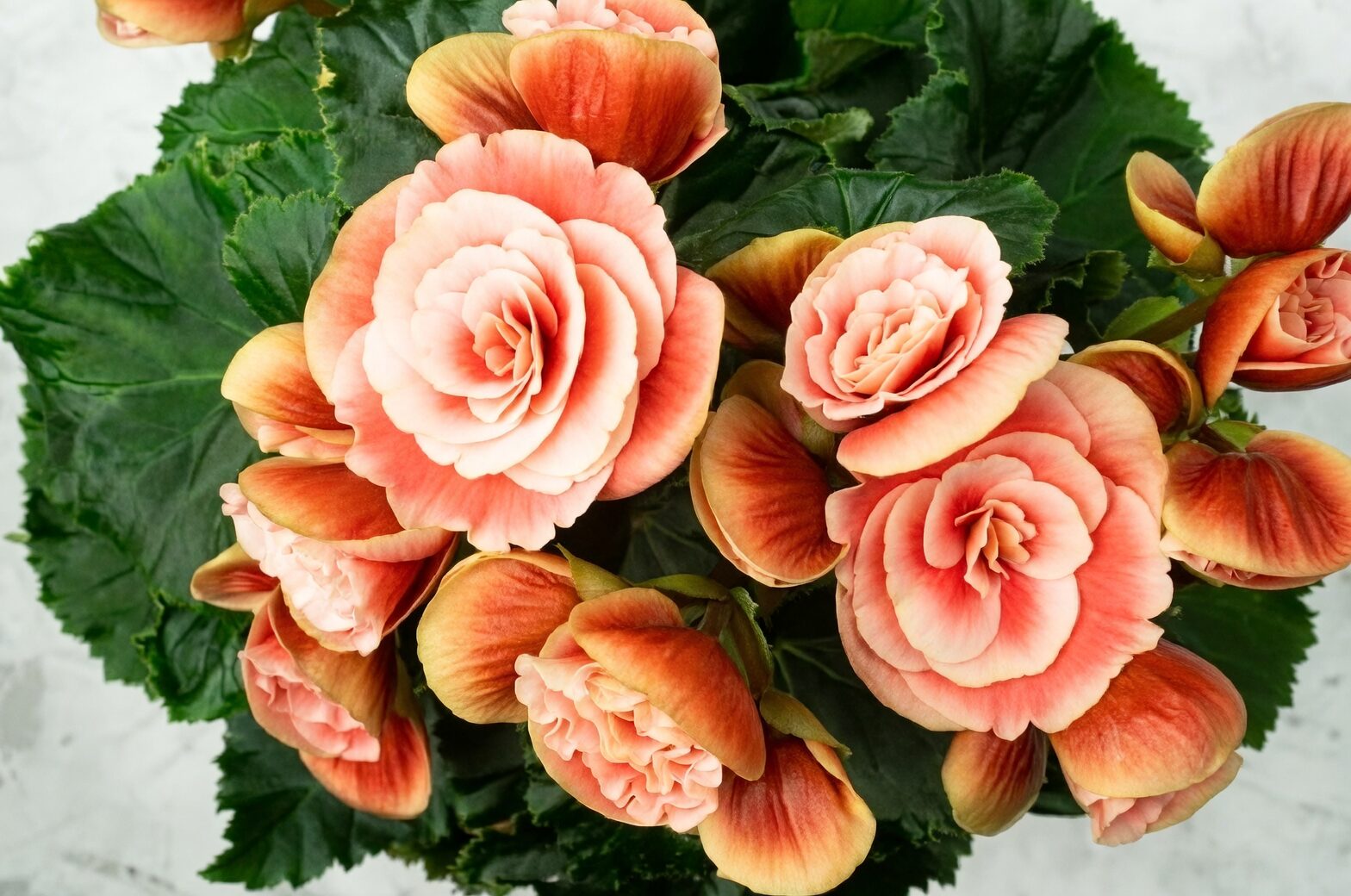
- From tuberous lines: extraordinary color and petal count—bold reds, corals, pinks, oranges, yellows, and whites, with single to luxuriously double forms.
Modern Elatior begonias are compact, upright-to-mounding, and fibrous‑rooted (not tuberous). That last detail matters: they don’t “sleep and return” on a big storage tuber like classic tuberous begonias. Their stamina depends on steady care and encouraging fresh basal shoots after each flush of bloom.
Meet the plant on your sill
- Habit and size: tidy mounds about 20–40 cm tall and wide; some cultivars happily cascade in hanging baskets.
- Leaves: narrow‑ovate to lanceolate, deep green and glossy. If light is weak, stems stretch and leaves pale.
- Flowers: clusters of showy singles to doubles in jewel tones. Regular deadheading keeps them coming.
How breeders would grow it (so you can, too)
Treat it like a cool-season star built for bright, gentle light and even comfort.
- Light
- Bright, filtered/indirect light; an east window is perfect.
- South windows are fine with a sheer curtain. Avoid harsh midday sun.
- Too little light = legginess and lackluster blooms.
- Temperature
- Best at 15–20°C (59–68°F).
- Keep above 10°C (50°F)—ideally above 12°C (54°F) in winter.
- Prolonged heat above 32°C (90°F) can trigger wilting and bud drop.
- Water and humidity
- Aim for evenly moist, never soggy. Water thoroughly, then let the top of the mix dry slightly.
- Don’t leave water in the saucer—stem/root rot and yellowing follow fast.
- Inconsistent watering and very dry air commonly cause brown leaf tips and bud drop.
- Gentle airflow helps; avoid stagnant humidity on the leaves.
- Soil and potting
- Rich but airy, slightly acidic potting mix. Think peat/leaf‑mold or compost base with coarse sand or perlite for drainage.
- Use snug pots (common sizes are 12–15 cm; baskets 15–18 cm). Oversized pots stay wet too long.
- Feeding
- Every 2 weeks in active growth with a balanced liquid feed.
- When buds form, add 1–2 bloom‑booster feeds (for example, a 15‑15‑30‑type formulation).
- Pause feeding during hot spells if the plant looks stressed.
- Pruning and shaping
- Deadhead promptly to prevent gray mold and to keep flowers coming.
- After a main flush, lightly cut back flowering stems, leaving about 4–5 nodes to spark fresh basal shoots.
- Pinch tips two weeks after potting to encourage branching; the pinchings make great cuttings.
- Placement
- Indoors on a bright sill or desk; outdoors only in frost-free weather in bright shade with shelter from wind.
- Not frost hardy (roughly USDA Zone 10–11 for outdoors).
After the big show: how to keep it going
Unlike tuberous begonias, Begonia × hiemalis doesn’t retreat into a storage organ. To prevent post-bloom fade:
- Remove spent flowers as they pass.
- After the main flush, give a light trim to older flowering stems (leave several nodes).
- Maintain bright, indirect light and even moisture while new basal shoots rise.
- Resume balanced feeding as growth restarts.
Handled this way, a good plant can bloom on and off from winter into spring, with encore shows later under favorable conditions.
A gardener’s calendar
- Late autumn–winter: brightest indirect light possible; keep above 12°C (54°F). Expect buds and bloom.
- Spring–early summer: 2–3 waterings per week may be needed with rising light and growth; feed every 2 weeks.
- High summer heat: shield from temperatures above 32°C (90°F), keep evenly moist, improve airflow, and pause fertilizer if stressed.
- After flowering: repot if rootbound; refresh the mix and trim lightly to encourage new shoots.
Troubleshooting, pests, and disease
- Bud drop or crispy tips: often inconsistent watering or very dry air.
- Leggy, pale growth: insufficient light.
- Fungal foes: powdery mildew, leaf spot, and Botrytis (gray mold) thrive in still, damp air. Space plants, ventilate gently, water the soil (not the leaves) early in the day, and remove spent flowers promptly.
- Pests: watch for spider mites and aphids; treat early with insecticidal soap or horticultural oil and repeat as needed.
Propagation like a pro
- Cuttings: non‑flowering tip or stem cuttings root in about 3 weeks in a free‑draining medium under bright shade and gentle warmth. Leaf‑with‑petiole cuttings also work for some cultivars.
- Seed: dust‑fine—surface sow from autumn through spring at about 16–18°C (61–64°F). Germination often in 1–2 weeks; plan roughly 5–6 months to first flowers. Fun fact: the seeds are famously tiny—often cited around 65,000 per gram.
Choosing a plant worth writing home about
- Look for a full, compact shape with deep‑green leaves.
- Pick one loaded with buds and a few open flowers—proof it’s ready to perform at home.
- For hanging baskets, choose an evenly filled rim with plenty of showing color.
Safety, gifting, and the “language of flowers”
Elatior/Rieger begonias are classic winter gift plants precisely because they bloom when days are shortest. Over time, they’ve gathered the symbolic halo of gentle affection and tender regard—a cheerful promise in cold months. That “flower language” is more cultural shorthand than ancient code, but its meaning fits: a luminous, steady companion through winter.
Do keep them out of reach of pets and children. Begonias are generally considered toxic if eaten and can cause mouth irritation and gastrointestinal upset, with higher risk sometimes noted for underground parts in other begonia types.
Quick facts and curiosities
- Scientific standing: Begonia × hiemalis (Elatior Group)—a cultivated hybrid group bred for indoor pots. You’ll often see the trade name “Begonia elatior.”
- Performance sweet spot: cool-warm rooms with bright filtered light; best blooms from winter into spring.
- Form factor: compact, fibrous‑rooted, made for windowsills, tabletops, and hanging baskets.
Coda: winter’s spark on a windowsill
From B. socotrana’s island insistence on winter bloom to the luxuriant colors borrowed from tuberous lines—and the mid‑century refinements of Elatior and Rieger breeders—the modern Begonia × hiemalis is a small act of timing magic. Give it bright, gentle light, even moisture, and cool comfort, and it will repay you the way its ancestors promised: with a long, cheerful cascade of color exactly when you need it most.