Imagine a plant that brings rainforest softness to your shelves, loves life behind glass, and plays nicely with curious paws. Meet Fittonia verschaffeltii—better known as the nerve plant or mosaic plant—a pet-safe stunner that turns any nook into a lush, low-growing tapestry. Here’s how to style it beautifully, keep it out of chomp range, and build humidity islands that coddle its delicate leaves without risking paws, tails, or whiskers.
Meet Fittonia: the gentle, pet-safe understory star
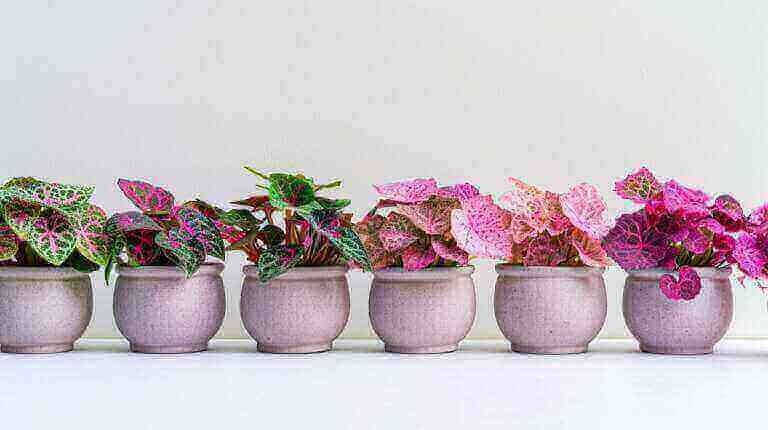
- What it looks like: Soft, thin leaves etched with bold white, pink, or red veining, depending on the cultivar—like a living map.
- Size and habit: Typically 10–20 cm (4–8 in) tall, spreading 20–30 cm (8–12 in) with a creeping, mat-forming habit. Stem tips root at nodes, so it thickens readily.
- Origin: Warm, humid rainforest regions of Peru, family Acanthaceae.
- Pet safety: Generally considered non-toxic to cats and dogs. Nibbling may still cause mild stomach upset in sensitive pets, so prevention is wise.
- Temperament: Warm-loving, shade tolerant, happiest in stable humidity and bright, filtered light. Leaves bruise easily—gentle handling wins.
Pet-safe placement ideas that flatter your space
1) Out-of-paw perches (but not launchpads)
- Wall shelves or picture ledges set at least one leap away from furniture edges.
- High cabinets with doors or risers inside glass-front bookcases—light still filters in, and whiskers stay out.
- Hanging planters near bright windows softened by a sheer curtain. Keep at least a paw’s length from curtain rods or tall furniture cats might use as springboards.
2) The “behind-glass” glow-up
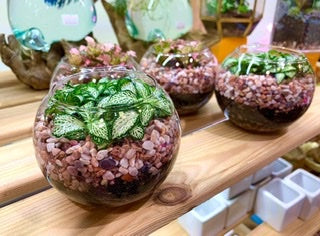
- Terrariums and Wardian cases are Fittonia’s happy place. They lock in humidity, protect foliage from batting, and look like jewel boxes.
- Use bright, indirect light; avoid direct sun that overheats glass.
- Vent occasionally (or choose a case with a small vent) to prevent stale air and leaf rot.
3) Draft-free, humidity-friendly nooks
- Near bright windows with a sheer curtain: perfect filtered light without harsh rays.
- Bathrooms with a window or bright ambient light—steamy, stable, and pet-safe, provided there’s no cold winter draft.
- Keep away from vents, radiators, and AC units. Sudden hot/cold gusts cause leaf curl, crisping, and drop.
4) Desks and side tables—with topple-proofing

- Choose wide, heavy ceramic pots and use non-slip pads beneath saucers.
- Avoid wobbly stands or skinny pedestals, especially where zoomies happen.
- Tuck trailing stems inward, away from table edges that tempt a curious swat.
Build “humidity islands” without risking whiskers
Fittonia adores 50–70%+ humidity. You can create a cushy microclimate that’s safe for pets and furniture.
Pebble tray clusters (cat-savvy version)
- Use a wide, sturdy tray lined with pebbles or LECA; add water to just below the top of the stones.
- Set pots on the pebbles—never sitting in water—to boost ambient humidity.
- Add a mesh or grate over stones to discourage curious drinking or paw-fishing, and keep the tray clean and fertilizer-free.
- Group a few humidity-lovers together to raise local moisture without soaking the room.
Small humidifier etiquette
- Place a compact humidifier 0.5–1 m (1.5–3 ft) from your Fittonia on low to medium mist—enough to lift humidity, not drench leaves.
- Keep cords tidy and out of batting range; use distilled water to prevent residue.
- Skip essential oils entirely—many are unsafe for cats and unnecessary for plants.
Terrarium recipe for the win
- Layer: drainage pebbles, breathable barrier (mesh), humus-rich mix (peat or leaf mold with perlite/coarse sand).
- Plant Fittonia slightly high so leaves don’t rest on damp glass.
- Place in bright, filtered light; open the lid briefly each week to refresh air if fully closed.
Chew-prevention that’s kind and effective
Design the space so plants aren’t cat toys
- Avoid placing Fittonia right beside the couch back or a windowsill—classic launchpads.
- Use cloches, mesh domes, or acrylic display boxes on desks and shelves for a clear, chew-proof barrier.
- Hang plants high enough that dangling vines don’t act like feather wands.
Offer irresistible “legal greens”
- Grow a pot of cat grass in a sunny spot your pet already loves.
- Rotate interactive play and provide scratch posts/perches to reduce boredom nibbling.
Gentle training and smart surfaces
- Reward “leave it” with treats and praise when your cat bypasses the plant.
- Place double-sided tape strips on the shelf beside the pot (not on the plant or soil). Most cats dislike the sticky feel and keep their distance.
What not to do
- Don’t spray deterrents, chili, vinegar, or citrus oils on Fittonia—its leaves are delicate, and many scents/oils aren’t safe for cats.
- Avoid sharp deterrent mats; choose gentle barriers and placement instead.
The quick-care recipe for lush, map-veined leaves
- Light: Bright, indirect light to partial shade; a curtained window is ideal. Avoid harsh midday sun that scorches.
- Temperature: Best at 18–25°C (64–77°F); keep above 16°C (61°F), especially in winter.
- Humidity: Aim for 50–70%+. Mist the air around the plant during dry spells, but avoid leaving water on leaves overnight.
- Watering: Keep the mix evenly moist—never bone-dry, never soggy. Dry spells cause curling, wilting, and leaf drop; waterlogging leads to yellow, soft leaves and rot. In winter, water a bit less, at midday, and maintain warmth above 16°C.
- Soil & pot: A rich, humus-heavy, well-drained mix (peat or leaf mold with perlite/coarse sand). Use a pot with drainage and empty saucers after watering.
- Feeding: Spring through summer, feed every 2 weeks with a diluted, balanced fertilizer (e.g., 20-20-20). Start once new growth appears and avoid splashing fertilizer on leaves.
- Pruning: Pinch tips to keep it compact and bushy; remove yellowing leaves promptly.
- Repotting: Refresh annually in spring. Commonly grown in 12–15 cm (4.7–5.9 in) pots, often with several plants per pot for a carpeted look. Trim leggy growth and divide if you want more plants.
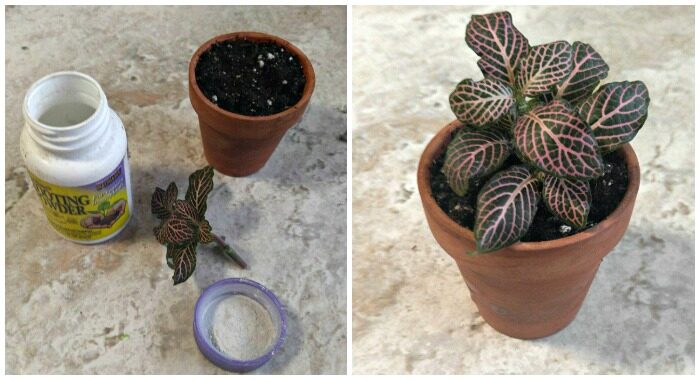
- Propagation: Very easy. In spring, take 10 cm (4 in) tip cuttings with 3–4 nodes, remove lower leaves, let the cut end dry briefly, and insert into moist peat-based mix or sand. Keep around 20°C (68°F); roots form in 2–3 weeks.
Troubleshooting and pet-safe fixes
- Curling leaves: Usually low humidity or the mix got too dry; occasionally from roots stressed by constant sogginess. Restore even moisture and raise humidity.
- Yellow, soft leaves: Back off watering and check for poor drainage or compacted soil.
- Pests (scale, spider mites, aphids): Improve humidity and airflow. Rinse foliage gently, then treat with insecticidal soap or horticultural oil—pet-safe when used as directed. Always test on one leaf first.
Styling inspiration for a pet-friendly home
- The rainforest vignette: A shallow bowl with multiple Fittonia cultivars (white, pink, red veining) under a glass cloche—mini jungle, zero nibble risk.
- The bright-but-gentle window: A sheer-curtained east window with Fittonia on a wide, secure ledge, elevated from launchpads; a pebble tray below, grouped with other humidity-lovers to share the moisture.
- The desk companion: A heavy ceramic pot on a non-slip mat inside an acrylic display cube—clean lines, lush color, safe from playful swats.
A note on meaning: the “living map” of wisdom
Fittonia is sometimes linked with Virgo and described as symbolizing rationality and wisdom—an association inspired by its dramatic netted veins that resemble a clearly charted plan. In the language of flowers, this translates to thoughtful order and attentive care, which suits a plant that rewards steady, consistent conditions over drama.
Final paws-and-petals pointers
- Non-toxic doesn’t mean snack time. While Fittonia is generally safe for cats and dogs, any plant matter can cause mild stomach upset in some pets—so lean on smart placement, barriers, and enrichment to prevent chewing.
- Stability is everything. Bright, indirect light; steady warmth above 16°C (61°F); and humid air will keep those delicate, map-veined leaves perky and gorgeous.
- When in doubt, glass it. Terrariums and cases give Fittonia its dream climate and your pets a safe, look-don’t-touch gallery.
With a few pet-savvy tweaks, Fittonia verschaffeltii becomes the easiest “wow” in your home—lush, low, and endlessly pattern-packed, without risking paws or whiskers.