
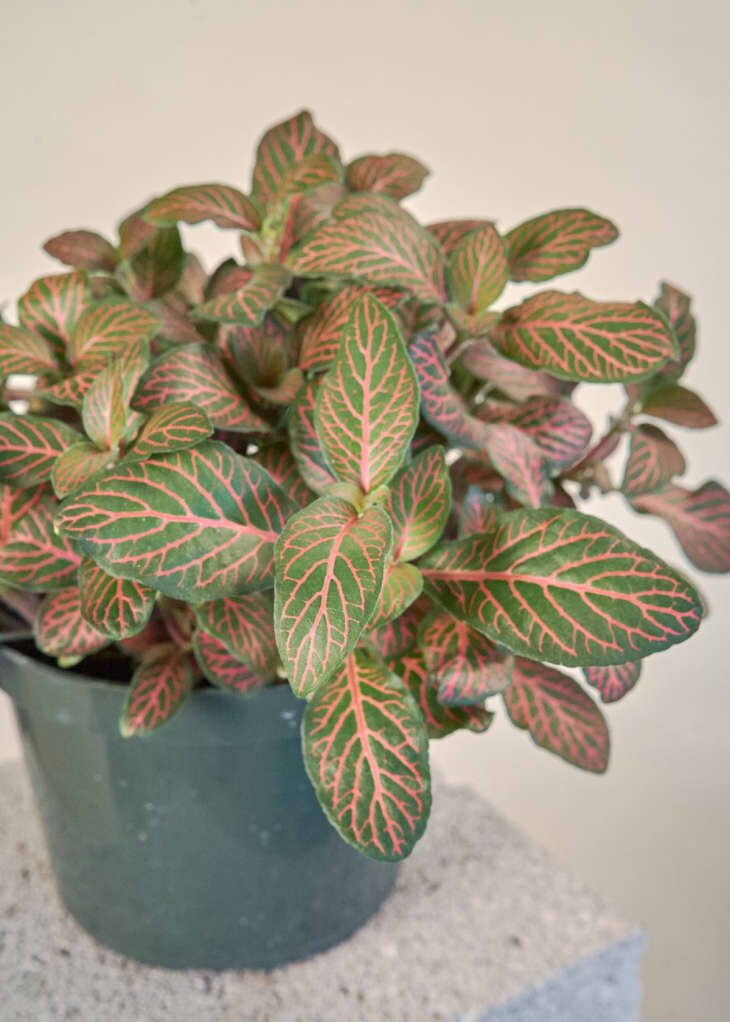
If your Fittonia verschaffeltii (nerve plant) is dramatically drooping, don’t panic—this rainforest native is famous for the “fainting couch” act and just as famous for bouncing back fast when you act smartly. Here’s your quick-action rescue plan, followed by a future-proof routine so you can retire your emergency watering can for good.
First aid: the 15-minute hydration triage
Think like a paramedic: assess first, treat second. Droop can come from bone-dry roots, soggy roots, heat stress, or all three.
Step 1: Speed-check soil moisture
- Finger test: Press a finger 2–3 cm (about 1 in) into the potting mix.
- Feels dry and the pot is very light? It’s drought droop.
- Feels wet or cool and heavy? It’s waterlogging/low-oxygen stress.
- Feels slightly moist but the plant still droops? Likely heat stress or low humidity.
Also peek for:
- Water pooling in the saucer
- A pot without drainage (deal-breaker)
- Hot window glass or direct sun hitting tender leaves
If it’s bone-dry: rehydrate without shocking
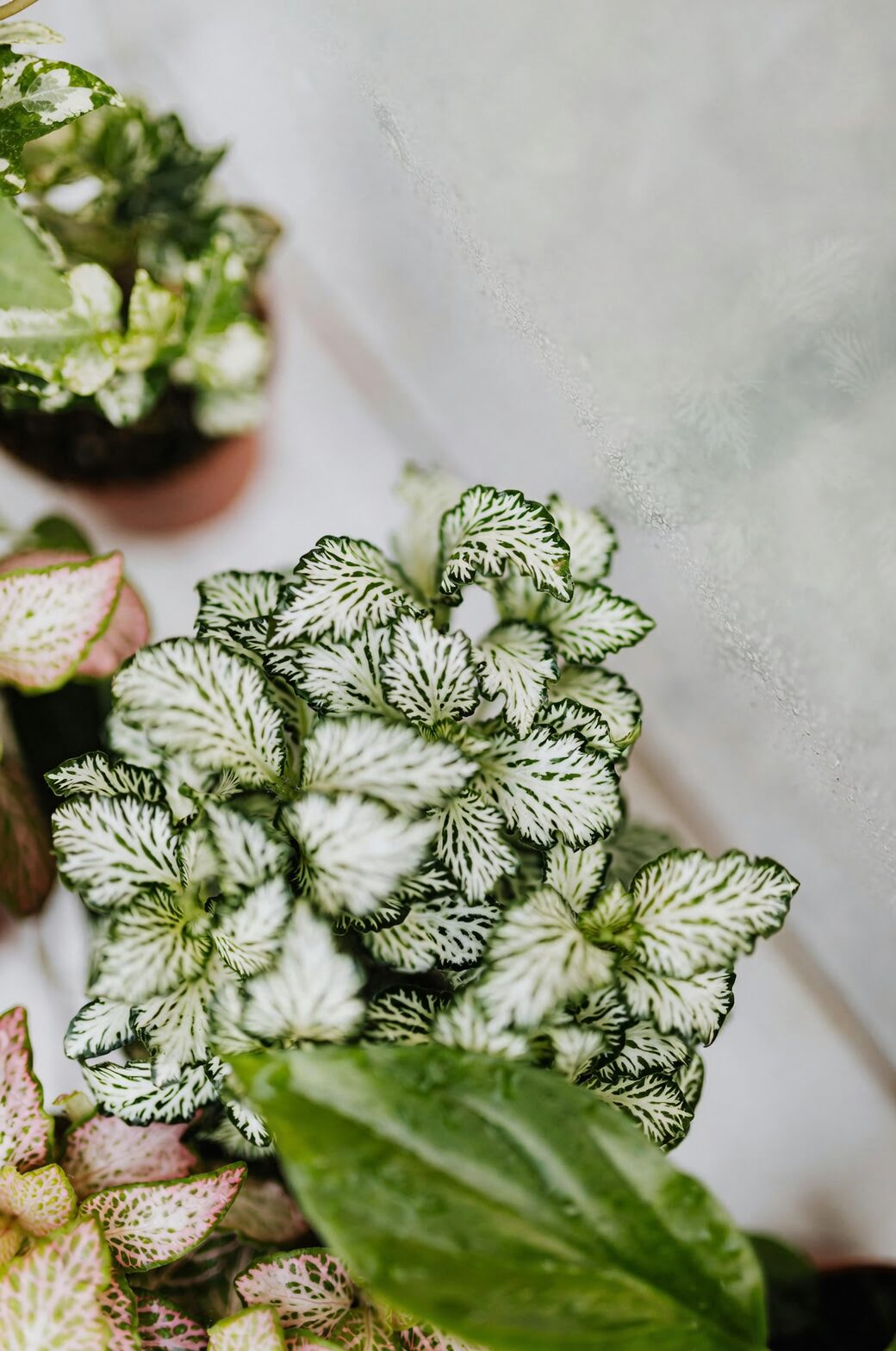
- Bottom-soak: Stand the pot in a bowl of lukewarm water for 10–20 minutes so hydrophobic mix can re-wet evenly. Stop once the top feels evenly moist.
- Drain well: Let excess water escape fully; never leave the pot standing in water.
- Gentle leaf cool-down: Move to bright, indirect light away from hot glass. Mist the air around the plant, not the leaves directly (or do it early enough that leaves dry before night).
- Expect a recovery within hours; full turgor often returns by morning.
If it’s soggy: oxygen and gentle drying
- Drain immediately: Empty the saucer, tip the pot slightly to help excess water escape.
- Wick moisture out: Tuck a corner of paper towel at the drainage hole to draw out extra water.
- Improve airflow: Place in bright, filtered light with gentle air circulation (not a cold draft).
- Spot-prune mushy stems/leaves: Remove soft, yellowing, or blackened bits to curb rot.
- If the mix smells sour or roots look brown/mushy, consider an urgent repot into fresh, well-drained mix (see “Should you repot?” below).
If it’s heat stress or low humidity: cool and cushion
- Leaf cool-down (no temperature shock): Move to a bright, shaded spot at 18–25°C (64–77°F). Avoid direct sun and hot or cold drafts.
- Humidity boost to 50–70%+: Use a humidifier, or set the pot on a pebble tray with water below the pot’s base. You can also give it a short “spa break” in a naturally humid bathroom with bright, filtered light.
- Water the soil only if the top 2–3 cm are no longer slightly moist.
Soil moisture checks that actually work
- The depth test: Water only when the top 2–3 cm feel just starting to dry; aim for “evenly moist” (not wet, not dust-dry).
- Lift test: Learn the pot’s “heft” when just-watered vs. ready-for-water. It’s surprisingly accurate.
- Skewer method: Insert a wooden skewer. If it comes out clean and dry, water; if it’s cool with crumbs clinging, wait.
- Golden rule: Keep evenly moist in spring–summer; in winter, water a bit less but never let the pot go bone-dry. Water at midday in winter and keep above 16°C (61°F).
The 24–48 hour recovery window: what to prune, what to keep
- Keep: Limp but still green leaves—they often reinflate after proper rehydration and rest.
- Remove promptly: Yellowing, black, or mushy leaves and stems.
- After recovery (usually within 1–2 days): Pinch stem tips to encourage a compact, bushy habit. Fittonia’s creeping stems root readily at nodes, so light tip-pinching works wonders.
Should you repot after a collapse?
Repot only when the situation calls for it:
- Repot now if:
- Roots are brown/mushy (rot), or the mix smells sour
- The current mix is compacted, waterlogged, or won’t re-wet evenly
- The pot has no drainage (move immediately to one with holes)
- Otherwise, plan a refresh in spring:
- Pot size: 12–15 cm (4.7–5.9 in) works well; avoid jumping to a much larger pot, which stays wet too long.
- Mix: Rich, humus-heavy, well-drained. Use a peat- or leaf-mold–based potting mix amended with perlite or coarse sand. Aim for fluffy, moisture-retentive but airy.
- Optional: Divide or combine 3–5 young plants per pot for that lush, carpeted look.
A future-proof routine (no more drama)
Light and placement
- Bright, indirect light to partial shade—think sheer-curtained window or a bright room.
- Avoid harsh direct sun (scorch) and hot/cold drafts from vents or AC.
- Shade tolerant, but too little light causes legginess and dull color.
Temperature and humidity
- Sweet spot: 18–25°C (64–77°F); keep winter temps above 16°C (61°F).
- Humidity 50–70%+: Humidifier, pebble tray, or a terrarium setting. Mist the air around the plant when the room is dry, but avoid leaving water on leaves overnight.
Watering rhythm
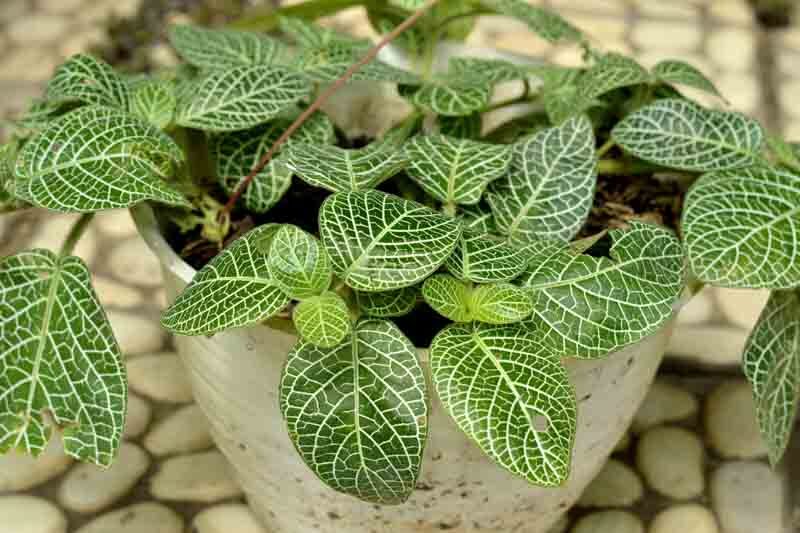
- Keep evenly moist, never waterlogged. If it dries too much, leaves will curl and wilt; if it stays soggy, leaves may yellow and soften, and roots can rot.
- In winter, water a bit less, at midday, and avoid cold water shocks.
Feeding, pruning, propagation
- Feed in spring and summer every two weeks with a diluted balanced fertilizer (e.g., 20-20-20). Start once you see new growth; avoid splashing fertilizer on leaves.
- Pinch tips regularly for a compact, bushy mat. Remove yellowing leaves promptly.
- Restart older plants (often around the 2-year mark) by taking fresh stem cuttings. Tip cuttings ~10 cm (4 in) with 3–4 nodes root easily in a moist, peat-based mix around 20°C (68°F) within 2–3 weeks.
Terrarium-friendly and desk-perfect

- Originating in Peru’s warm, humid rainforests, nerve plant thrives in steady warmth and humidity—ideal for terrariums, shelves, and desktops with soft, filtered light.
- Handle tender leaves gently; they bruise and scuff easily.
Pest and disease watchlist
- Rot: Prevent with a free-draining mix, careful watering, and airflow. Remove affected parts.
- Pests: Spider mites (worse in dry air), scale, and aphids. Rinse foliage, then use insecticidal soap or horticultural oil as needed. Keep humidity up and stress down to deter outbreaks.
- Safety: Generally considered non-toxic to cats and dogs, though any plant nibbling can upset sensitive stomachs.
Signals and fixes cheat sheet
- Sudden limp “collapse”: Usually drought or heat stress. Bottom-soak, then cool and humidify (bright shade).
- Leaves curling/crisping: Low humidity or the mix dried too much—raise humidity and water before the top layer goes fully dry.
- Yellow, soft leaves: Overwatering; improve drainage and let excess moisture escape.
- Brown, scorched patches: Too much direct sun or hot, dry air—move to filtered light and raise humidity.
- Thin, leggy growth with dull color: Not enough light—shift to brighter, indirect light.
Quick rescue kit checklist
- Pot with drainage holes and a proper saucer
- Humus-rich potting mix + perlite/coarse sand
- Clean snips for pinching/pruning
- Pebble tray and/or humidifier; hygrometer for humidity
- Wooden skewer or chopstick for soil checks
- Balanced fertilizer (diluted) for spring–summer
- Soft brush or shower wand for gentle pest rinses
A note on meaning and mystique
Those intricate “nerves” aren’t just pretty—they’ve inspired associations with Virgo, rationality, and wisdom, as if the leaves were a living map of clear thinking. It’s fitting: give Fittonia a consistent, thoughtful routine, and it responds with orderly, luminous veining and calm, steady growth.
—
With quick hydration triage, a smart moisture-check routine, and steady warmth, humidity, and filtered light, Fittonia verschaffeltii transforms from drama queen to low, velvety royalty—no more fainting episodes required.