

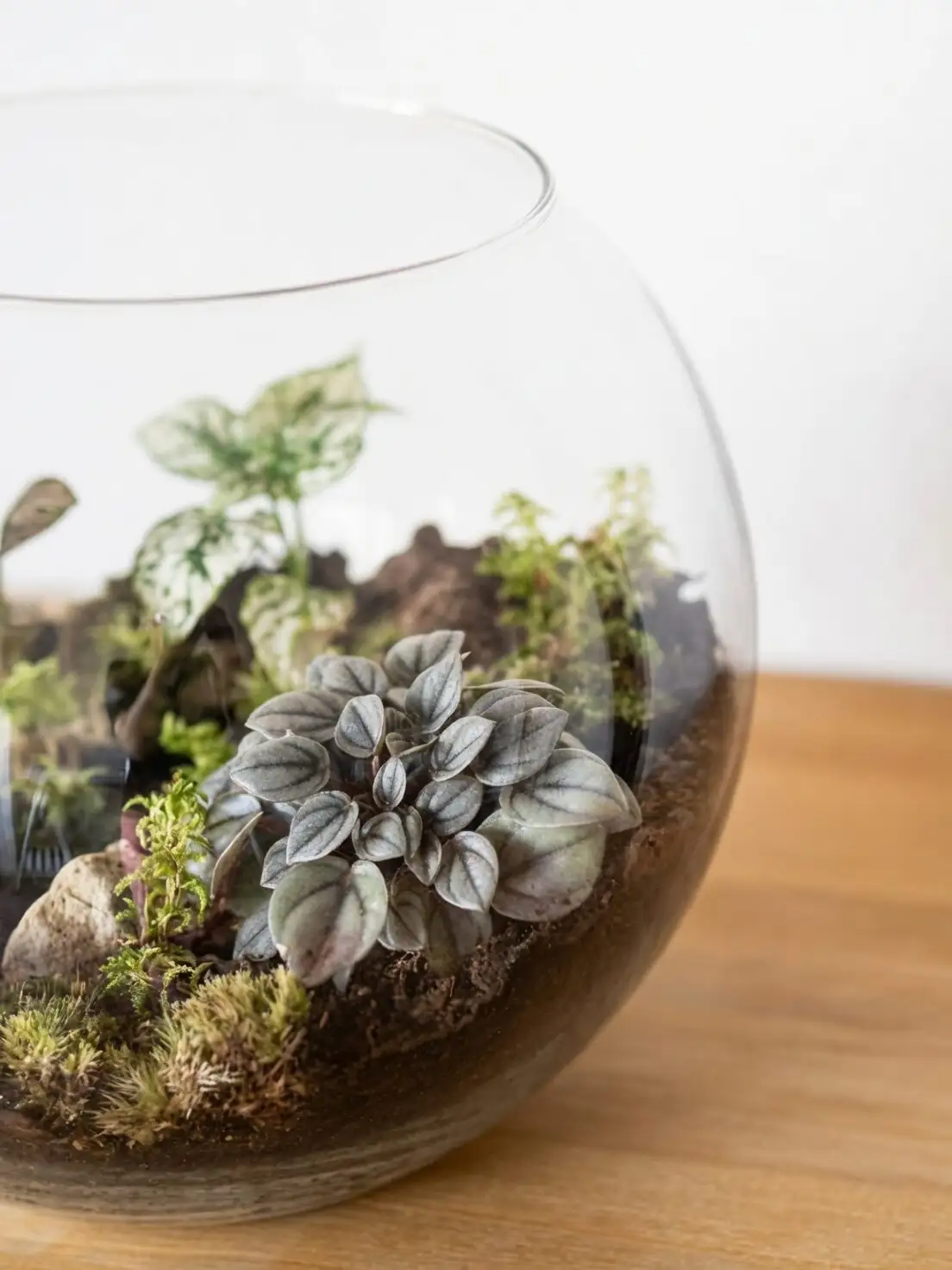
If foliage could whisper, Fittonia verschaffeltii would say “keep me comfy and consistent.” This rainforest sweetheart—also called Nerve Plant or Mosaic Plant—thrives when you match water to light, pot, and humidity. Do that, and its velvety leaves with vivid netted veins will glow on your desk, shelf, or in a misty terrarium.
Meet Fittonia verschaffeltii at a glance
- Origin: Tropical rainforest regions of Peru
- Habit: Low, creeping/trailing; roots easily at nodes for a full mat
- Size: About 10–20 cm tall, spreading 20–30+ cm
- Light: Bright, filtered light to partial shade; avoid harsh direct sun
- Temperature: Sweet spot 18–25°C (64–77°F); keep above 16°C (61°F) in winter
- Humidity: Prefers 50–70%+; excels in terrariums
- Soil: Rich, humus-heavy, free-draining; keep evenly moist, never waterlogged
- Personality: Precise but not fussy—rewarding with steady warmth, moisture, and humidity
Light placement: the “bright but gentle” playbook
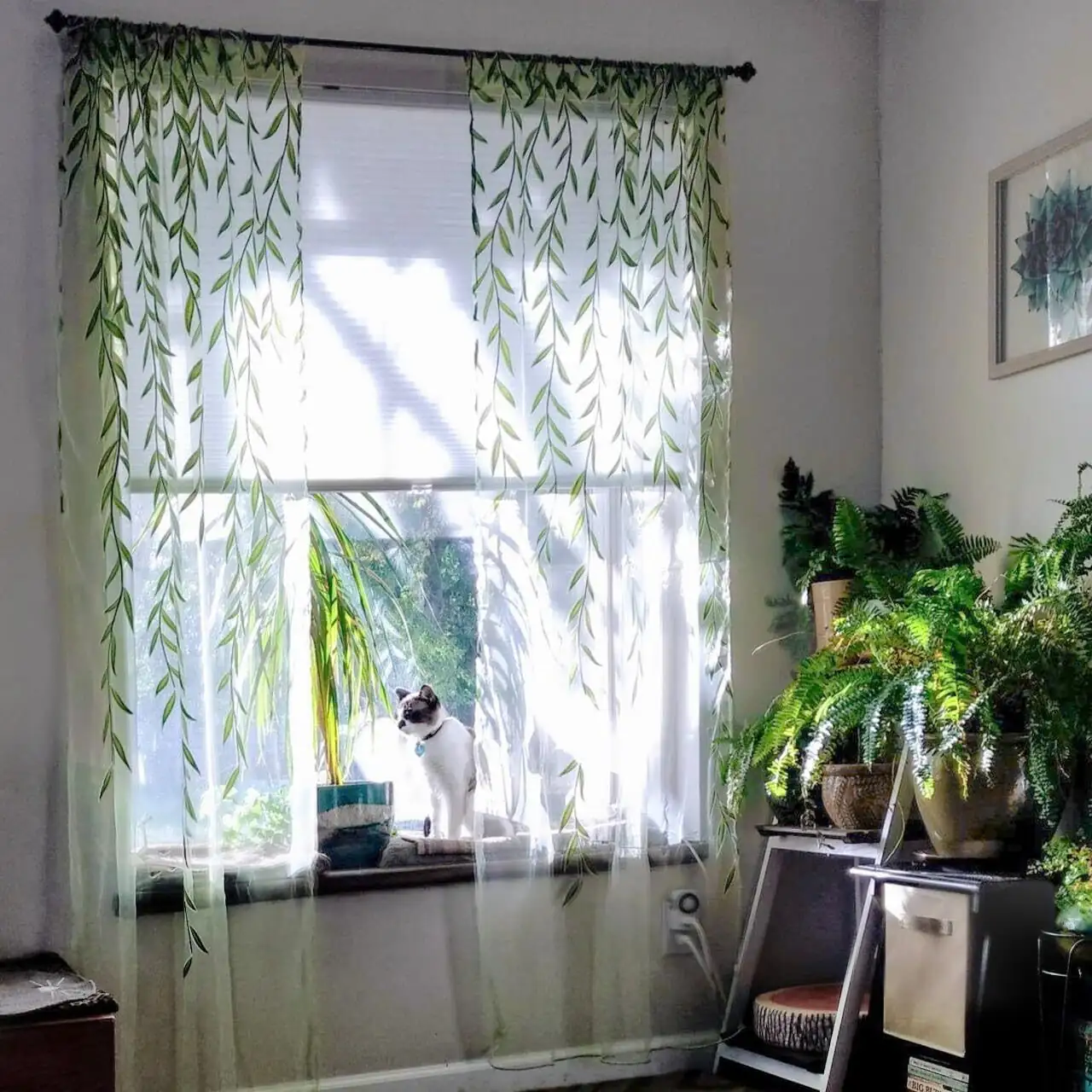
- Best windows: East or bright north.
- West or south windows: Set 3–5 feet (1–1.5 m) back from the glass or filter with a sheer curtain.
- In-room placement: A bright room with no direct rays works well; rotate the pot weekly for even growth.
- Signs you nailed it: Crisp veining, steady new leaves, no bleaching or crispy edges.
- Too much sun: Scorched, pale, or brittle patches.
- Too little light: Stretched stems, smaller/paler new leaves, slow growth.
Temperature and humidity: rainforest comfort
- Target range: 18–25°C (64–77°F); keep drafts away (vents, heaters, AC).
- Winter rule: Never let it drop below 16°C (61°F).
- Humidity: 50–70%+ is ideal.
- Easy boosts: Pebble tray with water (pot on top, not in water), a room humidifier, grouping with other plants, or a terrarium.
- Misting: Lightly mist the air around the plant when very dry, but avoid leaving water sitting on leaves overnight.
Your Fittonia soil recipe (fluffy, moisture-holding, never soggy)
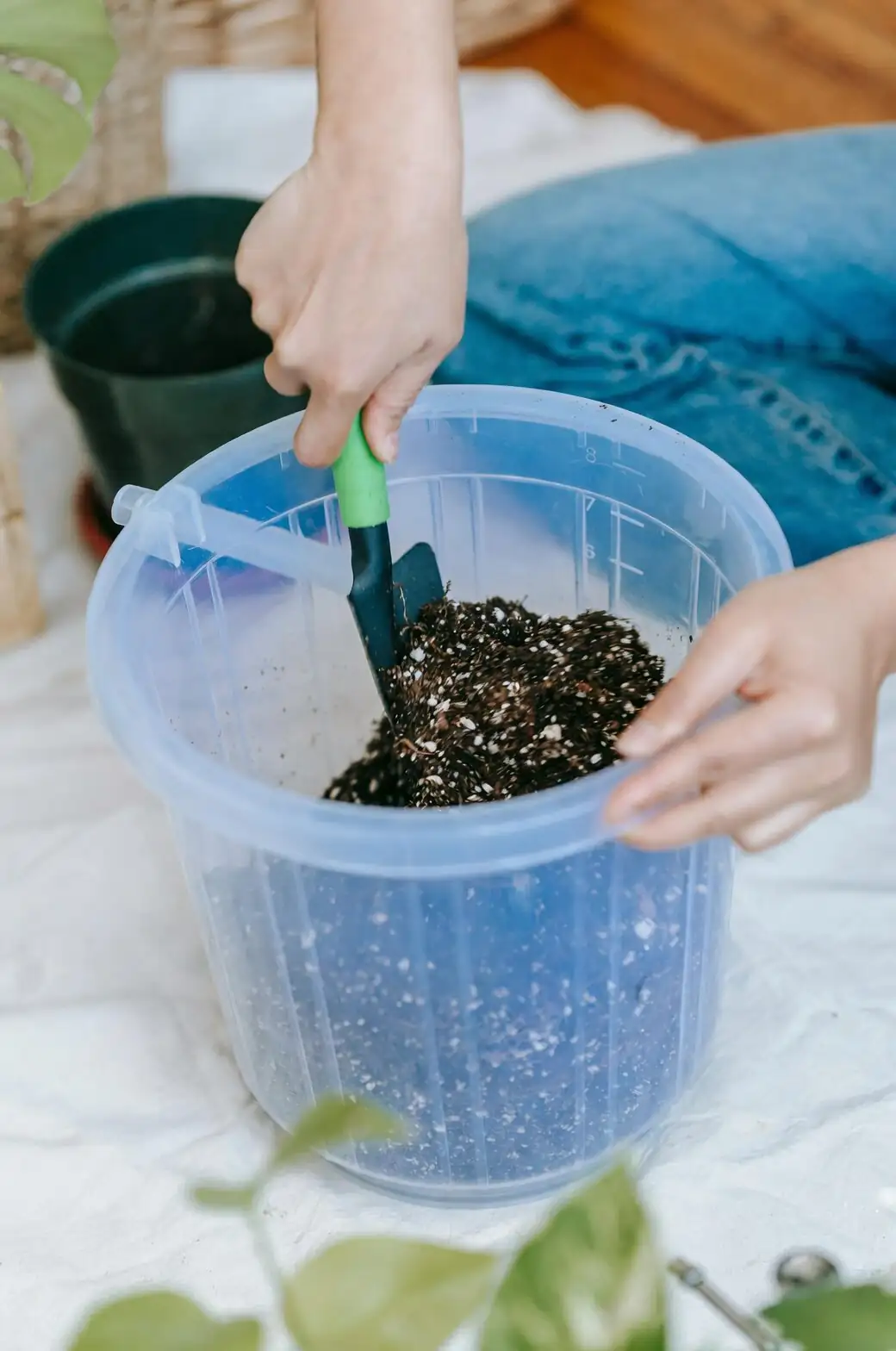
Aim for rich organic matter + chunky aeration:
- 45% peat or leaf-mold–based potting mix
- 35% perlite plus a pinch of coarse sand for drainage
- 20% fine orchid bark or extra leaf mold for structure and humus
Optional: 5–10% worm castings for a gentle nutrient boost.
Goal: Even moisture, quick drainage, and air around the roots.
The watering map: match water to light, pot, and humidity
Fittonia likes its mix evenly moist. Letting it go bone-dry leads to limp, curling, and leaf drop; keeping it soggy causes yellowing and rot. Use these scenario-based rhythms as starting points, then fine-tune by feel.
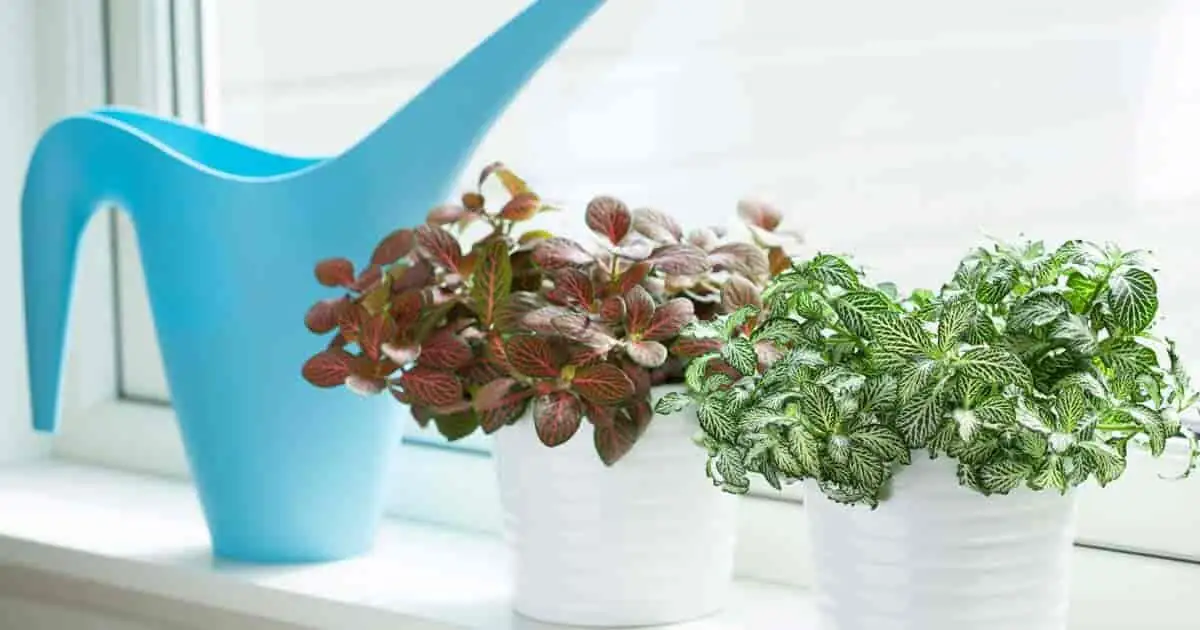
How light changes frequency
- Bright, indirect light (filtered east/north, bright room): Water more often; growth and evaporation are higher.
- Softer light/partial shade (deeper in the room): Water less often; the mix stays moist longer.
How pot and medium change frequency
- Pot size:
- 7–10 cm (3–4 in): Dries faster—expect more frequent watering.
- 12–15 cm (5–6 in): Holds moisture longer—water slightly less often.
- Pot material:
- Terracotta: Breathes and wicks—water more often.
- Plastic/ceramic with drainage: Retains moisture—water less often.
- Soil texture:
- Airy, bark-and-perlite–rich mix = faster drying.
- Denser, humus-heavy mix = slower drying.
How humidity changes frequency
- 60–70%+ RH (humid room/terrarium): Water less often; foliage loses less moisture.
- 40–50% RH (typical homes): Water a bit more often; consider a pebble tray or humidifier to stabilize.
Practical starting rhythms (spring–summer)
Assuming a healthy plant, airy mix, and 21–24°C (70–75°F):
- Bright, filtered light + 12 cm plastic pot + 55–65% RH: Every 3–5 days.
- Softer light 1–2 m from a window + 12–15 cm plastic pot + 50–60% RH: Every 5–7 days.
- Terracotta pot in bright, filtered light + 40–50% RH: Every 2–4 days.
- Terrarium (sealed or semi-sealed): Infrequent—check weekly; you may only need a light top-up every 10–21 days.
Use touch and weight to confirm:
- Top few millimeters just losing surface sheen? Time to water.
- Pot feels much lighter than after a fresh watering? Time to water.
- Always drain thoroughly; never leave in a saucer of standing water.
Winter watering adjustments
- Shorter days and cooler rooms slow growth.
- Water a bit less frequently but never allow the root ball to fully dry.
- Best practice: Water at midday, keep the room above 16°C (61°F), and avoid cold drafts.
Spring–summer vs. winter routines
Spring–summer (active growth)
- Light: Bright, filtered; protect from direct rays.
- Water: Keep evenly moist; use the scenario rhythms above.
- Feed: Every 2 weeks with a diluted, balanced fertilizer (e.g., 20-20-20). Start once you see new growth and avoid splashing fertilizer on leaves.
- Pinch: Tip-prune for a dense, bushy mat; trim any leggy runners.
Autumn transition
- If summering near a window, shift farther from harsh sun as angles change.
- Bring terrarium lids slightly ajar if condensation becomes excessive.
Winter (restful but not dormant)
- Light: Move closer to bright windows (still filtered).
- Water: Reduce frequency slightly, never bone-dry. Water at the warmest time of day.
- Temperature: Keep above 16°C (61°F); avoid vents and window chills.
- Humidity: Maintain 50–70%+ to prevent edge crisping and curl.
Repotting, shaping, and propagation
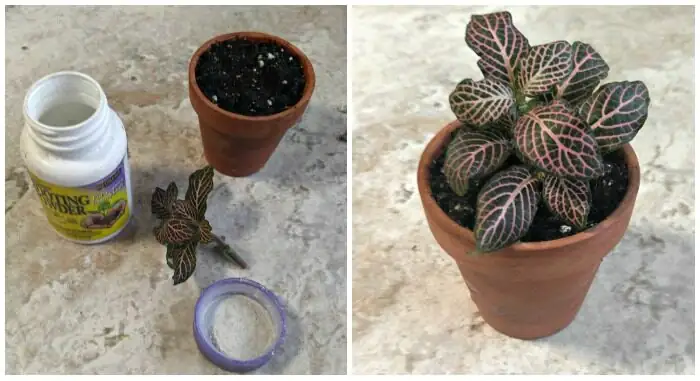
- Potting: Often grown in 12–15 cm (4.7–5.9 in) pots; many growers plant 3–5 starts per pot for a carpet effect.
- Repot: Annually in spring into fresh mix; this refreshes structure and nutrients.
- Shaping: Pinch tips frequently to keep it compact and lush; remove yellowing leaves promptly.
- “Restarting” older plants: After ~2 years, take cuttings for a fuller refresh.
- Propagation:
- Tip cuttings in spring: 10 cm (4 in) long with 3–4 nodes; remove lower leaves.
- Insert into moist peat- or leaf-mold–based mix (or moist sand).
- Keep around 20°C (68°F); roots form in 2–3 weeks.
- Creeping stems often root at nodes—lift and pot divisions about 10 cm (4 in) long.
Troubleshooting: quick diagnostics
- Leaves curling, wilting, or crisp edges: Mix too dry or humidity too low. Rehydrate thoroughly, then stabilize humidity to 50–70%+.
- Yellow, soft leaves; mushy stems: Overwatering or poor drainage. Improve aeration, let excess moisture escape, and check roots.
- Stretched, thin growth with small/pale leaves: Light is too weak—move to brighter, filtered light.
- Sudden leaf drop: Chill or drafts; keep above 16°C (61°F) and away from vents.
Pests and plant health
- Common pests: Spider mites, scale, aphids—more likely when air is dry.
- Prevention: Rinse foliage gently, keep humidity steady, and inspect undersides of leaves.
- Treatment: Insecticidal soap or horticultural oil; improve airflow and consistency of care.
- Rot risks: Soggy soil and poor airflow—fix with a well-drained mix and mindful watering.
Safety
- Generally considered non-toxic to cats and dogs, though nibbling can cause mild tummy upset in sensitive pets.
Bloom note
- It can produce small, modest flowers from late spring to early autumn, but the foliage is the headliner.
Symbolism: a “living map” of calm clarity
Fittonia is sometimes linked with Virgo and is said to symbolize rationality and wisdom—apt for a plant whose leaf veins resemble a delicate, organized map. The message: clarity comes from balance. Keep conditions steady, and Fittonia responds with poised, precise beauty.
Fun to know
- A classic terrarium star—steady warmth and humidity suit it perfectly.
- The dramatic veining (white, pink, or red by cultivar) is why it’s called “Nerve Plant” or “Mosaic Plant.”
FAQ
Q: Why are my nerve plant’s leaves curling?
A: Most often it’s from low humidity or the potting mix drying too much. Less commonly, it happens when roots are stressed by constant soggy soil. Aim for evenly moist (not wet) soil, higher humidity, and gentle, bright-indirect light.
Keep your Fittonia in a cozy, bright-but-soft spot, build a springy soil that drains and drinks, and water with intention based on light, pot, and humidity. Do that, and this petite rainforest map will chart a course straight to lush.


