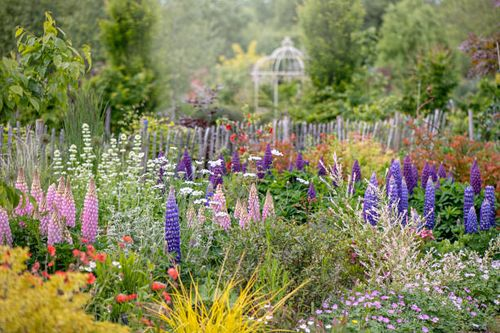
Think of Lupine (Lupinus polyphyllus) as the exclamation point your spring border has been waiting for—upright candles of pea-flowers in blues, pinks, reds, whites, and irresistible bicolors, rising over cool, fan-shaped foliage. Give it smart placement, a designer’s eye for height and color, and a little airflow management, and this cottage-garden classic turns any bed into a spring runway.
Habit, height, and how to stage it
Lupine is a clump-forming, herbaceous perennial that sends up dense flower spires from a basal rosette of palmate, “hand-shaped” leaves.
- Size: typically 60–120 cm (24–48 in) tall and 30–60 cm (12–24 in) wide. In rich conditions, flower spikes can hit 150 cm (60 in). Dwarf selections stay around 30–60 cm (12–24 in).
- Bloom time: spring to early summer (often April–June; May–July in cooler areas), with a smaller repeat if you deadhead promptly.
Design with tiers so those spires really read:
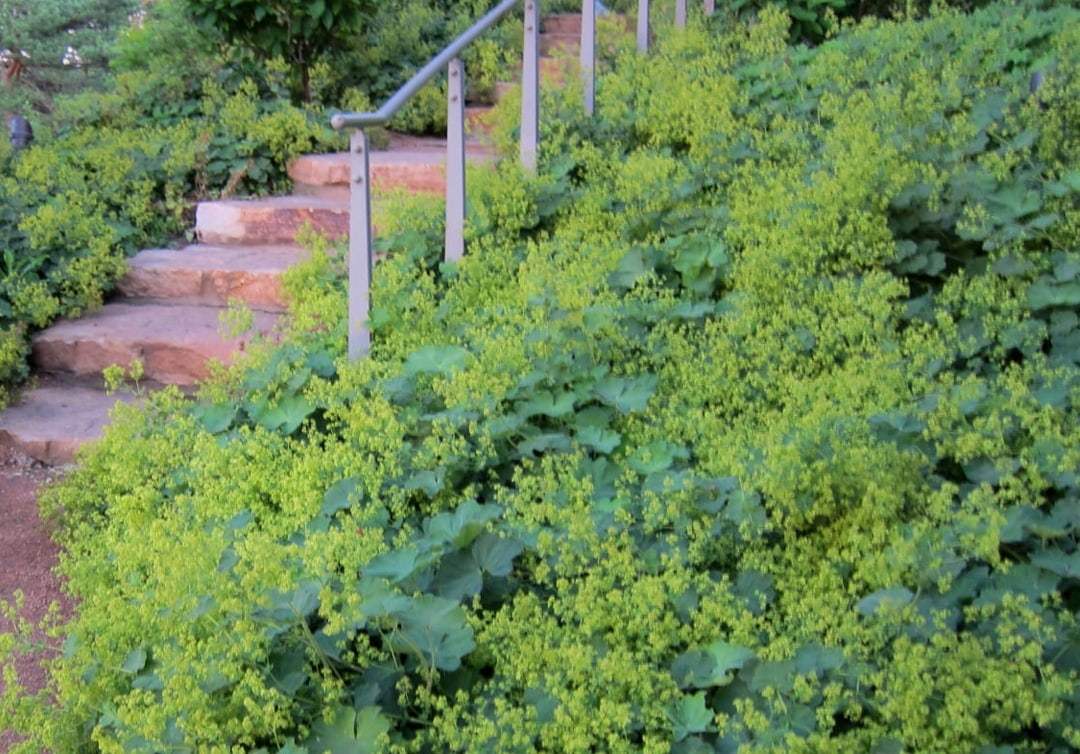
- Back-of-border towers: Standard Russell-style lupines make a strong vertical at the back. Slip them behind mounds of lady’s mantle (Alchemilla mollis) or hardy geraniums so the skirt of foliage hides bare ankles.
- Middle-tier rhythm: Use medium selections among bearded or Siberian iris. Their swordy leaves echo lupine spires without competing for the headline.
- Front-of-border punctuation: Dwarf “Gallery”-type lupines pop at the front with tulips and alliums, keeping sightlines open.
Tip: On terraces or gentle slopes, place tall lupines one tier up. The extra elevation shows off the spires without blocking smaller plants.
Color play: bold bicolors and painterly palettes
Lupine’s color range is a designer’s candy store, and bicolors are the showstoppers.
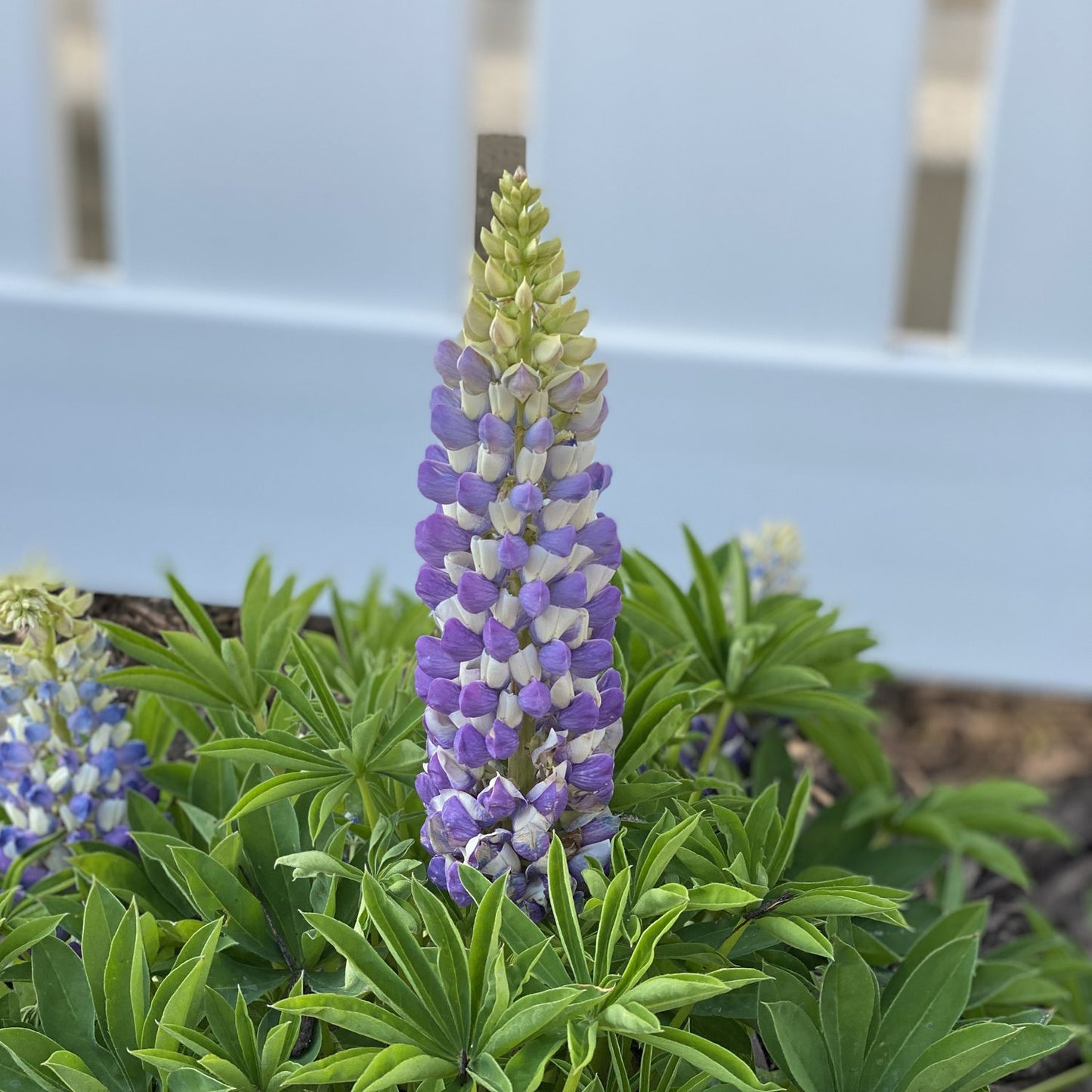
- Stripe echo: Pair red-and-white or pink-and-cream lupines with ivory narcissus or white fringed tulips to mirror the lupine’s light stripe.
- High-contrast drama: In a cool palette, set inky blues beside near-black tulips and limey Alchemilla. A few allium globes carry the drama into early summer after lupines peak.
- Pastel blend: Layer shell-pink and butter-cream lupines with pale columbine and blush peonies. Add a white lupine or two as “restful commas” to keep the scheme elegant rather than sugary.
- Repetition that reads: Plant in loose drifts of 3–5 plants, repeating a color every 1.5–2 m (5–6 ft). Your eye will connect the dots, making the whole border feel intentional.
Perfect partners: spring bulbs and early perennials
Design for a rolling wave of bloom—from bulbs to lupines to early summer companions.
Spring bulbs that bridge the season
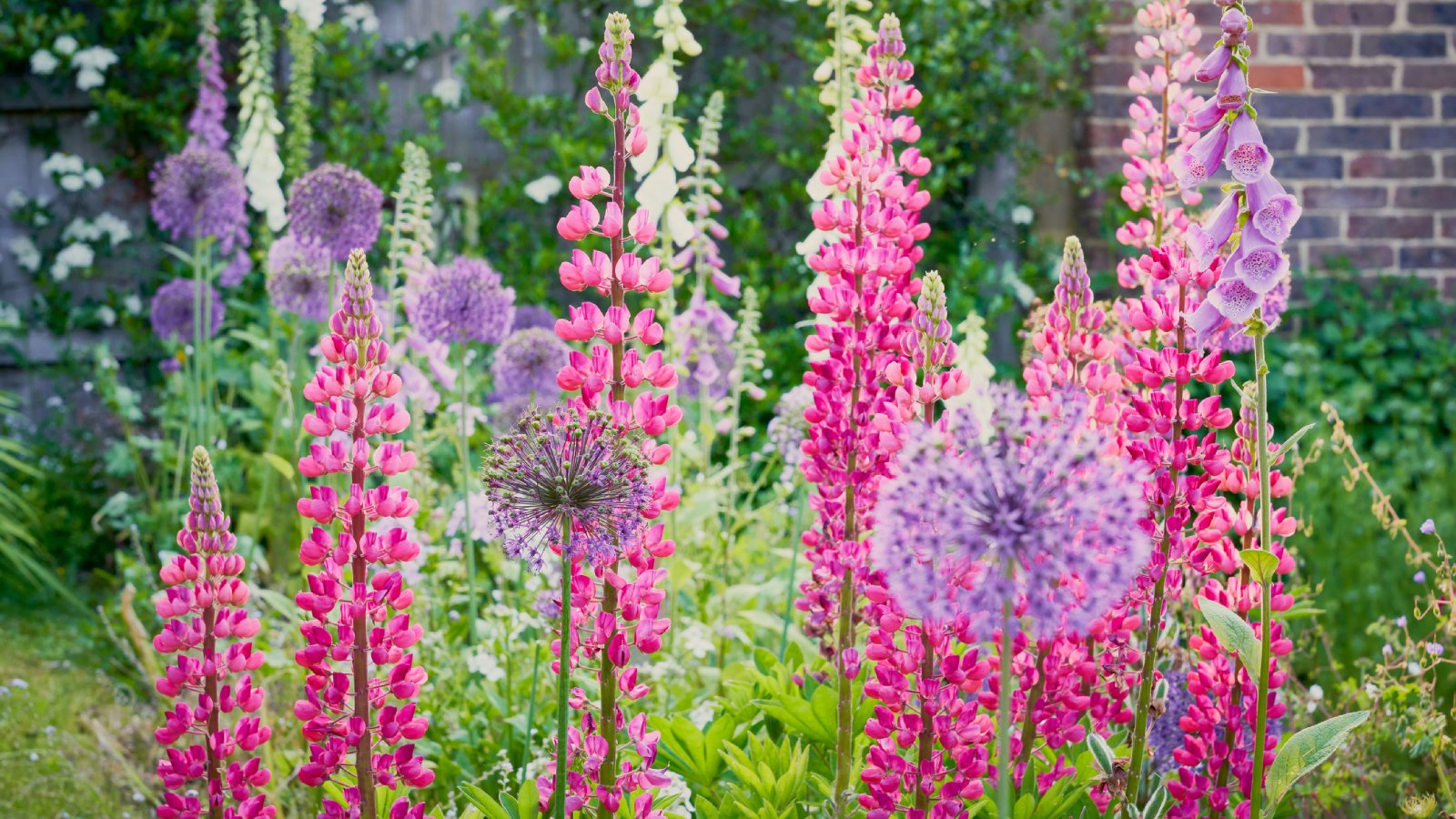
- Tulips (mid–late season): Bold cups under rising lupine spikes; choose white or deep-toned tulips to echo or heighten contrast.
- Narcissus: Ivory and pale-yellow daffodils lighten the composition and echo lupine bicolors.
- Alliums (late spring): Architectural spheres step in as lupines wane, keeping the vertical rhythm going.
- Camassia: Sky-blue flower wands harmonize beautifully with blue lupines and thrive in evenly moist spring soils.
Planting note: Lupines develop a taproot and dislike disturbance. Either sow/plant lupines where you want them and tuck bulbs around the rosette, or plant bulbs first and add young lupines with minimal root disturbance.
Early perennials that make lupines sing
- Columbine (Aquilegia): Airy spurs float at the same time lupines rise—perfect height dialogue.
- Siberian iris (Iris sibirica): Vertical leaves and elegant blooms balance lupine mass.
- Peonies: Big, satiny flowers make a lush counterpoint; place slightly forward so peony mounds frame lupine spikes.
- Bleeding heart (Dicentra): Soft, arching texture meets lupine’s upright form; a dream in cooler climates.
- Hardy geraniums and catmint (Geranium, Nepeta): Billowy base layers that carry the show after lupines finish.
Texture tips
- Foliage contrast is your secret sauce. Lupine’s palmate leaves read cool and architectural—surround them with frothy mounds (Alchemilla), ferny textures, and a few verticals (iris, allium) to keep the eye moving.
Site it right: wind and mildew savvy
Lupines love cool, bright conditions and breathing room.
- Light: Full sun for best bloom in cool-summer regions. In warmer or southern gardens, give light/afternoon shade to ease heat stress.
- Airflow vs. wind: Good air circulation helps prevent powdery mildew; avoid crowded plantings and stagnant corners. At the same time, steer clear of wind tunnels that can snap tall spikes—use the lee of a fence, open shrub, or airy grass to slow prevailing winds without sealing off air.
- Spacing: 30–40 cm (12–16 in) between plants for airflow.
- Soil: Well-drained sandy or loamy soil; slightly acidic (about pH 5.5–6.5) is ideal. Even moisture in spring, never waterlogged. Raised beds or berms help if drainage is marginal.
- Watering etiquette: Water at the base, ideally morning. Avoid soaking foliage or flower spikes late in the day to reduce mildew risk.
Planting and ongoing care
- Establishment: Plant young (they transplant best early) and then avoid moving them—taproots resent disturbance.
- Watering: Keep evenly moist during active growth; let excess drain freely. In containers, expect about twice weekly in spring and up to three times weekly in warm spells, adjusting to pot size and wind.
- Feeding: As legumes, lupines partner with soil microbes to fix nitrogen. In the ground, often no fertilizer is needed. If growth is weak, use a light, balanced feed or compost. Favor low-nitrogen, bloom-leaning feeds just before flowering. In containers, light feeding about every two weeks during active growth helps—keep nitrogen modest.
- Deadheading: Remove spent spikes promptly to tidy and encourage a smaller second flush.
- Cutback: After foliage yellows at season’s end, cut to near ground level.
Quick design recipes to steal
- Cottage Spire Border
- Back: Blue and white lupines in clumps of five
- Mid: Siberian iris and pale peonies interplanted with alliums
- Front: Lady’s mantle ribbon, sprinkled with ivory narcissus
- Cool-Coastal Drift (zones 4–6 sweet spot)
- Repeating drifts of blue, pink, and red-and-white lupines
- Camassia threading between clumps
- Hardy geraniums as a soft lower layer; a few ornamental grasses to filter wind
- Container Chorus (for dwarf selections)
- A deep, tall container with a dwarf lupine as the star
- Underplant with late tulips or small alliums
- Edge with low, airy fillers (e.g., Erigeron karvinskianus) to soften the rim
- Bright morning sun, light afternoon shade, and consistent moisture
Propagation and longevity notes
- From seed: Scarify (nick or sand) or soak in warm water 24–48 hours. Sow outdoors in autumn or early spring, cover 2–3 cm (0.8–1.2 in), keep evenly moist. Germination in roughly three weeks. Thin to 30–40 cm spacing.
- Hybrid heads-up: Many showy “Russell” types may not come true from seed.
- Division: Possible in spring or after flowering, but do it gently; taproots dislike rough handling.
- Cuttings: Basal cuttings in spring can work for select plants.
- Containers: Use a deep pot to accommodate the taproot; refresh mix in early autumn.
Pests, deer, and health
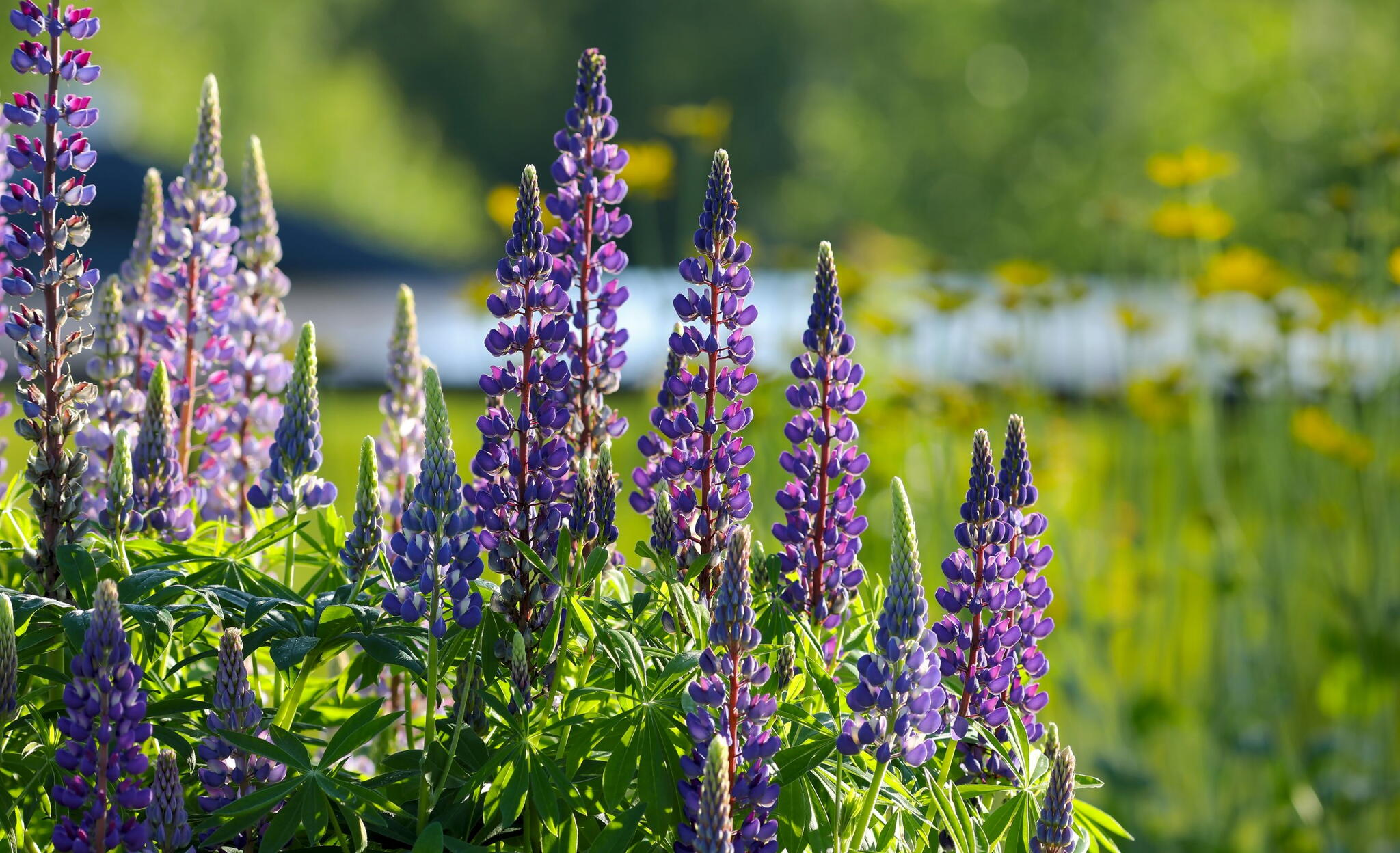
- Common issues: Aphids (including lupin aphid) on tender growth; treat early with a firm water spray, insecticidal soap, or horticultural oil. Slugs and snails may nibble young plants. Powdery mildew thrives in humid, still air—space plants, avoid overhead watering, remove badly infected leaves. Ensure drainage to prevent crown/root rot.
- Deer: Generally deer-resistant—another reason lupine’s a cottage-garden staple in browsing country.
- Toxicity: Seeds and other parts can be toxic if ingested due to bitter alkaloids. Keep away from children, pets, and grazing animals.
Flower lore and origin, with a designer’s wink
Native to western North America (especially the Pacific Northwest), lupines were later transformed for gardens by early 20th-century breeders—most famously George Russell—into today’s rainbow of tall spikes. The name traces to Latin “lupus” (wolf), from an old myth that lupines “wolfed down” soil fertility. In truth, they enrich soils over time by fixing nitrogen with the help of friendly bacteria.
Symbolically, lupines are linked with imagination, creativity, happiness, and a generous, nurturing love—perhaps inspired by their ability to turn lean ground into abundance. Some lore even pegs them to greed or voraciousness, a remnant of that wolfish misunderstanding. In a modern border, those lofty spikes feel more like optimism made visible.
At-a-glance growing calendar
- Jan–Mar: Keep established clumps lightly moist; protect potted plants from saturation.
- Apr–Jun: Peak growth/bloom—steady moisture, deadhead promptly; watch for aphids.
- Jul–Aug: Bloom winds down—reduce nitrogen; give afternoon shade in hot climates; water consistently but avoid soggy soils.
- Sep: Refresh container mix; divide with care if needed.
- Oct–Dec: Direct-sow seed in autumn; ensure excellent winter drainage and add a light mulch in colder areas.
Quick reference: conditions they love
- USDA Zones: 4–8 (often best in 4–6); heat and long, humid summers can shorten lifespan.
- Light: Full sun in cool-summer regions; light/afternoon shade where hot.
- Soil: Well-drained, slightly acidic, evenly moist in spring; avoid heavy clay unless amended and avoid nitrogen-rich soils that spur leaves over flowers.
Design them tall, let them breathe, and give their color room to sing. With smart tiers, bold bicolors, and savvy siting for wind and mildew control, Lupinus polyphyllus turns spring into a standing ovation.