
French marigolds, Tagetes patula, are small plants with outsized influence in a food garden. Pair them well and you get an attractive edging, steadier pollinator traffic, and—if you plan smartly—help tamp down root‑knot nematodes between vegetable crops. Pair them poorly and you mostly get pretty flowers. This guide keeps you on the evidence-based path: spacing that keeps plants healthy (and fungi at bay), timing that actually benefits crops, varieties that serve pollinators, and the truth about what marigolds can and cannot do for nematodes.
Meet Tagetes patula in the vegetable garden
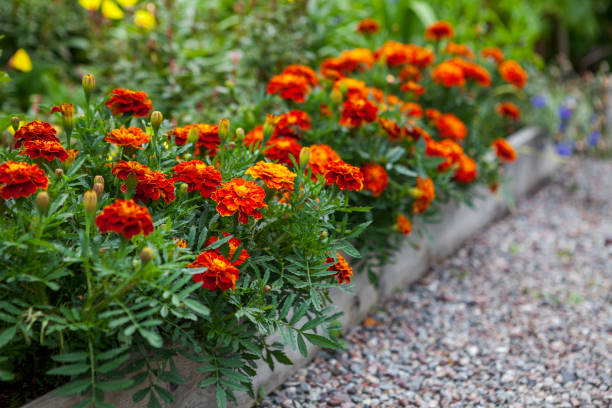
Compact, bushy, and forgiving, French marigolds are:
- 15–30 cm (6–12 in) tall and 15–20 cm (6–8 in) wide, with finely divided, aromatic foliage.
- Bloom machines from early summer to frost in yellows, oranges, reds, and bicolors.
- Sun-lovers that thrive in well-drained soil and make excellent companions tucked among tomatoes, peppers, greens, and herbs.
They’re grown as annuals, easy from seed, and happy in beds or containers—perfect for edging and for building living “insectary” strips through your veg patch.
Evidence-based spacing that works (and why)
Good spacing isn’t just tidy—it’s plant health insurance. Marigolds are prone to fungal leaf spots and powdery mildew in cramped, damp plantings. Give them room to breathe.
Baseline spacing for plant health
- Space plants 25–30 cm (10–12 in) apart in full sun.
- Water at soil level to keep leaves dry; avoid waterlogging.
Insectary edge and strip layouts

To maximize beneficial insects, plant in clusters and strips rather than single, isolated dots.
- Bed edges: A perimeter ring of plants every 25–30 cm (10–12 in).
- In-row accents: One plant every 60–90 cm (2–3 ft) within long veg rows, or a small cluster at each bed corner.
- Insectary strip: A double row down a path or the center of a block (rows ~25–30 cm apart, plants ~25 cm apart) to provide continuous nectar and pollen.
Containers and tight spaces
- Dwarf types: 2–3 plants in a 30 cm (12 in) pot, or one plant in a 15 cm (6 in) pot.
- Keep foliage from pressing against vegetable leaves to maintain airflow and reduce disease.
Timing your plantings for real benefits
The “when” changes what marigolds can do for you.
For beneficial insects and continuity of bloom
- Start indoors 6–8 weeks before last frost; transplant after frost danger has passed.
- Succession-sow every 4–6 weeks into midsummer to keep fresh flowers coming through fall.
- Deadhead for continuous nectar; blooms may pause in extreme heat, then rebound as temperatures cool.
For nematode suppression between crops
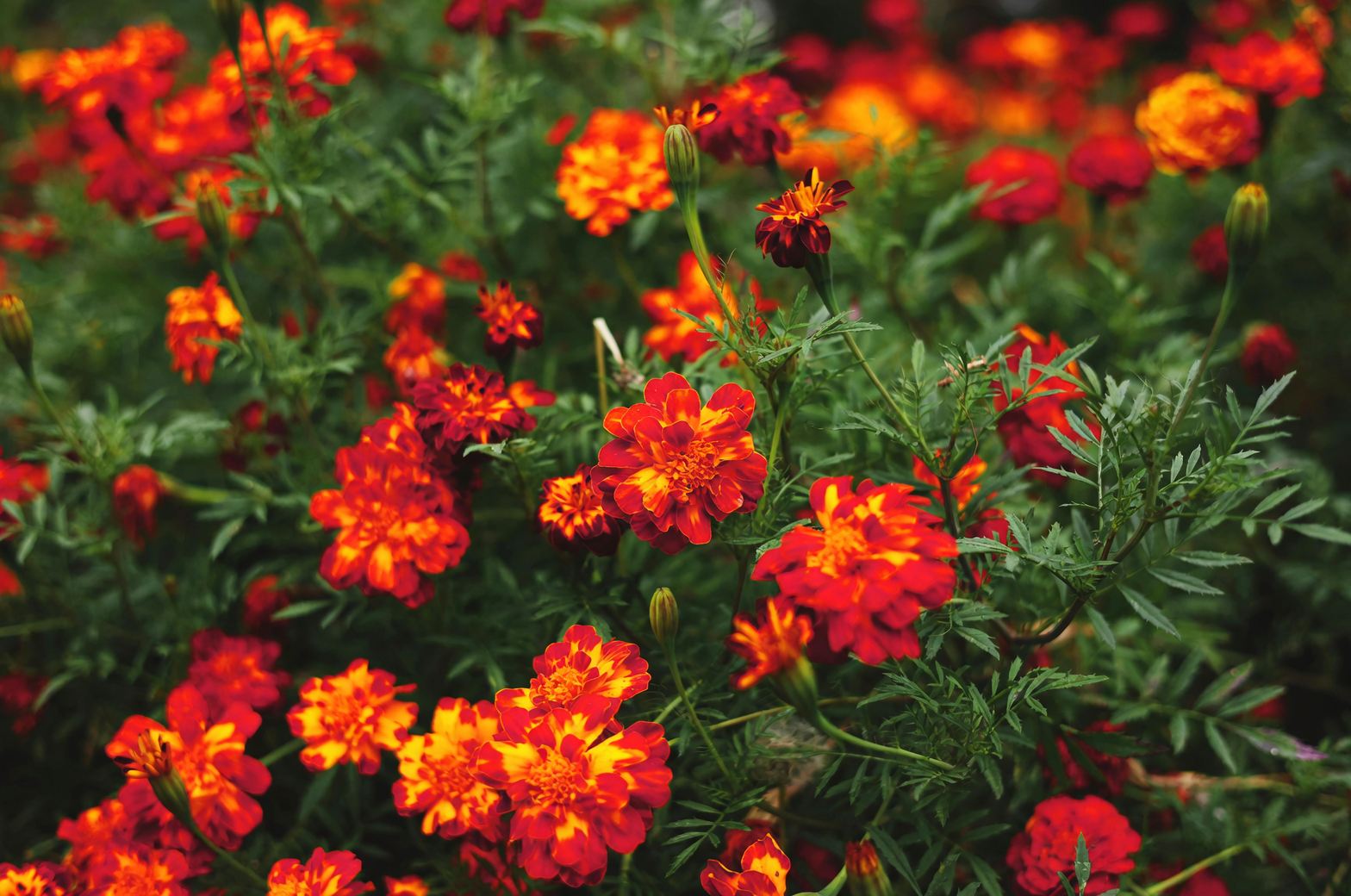
French marigolds can help suppress root‑knot nematodes (Meloidogyne spp.)—but not by sprinkling a few plants among veggies. The effect is strongest when marigolds are used as a pre‑plant cover crop or a solid stand:
- Grow a dense stand for at least 8–10 weeks during a break in vegetable cropping (spring-to-summer or late summer-to-fall, climate permitting).
- Keep the stand weeded; many common weeds host nematodes and will undo your efforts.
- After flowering begins, chop plants and incorporate residues lightly; wait about two weeks before planting the next crop to allow compounds to break down in soil.
Mid-season interplanting is excellent for insects but too sparse and too brief to decisively lower nematode populations.
Varieties and flower forms: pick for purpose
For pollinators and natural enemies
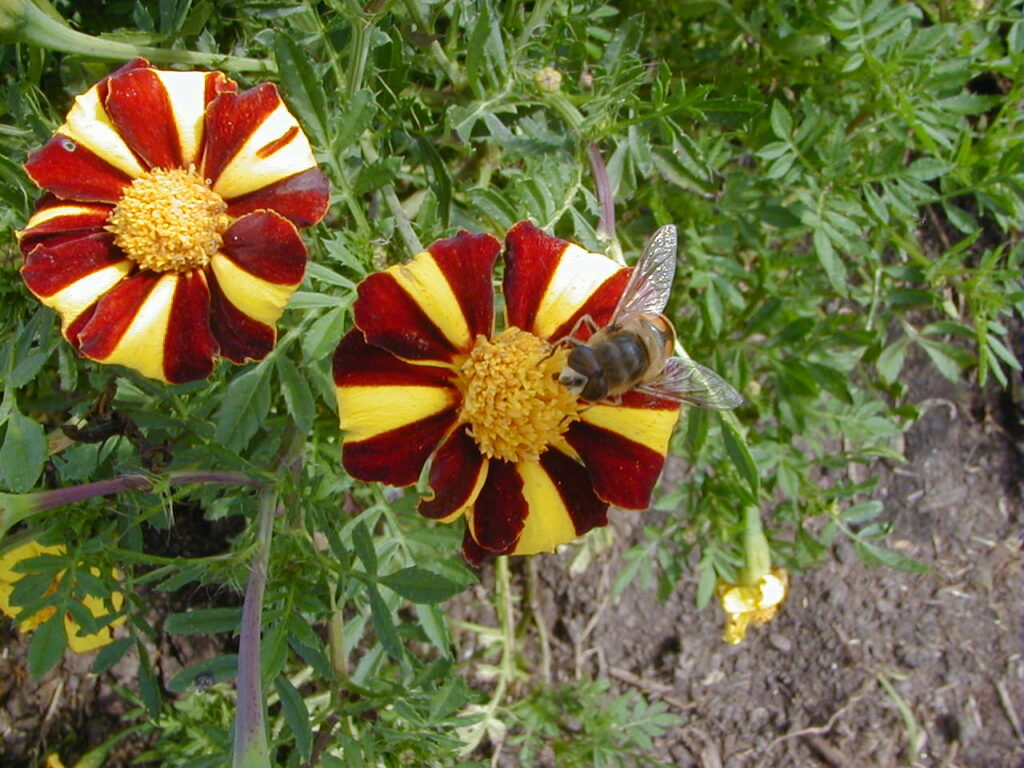
- Choose single to semi‑double blooms for easier pollen/nectar access. Look for classic single or open-faced forms such as:
- ‘Naughty Marietta’ (AAS winner; yellow with maroon blotch)
- ‘Super Hero Spry’ (AAS winner; bold bicolor)
- Series with many open forms: Disco
- Doubles are beautiful and still visited, but singles tend to be busier with hoverflies and tiny parasitic wasps.
For edging, containers, and heat
- Compact, edging-friendly series: Bonanza, Durango, Safari, Super Hero, Little Hero, Janie, Boy O’ Boy, Aurora.
- Heat-adapted options for hot summers: Hot Pak series.
- Expect most French marigolds to stay within 15–30 cm (6–12 in) tall—ideal for underplanting and border use.
Note: Not all cultivars are equal for nematode suppression. If nematodes are a known issue, consult local extension variety lists and consider trialing a small patch to see what performs best in your soil.
How marigolds help beneficial insects help you
French marigold flowers offer accessible nectar and pollen that support:
- Hoverflies (Syrphidae): Their larvae devour aphids and soft-bodied pests.
- Parasitic wasps (e.g., braconids, ichneumonids): Key allies against caterpillars and whiteflies.
- Lady beetles and lacewings: Adults feed on pollen and nectar; larvae hunt voraciously.
- Bees: Frequent visitors, especially to single forms.
For best results:
- Plant in clusters/strips for stronger “beacons.”
- Keep blooms coming (deadhead, steady moisture).
- Avoid broad-spectrum insecticides that undercut beneficials you’ve just recruited.
The nematode question: proven practices vs. garden lore
Root‑knot nematodes (Meloidogyne spp.) cause galls on roots and weaken many vegetables. Once a crop is infected, options are limited—so aim to reduce populations before planting.
What research and experience point to
- Marigold roots and residues can help suppress several plant‑parasitic nematodes, including root‑knot species. French marigold produces bioactive compounds (such as alpha‑terthienyl), and some cultivars act like “trap crops,” enticing nematodes but curtailing their reproduction.
- Suppression is most reliable when marigolds are grown as a dense, weed‑free stand for a full window (roughly 8–10+ weeks), then incorporated before planting the susceptible vegetable.
What actually works in gardens
- Use marigolds as a cover crop between vegetable plantings, not as a last-minute rescue.
- Keep the plot weeded and in full sun; shade and weed hosts reduce effectiveness.
- Follow with crop rotation and, where possible, nematode‑resistant vegetable varieties.
- Combine tactics in high-pressure sites: marigold cover crop, soil solarization in peak sun, then resistant or less-susceptible crops.
What doesn’t work (myths to skip)
- Dotting a few marigolds here and there among tomatoes and expecting nematode control.
- Planting marigolds after a crop is already infested and declining.
- Assuming any marigold species or any cultivar will suppress your local nematode species equally.
- Letting a marigold “cover” stand go weedy—those weeds can host nematodes and negate the effort.
A simple mini‑trial for your plot
If you garden in a small space:
- Dedicate one 1–2 m² (10–20 ft²) bed to a dense French marigold stand for a full warm season interval.
- Keep it weeded, then chop and incorporate. Plant a susceptible test crop (e.g., tomatoes) there next, and compare roots and vigor with a non‑treated bed at season’s end.
Crop-by-crop pairing playbook
Tomatoes, peppers, eggplant
- Goal: Attract hoverflies and parasitic wasps; edge beds to ease scouting and harvest.
- Spacing: Perimeter marigolds every 25–30 cm (10–12 in); optional clusters at tomato stakes.
- Nematodes: Use a marigold cover-crop interval before planting in known problem beds.
Carrots, beets, and other root crops
- Goal: Beneficials for aphid/leaf miner pressure; visual border to mark rows.
- Spacing: A low marigold border around root beds; keep at least 15–20 cm (6–8 in) from crop rows for easy pulling and airflow.
Cucumbers, squash, melons
- Goal: Recruit natural enemies for aphids and caterpillars.
- Spacing: Clusters at hill ends and along trellis bases. Maintain airflow around mildew‑prone cucurbits.
Brassicas (cabbage, kale, broccoli)
- Goal: Support parasitoids that target cabbage loopers and aphids.
- Spacing: Interplant clusters at row ends and mid‑row. Keep leaves from touching to reduce disease spread.
Beans and peas
- Goal: Insect support; note that hot, dry weather can favor spider mites on both beans and marigolds.
- Tactic: Maintain even moisture and strong airflow; avoid crowding marigolds against bean foliage in midsummer heat.
Alliums and leafy greens
- Goal: Pollinator draw near bolting herbs/greens; tidy edging that doesn’t shade low crops.
- Spacing: Standard 25–30 cm. In summer, provide light afternoon shade to greens while keeping marigolds in sun.
Care notes that keep marigolds doing their job
- Sun: Full sun for best flowering; light afternoon shade is fine in very hot climates.
- Soil: Well-drained, moderately fertile; pH ~6–7. Avoid soggy conditions (root rot risk).
- Water: Water thoroughly, then let the topsoil dry slightly; containers may need more frequent watering in heat.
- Feeding: Not heavy feeders. Go easy on nitrogen to avoid leafy growth at the expense of blooms.
- Pruning: Pinch early to encourage branching; deadhead to extend bloom. If leggy, trim back lightly.
- Pests/disease on marigolds: Watch for spider mites and thrips in heat; manage with strong water sprays or horticultural oils. Prevent fungal issues with spacing and by watering at the base.
Myths vs. proven practices (quick hits)
- Myth: “Marigolds repel all pests.”
- Reality: They attract beneficial insects; they don’t universally repel pests and can even host spider mites in hot, dry spells.
- Myth: “Any marigold next to tomatoes stops nematodes.”
- Reality: Nematode suppression requires a dense, weed‑free marigold stand for weeks before the crop, not a few accent plants.
- Myth: “More fertilizer = more flowers and more benefits.”
- Reality: Excess nitrogen reduces flowering; steady moisture and deadheading do more for sustained bloom.
- Myth: “Shade is fine—they’re tough.”
- Reality: Too much shade cuts bloom and undercuts the whole insectary purpose.
Two quick, practical layouts
4 × 8 ft (1.2 × 2.4 m) bed
- Perimeter: 16–20 marigolds spaced every 25–30 cm (10–12 in).
- Crop rows: Two central rows of tomatoes/peppers at usual spacing; optional marigold cluster at each corner.
- Result: Continuous bloom ring for beneficials, good airflow, easy harvest.
Patio container trio
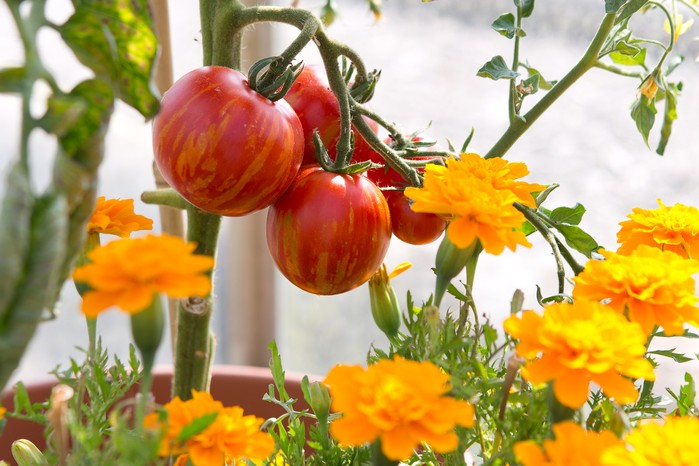
- 45 cm (18 in) tomato pot: 3 marigolds equally spaced around the rim.
- 30 cm (12 in) pepper pot: 2 marigolds opposite each other.
- 30 cm (12 in) herb bowl: 2–3 dwarf marigolds, keeping herbs from being shaded.
- Result: Pollinator buffet at eye level; tidy, vigorous displays.
A cultural note: meaning beyond the bed
Despite the “French” moniker, Tagetes patula hails from Mexico and Central America. Across cultures, marigolds symbolize warmth, enduring affection, and—paradoxically—grief and remembrance. In Mexico, marigolds are iconic in Day of the Dead observances, where their bright color and scent are said to guide spirits—an evocative reminder that a small flower can carry both celebration and memory.
Bottom line
Use French marigolds where they shine:
- As reliable, sunny companions that fuel beneficial insects—space them 25–30 cm apart, plant in clusters/strips, and keep flowers coming.
- As a pre‑plant, dense, weed‑free stand to help suppress root‑knot nematodes between vegetable crops—not as a mid‑season miracle cure.
Plant with purpose, and these compact powerhouses will earn their keep all season long.