
Step into a dappled forest margin in southern Africa and you’ll see it: a soft green cloud that seems to hover over brambles and branches, as light as breath and as intricate as lace. That same cloud would later sweep through Victorian parlors, trail from gilt jardinières, and—today—star in bridal bouquets worldwide. Meet Asparagus setaceus (Kunth) Jessop, the so‑called “asparagus fern” that isn’t a fern at all.
From African edges to empire-era drawing rooms
Native from southern Africa across eastern and southern regions—especially South Africa and also recorded in Botswana, Lesotho, Mozambique, Eswatini/Swaziland, Tanzania, Zambia, and Zimbabwe—Asparagus setaceus thrives where light is filtered and air is kind: along forest margins, thickets, and bright shade. Birds snack on its berries and spread its seeds; underground, tuberous roots store a little water for lean spells, helping it rebound after short droughts.
By the late 19th century, plant collectors ferried this diaphanous beauty to Europe. Under names like “Plumosa Fern” and “Lace Fern,” it became a Victorian darling—trained on wire frames, cascading from hanging baskets, and lending refined softness to conservatory displays. That same feathery poise keeps it perennially on-trend in modern floristry.
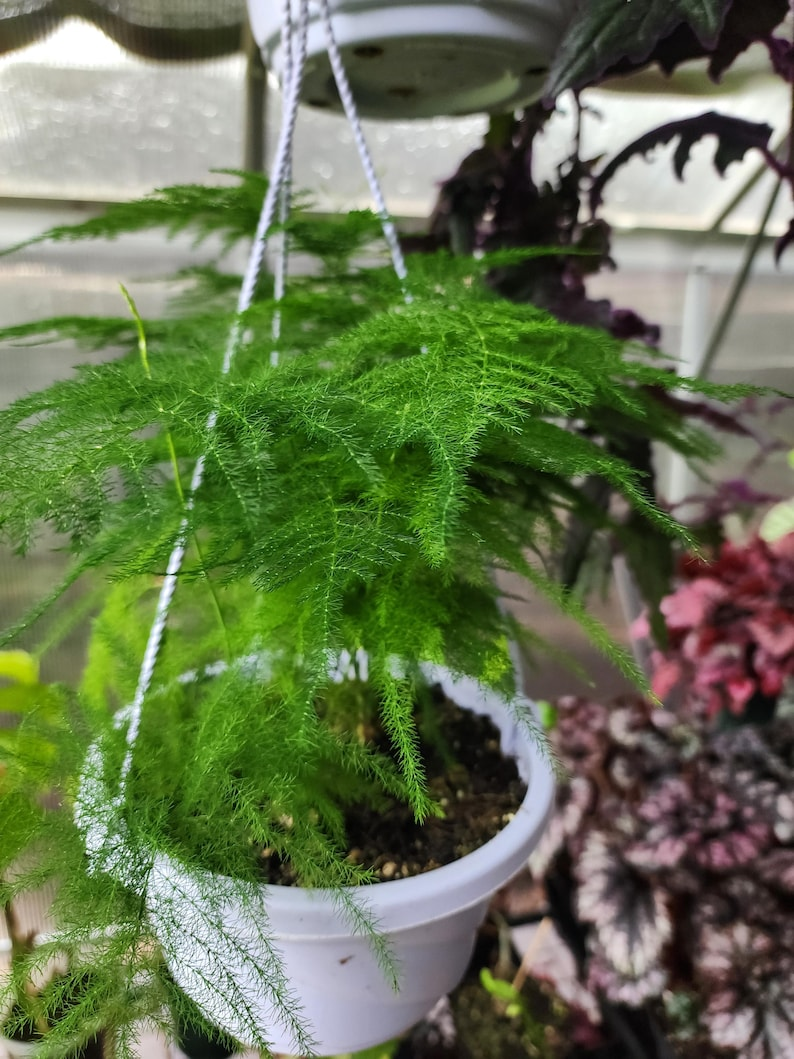
Not a fern at all—meet the asparagus in disguise
Here’s the twist: this plant belongs to the Asparagus genus, not to the fern clan.
- Those “fronds” are actually cladodes—leaf‑like stems that do the photosynthesizing. True leaves are shrunk to tiny, papery scales along the stems.
- It flowers and fruits like a typical flowering plant (a monocot in the Asparagaceae family), producing small, starry white to greenish‑white blossoms and dark purple‑black berries when pollinated. Ferns, by contrast, make spores and don’t bloom.
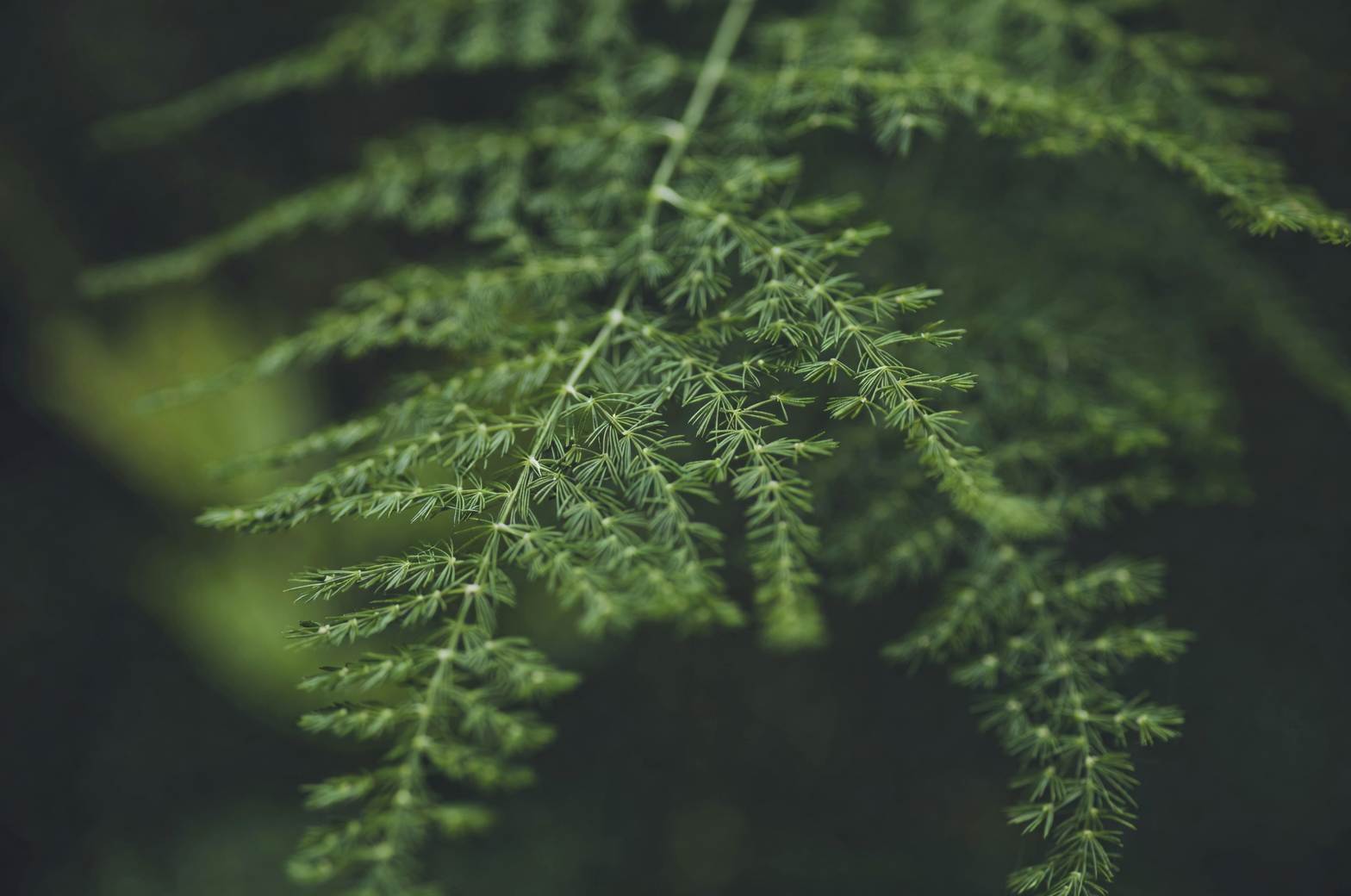
Once you know, you can’t unsee it: a fern in silhouette, an asparagus in substance.
Portrait of a plant
Form and size
- Indoors: typically 30–90 cm (12–35 in) tall, with arching, trailing, or climbing stems. Given support and minimal pruning, stems can extend about 1–3 m (3–10 ft).
- In habitat: roughly 1.8–2.4 m (6–8 ft), scrambling where it finds a perch.
Foliage feel
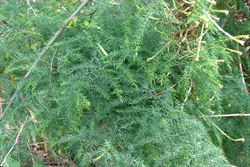
- Feathery sprays of fine, needle‑like cladodes in bright to deep green form a billowy, lace‑like veil. New, warm‑season growth is especially plush.
- Stems can occasionally bear small thorns, a subtle reminder of their not‑fern identity.
Flowers and fruit
- Tiny, starry white to greenish‑white flowers appear on mature plants from spring–summer into late summer–autumn (often summer into autumn indoors).
- If pollinated, berries follow—ripening from green to deep purple‑black and typically holding 1–3 seeds.
Why florists fell in love

- Airy volume without heaviness: it “floats” between blooms, softening edges and adding movement.
- Versatile texture: elegant with roses and orchids, fresh with wildflowers, romantic in wreaths and corsages.
- Reliable in buckets: when kept hydrated, its sprays hold well, making it a staple filler greenery worldwide.
The RHS seal of approval
Asparagus setaceus has earned the Royal Horticultural Society’s Award of Garden Merit—horticultural shorthand for “dependable, ornamental, and worth growing” in suitable conditions. Expect grace, adaptability to containers, and year‑round good looks indoors—provided you give it that sweet spot of light, moisture, and humidity.
Living with Asparagus setaceus indoors

Think middle path—never harsh, never extreme.
- Light: Bright, indirect light or light shade. Shield from harsh midday sun, which can scorch and yellow the foliage.
- Temperature: Best around 20–25°C (68–77°F); comfortable at 15–25°C (59–77°F). Keep above 4–5°C (39–41°F); it’s not frost tolerant.
- Humidity: Prefers moderate to high humidity (about 50%+). Use a pebble tray, humidifier, or plant groupings; light morning misting is fine with good airflow.
- Water: Keep evenly moist, never soggy. Water thoroughly, then let the top 2–3 cm (0.8–1.2 in) dry slightly. In heat or active growth, you’ll water more often; in winter, a bit less.
- Soil: Loose, well‑draining yet lightly moisture‑retentive. A quality potting mix with compost or coir plus perlite/coarse sand works well. Drainage is essential.
- Feeding: In spring–summer, feed about every 4–6 weeks with a balanced liquid fertilizer at half strength. Ease off in autumn–winter. A one‑off, light bloom feed before flowering can help mature plants set berries.
- Pruning and training: In spring, remove yellow, dead, or overlong stems at the base. Lightly tip‑pinch very young shoots to encourage branching. A small trellis or hoop keeps the cloud tidy and airy.
- Repotting: Every 1–2 years (slower plants 2–3). Move up one pot size, loosen circling roots, and refresh the mix. Larger, mature plants in 20–25 cm (7.9–9.8 in) pots may flower and fruit more readily.
- Placement ideas: A bright living room, office, bedroom corner, or a steamy, sun‑safe bathroom. Outdoors in warm months, give bright shade on an east/north porch and shelter from hot winds.
Calendar care cheat sheet
- Spring: Repot or divide, prune to shape, resume regular watering and monthly feeding.
- Summer: Protect from harsh sun; keep evenly moist; boost humidity during heat; watch for spider mites.
- Autumn: Reduce watering and feeding as growth slows; mature plants may flower and fruit.
- Winter: Keep above 4–5°C (39–41°F), give maximum bright indirect light, water less but don’t let it bone‑dry.
Propagation paths
- Division: The simplest and most reliable. In spring, split the root mass into sections with a few healthy shoots each; pot up and keep in bright shade while they re‑establish.
- Seed: Sow shallowly in a well‑draining seed mix. Keep warm at 20–22°C (68–72°F) and evenly moist. A 24‑hour pre‑soak can improve germination. Pot on when seedlings are sturdy.
Troubleshooting the “cloud”
- Yellowing and collapse: Often from waterlogging or poor drainage; also from harsh sun or nutrient issues. Refresh mix, improve drainage, and adjust light.
- Brown tips: Usually low humidity or uneven watering. Raise humidity and water more consistently.
- Leaf drop after moves: Common after sudden changes. Stabilize light, watering, and humidity; new growth should restore fullness.
- Pests: Spider mites in hot, dry air; also mealybugs and scale. Rinse foliage, then treat with insecticidal soap or horticultural oil, repeating every 7–10 days as needed. Improve humidity to deter mites.
- Diseases: Root rot in soggy soil; Botrytis/leaf spots in stagnant, wet conditions. Ensure airflow, avoid late‑day wet foliage, and remove affected parts.
A note on garden behavior
In frost‑free climates (USDA 9–11), Asparagus setaceus can be grown outdoors in bright shade. Its vigor and bird‑dispersed seeds mean it’s considered invasive in some regions, including parts of Australia, New Zealand, Hawaii, and other Pacific islands. Prevent unwanted spread by removing berries and disposing of green waste responsibly.
Safety around pets and people
Mildly toxic if ingested—berries are the main concern and can cause gastrointestinal upset in pets and people. The sap and fine foliage may irritate sensitive skin. Keep out of reach of children and curious animals, especially when berries are present.
Symbolism and the “language of ferns”
Victorian floriography loved coded messages, and the lace‑light look of “plumosa” greenery quickly took on the meanings of lasting affection and gentle devotion. Today, it’s still gifted to symbolize enduring love and steady support. In Feng Shui, its soft, protective “aura” is thought to calm edges and nurture focus—especially in study or work spaces. While these traditions are cultural rather than scientific, they reflect something you can feel: the plant’s talent for softening a room and inviting deep, unhurried breaths.
Quick names to know
- Scientific: Asparagus setaceus (Kunth) Jessop
- Common: Asparagus Fern, Lace Fern, Plumosa Fern, Plume Asparagus, Ferny Asparagus, Climbing Asparagus, Common Asparagus Fern
- Family/Genus: Asparagaceae, Asparagus
From African understories to Victorian salons and twenty‑first‑century studios, Asparagus setaceus has kept the same irresistible promise: a living wisp of green lace, forever floating, forever in style—and, once you know its secret, all the more intriguing for not being a fern at all.