Imagine sending a whole conversation in a fistful of petals. That’s the charm of flower language—quiet feelings folded into a bouquet. And few blooms feel more like bright, pocket-sized missives than Chinese pink (Dianthus chinensis), a compact, clove-scented spark of color whose modern Chinese 花语 leans into joy, affection, honor, and even a gentle “guardian” spirit. Let’s decode how these meanings grew—from Victorian parlors to Japanese hanakotoba—and how to celebrate Chinese pink without slipping into carnation-only color codes.
Meet Chinese Pink (Dianthus chinensis)
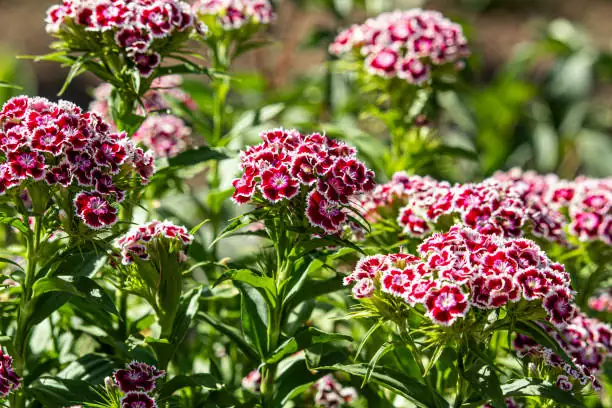
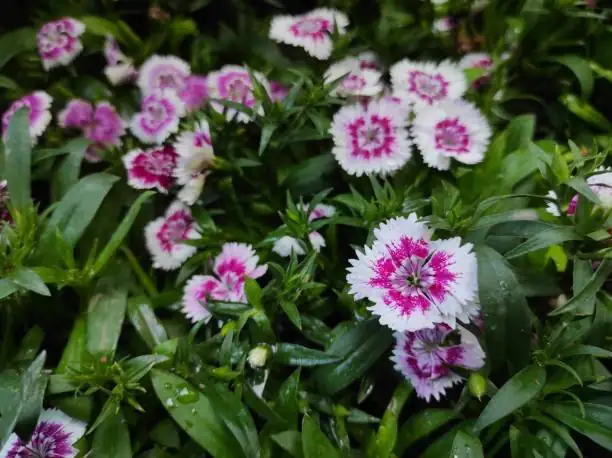
Known in Chinese as 石竹 (literally “stone bamboo”), Chinese pink is a cheerful dianthus native to China. It’s an easy-to-love garden and container favorite:
- Habit and size: Compact, clump-forming, typically 20–40 cm tall with a 15–30 cm spread.
- Flowers: Fringed or serrated petals in pink, red, white, purple, and striking bicolors—often with a darker central “eye.”
- Scent: A light, spicy, clove-like fragrance common to the genus.
- Season: A cool-season bloomer—most abundant from spring to early summer, and winter to spring in mild climates.
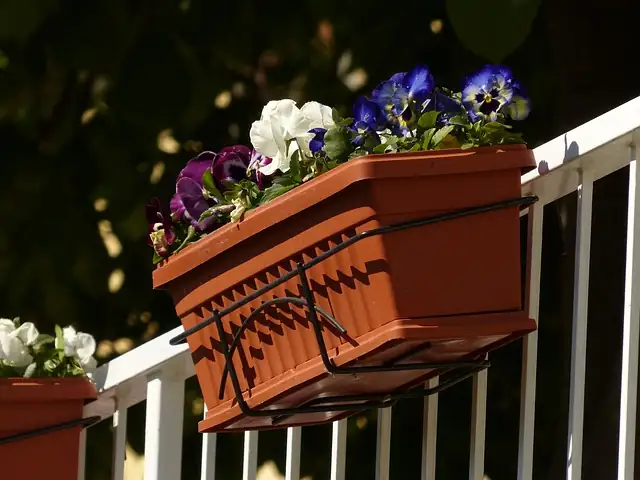
- Uses: Borders, window boxes, pots, and small bouquets. Petals can garnish dishes—only if the plant was grown chemical-free specifically for culinary use.
The genus name, Dianthus, is often rendered “flower of the gods,” which hints at the long history of admiration surrounding these plants.
How Flower Language Took Root
Victorian floriography: feelings, pressed in print
The “language of flowers” as most of us know it blossomed in the 19th century. Victorians adored coded bouquets called tussie-mussies and turned to pocket dictionaries to “translate” meaning. Influential volumes like Charlotte de la Tour’s Le Langage des Fleurs (1819) and Kate Greenaway’s The Language of Flowers (1884) helped standardize a European-American craze in which species, colors, and even the number of stems conveyed intent.
Carnations (a different species in the same genus) became some of the era’s loudest “speakers,” with color-specific signals. That color-coding, however, belongs to the traditional carnation (Dianthus caryophyllus), not automatically to Chinese pink.
Japanese hanakotoba: virtues in bloom
In Japan, hanakotoba assigns concise emotional or moral values to flowers. “Nadeshiko” (a name applied to dianthus in Japan) evokes refined grace and heartfelt affection in popular understanding—another example of how cultures distilled character into petals without needing a sentence.
China’s 花语: a living blend, not a single canon
China has a deep tradition of floral symbolism, but no single, official floriographic dictionary. Instead, modern 花语 pulls threads from:
- Indigenous symbolism and aesthetics,
- The global floriography wave (Victorian-era ideas that spread widely), and
- East Asian cultural exchanges, including hanakotoba.
Within this blended context, Chinese pink (石竹) has settled into approachable, upbeat meanings that match its look and garden behavior.
The Chinese Pink Message: Joy, Affection, Honor, and a Quiet Guardian
Here’s how contemporary Chinese 花语 commonly frames Dianthus chinensis—and how the plant’s character supports each idea:
- Joy and good fortune: The plant is a cool-season “smiler,” flashing bright bicolors and patterned “eyes” right when gardens crave color. The effect is celebratory, so bouquets read as cheerful well-wishes.
- Affection and admiration: The soft clove note and tidy, mounded habit give it a gentle, welcoming presence—warm but not overwhelming. It’s perfect when you want to say “I’m fond of you” without formality.
- Honor and respect: Straight, clean stems, an orderly look, and enduring cultural esteem within the genus lend it a respectful tone suited to congratulatory or esteem-filled occasions.
- Guardian motif: In modern traditions, dianthus is sometimes called a “guardian flower.” Chinese pink’s resilient cool-weather flowering, neat form, and steady return of blooms after deadheading suit that subtle message of watchfulness and care.
Don’t Confuse It with Carnation-Only Color Codes
A friendly caution if you’re composing a “message bouquet”:
- Chinese pink (Dianthus chinensis) is not the same as the florist’s carnation (Dianthus caryophyllus). They share a genus but differ in size, habit, and how their symbolism is typically used.
- The famous Victorian color codes—like red carnation for deep love, white for purity and remembrance, striped for refusal—belong to carnation tradition. They do not automatically apply to Chinese pink, whose 花语 centers on species-level sentiments (joy, affection, honor, guardian) rather than strict color rules.
- When gifting Chinese pink, choose colors for mood and cultural context rather than to “quote” carnation dictionaries. For example, vibrant bicolors feel festive; soft pinks read tender; crisp white looks fresh and refined—but your main message still comes from the flower itself.
Cultural Significance and Where It Shines
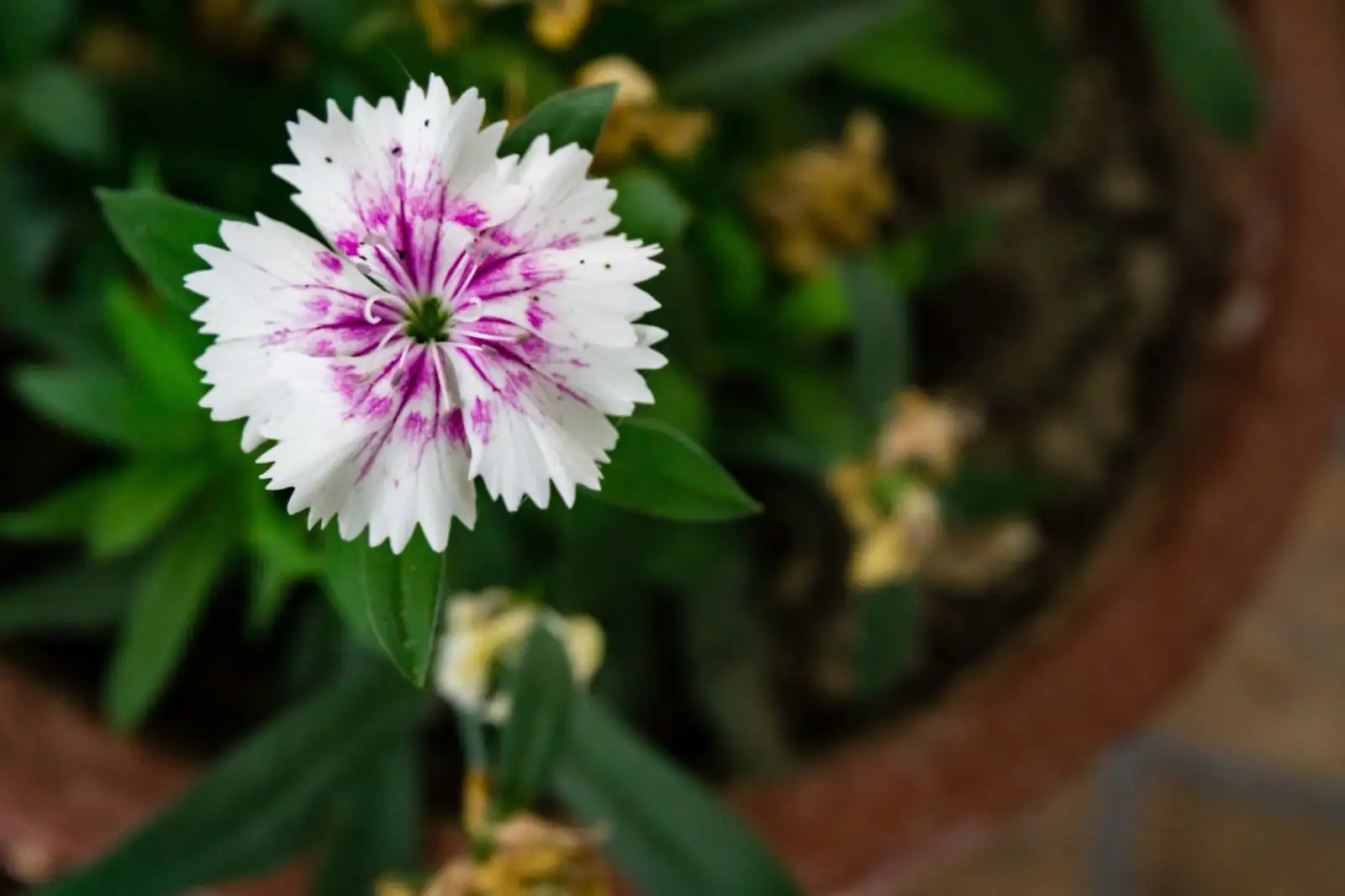
- A shared East Asian thread: Across East Asia, dianthus has long been cultivated, praised for its refined petals and clean lines. In China, Chinese pink’s cool-season sparkle and durable charm make it a natural for festive planters, courtyard pots, and spring borders.
- A classical echo: “Flower of the gods” adds a timeless, admiring undertone to the genus. Chinese pink’s role in traditional herbal references appears in historical texts, reflecting cultural history rather than modern clinical use.
- Everyday elegance: In small bouquets, Chinese pink feels personable and optimistic—ideal for teachers, mentors, neighbors, or anyone you want to honor warmly without ceremony.
If You Want Your Message to Bloom: Care Tips That Keep Flowers Talking
Think of care as punctuation—good cultivation makes your bouquet’s “sentence” crisp and clear.
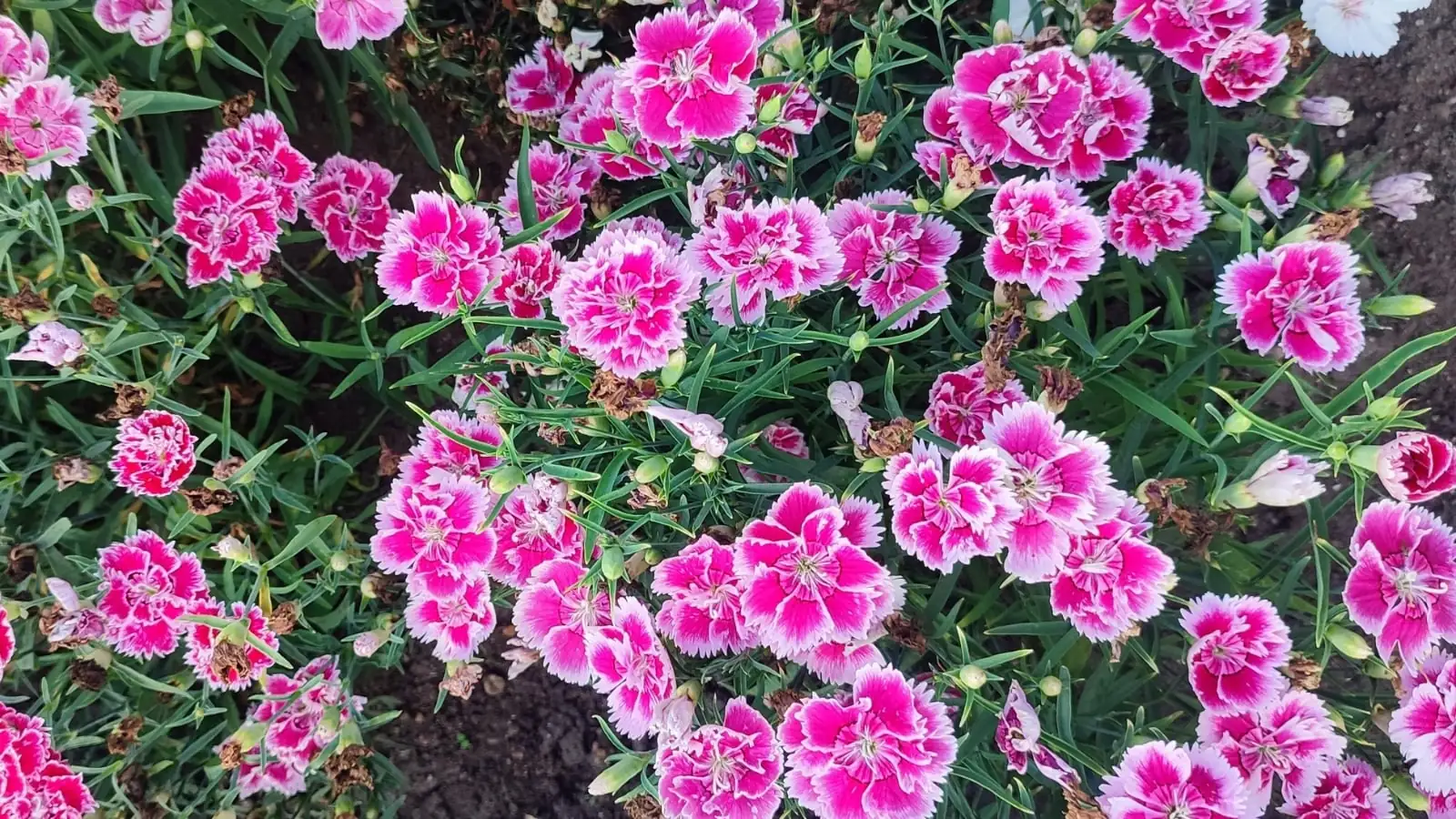
- Light: Full sun (6–8 hours) for the heaviest flowering; in hot summers, brief afternoon shade helps petals last.
- Temperature: Loves cool to mild conditions (about 7–20°C / 45–68°F). Treat as a cool-season annual or short-lived perennial (roughly USDA 6–9, cultivar and winter-wet permitting).
- Soil and water: Loose, fertile, very well-drained sandy or gritty loam. Let the top layer dry slightly between waterings; water at the base to keep foliage and petals dry.
- Feeding: Light touch. During active growth, feed monthly at half strength; in cool weather bloom, a gentle low-nitrogen, higher-potassium feed every 10–14 days can help—use sparingly.
- Grooming: Pinch once at 10–15 cm to encourage branching; deadhead often to extend bloom. Trim back after a main flush if overwintering.
- Airflow and health: Good ventilation discourages rust; spider mites can flare in hot, dry spells—treat early if needed. Avoid waterlogging to prevent rot.
Quick Gifting Guide
- When to choose Chinese pink:
- Congratulations on exams, promotions, or openings (joy + honor).
- Thank-you gifts and friendly check-ins (affection + “guardian” warmth).
- Seasonal brighten-ups for balconies and windowsills—so the message keeps blooming.
- How to present it:
- A small hand-tied posy or a potted plant works beautifully. For symbolism-forward gifting, keep the palette harmonious and let the species carry the meaning.
- Can you eat the petals?
- Only if the plant was grown for culinary use and never treated with chemicals. When in doubt, admire with your eyes and nose, not your fork.
Spot the Difference: Chinese Pink vs. Carnation (At a Glance)
- Species: D. chinensis (Chinese pink) vs. D. caryophyllus (carnation).
- Habit: Compact and mounding (about 20–40 cm) vs. typically taller, florist-grade stems.
- Role: Bedding, pots, and small cuts vs. classic long-stem floristry.
- Symbolism use: Chinese pink’s 花语 emphasizes joy, affection, honor, and a guardian theme; carnation is the one with tightly codified Victorian color meanings.
Final Thought
When you give Chinese pink, you’re sharing more than pretty fringed petals—you’re sending a compact chorus of well-being. In the global evolution of flower language, this little dianthus has earned a distinctly upbeat voice. Let it speak joy, offer affection, stand in quiet honor, and keep a watchful, guardian grace—all without saying a word.