

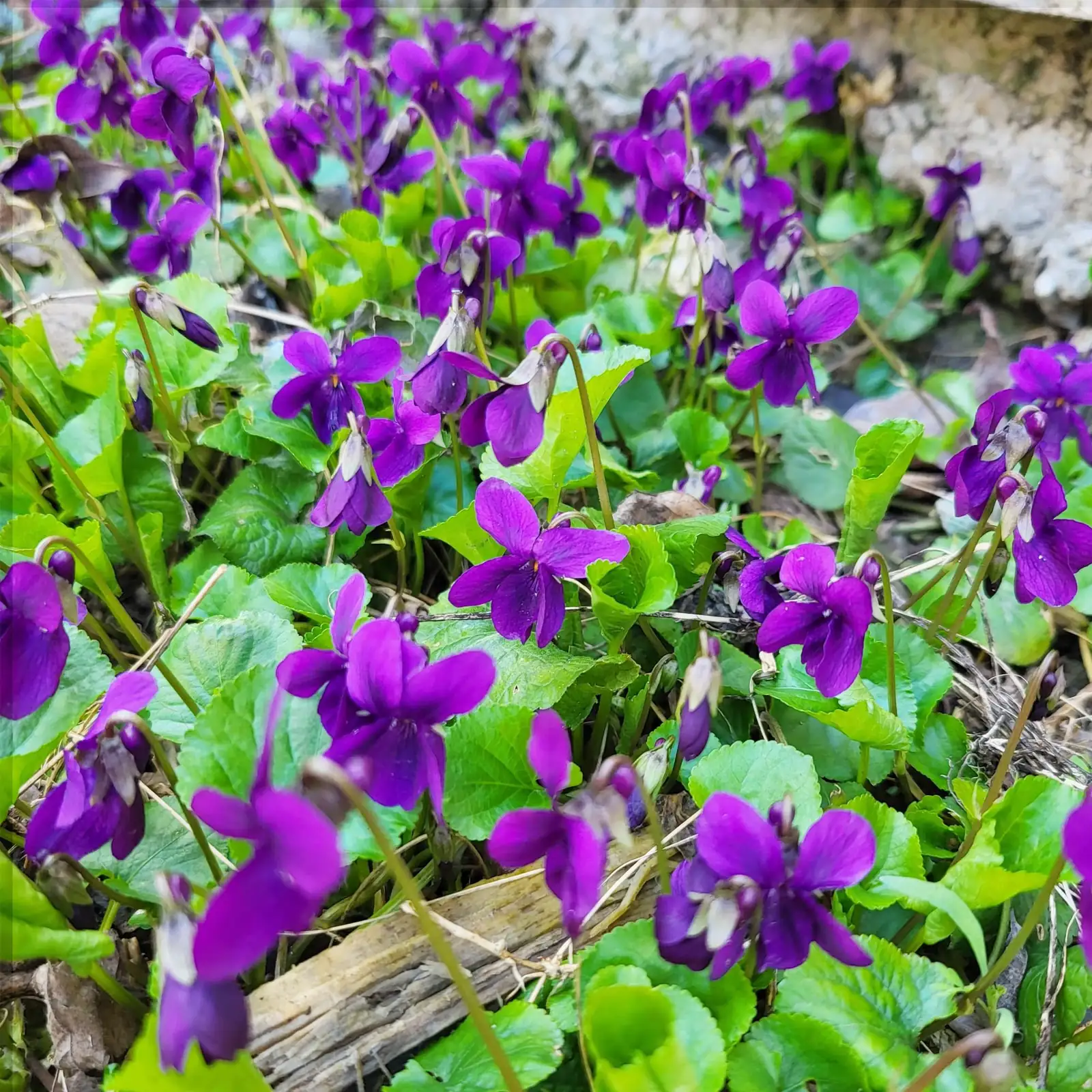
Imagine lifting the skirt of a spring shrub and finding a velvet sea of perfume and color. That’s the magic of Sweet Violet (Viola odorata): a soft, heart-shaped-leaf carpet that wakes early, blooms from February to April, and turns the awkward space under shrubs into a scented woodland vignette. Design it right, and those violets become the base note for layered color, graceful bloom succession, and moisture-harmonized planting in dappled shade.
Why Sweet Violet makes the perfect under-shrub anchor
- Fragrance and timing: Among the first true “hellos” of the year, Sweet Violets open in late winter and carry through spring (commonly February–April), releasing that unmistakably sweet scent when little else is awake.
- Form and feel: Low and tidy, with rounded to heart-shaped leaves, they spread gently by short stolons, knitting into a cushioned, naturalistic ground cover without looking weedy.
- Shade-savvy: They thrive in partial shade to dappled woodland light—think morning sun, afternoon shade in warmer areas—making them tailor-made for the soft light under shrubs and small trees.
- Cool comfort: Best in cool to mild conditions (USDA Zones 5–9). They sulk in high heat, so a protective canopy and steady moisture go a long way.
Designing color layers in the half-light
Use Viola odorata as the living paint that ties the palette together. Their classic deep purple blooms glow in soft shade, and there are white forms if you prefer a cooler scheme.
Classic woodland contrast: violet, white, and chartreuse
- Base (carpet): Viola odorata
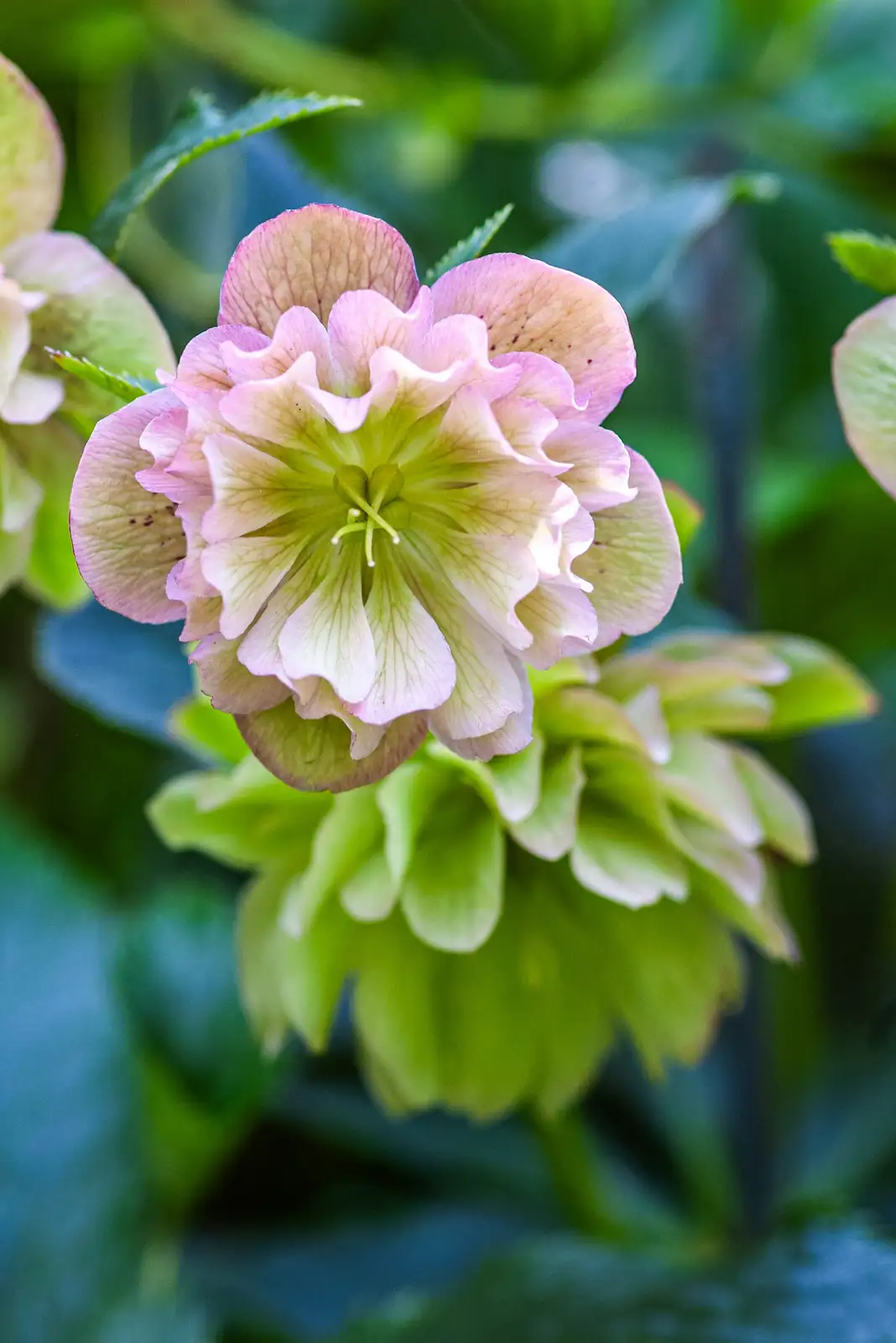
- Uprights/accents: Hellebores (Helleborus × hybridus, H. niger) rising above the violet mat
- Sparkle: Snowdrops (Galanthus), Winter aconite (Eranthis hyemalis)
- Fresh lift: Fern croziers and the chartreuse bells of Helleborus foetidus
Pastel twilight: lavender, ice-blue, soft yellow
- Base: V. odorata ‘Alba’ or pale violet forms interlaced with sweet woodruff (Galium odoratum)
- Companions: Brunnera macrophylla (sky-blue), Primula vulgaris (buttermilk)
- Punctuation: Small-cupped Narcissus (e.g., ‘W.P. Milner’) to catch low light
Jewel-tone edge: amethyst, sapphire, pewter
- Base: Deep purple V. odorata
- Companions: Pulmonaria (spotted leaves, cobalt flowers), Heuchera in smoky-plum foliage
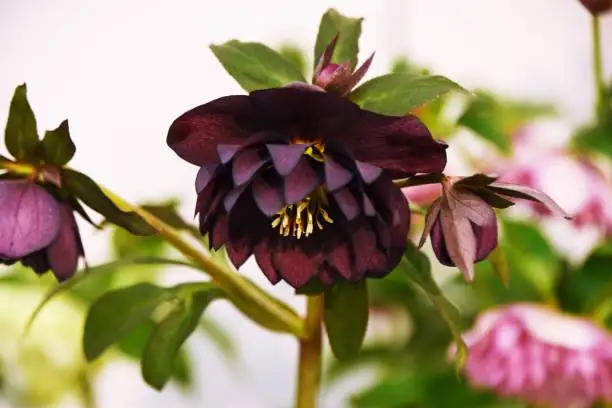
- Vertical notes: Lenten roses in burgundy and near-black tones
Bloom succession, February to April (and a few steps beyond)
Think of violets as the elegant continuo line while other players take short solos.
February: the whisper before spring
- Snowdrops and Helleborus niger open into the quiet.
- Early crocus and winter aconite add pinpoints of saffron and white.
- Violets begin, especially in milder pockets near a wall or under a leaf mulch.
March: the crescendo
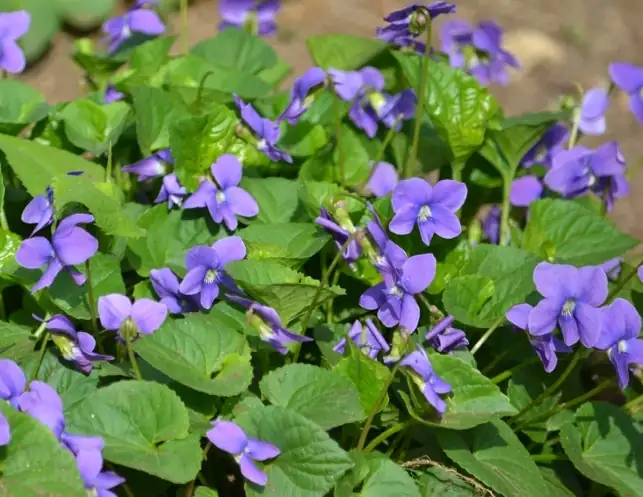
- Sweet Violet is in prime bloom—purple pools under shrubs.
- Lenten roses (Helleborus × hybridus) nod above the violet carpet.
- Anemone blanda, early Primula, and Scilla weave blue and white through the scene.
- Pulmonaria flowers pull in bees on warm days.
April: the lingering echo
- Muscari (grape hyacinths) and small Narcissus drift among still-flowering violets.
- Brunnera and Corydalis solida keep blue and pink tones moving.
- Ferns unfurl; Heuchera foliage holds the structure as temperatures rise.
Moisture-matching: the quiet key to success
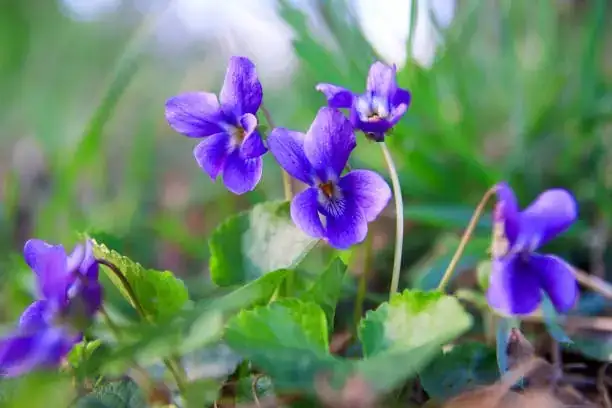
Violets love evenly moist, fertile, well-drained soil—think leafmold-rich woodland loam that never puddles but also never crisps.
- Soil recipe: Work in compost or leaf mold to a loose, moisture-retentive but free-draining texture; sandy loam is ideal.
- Mulch: Top-dress annually with shredded leaves; this mimics a forest floor and buffers moisture.
- Companions that agree: Hellebores, Primula, Pulmonaria, Brunnera, snowdrops, small Narcissus, Anemone blanda, and many ferns relish the same regular moisture.
- Watering rhythm: Keep consistently moist in spring; once established, you can allow the surface to dry lightly between waterings without letting clumps stress.
- Warm-climate tip: In hot summers, site violets in bright shade with afternoon protection and keep the root zone cool with mulch. Treat them as cool-season charmers if summers are severe.
Soft ground cover effects under shrubs
Underplanting is part choreography, part comfort.
Deciduous shrubs and small trees (e.g., witch hazel, dogwood, hydrangea)
- Benefit: Early light before leaf-out encourages robust violet bloom.
- Design move: Sweep violets in broad drifts. Thread in snowdrops and Anemone blanda. Set hellebores as “islands” rising above the carpet.
- Summer grace: When canopy fills, heat softens; violets stay happier.
Evergreen structure (e.g., camellia, rhododendron/azalea, mahonia)
- Benefit: Reliable shade and a sheltered, moist root run.
- Design move: Use white violets to brighten the shade. Add Pulmonaria and Brunnera near the dripline; tuck small Narcissus for spring sparkle.
Path edges and pockets
- Let violets spill to the path where fragrance is most appreciated.
- Plant between buttress roots rather than too close to trunks; aim for the outer third of the shrub’s canopy where feeder roots are friendlier.
Three planting recipes to copy
1) Lenten Rose Salon (dappled shade, cool loam)
- 5–7 Helleborus × hybridus in a loose triangle
- Broad sweep of Viola odorata beneath and between clumps
- Drifts of Galanthus and Eranthis for February
- A ribbon of Muscari to carry blue through April
Design note: Keep a palm’s width clear around hellebore crowns; violets can lightly skirt them.
2) Camellia Parlor (evergreen canopy, acid-leaning loam)
- Camellia sasanqua or japonica as the anchor
- Viola odorata ‘Alba’ as a luminous base layer
- Pulmonaria and small-leaved ferns tucked in clusters
- Species Narcissus in light drifts for sparkle
Design note: Leaf-mold mulch every fall; steady spring moisture.
3) Tiny Terrace Pot (cool container by the back door)
- Wide, shallow container with excellent drainage
- Center: a compact hellebore
- Underplant: Sweet violets and mini Narcissus
- Top-dress with fine bark and a few mossy stones
Care: Water when the surface begins to dry, never letting it sit soggy.
Planting and establishment
- Buying guide: Choose plants with fresh, vibrant green leaves, no spotting, and no visible pests. Rooted stolons or a well-filled pot take off fastest.
- Setout: Plant in loose, fertile soil enriched with compost. Space clumps 15–20 cm apart; they’ll knit by runners.
- First year: Keep evenly moist. After establishment, allow a light surface dry-down between thorough waterings.
Care calendar (Zones 5–9)
- Late winter to spring (Feb–Apr): Peak bloom; keep moisture steady. Feed lightly with compost or a balanced fertilizer for lush growth and more flowers.
- Summer: Shield from harsh sun and heat; mulch to cool roots; water during dry spells.
- Fall: Tidy, deadhead, and rein in long runners if needed; divide and refresh congested clumps.
- Winter: Cold hardy and usually unbothered by light frosts; in containers, avoid waterlogged media.
Keeping the carpet courteous
- Editing spread: Violets spread by stolons. Edge beds once or twice a year if you prefer sharp lines; or let them flow for a natural look.
- Deadheading: Snip spent blooms to tidy and to encourage more flowers.
- Division and propagation: Divide mature clumps in spring or fall. You can also peg down a runner, let it root, then lift and replant.
Pests, diseases, and prevention
- Usual suspects: Aphids, red spider mites in hot/dry spells, and slugs/snails. Violet gall midge can distort buds; leaf spots and powdery mildew appear in still, damp air.
- Good habits:
- Water at the soil line to keep foliage dry.
- Maintain airy spacing and clean away tired leaves.
- Encourage predators, hand-pick slugs, and use traps/barriers as needed.
- Ensure good drainage to prevent rot.
Safety, scent, and the edible question
- Toxicity: Seeds and rhizomes are toxic—keep away from children and pets. The flowers (and sometimes young leaves) are used as edibles in small amounts, but avoid seeds and rhizomes entirely.
- Fragrance moments: Plant near paths, gates, or doorways where a low drift of violets perfumes the air as temperatures rise.
A brief note on symbolism (flower language)
Sweet Violet carries centuries of symbolism—modesty and humility in ancient lore, then faithfulness and quiet devotion in Victorian “flower language.” Stories link violets to love and remembrance (Napoleon’s fondness helped cement their romantic aura). Flower language isn’t a scientific system; it’s a cultural shorthand woven from poetry, myth, and social custom. In design, you can nod to that history by pairing violets with gentle companions—snowdrops for purity, hellebores for endurance—building a planting that feels intimate, loyal, and quietly hopeful at winter’s end.
Quick companion checklist for dappled shade
- Perfect partners for color and moisture: Hellebores, Galanthus, Eranthis, Crocus, Anemone blanda, Scilla, Muscari, small Narcissus, Primula, Pulmonaria, Brunnera, ferns, select Heuchera, and fine-textured sedges (Carex).
- Light: Partial shade to dappled; morning sun with afternoon shade in warm regions.
- Soil: Moist, fertile, well-drained; leaf mold is your friend.
- Climate: Cool to mild; protect from strong heat and dryness.
When you let Sweet Violets do what they do best—knit, perfume, and glow—they turn the dim places under shrubs into living tapestries. Layer color smartly, choose plants that like the same moist-but-drained comfort, and aim for a steady procession from February to April. Your spring garden won’t shout; it will sing.


