

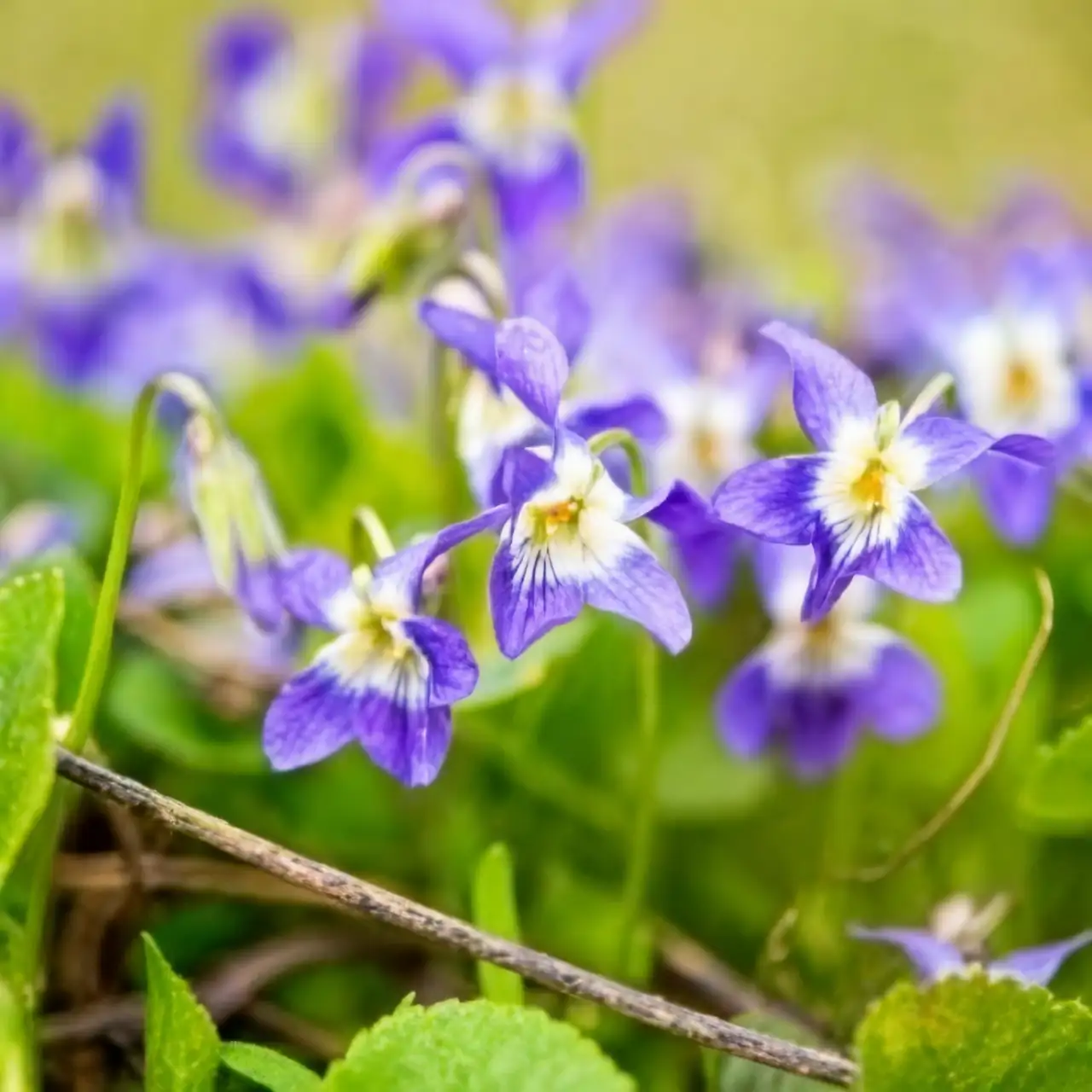
Imagine a flower that greets you with a scent so sweet and powdery you lean in for another breath—only to find it’s mysteriously vanished. Meet Sweet Violet (Viola odorata), the little woodland charmer that plays hide-and-seek with your nose. The trick? A group of fragrant molecules called ionones that both define violet’s signature smell and momentarily “switch off” your ability to perceive it. Science, mischief, and romance in one tiny bloom.
Meet Sweet Violet (Viola odorata)
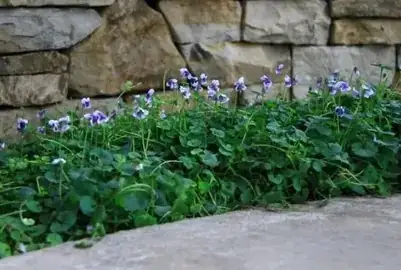
- Family: Violaceae; Genus: Viola
- Origins: Native to Europe, North Africa, and Western Asia
- Habit: Low, herbaceous perennial; about 15 cm (6 in) tall, creeping by runners to form gentle carpets
- Look: Tidy clumps of heart-shaped, scalloped leaves; early flowers (usually deep purple) with a sweet, unmistakable fragrance
- Season: Late winter through spring—often February to April—when it feels like the garden’s first “hello” of the year
- Best places: Dappled woodland light, under shrubs, at the edges of shaded borders, in cool rock gardens, and in containers kept out of harsh sun
What’s in that perfume? Ionones, orris, and a dash of chemistry
The scent of Viola odorata is largely built on ionones—violet-tinged aromatic ketones born from the breakdown of plant pigments. Here’s why they matter:
- Ionones = signature violet smell: airy, sweet, powdery, with a soft woody-orris (iris) undertone.
- Tiny but mighty: Even at low concentrations, ionones shape our perception of “violet.”
- Perfumery’s secret: Natural violet flower extracts are rare and costly; most “violet” perfumes are built from ionones and relatives (methyl ionones, ionols), often blended with orris notes. Violet leaf is also extracted, but it smells green and dewy—more leafy-cool than candy-sweet.
Why the scent “disappears”: olfactory fatigue meets ionone trickery
Violets are famous for a sensory magic trick. After a few sniffs:
- Ionones temporarily desensitize the very receptors needed to detect them.
- Your brain reads this as “the scent is gone,” even while the flower is still producing fragrance.
- Give it a short break—minutes, not hours—and your perception resets, so the scent “returns.”
This is a dramatic, violet-specific version of olfactory adaptation: your nose gets momentarily saturated and stops firing, so you can pay attention to new smells. Violets just happen to be very good at pushing that button.
How to actually smell your violets (and keep smelling them)
Outdoors: make the most of fleeting fragrance
- Time it right: Early morning or after light rain is prime; cool, humid air lifts scent without blowing it away.
- Go low and slow: Kneel so your nose is right at flower height; take one or two gentle inhalations, then step back for a minute.
- Plant by paths: Edge a walkway, doorstep, or gate where you naturally pass—micro-whiffs beat marathon sniffs.
- Cluster wisely: Small clumps every few meters let you “reboot” your nose as you move through the garden.
- Keep them happy: Partial shade, evenly moist (not soggy) soil, and regular deadheading promote more fragrant blooms, longer.
Small spaces and containers
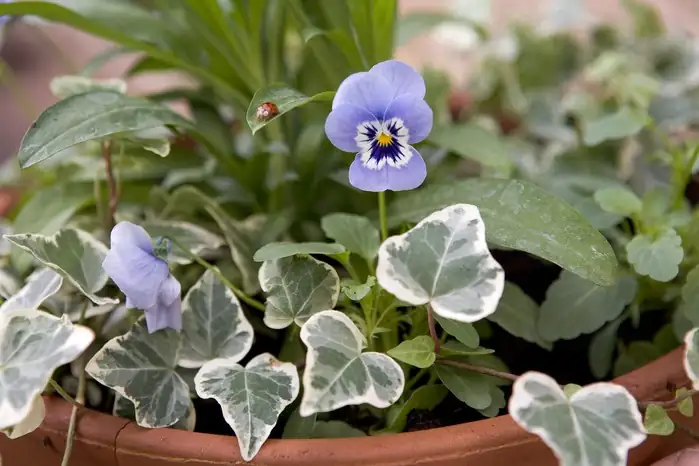
- Right spot: Bright shade or dappled light; morning sun with afternoon shade in warm regions. Indoors can be too warm and dry—balconies, porches, and shaded windowsills are better.
- Potting mix: Moisture-retentive, well-drained mix. Water when the surface just begins to dry; never let pots bake.
- Fragrance placement: Put containers at nose level near a doorway, bench, or open window—anywhere you naturally pause.
- Gentle companions: Pair with spring friends that won’t overpower the scent (primroses, ferns, or hellebores in deeper shade).
Scent-savoring hacks
- Warmth unlocks volatiles: Cup a flower gently in your hands for 10–15 seconds, then take a single, soft sniff.
- Reset your nose: Step into neutral air for a minute or smell your sleeve (better than coffee beans) before returning.
- Explore the leaf note: Lightly crush a leaf between fingertips—the “violet leaf” accord is cool, green, and cucumber-fresh, a playful counterpoint to the sweet bloom.
From garden to bottle: flowers vs. leaves
- Garden scent = flowers: That classic sweet, powdery violet perfume wafting from the petals in late winter and spring.
- Perfumery’s violet = chemistry: Because true violet flower extracts are finicky and scarce, perfumers often recreate the note with ionones and kin.
- Violet leaf absolute: Distilled from the leaves of Viola odorata; smells fresh, green, and herbaceous rather than candy-sweet. It’s widely used to lend a crisp, dewy facet in fragrance.
Grow it like a pro (fragrance-first care)
- Light: Partial shade to dappled sun; avoid hot, all-day exposure.
- Soil: Fertile, loose, moisture-retentive but well-drained (think moist sandy loam). Consistent moisture is key.
- Climate: Cool to mild; happiest in USDA Zones 5–9. Protect from sustained heat.
- Watering: Keep evenly moist, especially during spring growth and bloom; avoid waterlogging.
- Feeding: Light compost or balanced feed in spring; optional light liquid feed every 7–10 days in active growth for extra lushness.
- Pruning: Deadhead to tidy and encourage more flowers; trim weak growth and rein in long runners in late fall if you prefer a neat patch.
- Propagation: By seed, gentle division, or pegging down runners (stolons) to root. Container clumps appreciate refreshing/dividing every 2–3 years.
Pests, diseases, and simple prevention
- Likely culprits: Aphids, red spider mites (in hot, dry spells), slugs/snails. Fungal issues include leaf spots and powdery mildew; violet gall midge may appear in some areas.
- Prevention: Keep airflow good, water at soil level, avoid soggy soil, and clear old foliage. Shade and steady moisture deter mite flare-ups.
Safety and edibility
- Edible accents: Flowers—and sometimes young leaves—are used as delicate garnishes, in teas or syrups.
- Important caution: Seeds and rhizomes are toxic; do not ingest. Keep plants out of reach of curious children and pets.
Why violets symbolize modesty and devotion
In European lore, Sweet Violet came to embody modesty and faithfulness: small, low to the ground, often half-hidden by its own heart-shaped leaves, yet among the first to arrive each spring. The Victorian “language of flowers” amplified this—discreet blossoms for quiet affection, steadfast loyalty, and remembrance. Add Napoleon’s celebrated fondness for violets, and you get a centuries-deep association with tender constancy rather than showy passion.
Quick answers
- Are all violets fragrant? No. Many wild species and hybrids are scentless or only lightly scented. For a palpable perfume, seek Sweet Violet (Viola odorata).
- How is Sweet Violet different from pansy? Sweet Violet is a fragrant, creeping perennial with smaller blooms; pansies are typically grown as annuals/biennials, with larger “faces” and generally less fragrance.
- Can it handle hot climates? It struggles in sustained heat. Provide bright shade, consistent moisture, and enjoy it as a cool-season charmer rather than a summer workhorse.
A final sniff
Sweet Violet’s genius is its brevity: a whisper of candy-powdered spring, then a science trick that urges you to come back for more. Plant it where you’ll pass often, breathe in once, step away, and repeat. With a little know-how—and a friendly nudge from ionones—Viola odorata turns everyday moments into tiny, fragrant revelations.


