
Think of your entrance as a runway and pansies as your color chips. Viola × wittrockiana—the modern garden pansy—turns stoops, steps, and window boxes into instant couture with plush, face-like blooms in moody violets, lemon sorbets, and crisp tricolor pops. Choose the right palette, mix mounding and trailing forms, and plant with purpose: you’ll have a high-impact welcome that looks intentional from the sidewalk and irresistible up close.
Meet the star: Viola × wittrockiana (Pansy)
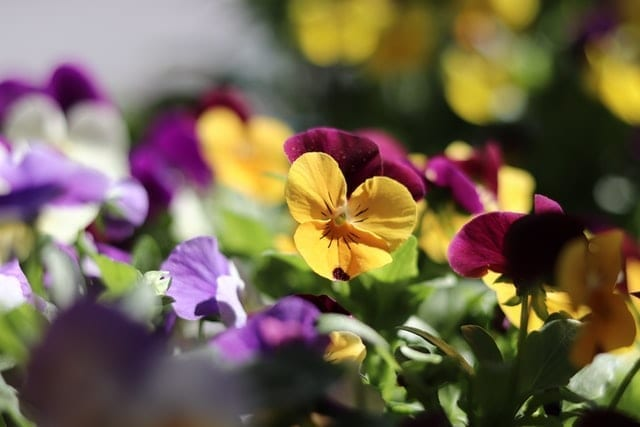
- Habit and size: Compact, mounding to softly trailing, typically 6–10 in tall and 6–12 in wide depending on type.
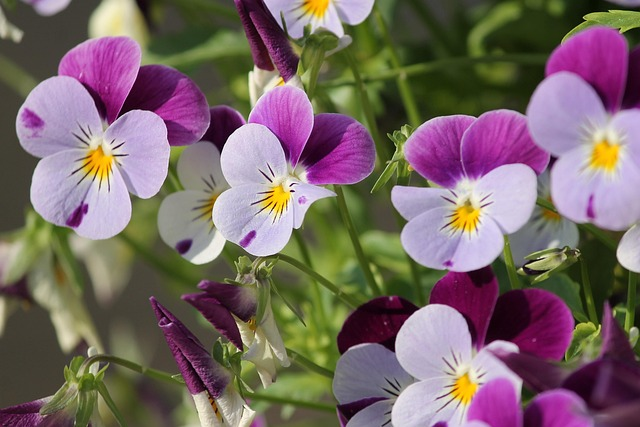
- Flowers: Velvety 1.5–2.5 in blooms with that iconic “face,” in single, bi-, and tricolor schemes.
- Season: Peak in cool weather—spring to early summer and again in fall; often through mild winters.
- Light: Full sun to partial shade (aim for ~6 hours; give afternoon shade in warm regions).
- Soil: Fertile, humus-rich, consistently moist but well-drained; slightly acidic is ideal.
- Climate notes: Thrives in cool conditions (about 45–68°F). Heat above ~77°F slows buds; around 85°F many plants stall. Light frosts are typically fine; prolonged hard freezes around 23°F or below can damage, especially in containers.
Design first: color palettes that pop at the door
1) Moody Violets
Think velvet theater curtains at dusk—inky purples, near-black blooms, and midnight blues for a luxe, shadowy vibe that reads sophisticated from a distance and dramatic up close.
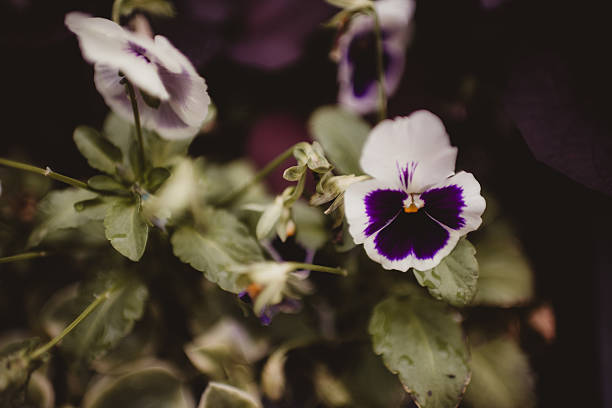
- Go-to pansy colors: deep violet, near-black, indigo, smoky plum
- Accents: a touch of silver foliage or soft gray pot finishes heightens the mood
2) Lemon Sorbet
A breath of cool air: pale lemon, cream, and white pansies glow in low light and feel crisp against brick, charcoal, or black doors.
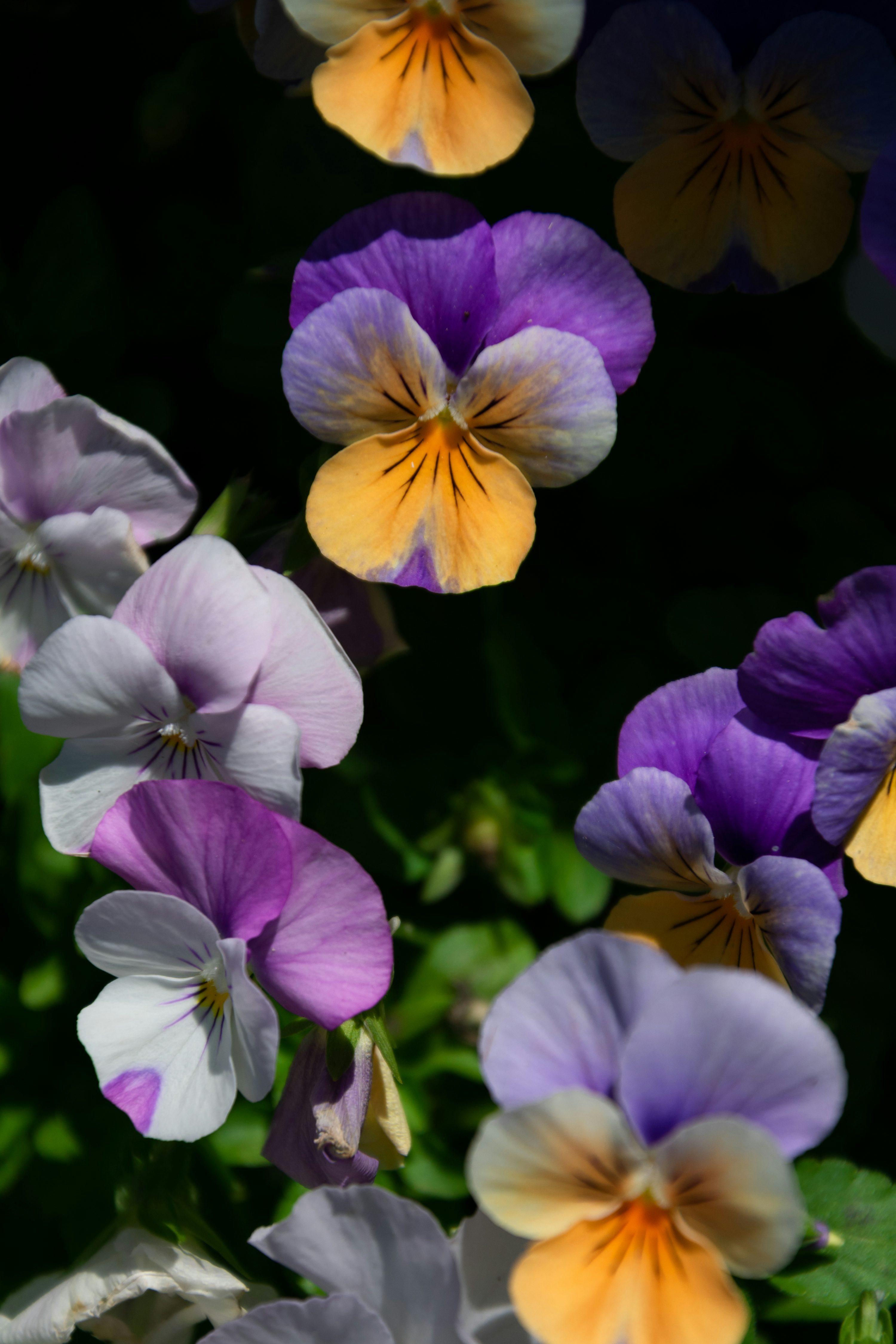
- Go-to pansy colors: pastel yellow, parchment cream, white with soft “faces”
- Accents: fresh green foliage and clean-lined containers for a modern, airy look
3) Tricolor Pops
That classic pansy look—purple, yellow, and white—stitches together like confetti. Use it to make small entrances feel joyful and animated.
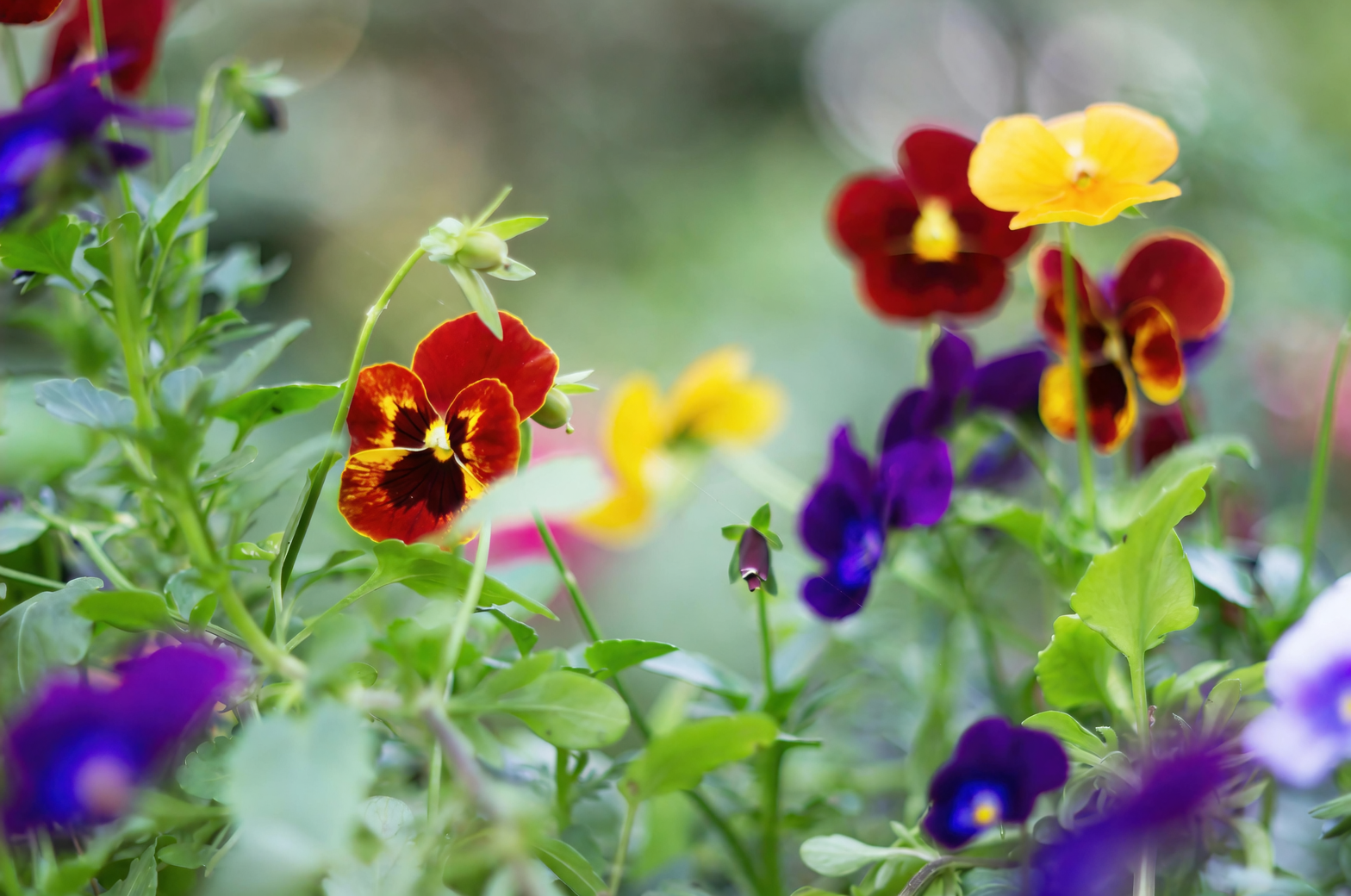
- Go-to pansy colors: purple/yellow/white mixes, bold “faces”
- Accents: repeat a single color (like yellow) in door hardware or a mat to tie it together
Trailing vs. mounding: how to build the silhouette
- Mounding pansies (the classic habit): Create the “cushion” of color. Use these for the main mass in the center/back of pots and the back row of window boxes.
- Trailing pansies (e.g., Cool Wave–type series): Soften edges and draw the eye down the container or over the rail. Use these at the rim/front, spaced a bit wider than mounders.
Proportions that work:
- Tight/graphic look: 80% mounding, 20% trailing
- Lush/cascading look: 60% mounding, 40% trailing
High-impact entrance recipes with exact counts and spacing
Plant counts assume healthy 3–4 in nursery pots and a well-draining mix. Adjust slightly for extra-compact or extra-trailing cultivars.
A) Moody Violets—Paired entry urns (each 16–18 in wide)
- Palette: Deep violet + near-black pansies with a whisper of silver foliage
- Per urn:
- 5–7 mounding pansies (center and middle ring)
- 2–3 trailing pansies at the rim (evenly spaced)
- Optional: 1 small, airy silver accent (like a single dusty miller) at the back for contrast
- Spacing: 6–8 in between mounders; 8–10 in between trailing plants
- Tip: Keep the color story tight—two tones max—to maintain that luxe, gallery feel.
B) Lemon Sorbet—30–36 in window box, cool shade to bright light
- Palette: Pastel yellow and white pansies with a faint lemon-cream ombré
- Per box (two staggered rows):
- Back row: 6–8 mounding pansies
- Front row: 5–6 mounding pansies + 3–4 trailing pansies mixed in the front edge
- Spacing: 6–8 in for mounders; 8–10 in for trailers along the lip
- Styling: A white or pale-stained box enhances the sorbet glow; let the trailers just kiss the sill line.
C) Tricolor Pops—Porch step planters (each 12–14 in wide)
- Palette: Purple/yellow/white “faces” mixed evenly for a confetti effect
- Per planter:
- 4–5 mounding pansies (center)
- 1–2 trailing pansies at the rim
- Spacing: 6–7 in between plants
- Placement: Stagger two or three pots up the steps to pull the eye toward the door.
D) Bed-to-door runway—Edging strip, 10 ft long
- Goal: A graphic ribbon of color leading to the entrance
- Plants: 20–26 compact mounders (6–8 in apart in a single row), or 16–20 mounders plus 6–8 trailers in front (trailers 8–10 in apart)
- Pattern ideas:
- Color-block: 5 ft of deep violet, then 5 ft of lemon sorbet
- Stripe: Alternate tricolor and solid violet every 3–4 plants for rhythm
Quick plant-count cheat sheet
- 12 in round pot: 4–5 mounders + 1–2 trailers
- 16–18 in round pot: 5–7 mounders + 2–3 trailers
- 24 in window box (two rows): 6–8 mounders + 2–3 trailers
- 30–36 in window box (two rows): 11–14 mounders + 3–4 trailers
- In-ground edging: 6–8 in spacing for compact/mounding, 8–10 in for trailing types
Note: Resist the urge to overstuff. Good airflow keeps blooms coming and fungal issues at bay.
How to plant for flawless entrances
1) Prep the container
- Use pots/boxes with drainage holes and a loose, well-draining, peat- or compost-amended mix. Pre-moisten before planting.
2) Lay out first, plant second
- Set pots on top and audition your spacing (6–8 in for mounding, wider for trailers). Tweak the palette and position before you commit.
3) Plant with a gentle hand
- Set crowns just above the soil line. Firm lightly; don’t bury stems.
4) Water at soil level
- Wet thoroughly, then let the top 0.4–0.8 in dry before watering again. Never let containers sit in saucers of water.
5) Finish with detail
- Tuck in a living “mulch” of moss or fine gravel for polish and to buffer splash on petals.
Care that keeps them couture
- Light: Full sun to partial shade; in warm climates, protect with afternoon shade to prevent heat stress and keep flowers coming.
- Temperature: Best around 45–68°F. Flowering usually slows above ~77°F and can stall near 85°F. In cold snaps, short frosts are often fine; protect from prolonged deep freezes (around 23°F or lower), especially in containers.
- Watering: Keep evenly moist, never soggy. Aim water at the base—wet petals invite Botrytis and other troubles.
- Feeding: Mix in a light, slow-release fertilizer at planting. During active growth, either feed monthly with a balanced fertilizer or every 2 weeks at half strength. Once budding is strong, switch to a bloom-leaning feed and avoid excess nitrogen.
- Grooming: Deadhead often—pinch off the spent bloom with its stem. If plants get leggy after a heat lull, shear to 3–4 in to refresh.
- Spacing and airflow: Your best defense against powdery/downy mildew and leaf spots. Remove any mushy or spotted foliage promptly.
- Pests: Watch for aphids, spider mites, and slugs/snails. Insecticidal soap helps for soft-bodied pests; hand-pick slugs after dusk. Rabbits may nibble—consider low-profile guards near beds.
Seasonal strategy for doorfront impact
- Fall: Prime planting in many regions. Cooler nights = richer color and fresh growth.
- Winter (mild climates): Keep boxes bright and cool; bloom often continues.
- Spring: Peak show. Keep moisture steady, deadhead diligently, and top up feed.
- Summer: Expect a pause in heat. Shift to afternoon shade, maintain even moisture with excellent drainage, and don’t “overwater to fix” heat stall—cooler conditions are the cure.
Edible flourish, with care
Pansy blooms are commonly used as edible garnishes—float them on spring drinks or perch on cupcakes—provided they’re grown without ornamental pesticides. Use as accents rather than large servings, since overindulgence may upset stomachs.
Flower language: why pansies feel like a little hello
The word “pansy” comes from the French pensée—“thought.” That etymology fed a deep association with remembrance and thoughtful love. In Victorian floriography, pansies could hint at quiet or even “forbidden” affection, and color deepened the nuance: purples for deep, reflective love; mixed “faces” for cheer and fond regard. As with all flower language, meanings are cultural and fluid, but on a doorstep the message translates simply: I’m thinking of you—welcome.
Troubleshooting, fast
- Buds but no blooms? Heat likely. Add afternoon shade and airflow; keep soil evenly moist but draining freely.
- Petals spotty or fuzzy? Water earlier in the day at soil level; remove affected blooms.
- Plants collapsing at the crown? Check for waterlogging—improve drainage and reduce crowding.
Bring your entrance to life with intention: choose a palette, honor spacing, and let those mounding cushions meet a few elegant trailers at the edge. With pansies, the first impression is all color, all season—exactly where it counts.