

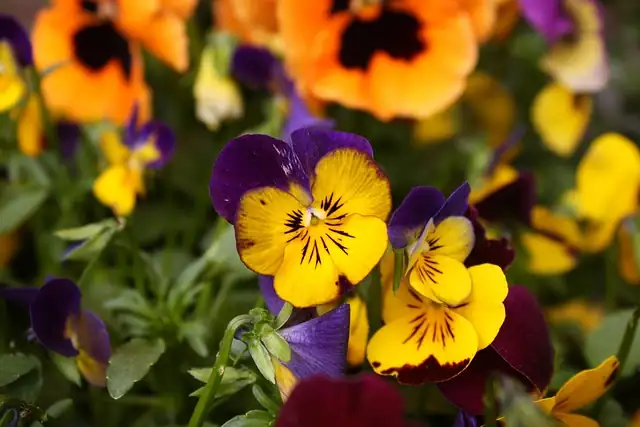
Imagine a flower with a built‑in landing strip, high‑contrast runway lights, and a plush red‑carpet finish. That’s the garden pansy, Viola × wittrockiana: a cool‑season charmer whose “face” isn’t just cute—it’s precision engineering for pollinators and irresistible material for garden designers.
Meet Viola × wittrockiana, a quick profile
- What it is: The classic garden pansy—bred in Europe from Viola relatives (notably Viola tricolor) and now a world favorite for cool‑season color.
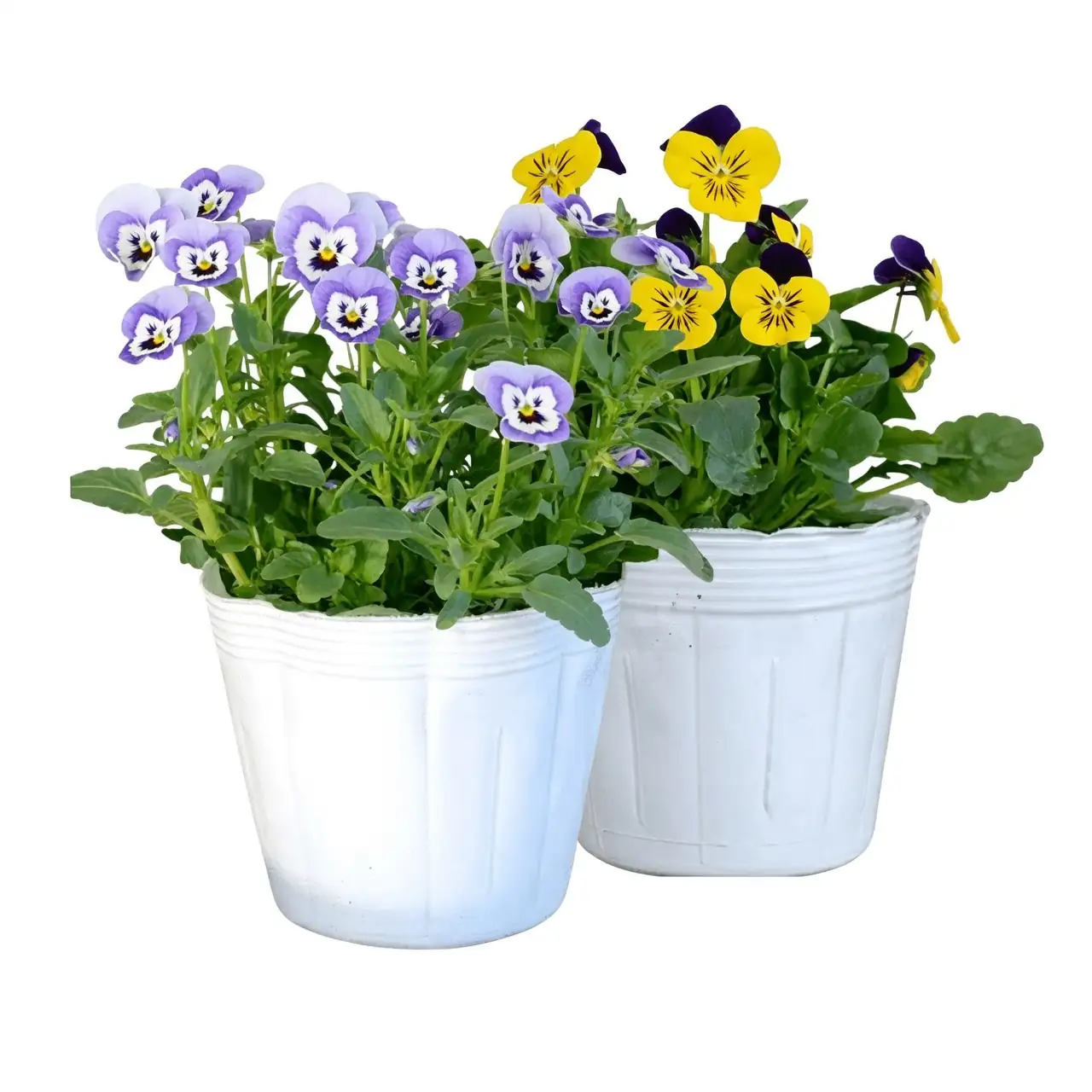
- Habit and size: Compact, mounding plants about 15–25 cm tall and 15–30 cm wide, with dense green leaves and large, often velvety blooms roughly 4–6.5 cm across.
- Season: Flourishes in cool weather—spring to early summer and again in fall; in mild regions it often flowers right through winter.
- Growing cues: Bright light (about 6 hours), moist but well‑drained soil, and good airflow. Afternoon shade helps in warm climates; prolonged heat above ~25°C can halt blooms.
Now for the fun part: how those “faces” are made—and why bees care.
The anatomy of a “face”: petals, beards, and signposts
Five petals, one runway
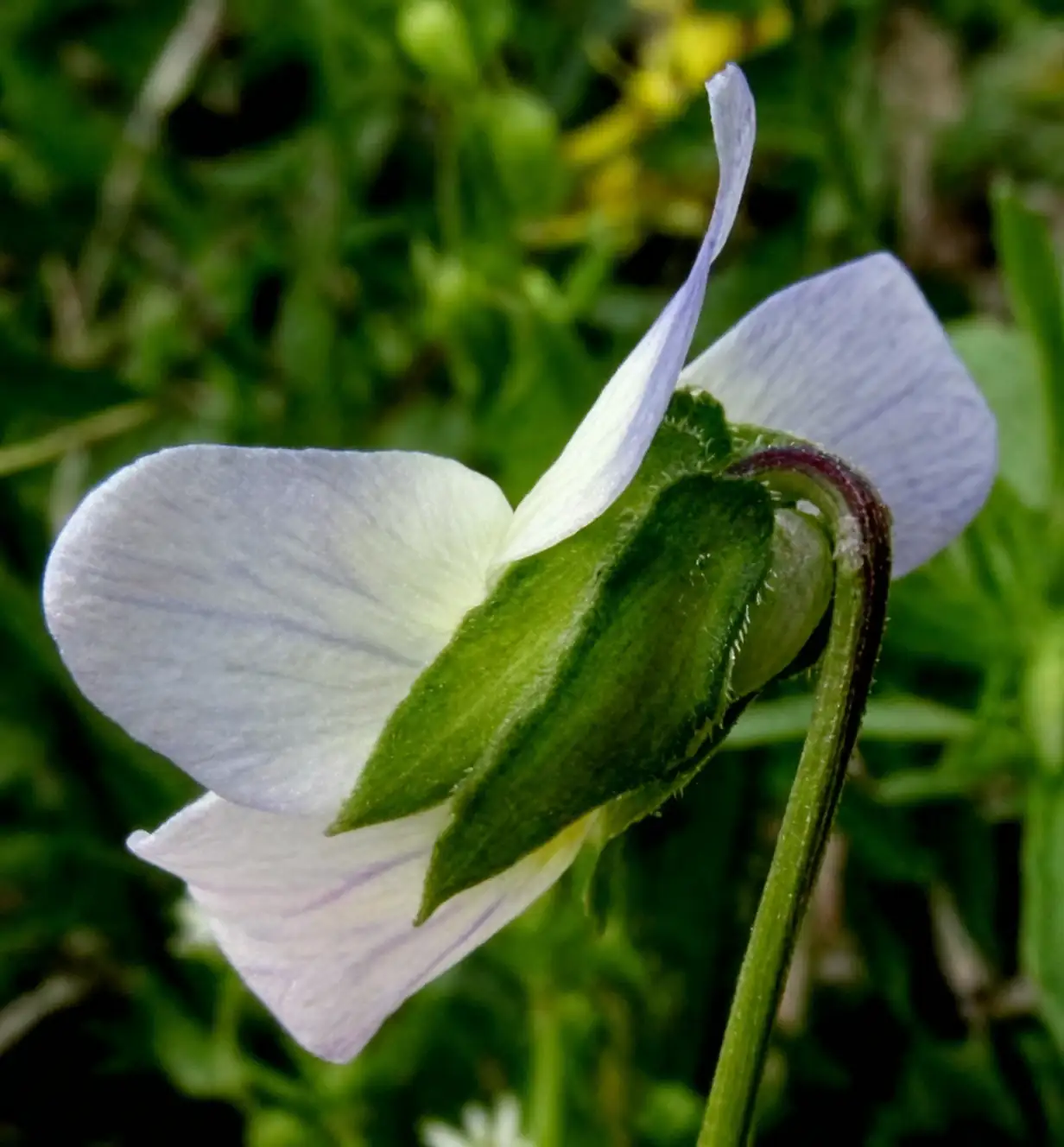
Pansy flowers have two overlapping upper petals, two side petals, and a single lower petal that bears a tiny “beard” (a tuft of hairs) near the throat. Tucked behind, the lower petal forms a short spur that hides the nectar. To a bee, that beard plus the throat architecture is a tactile‑visual combo plate: “this way to the good stuff.”
Nectar guides and veining
Those penciled lines (“whiskers”) and bold central blotches aren’t random. They:
- Radiate toward the nectar, acting like arrows for insect visitors.
- Often create strong contrast in human vision—and in bee vision too. Many pansies exhibit UV‑dark centers or radiating patterns that “light up” differently for pollinators than they do for us.
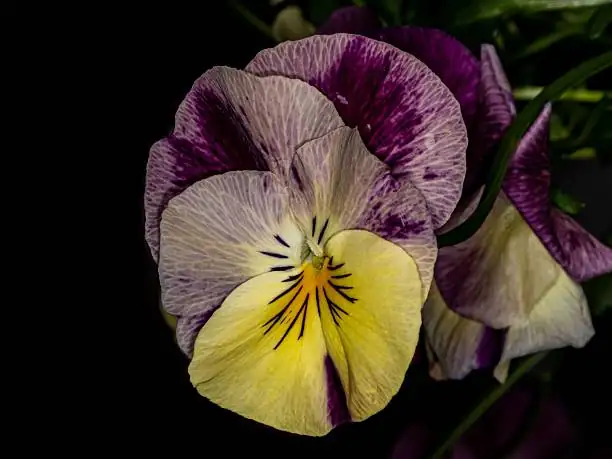
- Can be subtle (fine veining on pale petals) or dramatic (the classic dark “mask”), but either way they boost foraging efficiency. That rewards pollinators and encourages repeat visits.
Pigments that paint the mask
What looks like a tiny face is really a map of biochemistry laid over petal micro‑architecture.
Anthocyanins: purples, blues, and near‑blacks
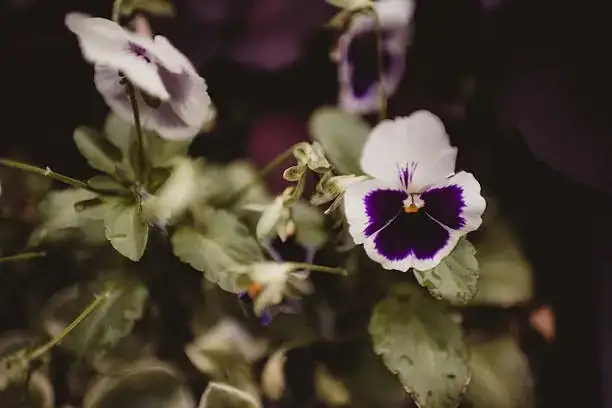
- The deep purples, blues, and burgundies come largely from anthocyanins, especially cyanidin and delphinidin, which accumulate in the upper epidermal cells of colored zones.
- Why blotches look so saturated: research on pansy petals has shown that several anthocyanin‑pathway genes ramp up in the dark blotch areas as the flower develops—particularly F3’5’H, DFR, and ANS. That localized “on” switch floods the blotch with pigment while adjacent zones stay paler.
- The elusive “black” pansy is really an ultra‑dense maroon‑purple made even darker by the petal’s light‑trapping surface (more on that velvet trick below).
Carotenoids and friends: yellows, creams, and hidden cues
- Sunny yellows and golds are powered by carotenoids, often concentrated in the lower petals and throats.
- Colorless flavonols, while invisible to us, can strongly absorb UV—sharpening nectar guides for bees.
- Co‑pigmentation and vacuolar pH subtly shift tones (think cool violet vs. red‑violet) and punch up saturation, which is why a pansy can read as “electric” on a crisp morning.
The optical “velvet” effect: why pansies look plush
That luxurious, matte glow—especially on dark varieties—comes from optics as much as pigment.
- Microscopic petal architecture: Pansy petals are covered in tiny conical (papillose) epidermal cells. These act like a field of micro‑lenses that scatter and funnel light into the pigment layer rather than bouncing it back as glare.
- Light‑trapping + heavy pigment = velvet: Dense anthocyanins absorb incoming light, while the rough micro‑texture suppresses shiny reflections. The result is that soft, plush visual depth we call “velvety.”
- Function, not just fashion: Conical cells also improve insect grip on petals, helping pollinators land and feed in chilly, dewy weather—prime pansy season.
Pollinators’ POV: what the bee actually sees
- High‑contrast targets: Dark masks on pale backgrounds are visible billboards; fine veining works like runway striping toward the nectar.
- Blue‑violet bias: Bees are particularly responsive to blues and violets (pansy forte), with UV patterns adding a secret layer of signage we can’t see.
- Tactile confirmation: The lower‑petal beard and the flower’s gentle “throat” contours guide proboscises to the nectar spur with minimal fuss.
Design takeaway: The more coherent and contrasting the center pattern, the faster a bee can process “nectar here”—and the better your cool‑season pollinator traffic.
Design with the pansy’s optics in mind
Choose your “face” for function and mood
- Clear‑faced: Solid colors without a mask—great for refined, modern schemes and late‑day glow (whites and lemons “pop” at dusk).
- Whiskered/veined: Fine penciling reads delicately up close; mix into balcony boxes and entry pots where people stand within arm’s reach.
- Blotched/masked: Bold, graphic faces that hold distance—perfect for beds, curbside views, or punchy container focal points.
- Near‑black velvets: Use as “matte anchors” with silver foliage (helichrysum, dusty miller) or chartreuse accents for drama.
Color strategy that considers bee vision
- Blues, violets, and strong contrasts draw more early‑season pollinators.
- Pale edges and bicolors add a “flag effect,” improving visibility from afar.
- Plant in generous drifts of one pattern or palette: bees learn fast, and repetition improves foraging efficiency.
Compositions that make texture the star
- Counterpoint velvet with shine: pair dark, velvety pansies with glossy ivy or polished ceramic pots.
- Layer with bulbs: Let tulips or narcissus rise through a pansy carpet; the pansies mask bulb foliage after bloom and keep color going.
- Trailing vs. mounding forms: Trailers soften pot rims and mixed baskets; mounding types give tidy, face‑forward color blocks.
Care that keeps colors crisp and petals plush
- Light: Full sun to partial shade; give afternoon shade in warm zones to prevent heat stress and washed‑out color.
- Temperature: Cool is king. Steadiest growth around 7–15°C; many bloom well near 10–20°C. Sustained heat above ~25°C reduces buds; above ~29°C, plants often crash.
- Water: Keep evenly moist but never soggy. Water at soil level to protect petals from spotting and gray mold. Containers dry quickly—check often.
- Feeding: Light, steady nutrition. A slow‑release at planting, then balanced liquid feed monthly (or half‑strength every two weeks). Shift to bloom‑leaning formulas once buds form; avoid high nitrogen that bloats leaves and mutes flowers.
- Grooming: Deadhead with the flower stem attached to prevent seed set and keep the color marathon going. Shear lightly if plants get leggy.
- Spacing and airflow: About 15–20 cm between plants for compact types; wider for trailers. Good spacing = clearer “velvet,” fewer fungal headaches.
- Pests/diseases: Watch for aphids, slugs/snails, and spider mites; rabbits may also snack. Reduce mildew and Botrytis by avoiding overhead watering and crowding; remove spotted petals promptly.
- Hardiness notes: Often treated as a cool‑season annual. Many cultivars handle light frosts; protect from prolonged hard freezes (around −5°C and below), especially in containers.
Edible note: The flowers are widely used as edible garnishes—only when grown without pesticides for ornamentals. Use as accents, not entrées.
Symbolism, origins, and a bit of lore
- Name and meaning: “Pansy” comes from French pensée—“thought.” Over centuries, it became a floral shorthand for remembrance, affectionate regard, and thoughtful love.
- Victorian floriography gave colors their own whispers (deep purples for silent or deep love, for example), but treat these as cultural poetry rather than strict rules.
- History in brief: Modern garden pansies were developed in 19th‑century Europe from species including Viola tricolor, selected for larger blooms and ever‑wilder palettes. Shakespeare nodded to its ancestor as “love‑in‑idleness”—a flower with a face made for stories.
Nerdy grower tips for peak pattern and velvet
- Cooler temps intensify anthocyanin expression, deepening purples and clarifying veining—plant for fall‑to‑spring arcs where possible.
- More light (without heat) = crisper contrasts. Morning sun plus afternoon shade is a pattern‑friendly combo in warm climates.
- Keep petals dry. Nothing dulls the velvet faster than lingering moisture and botrytis flecks.
- Choose pattern‑rich cultivars for pollinator plantings, and avoid systemic insecticides that can undermine the very visitors your nectar guides are courting.
In short: Viola × wittrockiana is a tiny masterclass in floral optics. Its “faces” are maps, its velvety sheen is physics, and its colors are a living lab of plant pigments. Plant them where you can admire the details up close—and where bees can read the signs just as clearly.


