From a hedgerow daydream to a riot of color at your doorstep—few plants have traveled as dramatically as the pansy. The story starts with a wild European violet, Viola tricolor—heartsease, love-in-idleness, the sprite of field margins—and crescendos into today’s Viola × wittrockiana: bigger blooms, bolder faces, and a palette that seems to have borrowed sunrise, stormcloud, and carnival all at once.
From heartsease to head-turner: the wild spark
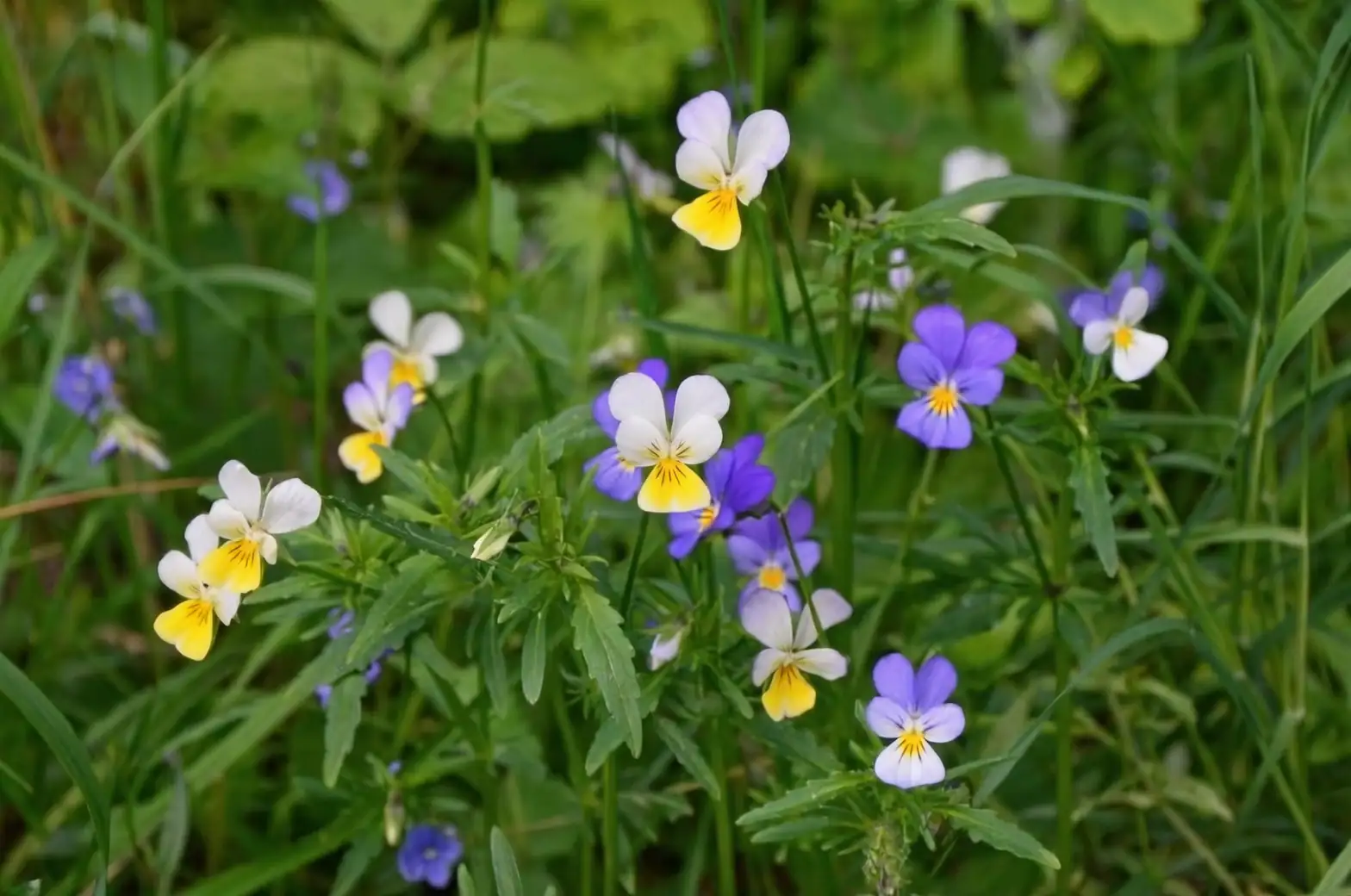
Viola tricolor once ruled cottage borders and meadow edges across Europe, including England. Small, tricolored blossoms winked from pasture and path: purple, yellow, white, veined like whispered secrets. It gathered legends as easily as dew—Shakespeare’s “love-in-idleness” in A Midsummer Night’s Dream, the flower whose juice could ignite mischief, and Hamlet’s nod to “pansies, that’s for thoughts.”
- Etymology with a wink: “Pansy” comes from the French pensée—“thought”—which is why, in the old language of flowers, pansies speak of remembrance and quiet affection. Victorian floriography wasn’t a scientific code so much as a cultural game, but the association stuck because the flower’s face looks so expressive. Purple forms often leaned toward “deep or silent love,” while mixed “faces” suggested affectionate, thoughtful regard.
The 19th-century leap: European breeders reimagine a cottage flower
By the early 1800s, gardeners across Europe began to wonder: what if heartsease could be dialed up—larger, richer, more theatrical? Breeders set to work, crossing and selecting within the “pansy” group (Viola sect. Melanium), with wild V. tricolor as the lead actor and other Viola species in supporting roles. In England, figures like Admiral Lord Gambier and the devoted plantsman William Thompson famously selected for unusual colors and larger faces; on the Continent, enthusiasts pursued the same dream.
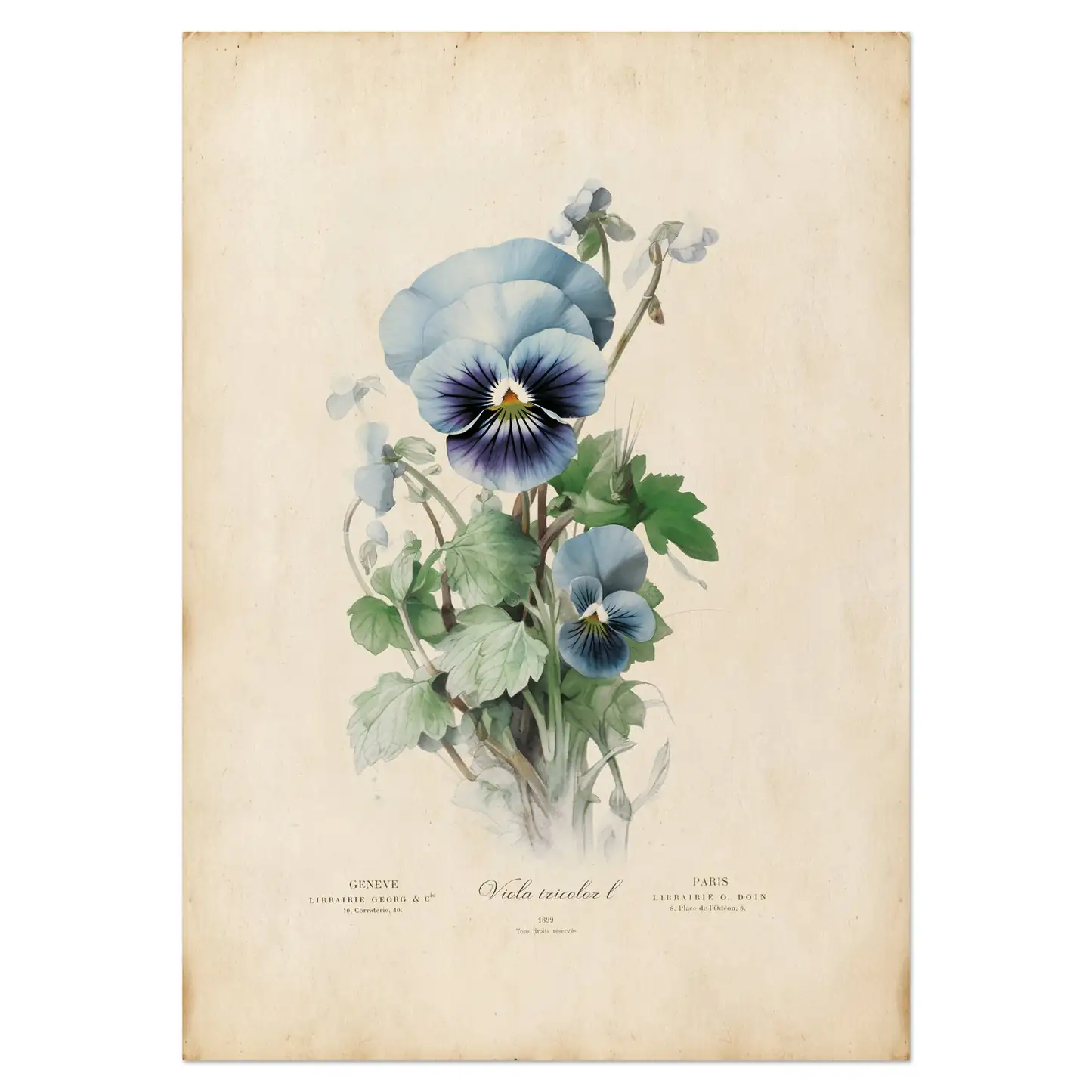
The outcome wasn’t just a better heartsease—it was something new: the modern garden pansy, Viola × wittrockiana, a hybrid lineage crafted in Europe and named in honor of Swedish botanist Veit Brecher Wittrock. The defining look emerged: a broad, velvety “face,” often with a dramatic central blotch or whiskered mask, on a compact, mounding plant that could blanket beds in cool weather.
What changed—besides everything?
- Bigger, showier blooms: Where wild V. tricolor wore petite flowers, modern pansies commonly produce showy blossoms about 4–6.5 cm across, with a five-petal “face” and in-your-yard stage presence.
- A color explosion: From inky purple and midnight blue to lemon, cream, snow, and embery bicolors—plus tricolors, clear colors without blotches, and intricate veining. Ruffled and frilled forms joined the party, and breeders keep pushing the envelope. (Contemporary series you might meet at nurseries include playful lines like Joker, Ultima Morpho, and the flamboyantly frilled Frizzle Sizzle.)
- A compact, generous habit: Typically 15–25 cm tall and 15–30 cm wide, pansies now mound and trail in tidy, flower-forward domes that thrive in spring and fall, and often through mild winters.
Meet the plant up close
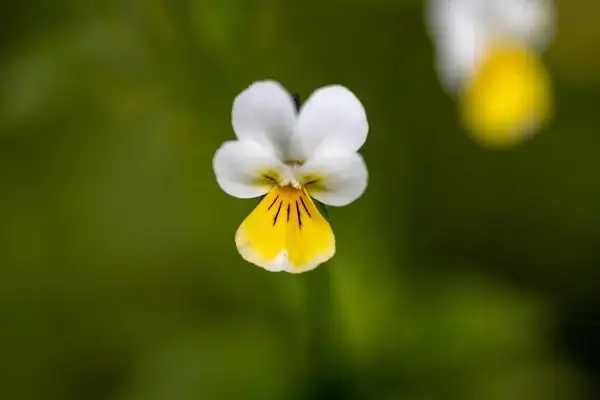
- Foliage: Dense, green, oval leaves with gently scalloped edges. Basal leaves sit on longer stalks; stem leaves clasp closer. Look for those big, leafy stipules—classic violet family signatures.
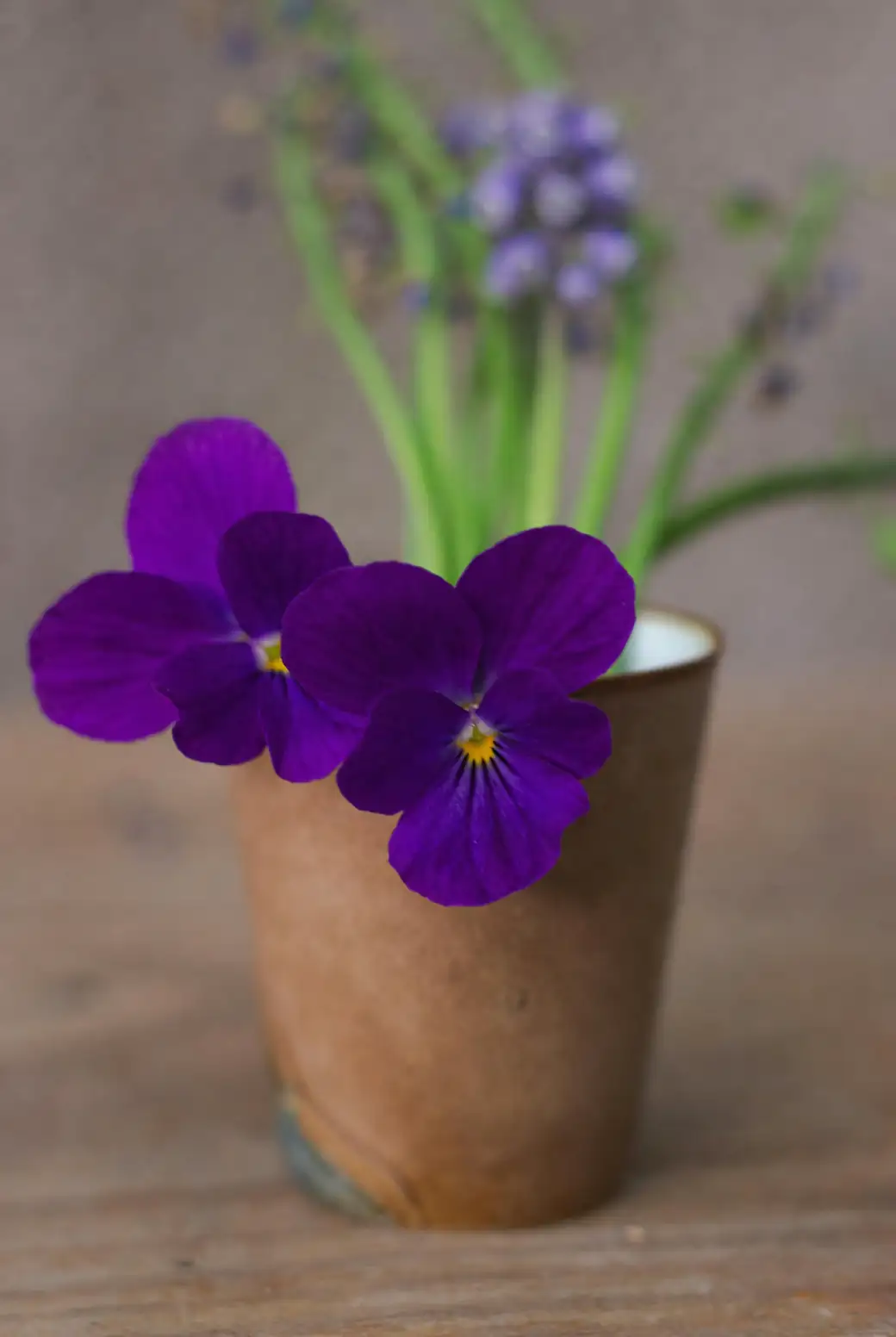
- Flowers: The unmistakable “face,” often velvety and patterned with veining and a central blotch. Deadhead spent blooms (pinch off the flower with its stem) and you’ll coax a nonstop encore.
- Growth habit: Compact, clumping mounds for bedding; trailing types spill from baskets and window boxes.
Growing your own color storm
Light and temperature
- Sunlight: Full sun to partial shade; aim for about 6 hours of light. In warm regions, give afternoon shade to prevent sulks.
- Cool-loving: Best steady growth around 7–15°C (45–59°F), with many flowering beautifully between 10–20°C (50–68°F).
- Heat pause: Prolonged heat above ~25°C (77°F) slows growth and bud set; around 29°C (85°F) and up, plants often struggle.
- Cold note: Light frosts are fine for many cultivars, but prolonged hard freezes (around -5°C / 23°F and below) can damage plants—especially in containers.
Soil and water
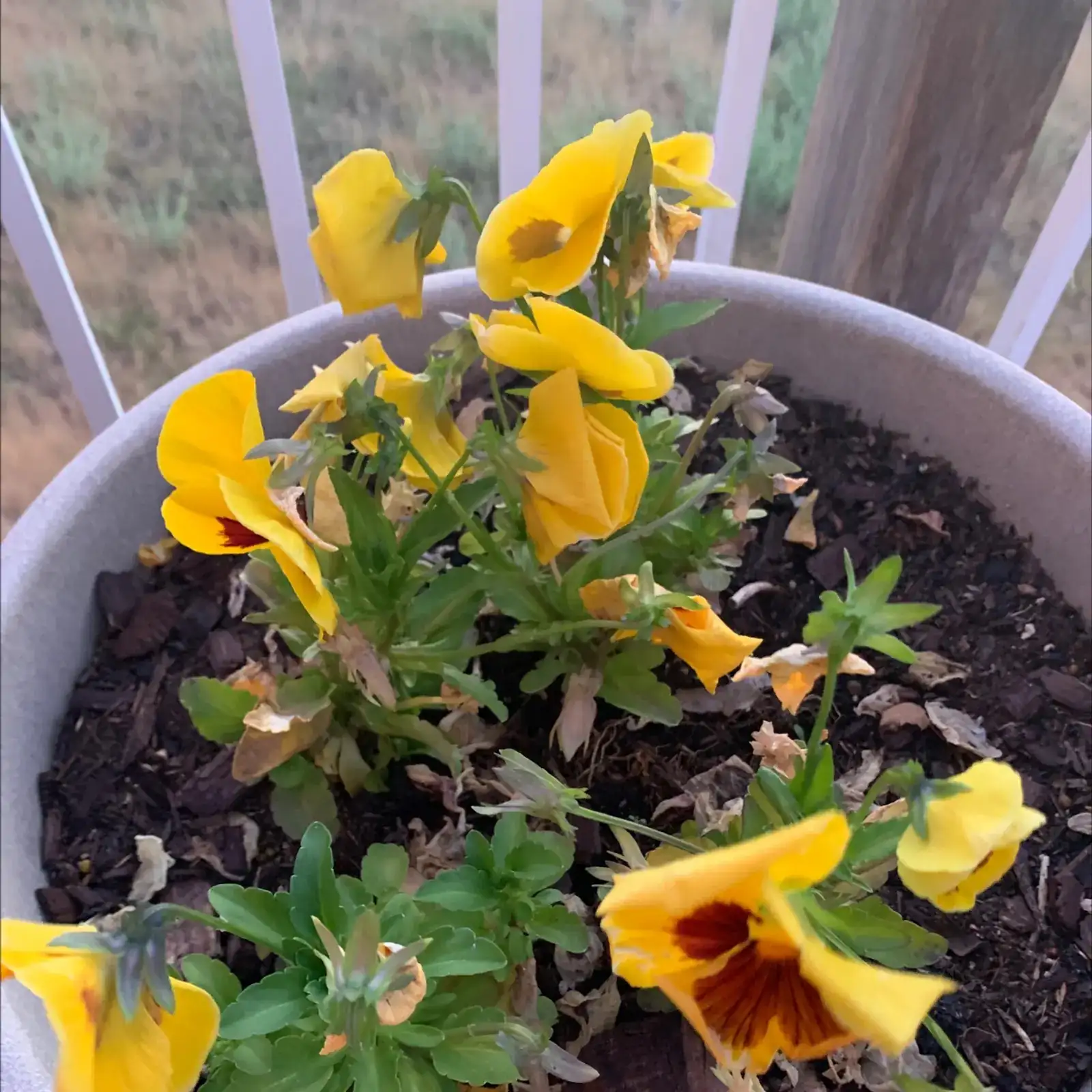
- Soil: Fertile, humus-rich, and well-drained—think loose sandy/loam with compost or leaf mold. Slightly acidic often suits them. In containers, a peat-based mix with excellent drainage is ideal.
- Watering: Keep evenly moist but never waterlogged. In active growth, water when the top 1–2 cm (0.4–0.8 in) dries. Water at soil level (not over blooms) to limit fungus. Bottom-water seedlings. In midsummer lull, prioritize shade and cool roots over “more water.”
Feeding and grooming
- Fertilizer: A light slow-release feed at planting, then either monthly with a balanced fertilizer or every 2 weeks at half strength (especially in pots). As buds build, many growers shift to a bloom-leaning formula and avoid very high nitrogen.
- Deadhead: Pinch off spent blooms with their stems—no seed, more flowers.
- Refresh: If plants get leggy, trim back to about 7.5–10 cm (3–4 in).
Propagation pathways
- Seed (classic route):
- Timing: Sow 8–12 weeks before transplanting, or in early autumn for cool-season shows.
- Germination: Best in darkness at ~13–16°C (55–61°F), sprouting in about 2 weeks.
- Bloom clock: Roughly 14–16 weeks from sowing to flowers.
- Cuttings: Short shoot tip cuttings in late spring/early summer root in peat-based media in ~15–20 days.
- Division: After flowering, separate rooted side shoots if present.
Calendar cheat sheet
- Spring: Peak bloom—bright light, steady moisture, regular deadheading, light feeding.
- Summer: Growth often stalls in heat—offer afternoon shade, airflow, and careful watering. Expect a siesta.
- Fall: Prime planting time in many regions—cool nights bring exuberant color.
- Winter: In mild climates, pansies keep blooming; otherwise, protect from extended deep freezes. Indoors, keep cool and bright around 10–12°C (50–54°F).
Troubles, nibbles, and quick saves
- Pests: Aphids, spider mites, and slugs/snails are common; rabbits may snack. Use insecticidal soap for soft-bodied pests and barriers or bait for slugs.
- Diseases: Powdery and downy mildew, leaf spots, rust, anthracnose, gray mold (Botrytis), and root rot—usually signs of soggy soil or crowded, still air.
- Prevention playbook: Excellent drainage, good spacing and airflow, water early and at the base, and remove infected leaves/flowers promptly. Use appropriate fungicides if needed.
Safety, kitchen cameos, and perfect placements
- Edible accents: The flowers are widely used as edible garnishes—on cakes, salads, and even candied—but only if grown without pesticides intended for ornamentals. Enjoy as accents; overindulgence can upset stomachs in people or pets.
- Where they shine: Beds, borders, edging, window boxes, hanging baskets, patios, balconies, and bright cool windowsills—especially near entrances where their “faces” greet you up close.
Two “pansies,” one lineage: clearing up the names
- Viola × wittrockiana is the modern garden pansy—today’s large-flowered, color-forward bedding star.
- Viola tricolor is the wild pansy/heartsease—the nimble ancestor and a key parent. Smaller-flowered relatives and self-seeders are behind the nickname “Johnny-jump-up,” a name sometimes casually (and confusingly) applied across the group.
- Both share the lore and the thoughtful name; in gardens, they play different roles.
Fast facts and modern trends
- Origin story: Horticultural creation of Northern Europe from Viola species, with V. tricolor central to its parentage.
- Size and habit: Typically 15–25 cm tall and 15–30 cm wide; compact mounds or trailing forms.
- Seasonality: Spring and early summer, then again in fall; often winter-flowering in mild regions.
- Hardiness approach: Commonly grown as a cool-season annual; overwintering success varies by cultivar and climate (often reliable in milder areas).
- Cultural notes: A symbol of remembrance, affection, and freethought—its very existence celebrates human-guided creativity in plants.
- Trendy looks: High-contrast “faces,” clear single colors, micro-patterned “whiskers,” and frilled or ruffled edges keep breeding exciting.
The last word: plant a thought, reap a chorus
Tuck pansies where you’ll see them often—by the front step, in a window box, along a path. Give them bright, cool days; moist, well-drained footing; and a regular pinch of spent flowers. In return, they’ll do what they’ve done since their wild days in Europe: turn passing thoughts into a season-long, many-colored conversation.