Spring’s sweetest perfume, on demand—Hyacinthus orientalis (garden hyacinth) is a powerhouse cut flower when you know exactly when to harvest, how to condition those fleshy stems, and how to keep every floret pristine. Here’s the floral insider’s guide to longer‑lasting, more fragrant spikes.
Meet the spike: what makes hyacinths different
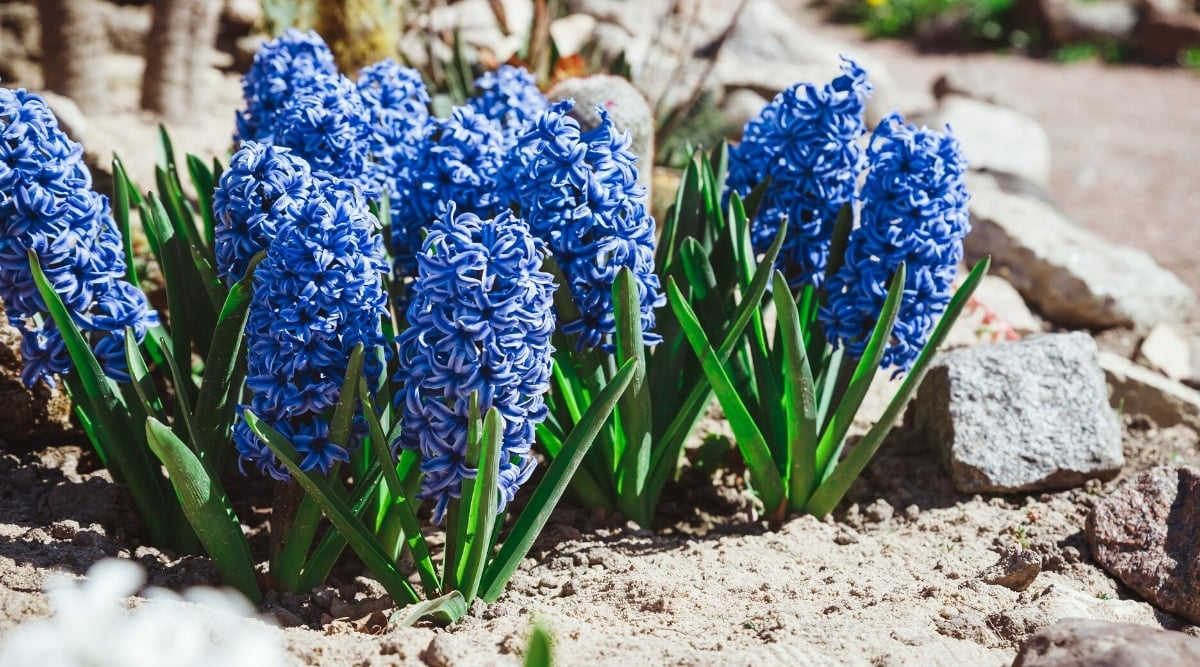
- Dense, waxy florets pack a compact, upright spike—typically 15–30 cm (6–12 in) tall in bloom.
- Their scent is famously strong and sweet. A single stem perfumes a room.
- Stems are fleshy (not woody), so hydration, hygiene, and cool temps matter more than fancy tricks.
- Keep water off the blooms—petals can spot or go mushy if splashed or misted.
Best harvest stage (for color, perfume, and vase life)
- Aim for “color showing, base just opening”:
- Lower 2–5 florets just cracking or open.
- Upper buds well colored but still closed.
- Too tight (all buds green) risks poor opening; too open shortens vase life.
- Time of day: Cut at first light or early morning when stems are fully turgid and cool.
Pro tip for home gardeners who want bulbs to return: Cut the flower spike cleanly but leave all the foliage on the plant. Those strap-like leaves recharge the bulb after bloom.
The cut: tools and technique
- Use a sharp, clean knife or snips; sanitize between bunches (a quick dip in alcohol or a bleach solution).
- Cut stems on a slight angle to increase surface area without crushing.
- Slip cut stems straight into a clean bucket of cool water in the garden—don’t let them air-dry.
Conditioning: the first hour sets the week
- Strip only the lowest leaf bases that would sit in water (hyacinths often have just a few leaves; keep most for structure).
- Recut 0.5–1 cm (¼–½ in) under water or immediately before hydrating to prevent air embolisms.
- Hydrate upright for 2–4 hours in a cool, dim place.
- Wrap loosely in paper while hydrating if stems curve; it helps them drink and set straight.
- Temperature sweet spot: 10–15°C (50–59°F) during conditioning, then display on the cool side of room temp. Cooler rooms = longer life.
- Change vase water daily for hyacinths. Their fleshy stems can cloud water quickly.
Avoid:
- Misting flowers (causes spotting/rot).
- Warm, stagnant rooms (shortens life and dulls perfume).
- Dirty tools or buckets—fast track to stem slime.
Vase solutions that actually work
- Use a commercial cut-flower food whenever possible.
- DIY recipe (for 1 liter / 1 quart of water):
- 1–2 teaspoons sugar (energy)
- 1 teaspoon lemon juice or white vinegar (acidifier)
- 1/8 teaspoon unscented household bleach (biocide)
- Mix well; refresh daily. If water clouds sooner, refresh sooner.
Good to know:
- Hyacinths open well in plain clean water, but food can extend life and keep water clearer.
- If arranging with daffodils, precondition daffodils alone in water for 6–12 hours first; their sap can shorten other flowers’ vase life.
Arranging and mechanics: make the most of short, heavy stems
- Choose narrow‑neck cylinders, bud vases, or compotes with a grid (floral tape), chicken wire, or a pin frog. The dense head appreciates support.
- Keep stems short and clustered for a luxe, domed look. Think “baroque bonbon” rather than tall and airy.
- Pairings that play well:
- Branches (quince, forsythia), hellebores, muscari, tulips (preconditioned), or evergreen sprigs.
- Airy fillers like baby’s breath or spirea to contrast the chunky florets.
- Waterline awareness: Keep any foliage out of water to reduce bacterial growth.
Design note: Hyacinths continue to open in the vase and may lean toward light. Rotate the vase daily for even form, or keep them slightly cooler to slow movement.
Cool storage and transport: buy time without losing bloom
- Short-term holding (same day to overnight): 7–15°C (45–59°F) in water.
- Longer holds (1–3 days): 0.5–2°C (33–35°F) in water, upright, loosely wrapped to protect florets; do not freeze.
- Keep away from ethylene sources (ripening fruit, cigarette smoke, vehicle exhaust). Bulb flowers can be ethylene‑sensitive, which hastens floret drop.
- Transport upright, cushioned, and cool. Avoid jostling; the waxy florets can bruise.
Troubleshooting: quick fixes
- Spike flopping? Recut and hydrate upright for 2–4 hours in deep, cool water. Use a narrower vase or internal support.
- Cloudy water or odor? Dump, wash vase with hot soapy water (or a tiny bleach rinse), recut stems, refresh solution daily.
- Browning or mushy florets? Likely water splashes or high humidity with poor airflow. Keep blooms dry and move to a cooler, breezier spot.
- Not opening after cutting tight? Give them brighter indirect light and slightly warmer room (but still cool, under ~18°C / 64°F) with fresh solution.
Special cases: bulbs-on displays and forced pots
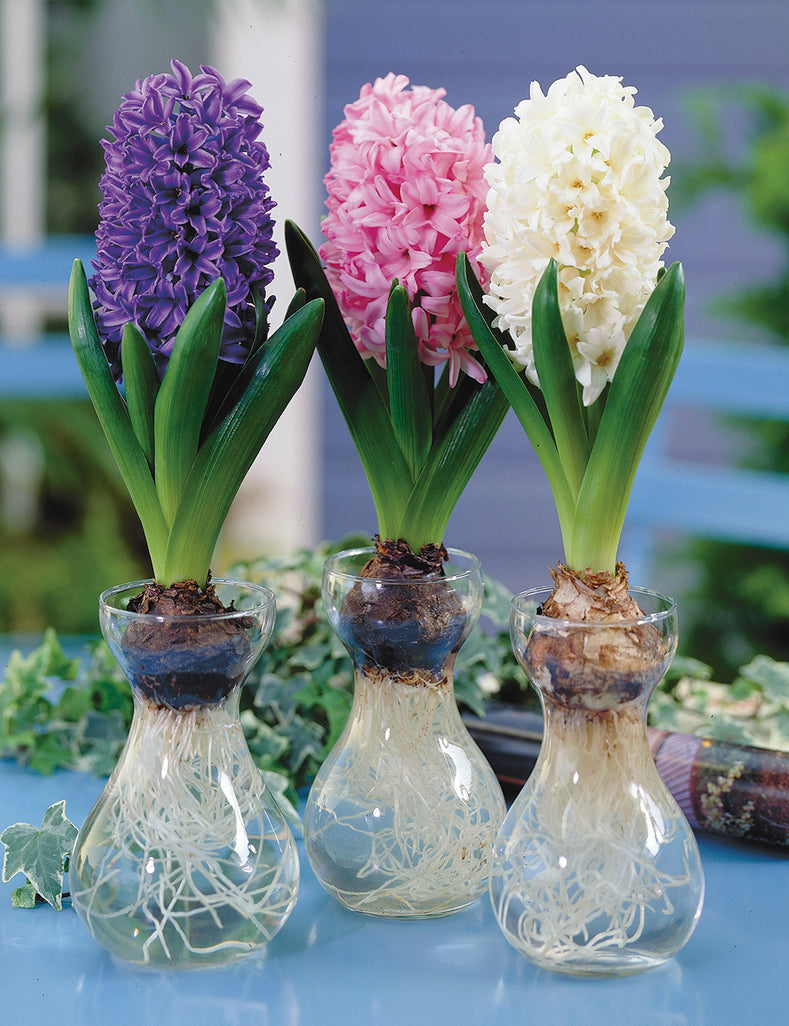
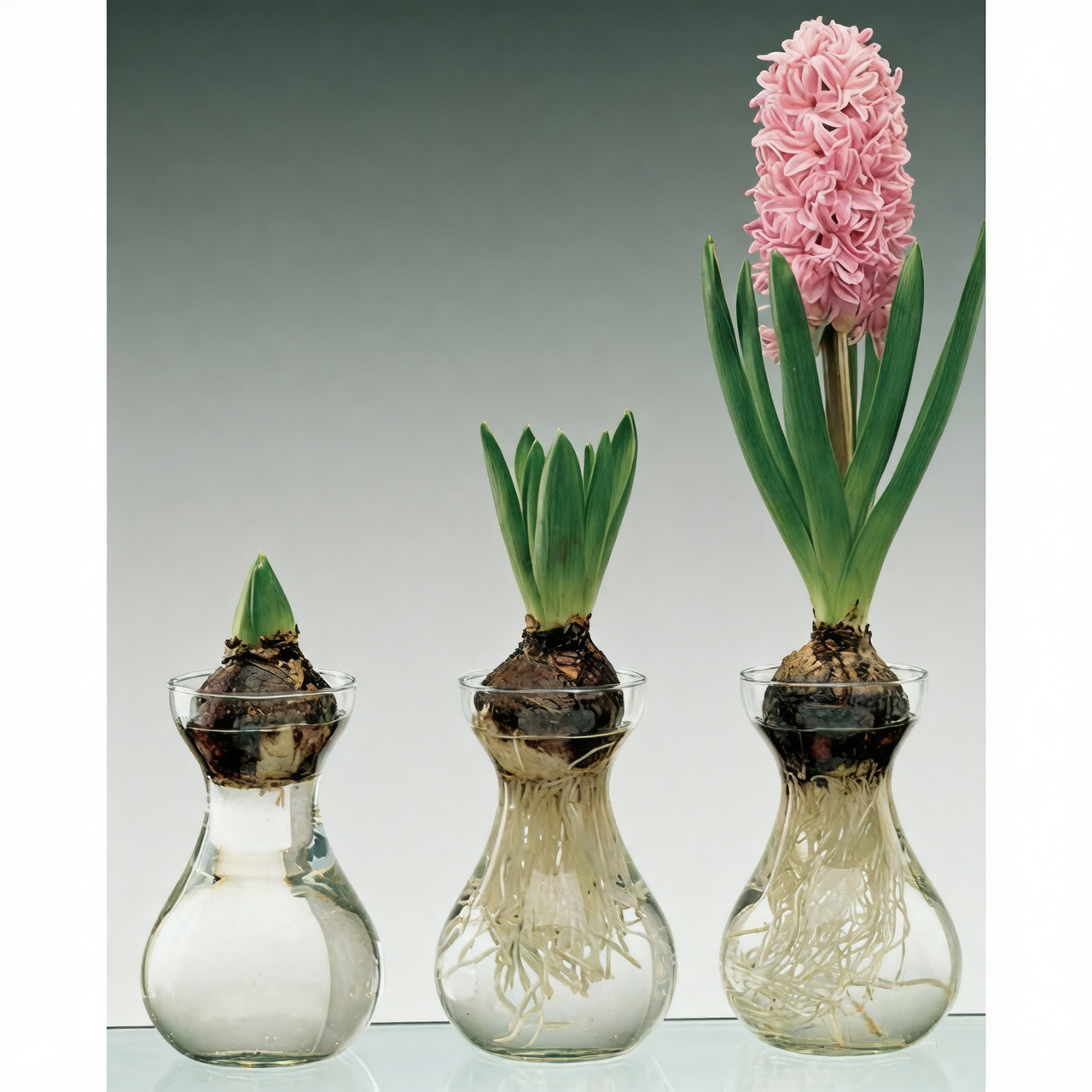
- Bulb‑on styling (common in floristry): Leaving the bulb attached can look sculptural and may modestly extend life. Rinse roots, then display with the bulb perched above the waterline (do not submerge the bulb). Note: harvesting this way sacrifices the plant.
- From forced pots: If you cut the spike and keep the leaves growing in bright light with moderate watering, you can plant the bulb into soil after bloom. Expect a recovery year—next spring’s show may be smaller until the bulb fully recharges.
Safety and scent savvy
- All parts are toxic if ingested; bulbs are most concerning. Keep away from pets and curious kids.
- The sap can irritate skin (“hyacinth itch”). Wear gloves if handling many stems or you have sensitive skin.
- The fragrance is strong—delightful to most, overpowering to some. In small rooms, crack a window or place the vase a bit farther from seating.
Care checklist (at a glance)
- Harvest: Early morning; base florets just opening; upper buds colored.
- Tools: Sharp, clean blade; clean buckets.
- Condition: Recut; hydrate cool 2–4 hours; keep blooms dry.
- Vase: Narrow neck or supported mechanics; fresh solution; daily water change.
- Display: Cool, bright but not hot sun; rotate; avoid fruit bowls.
- Storage: 33–35°F (0.5–2°C) for holds beyond a day; never freeze.
Flower language, myth, and meaning—beyond the perfume
The hyacinth’s name echoes a Greek tale: the youth Hyacinthus, loved by Apollo, dies tragically; a flower springs from his blood, a symbol of remembrance. Over centuries, gardeners and poets layered meanings onto the bloom—constancy and sincerity for blues, purity or quiet love for whites, playfulness for pinks, passion for reds, joy for yellows, even sorrow or jealousy for purples. These “languages” aren’t botany; they’re cultural stories that traveled with the flower from the eastern Mediterranean and western Asia into European salons and, later, Dutch bulb fields. When you bring hyacinths indoors, you’re not just arranging stems—you’re arranging centuries of symbolism and a myth that still whispers through each fragrant floret.
Enjoy the bloom, keep it cool, and let every spike sing for a week or more. With the right harvest stage and a little conditioning know‑how, Hyacinthus orientalis becomes the most elegant alarm clock for spring.