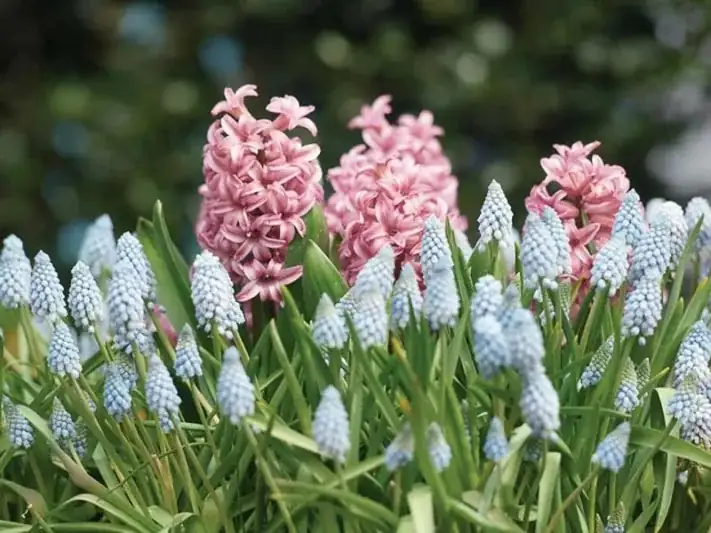
Picture it: a cool spring breeze, a path edged in cobalt muscari, hyacinths perfuming the air, and tulips and daffodils trading places week after week. With a little planning, you can choreograph a bed that fires off color from late winter into late spring, drains like a dream, and keeps hungry critters at bay—all starring the wonderfully fragrant Hyacinthus orientalis.
Meet Hyacinthus orientalis (Garden Hyacinth)
- Family: Asparagaceae; Genus: Hyacinthus
- Also called: Common/Dutch/Garden Hyacinth
- Size and habit: Compact, upright bulbs, typically 15–30 cm (6–12 in) tall in bloom and 10–20 cm (4–8 in) wide; one sturdy flower spike per bulb is the norm
- Flowers: Dense, waxy bells or stars in blue, purple, pink, white, red, with creams/yellows/apricots and doubles available; intensely sweet perfume
- Timing: Late winter to spring (commonly March–April outdoors)
- Sun and hardiness: Full sun to partial shade; USDA Zones 4–8 (some cultivars into 9 where winters are reliably cool)
- Soil: Fertile, loose, and sharply drained; hyacinths detest waterlogging
- Bonus (and caution): Great for cut flowers and indoor forcing. All parts are toxic if ingested (bulbs most of all), and the bulb scales/sap can irritate skin—gloves help.
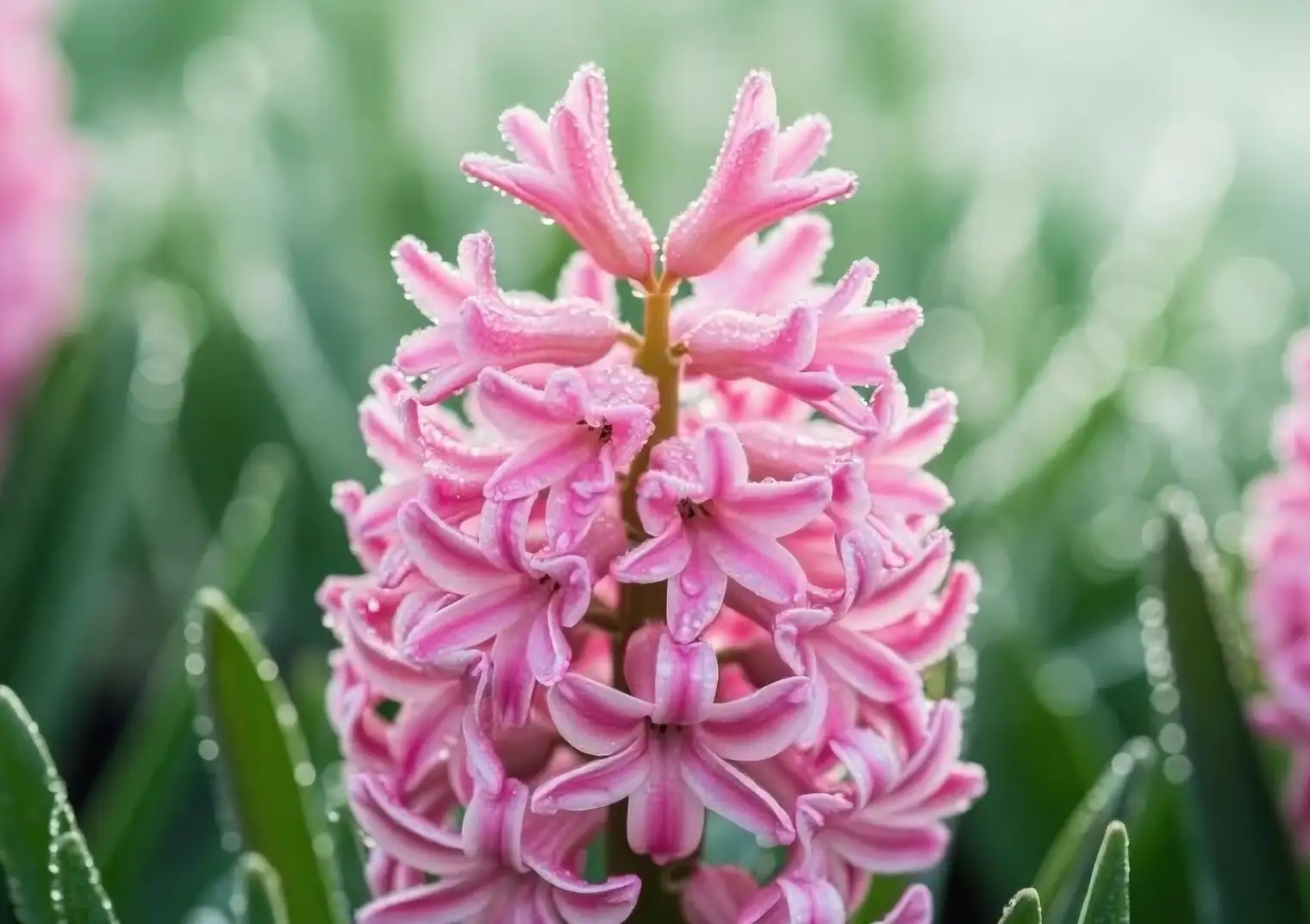
The Design Goal: Continuous Color with Tulips, Daffodils, and Muscari
Think of spring as three mini-seasons—early, mid, and late. Blend bulbs that bloom in each window so the show never stalls. Hyacinths bridge early to mid-spring beautifully.
Early Spring: Wake-up Call
- Daffodils (short early forms like ‘Tête-à-Tête’ or petite triandrus/early cyclamineus types) bring sunny trumpets just as the garden yawns awake.
- Hyacinths begin to pop with their candy-colored spikes and lush perfume.
- Add a blue base layer of muscari (grape hyacinth) at the front to frame the scene.
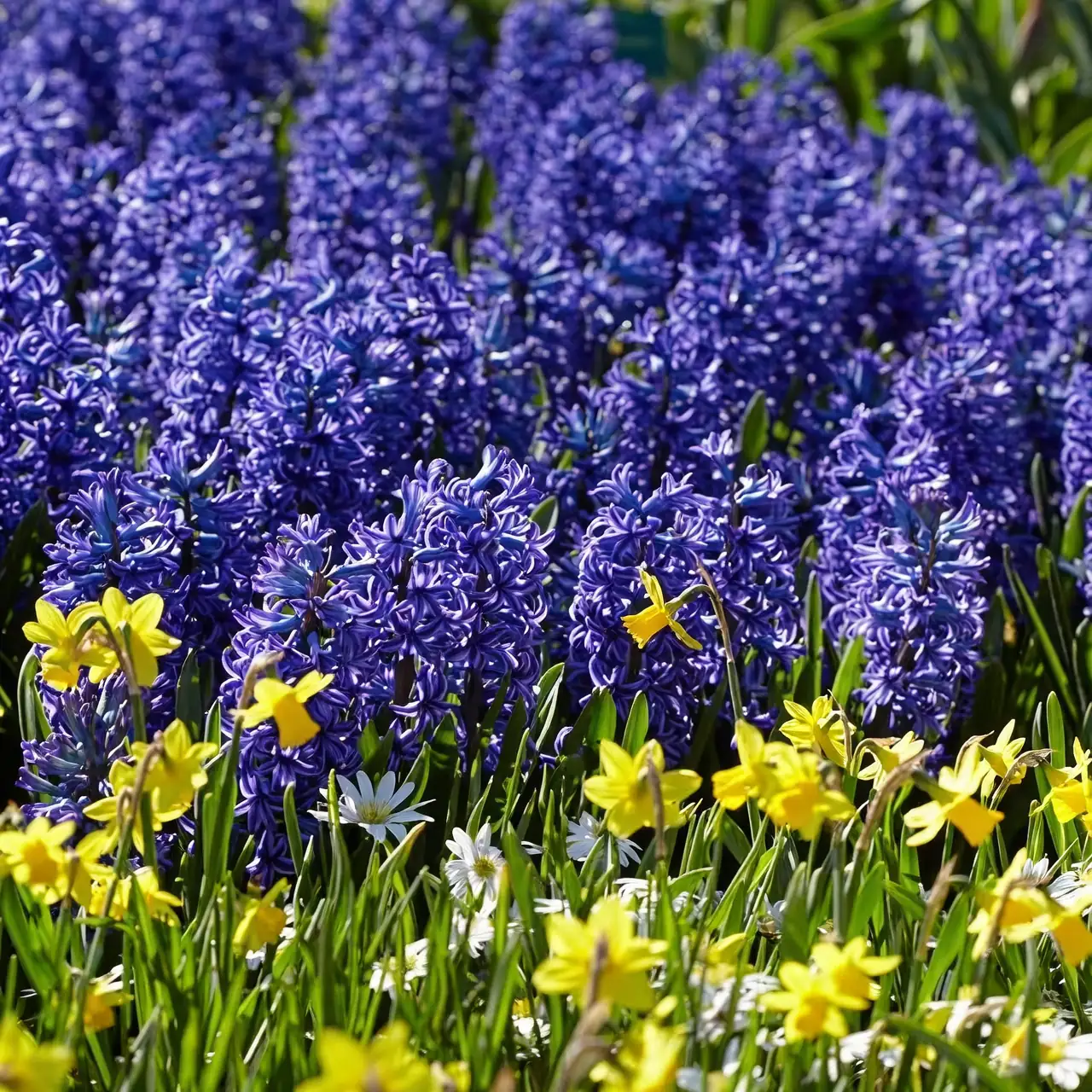
Try: Yellow daffodils with deep blue hyacinths (e.g., Hyacinth ‘Blue Jacket’) and a low river of Muscari armeniacum.
Mid-Spring: Saturated Color
- Midseason tulips sweep in—try glowing oranges and plums or romantic pastels.
- Hyacinths are still in stride; muscari continues the blue “carpet.”
Try: Tulip ‘Prinses Irene’ (orange, purple-flamed) with Tulip ‘Purple Prince’, hyacinths in violet-pinks, and textural swathes of muscari. Or pair yellow daffodil ‘Dutch Master’ with hyacinth ‘Blue Jacket’ for a classic high-contrast duet.
Late Spring: Tall Finales
- Late tulips (‘Ballade’, ‘White Triumphator’, ‘Ballerina’) take the batons for a finale of elegance as hyacinths wind down.
- Muscari still knits everything together, softening gaps and edges.
Tip: Low, soothing blues (muscari) make saturated tulips and hyacinths look richer and more intentional.
The “Bulb Lasagna”: Layered Planting for Big Impact
Stack bulbs at different depths so they bloom in succession and maximize space in beds or containers.
- General rule: Plant bulbs about 2–3 times their own height deep.
- Rough guide for beds (depth from soil surface):
- Bottom layer: Larger daffodils (about 15–20 cm / 6–8 in)
- Middle: Tulips (about 13–15 cm / 5–6 in)
- Upper: Hyacinths (about 10–13 cm / 4–5 in)
- Topmost/front edge: Muscari (about 7–10 cm / 3–4 in)
- Spacing and density:
- Hyacinths: 10–12 cm (4–5 in) apart; plant in tight drifts or clumps of 5–9 for visual punch
- Tulips/daffodils: 10–15 cm (4–6 in) apart, depending on bulb size
- Muscari: Naturalize in broad ribbons, 5–8 cm (2–3 in) apart
Container tip: Use a gritty bulb mix (about 2 parts high-quality potting mix to 1 part grit/pumice) and a pot with drainage holes.
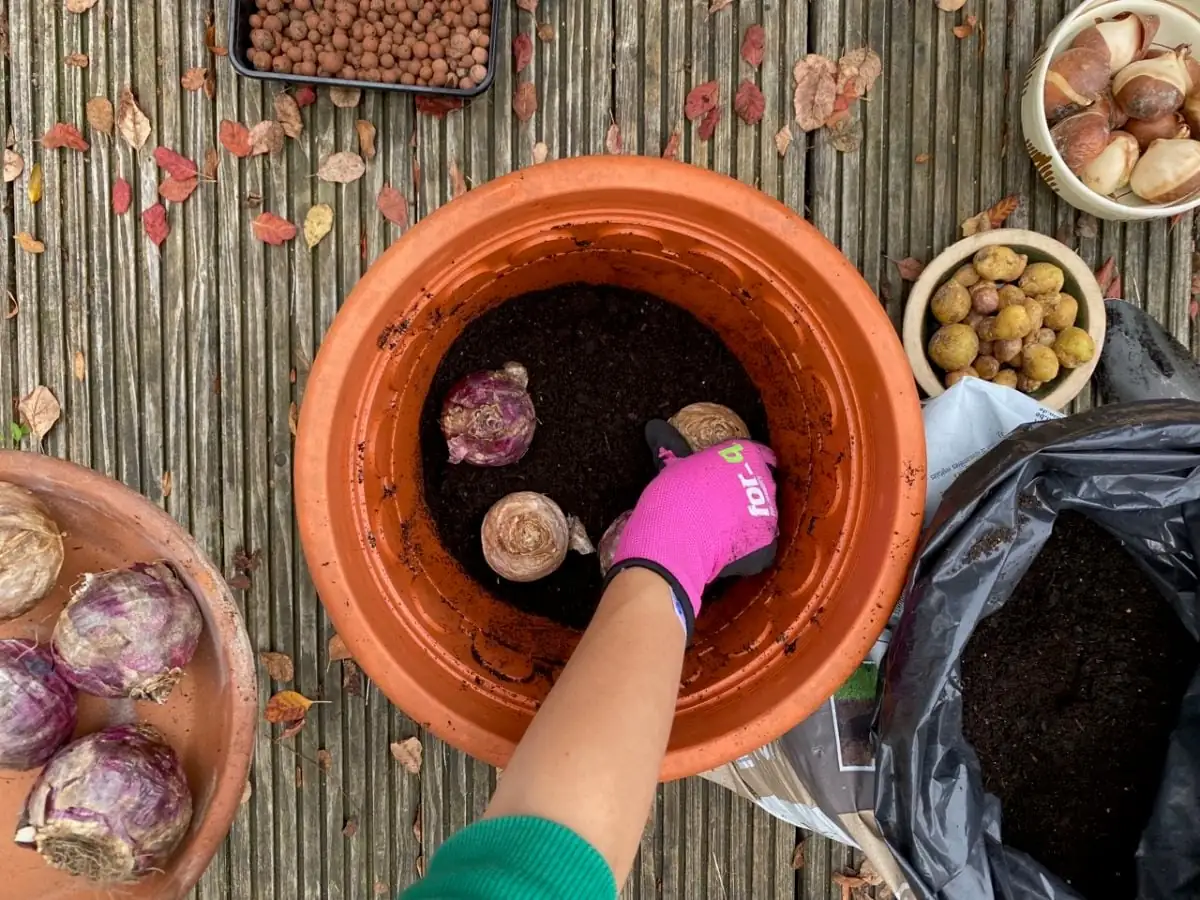
Sharp Drainage, Happy Bulbs
Hyacinths are unforgiving about soggy soil. Design for drainage first; color is the reward.
- Site and soil
- Choose full sun to light shade; more sun = sturdier stems and fuller spikes.
- Elevate the planting area slightly or use raised beds on heavy soils.
- Work in coarse grit or sharp sand plus organic matter to create a loose, free-draining profile. Avoid confining “saucers” of sand beneath bulbs—improve the entire root zone instead.
- Watering
- Water once after planting to settle soil; then keep it only lightly moist in winter.
- During growth and bloom, water when the top 2–3 cm (about 1 in) dries—at soil level, not over the flowers. Wet blooms spot and can rot.
- After flowering, taper off; keep much drier in summer dormancy.
- Feeding
- At planting, mix in a bulb fertilizer or balanced granular feed (e.g., 10-10-10). Bone meal is an option; if wildlife digs, use a balanced fertilizer instead.
- While leaves are green after bloom, a light feed every couple of weeks helps recharge next year’s flowers.
Clever Protection: From Rot, Rodents, and Weather
Keep bulbs plump, safe, and show-ready with these strategies.
- Against rot and disease
- Start with firm, clean bulbs.
- Ensure free drainage and good airflow; avoid overwatering, especially in cool weather.
- Deadhead after flowering to divert energy back to bulbs; let foliage photosynthesize until it yellows naturally.
- Promptly discard any bulb that goes soft or moldy; store lifted bulbs dry and ventilated in summer.
- Against rodents
- Plant hyacinths inside a “friendly fortress”: use bulb baskets or line planting holes with hardware cloth.
- Ring prized clumps with daffodils—their alkaloids are unpalatable, and a narcissus border can discourage nibblers.
- Top-dress with a thin layer of pea gravel or sharp grit to make digging less appealing.
- If critters are active, skip animal-attracting additives; opt for a balanced fertilizer at planting.
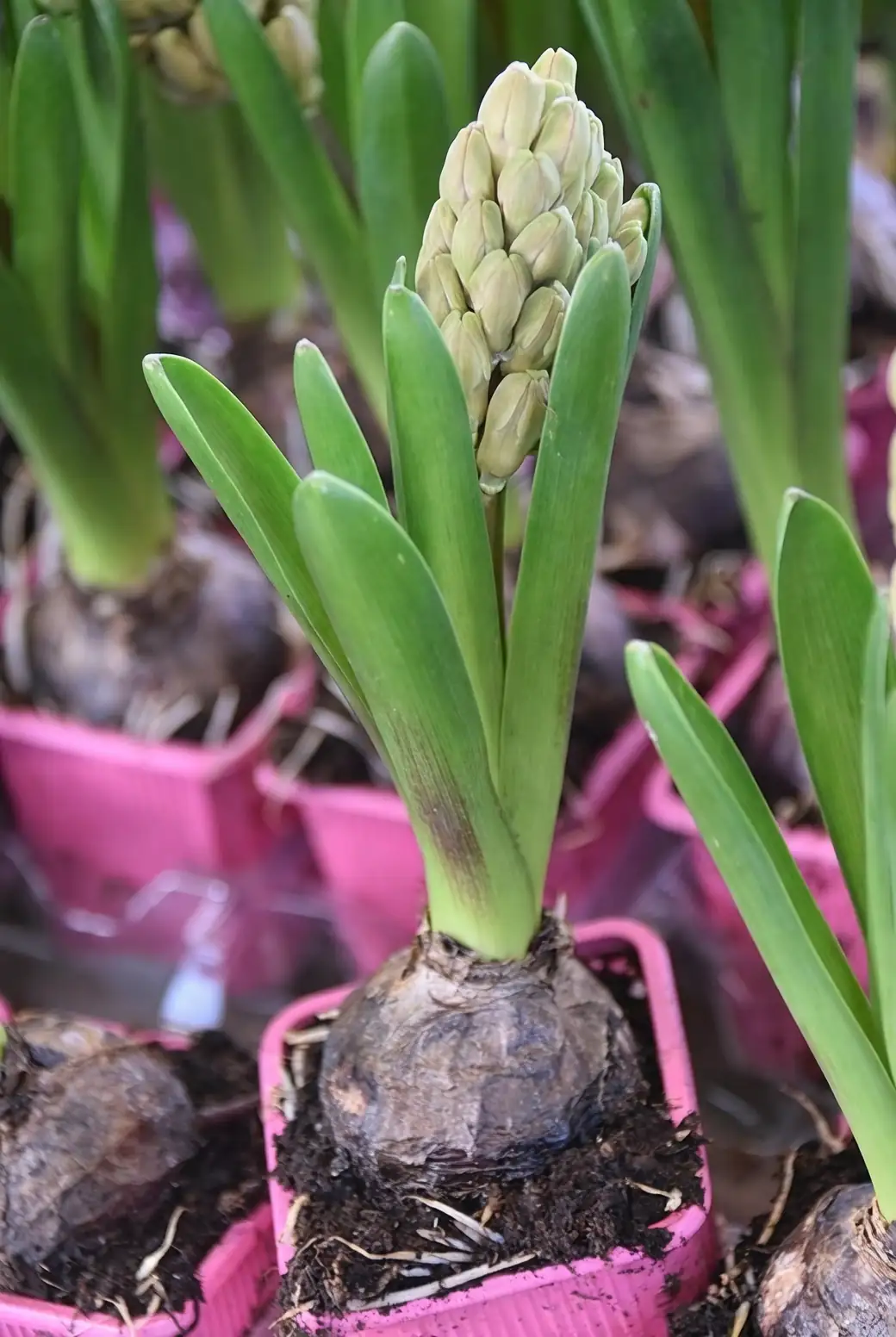
- Against flopping and weather stress
- Sun hardens stems; partial shade is fine, but deep shade can stretch growth.
- Position taller tulips at the back or in lee of a low hedge/fence for wind protection.
A Ready-to-Plant 6 × 10 ft (1.8 × 3 m) Spring Bed
Color theme: sapphire, citrus, and soft pink.
- Front ribbon (edge): 150–200 Muscari armeniacum, planted in a wavy 30–40 cm (12–16 in) wide band, 5–8 cm (2–3 in) apart.
- Core drifts: 60–75 Hyacinthus orientalis in mixed blues and pinks, in 8–10 clumps of 6–8 bulbs each, staggered for a natural look.
- Back bone: 30–40 mid-late tulips (e.g., ‘Prinses Irene’, ‘Purple Prince’, ‘White Triumphator’) spaced 12–15 cm (5–6 in).
- Sunny anchors: 25–30 daffodils (e.g., ‘Dutch Master’ or compact early types nearer the midline to avoid shading hyacinths).
Plant in autumn. Water in once. Mulch lightly with shredded leaves or fine gravel to maintain moisture and deter digging without trapping sogginess.
Care Calendar (Temperate Climates, Zones 4–8)
- Autumn (Oct–Nov): Plant bulbs into free-draining soil; mix in bulb food or balanced fertilizer. Water once.
- Winter: Keep cool and only slightly moist; roots develop. Natural chilling outdoors will set strong flower spikes.
- Late winter–spring (Feb–Apr): Growth and bloom. Keep bright and cool (roughly 5–18°C / 41–64°F) for best color and longevity. Water at soil level; keep flowers dry.
- Post-bloom: Snip spent spikes; leave leaves to recharge bulbs. Feed lightly while foliage stays green; then let it wither naturally.
- Early summer: Reduce watering. If lifting, cure and store bulbs dry and ventilated around 20–28°C (68–82°F) for summer dormancy.
- Replant: In autumn, return bulbs to the bed or refresh containers.
Note: Garden hyacinths form offsets slowly (often 1–2 per year). They’ll bulk up over time, but they’re not fast naturalizers. Indoor-forced bulbs can be planted out after bloom; expect a weaker second year while they regain strength.
Pots, Paths, and Perfume
- Containers: Use the gritty 2:1 mix (potting mix:grit/pumice) and a drainage hole. Layer daffodil/tulip/hyacinth/muscari for a compact, months-long display on stoops and patios.
- Cut flowers: Harvest hyacinths when the lower third of florets are open. Keep stems away from delicate cut blooms that may dislike their sap—use a dedicated vase.
- Placement: The scent is glorious but potent; near doorways or along paths is perfect. In small, closed rooms it can overwhelm—give them some air.
Safety First (and Second)
- Toxic/irritant: All parts can cause GI upset if ingested (bulbs most of all) for people and pets. Wear gloves if you have sensitive skin; “hyacinth itch” from bulb scales is real. Keep blooms and bulbs out of reach of curious pets and children.
Flower Language and Meaning
Hyacinths carry layers of symbolism—spring renewal, devotion, sincerity—colored by centuries of storytelling. The name recalls the Greek myth of Hyacinthus, a youth beloved by Apollo, whose tragic death was memorialized by a flower. Later, Victorian floriography turned hyacinths into coded messages: blue for constancy, white for purity or quiet love, pink for playfulness and romance, red for passion, yellow for joy, and purple for sorrow or jealousy. While these “meanings” aren’t botanical truths, they’re a charming cultural lens—and a playful way to match colors to the mood of your garden.
—
Design with the calendar in mind, engineer the drainage, guard your bulbs, and let hyacinths perfume the baton-pass from daffodils to tulips to muscari. A few autumn hours of thoughtful planting will give you a spring that unfolds like a well-composed symphony—movement after movement of color and scent.