
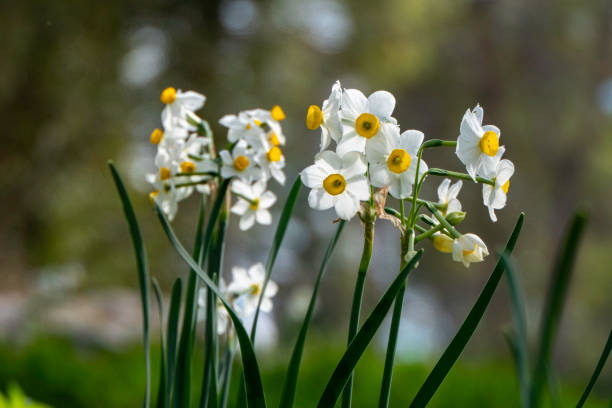
Open a window on a windy Mediterranean headland: salty air, bright sun, and wild clumps of narcissus holding their white stars to the sky. Now close it and step into a winter kitchen in East Asia, where a shallow porcelain bowl waits on the sill, pebbles glinting under clear water. The same plant—Narcissus tazetta—has wandered a long road from those coastal meadows to become the beloved “paperwhite” of winter rooms and the sculpted 水仙 centerpieces of Lunar New Year.
Here’s its story—and how to welcome it into your own home with grace, fragrance, and a touch of living art.
Born on a coast: the Mediterranean beginnings
Narcissus tazetta is a bulbous perennial from the sun-struck shores and valleys of the Mediterranean region (southern Europe and North Africa). In the wild and in gardens it’s clump-forming, with:
- Narrow, strap-shaped leaves in deep to blue-green.
- Upright stems topped with tight umbels of small, waxy, star-shaped flowers—most commonly pure white with a tiny yellow cup.
- A sweet, pervasive perfume that can fill a room.
Indoors, most plants are a neat 20–45 cm tall in bowls or pots, though some tazetta forms can stretch taller (occasionally 75–80 cm under generous conditions). Unlike many spring bulbs, tazettas happily leap the seasonal queue: start them in cool, bright conditions and they’ll often flower in just 4–6 weeks.
The long voyage east
As trade routes braided continents together, so did they braid plant stories. Tazetta narcissus traveled out of the Mediterranean along both Silk Road caravans and old maritime routes. By medieval times, bulbs had reached East Asia; in China they naturalized especially along the coasts and islands of Fujian and Zhejiang and became intimately linked with winter households.
In this new home, Narcissus tazetta was honored as 水仙—“water immortal” or “water fairy”—and refined into a seasonal art form: grown in shallow bowls, coaxed into bloom precisely for winter and Lunar New Year, sometimes even carved and trained so leaves and stems curve like calligraphy.
From boat to bowl: winter fragrance on the sill
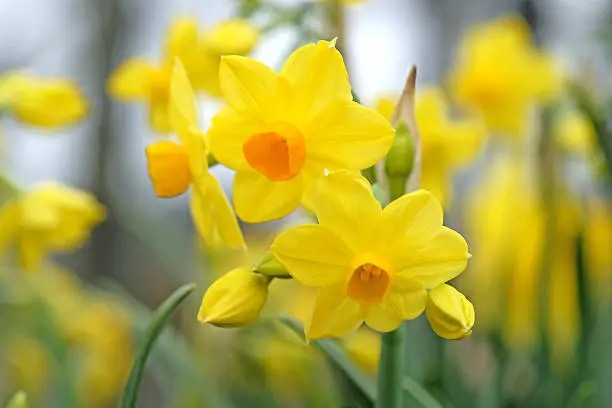
The classic display is disarmingly simple:
- A low bowl, a layer of clean pebbles.
- Bulbs set high so only the roots reach the water.
- Bright light, cool air.
- In about a month, a constellation of white flowers and that unmistakable winter perfume.
This sensibility—paring back to essentials—suits tazettas perfectly. Their natural rhythm is cool-season growth and bloom, then a restful summer dormancy.
The art of carving and training (水仙雕刻)
Across southern China and Taiwan, connoisseurs turn bulbs into living sculpture. The goal is not harm but harmony: to guide growth for a poised, architectural display that nods to cranes, boats, or sweeping fans. If you’d like to try a gentle, beginner-friendly version:
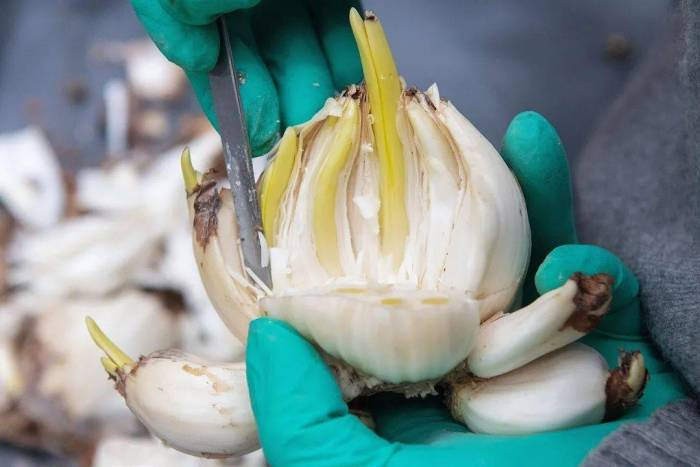
- Choose excellent bulbs: firm, heavy, with intact papery skins; avoid any soft spots or mold.
- Prepare your tools: a clean, sharp blade and a bowl of fresh water.
- Make only shallow, strategic cuts. Traditional carvers lightly score the basal plate or remove small wedges of outer scales to encourage multiple shoots. Minimal cuts are safer for newcomers.
- Rinse away sap and keep everything clean. Sticky latex can invite rot; swish cuts in clean water.
- Let cuts “callus.” Set the prepared bulbs in a well-ventilated, lightly shaded spot for a day so surfaces dry.
- Set in pebbles with low water: roots in water, bulb shoulders dry. Keep water just at or slightly below the basal plate.
- Train as growth begins. Loop leaves with soft twine, guide stems along thin bamboo hoops, or fan the foliage with gentle, regular adjustments. Good airflow and bright, cool light help leaves set in elegant arcs.
Pro tip for success: cool, bright conditions are the invisible hand of the craft. Warmth plus low light invites flopping and rot; cool air firms cell walls and keeps the structure crisp.
Paperwhites on the windowsill: an easy indoor forcing guide
Narcissus tazetta (including beloved cultivars like ‘Ziva’ and ‘Grand Soleil d’Or,’ and the Chinese Sacred Lily forms) became famous because they flower readily indoors without the lengthy cold treatment many daffodils require.
Two simple ways to start:
- Water culture (classic bowl)
- Nest bulbs among pebbles; add water to touch the root zone but keep the bulb mostly dry.
- Keep very bright and cool (ideally 10–15°C / 50–59°F).
- Refresh water frequently—daily at first, then about weekly once buds set. Keep the bowl spotless.
- Pot culture (for longer-term keeping)
- Use a free-draining bulb mix (about 2 parts potting mix to 1 part grit).
- Water lightly until growth begins; never leave pots standing in water.
- Bright light is essential; a south or east window is ideal.
Sturdiness secrets:
- Light: aim for 6+ hours of strong light per day.
- Temperature: cool rooms make compact, strong plants; avoid sustained heat above 25°C / 77°F.
- Rotation: turn the container regularly for even growth.
- Discreet support: if stems surge, a slim hoop or a soft twine corral keeps clusters upright without fuss.
Life outdoors and long-term habits
Where winters are gentle (roughly USDA Zones 8–10/11, varying with form and winter wet), tazetta narcissus can be planted out in borders, rock gardens, and sunny woodland edges with good drainage. They’ll clump up over time via offsets; divide crowded clumps during dormancy. In colder regions, treat bulbs as indoor seasonal stars, or store dry and cool after leaves yellow and wither.
Scent, names, and the tangle of “paperwhites”
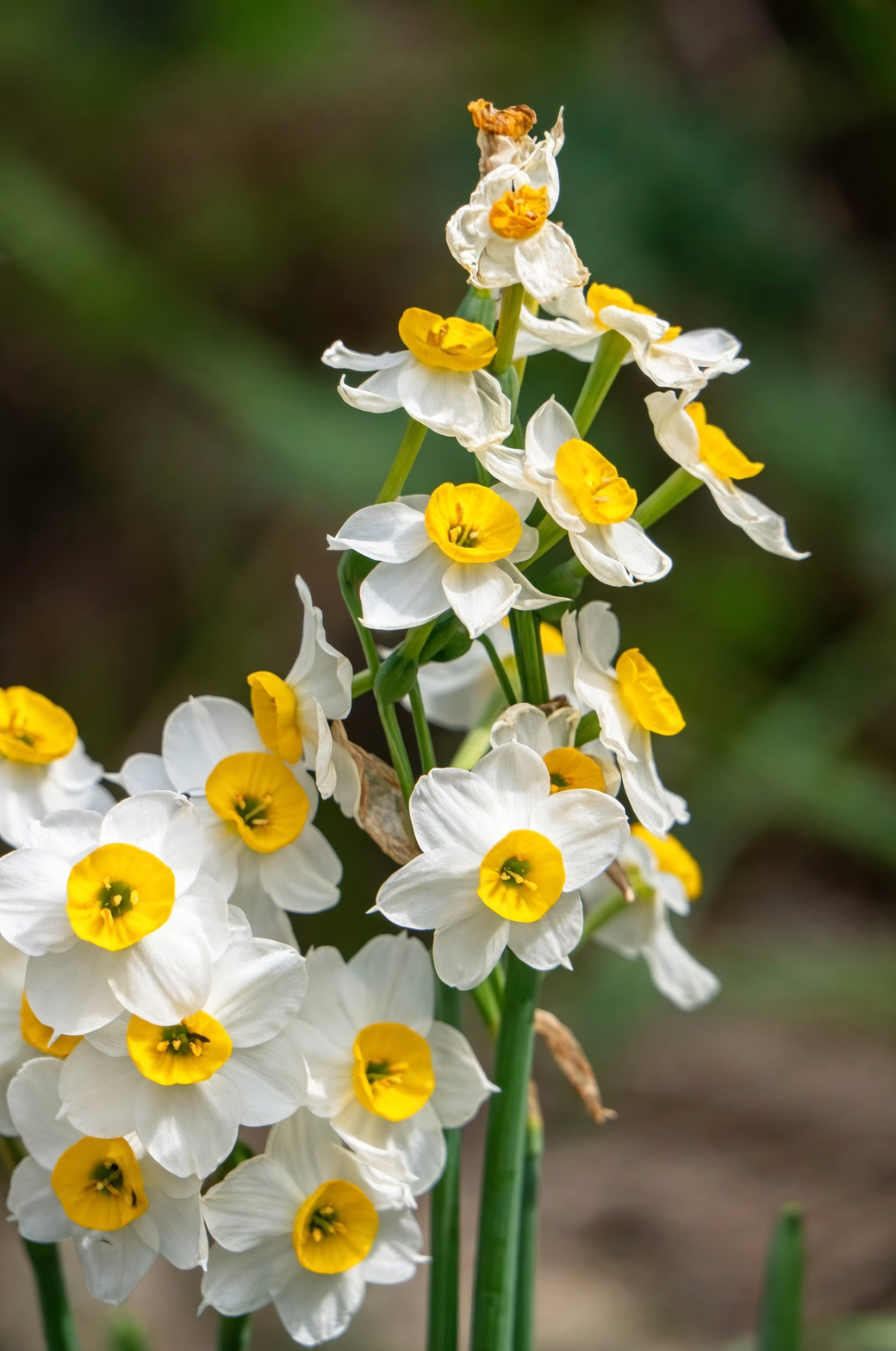
Tazetta narcissus goes by a thicket of names: paperwhite, bunch-flowered daffodil, Chinese Sacred Lily, jonquil, and more. In horticulture, “paperwhite” commonly refers to tazetta-type, white-flowered forms—often sold under Narcissus tazetta or allied names—with ‘Ziva’ a prolific favorite for indoor forcing. Chinese Sacred Lily is associated with tazetta forms long cultivated in East Asia, especially Narcissus tazetta subsp. chinensis.
Whatever the label, the experience is unmistakable: clusters of starry white, a compact golden cup, and a scent that says “spring, in advance.”
Meaning and myth: from reflection to renewal
- The Greek myth: Narcissus, captivated by his reflection, becomes the eponym of the flower—fueling the Western floriographic link to self-regard and introspection.
- The East Asian heart: In winter homes, 水仙 is a wish—for renewal, fortune, and a thriving household. Timing matters: blossoms opening at New Year are auspicious, a fragrant pledge that the season (and one’s luck) is turning.
Flower language is a cultural palimpsest. Western “self-love,” Eastern “prosperity,” and the universal “new beginnings” all abide in the same bulb, interpreted through different stories and calendars.
Care at a glance
- Light: bright light to full sun. Indoors, a south or east window is best.
- Temperature: 10–20°C (50–68°F) during growth; 5–15°C (41–59°F) keeps plants compact. Heat shortens bloom.
- Water:
- Bowls: keep water shallow—roots wet, bulb mostly dry; refresh often.
- Pots: keep evenly moist but not soggy; never let containers sit in water.
- Humidity: average is fine; avoid stagnant, damp air.
- Soil (pots): free-draining bulb mix (about 2:1 potting mix to grit).
- Feeding: not needed for short indoor displays. If keeping bulbs, feed lightly during active growth and after bloom while leaves are green.
- After flowering: deadhead but don’t cut green leaves; let foliage yellow naturally (6–8 weeks) to recharge the bulb.
- Propagation: offsets (bulb division) are simplest. Advanced growers may try basal-plate/scale techniques to make bulblets.
- Safety: all parts are toxic, especially bulbs. Keep away from pets and children; sap may irritate skin.
Frequently asked (and swiftly answered)
- Why are my paperwhites tall and floppy?
- It’s almost always warmth plus low light. Move them to your brightest window and keep them cooler—ideally 5–15°C (41–59°F). Rotate the bowl; avoid heaters.
- Can I cut the leaves off after flowering?
- Not if you plan to keep the bulbs. Leaves must yellow naturally to refuel the bulb.
- How do I keep bulbs from rotting in a water bowl?
- Keep water low: roots in, bulb out. Refresh often and ensure good airflow. Warm, stale conditions invite rot.
- Leaves but no flowers?
- Possible causes: undersized/immature bulbs, foliage cut too early last season, overcrowded clumps needing division, or insufficient light. Tazettas usually don’t require heavy chilling to bloom.
- Are they safe around pets?
- No. All parts are toxic; the bulb is most dangerous if chewed or ingested.
Little extras for botanical sleuths
- Tazetta narcissus can bloom indoors without a long cold period—hence their winter fame.
- Keep them cool and bright to extend bloom life and perfume.
- As cut flowers, let narcissus stems condition alone first; their sap can shorten the life of other blooms if mixed immediately.
A final note: bringing the journey home
When you lift a Narcissus tazetta bulb from its paper bag and settle it on pebbles, you join a long line of travelers and keepers—sailors and scholars, merchants and grandparents—who found it irresistible to coax spring from a bowl of stones and water. Give it bright light and a cool breath of air; encourage a curve in a leaf; wait. In a few short weeks, your room will hold the same winter promise that once reached China by caravan and sea: a small, starry chorus singing, The year is turning.