

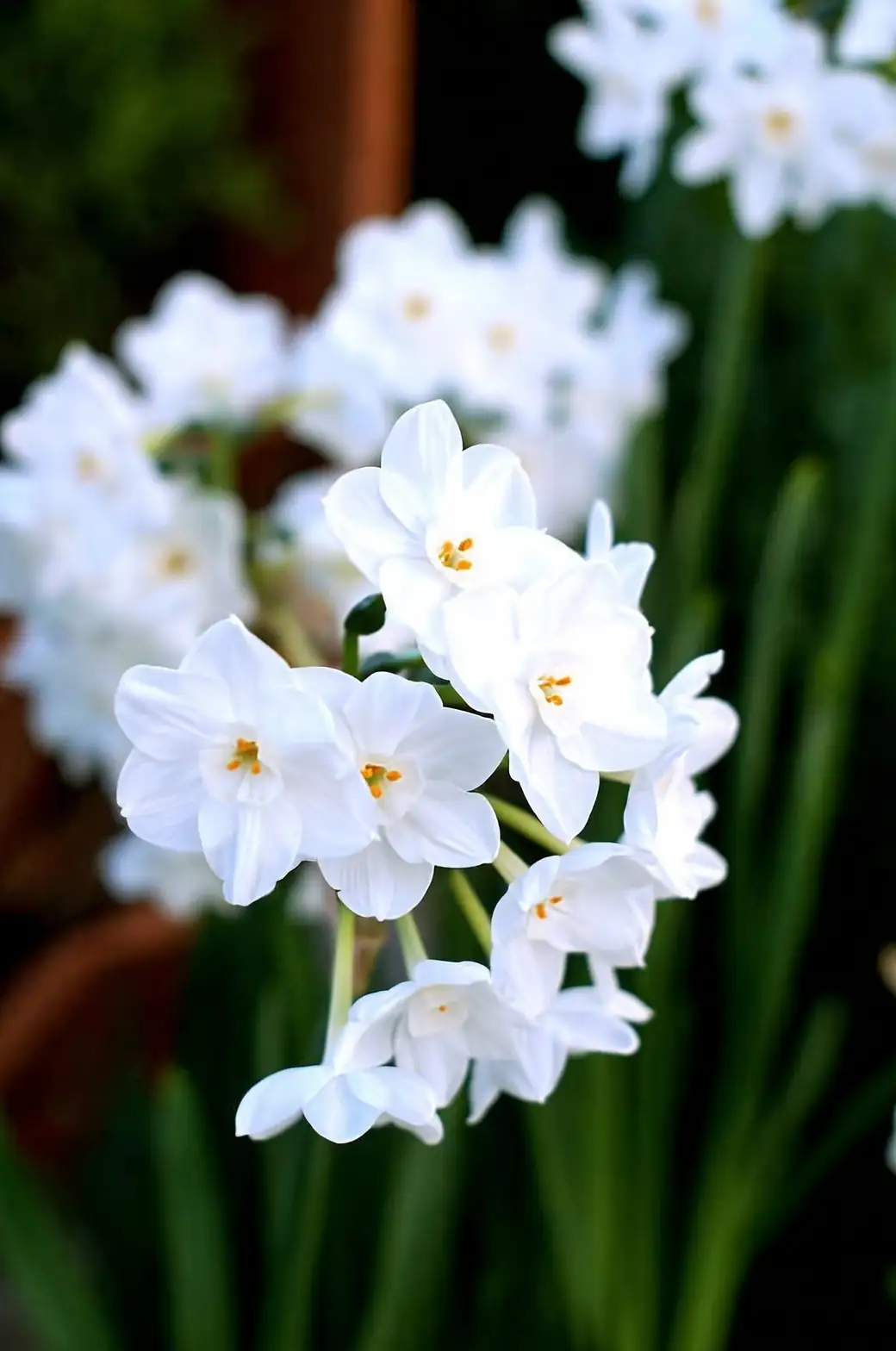
Bring a blast of spring to your windowsill with paperwhite narcissus (Narcissus tazetta)—the famously fragrant “winter daffodil” that’s easy to force indoors. Give them bright light, cool air, and clean water, and they’ll reward you with clusters of starry white flowers in roughly 4–6 weeks. Here’s your no-nonsense roadmap to sturdy stems, showy blooms, and zero flop.
Light, temperature, and watering—your sturdy-bloom map
- Light
- Indoors: Bright light to full sun. Aim for at least 6 hours of strong light (east or south window is ideal). Low light = tall, floppy stems.
- Outdoors (mild climates): Sun to light shade with excellent drainage.
- Temperature
- Best range during growth/bloom: 10–20°C (50–68°F).
- For compact, sturdy plants: cooler rooms at 5–15°C (41–59°F).
- Avoid sustained heat above 25°C (77°F)—it shortens bloom life and weakens stems.
- Watering
- In pots: Keep evenly moist, never soggy. Water when the top of the mix just begins to dry; don’t let the pot sit in water.
- In water culture: Keep water shallow—roots in water, bulb mostly dry (waterline just at or barely below the bulb’s basal plate). Freshness matters: change frequently (even daily early on), then weekly once buds are set.
Tip: Bright + cool + clean. Those three words solve 90% of paperwhite problems.
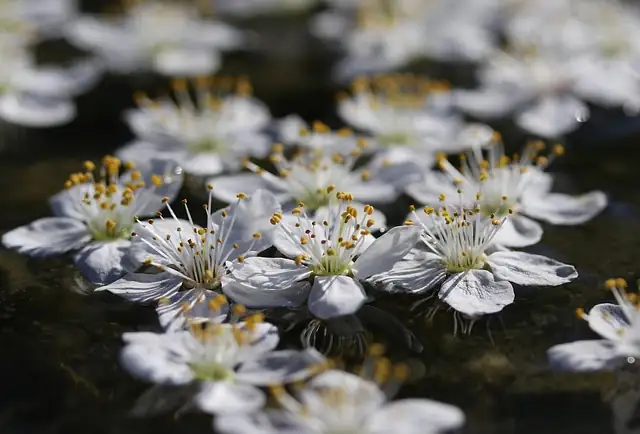
Week-by-week forcing timeline (4–6 weeks to flowers)
Want blooms on a specific date? Work backward 4–6 weeks. Cooler, brighter rooms lean to 6 weeks of compact growth; slightly warmer (but still cool) rooms push toward 4–5 weeks.
- Week 0 (Planting day)
- Choose firm, heavy bulbs without mold or soft spots.
- Pot culture: Use a free-draining bulb mix (about 2 parts potting mix to 1 part grit). Nestle bulbs close, pointed ends up, with top third exposed. A typical 20 cm / 8 in pot fits about 3–5 bulbs depending on size.
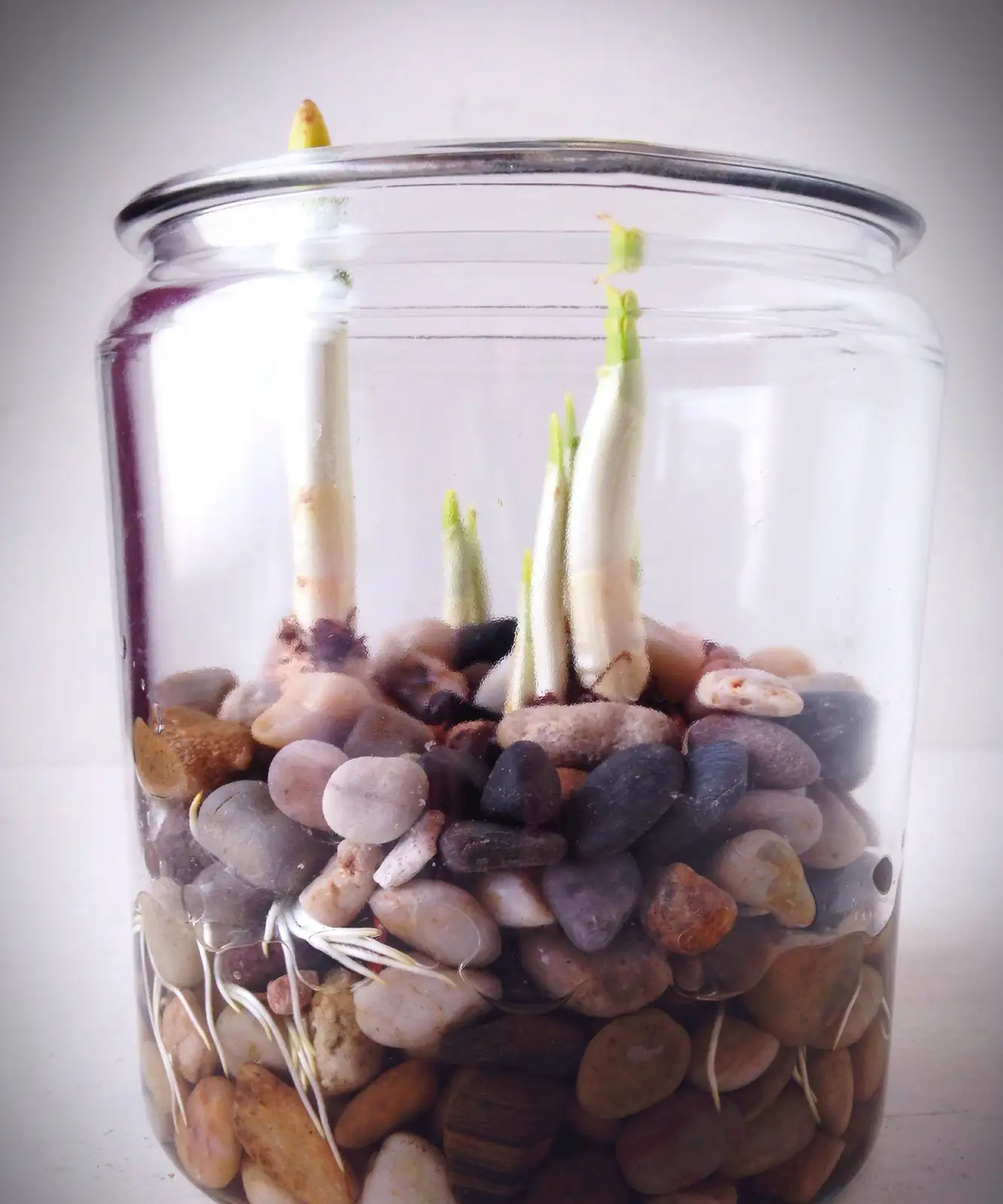
- Water culture: Set bulbs on clean pebbles. Add water to just touch the basal plate—don’t wet the bulb itself.
- Placement: Bright and cool from the start. Optional: keep in a very cool, dim spot for 5–7 days to encourage root growth, then move to your brightest cool window.
- Week 1
- Roots form; shoots emerge. Keep temperatures 10–15°C (50–59°F) for stockier growth.
- Water: Maintain that low waterline (water culture) or barely moist mix (pots). Refresh water frequently.
- Airflow: Provide gentle air movement to discourage rot and strengthen stems.
- Week 2
- Leaves 5–10 cm (2–4 in). Rotate the pot a quarter turn every couple of days for even growth.
- Light: As bright as you can provide. If daylight is scarce, supplement with a grow light 6–12 inches above the foliage for 10–12 hours/day.
- Week 3–4
- Buds form. Maintain cool temps (ideally under 18°C / 65°F).
- Water: Slightly more frequent in pots as growth accelerates; in bowls, keep water sparkling clean.
- Support setup: If needed, add discreet twig or hoop supports now, before stems get tall.
- Week 4–6 (Bloom)
- Flowers open in succession for 1–3 weeks. Cooler rooms extend the show.
- Keep away from heaters and hot, dry blasts. Avoid spraying open flowers to prevent spotting and premature drop.
- Deadhead spent blooms to keep things tidy; keep leaves intact.
Note: Fast tazetta cultivars can be quick—some selections flower near the short end of the window—yet plan for ~30–40 days as a reliable benchmark.
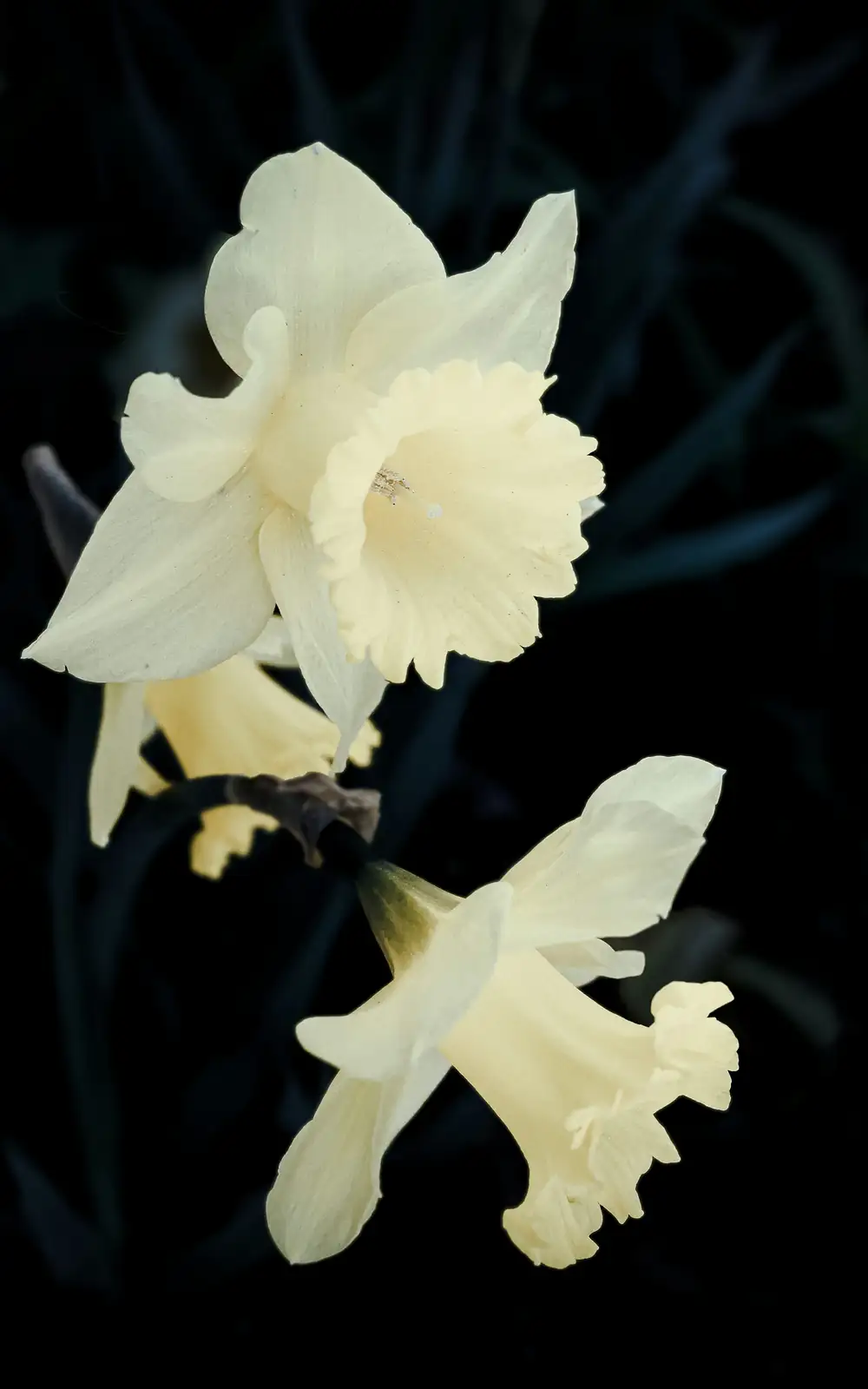
Pot vs. water culture: which should you choose?
- Pot culture (soil/grit)
- Best for: Longer displays, bulbs you may want to keep.
- How-to: Use a free-draining bulb mix; expose the top third of each bulb. Water thoroughly, then keep evenly moist—not wet.
- Pros: More forgiving, steadier moisture, easier long-term care.
- Water culture (pebbles)
- Best for: Elegant centerpieces and classic winter bowls.
- How-to: Place bulbs on pebbles; add water to just reach the basal plate. Keep the bulb body mostly dry.
- Pros: Dramatic look, super simple setup; no fertilizer needed.
- Keys to success: Ultra-clean water and containers, shallow waterline, excellent light and airflow. Refresh water often (daily at first; weekly later).
The anti-flop playbook (strong stems, compact plants)
- Keep it cool: 5–15°C (41–59°F) is the single best trick for sturdy growth.
- Max out light: Bright east/south window or a grow light for 10–12 hours/day.
- Crowd the bulbs: Multiple bulbs in a pot naturally brace one another and look lush.
- Rotate regularly: Quarter-turns prevent leaning.
- Gentle airflow: A small fan on low strengthens tissues and discourages mildew.
- The “gin trick” (for water culture or watered pots):
- Once shoots are 5–8 cm (2–3 in), switch to a 1:7 mix of clear spirit (e.g., gin or vodka, ~40% ABV) to water—about 5% alcohol in the final solution.
- This safely reduces plant height without sacrificing bloom.
- Do not use beer or wine (sugars cause issues). Return to plain water after flowering.
- Subtle supports: Tuck in slender twigs, willow hoops, or discreet stakes and soft ties before stems elongate fully.
Easy, step-by-step setup (both methods)
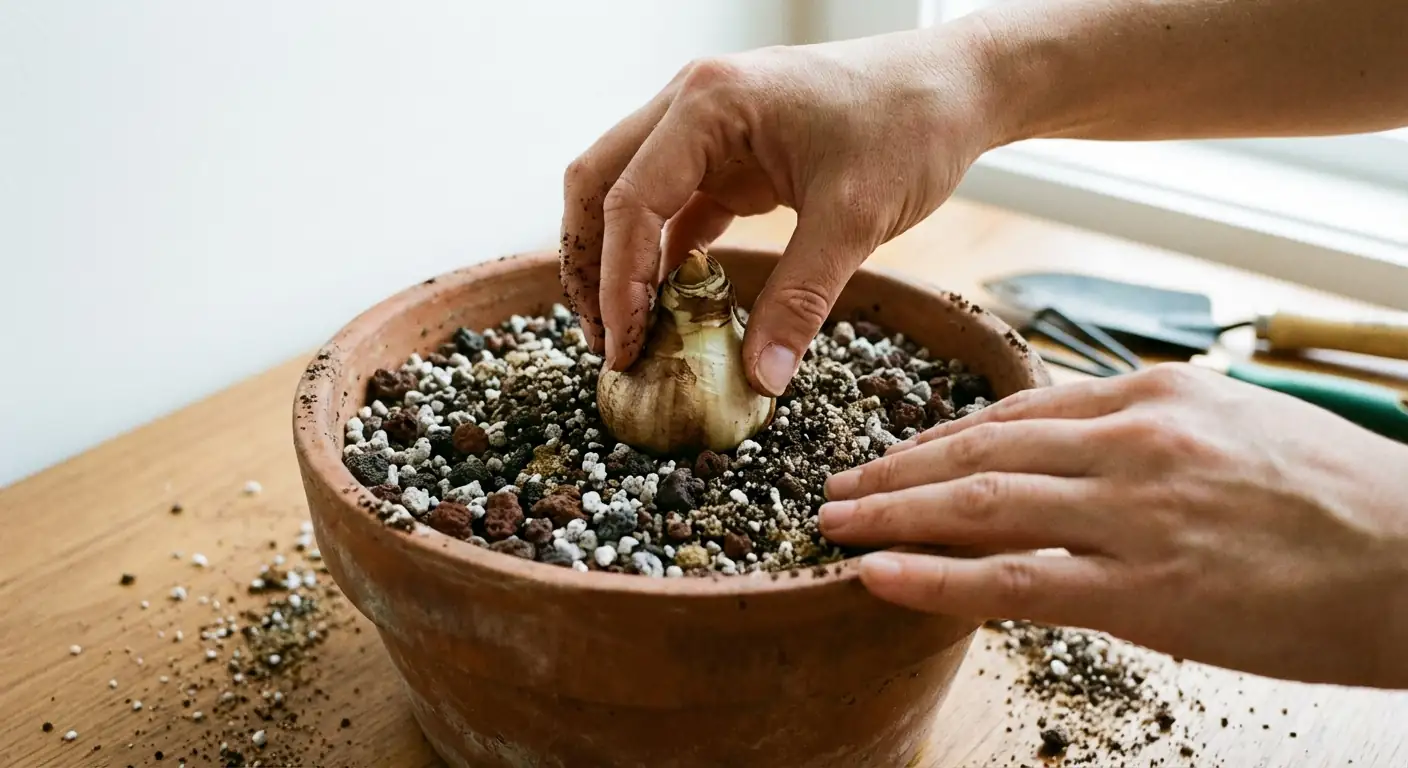
- Choose healthy bulbs: Firm, heavy, papery skins intact.
- Container choice:
- Pots need drainage holes. Use a saucer or slip a plastic grow pot into a decorative cachepot.
- Bowls for water culture should be shallow, stable, and easy to clean.
- Planting depth:
- In mix: top third of each bulb above the surface.
- In pebbles: bulb perched above water; only roots should sit in water.
- Hygiene:
- Rinse tools and containers before use.
- In carved/trained displays, rinse away any sap after cutting and allow cuts to dry and callus in airy shade before bright light.
After flowering: keep or compost?
- During and right after bloom
- Snip spent flowers, but keep all green leaves. They “recharge” the bulb for next year.
- 6–8 weeks post-bloom
- Keep leaves in bright light. If you plan to keep bulbs, feed lightly (half-strength balanced fertilizer every ~2 weeks) until foliage yellows.
- Dormancy
- Reduce watering as leaves yellow. Store bulbs dry and airy in a cool place—or plant outdoors in mild climates (roughly USDA Zones 8–10/11) with excellent drainage.
- Note: Water-forced bulbs can be weaker; many people enjoy paperwhites as a seasonal one-and-done. In mild climates, tazettas may naturalize and bloom in late winter–early spring.
Troubleshooting quick answers
- Tall, floppy stems
- Almost always warmth + low light. Move to the brightest window, keep at 5–15°C (41–59°F), rotate regularly, consider the alcohol trick, and use discreet supports.
- Leaves but no flowers
- Bulbs may be too small/young, depleted by early leaf removal last season, overly crowded long-term, or underlit. Paperwhites generally don’t require chilling, but they do need strong light.
- Rot or mold
- In bowls: lower the waterline, refresh more often, increase airflow, and keep bulbs dry above the roots. In pots: improve drainage and water less often.
- Pests
- Indoors: occasional aphids—wash off or treat promptly. Discard any bulbs that soften or smell off; keep storage and displays airy and clean.
- Fragrance too strong?
- Move to a cooler, slightly more ventilated room or display fewer bulbs per container. Some cultivars are less intense than others.
Safety, pets, and vase smarts
- Toxicity: All parts—especially the bulbs—are toxic to people and pets. Keep away from children, cats, and dogs. Sap may irritate skin; wear gloves if sensitive.
- Cut-flower note: Narcissus stems exude a sap that can shorten the life of other flowers. Condition stems separately in water for several hours, then add to mixed arrangements.
Seasonal calendar snapshot
- Autumn: Start indoor forcing or plant outdoors in mild climates.
- Winter to early spring: Keep cool and bright; bloom typically arrives ~4–6 weeks after starting.
- After flowering: Deadhead; keep leaves growing in bright light and feed lightly if you’re saving bulbs.
- Late spring to summer: Allow foliage to yellow naturally; bulbs enter dry dormancy. Divide offsets during dormancy every few years if clumps are crowded.
A note on meaning and tradition
Paperwhites carry a double heritage. In the West, their genus name recalls the myth of Narcissus, a youth so entranced by his reflection that a flower sprang where he fell—hence associations with self-reflection and, sometimes, self-love. In East Asia, the same plant (水仙) is woven into winter and Lunar New Year customs as a symbol of renewal, prosperity, and fresh beginnings. It’s less about vanity and more about ushering in luck and light in the darkest season. That contrast is the charm: a single living object, two cultural lenses—one cautionary, one celebratory—both pointing to the timeless human hope for a new start.
Quick kit: what to buy
- Firm, large bulbs (bigger bulbs = more reliable flowers)
- Free-draining bulb mix + grit (for pots) or clean pebbles (for bowls)
- A bright, cool display spot away from heaters
- Optional: slender twigs or hoops for support, a small fan for airflow, and clear spirit for the height-control trick
Grow them bright, keep them cool, and enjoy that snowy-white, honeyed perfume long before the garden wakes up.


