

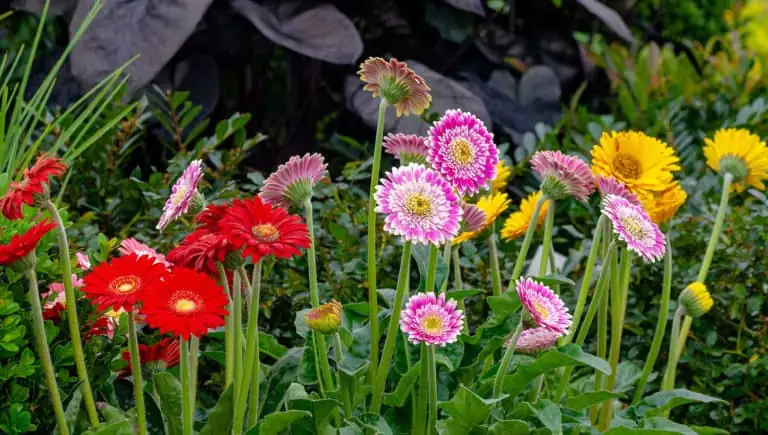
If you’ve ever stared into a gerbera daisy and felt like it was smiling back, you’re not wrong—this plant is a born show‑off. Gerbera jamesonii, the Gerbera Daisy or Barberton Daisy, piles color and geometry into a tight, sunburst display, then hoists it aloft on a tall, leafless stem above a neat rosette of green. Look closer and you’ll discover a few delightful secrets that explain why it’s both a garden darling and one of the world’s best‑selling cut flowers.
The big reveal: your “one” flower is a whole bouquet
Gerbera belongs to Asteraceae, the daisy family famous for composite flower heads. That “single” bloom is really an inflorescence made of many tiny flowers (florets) packed together.
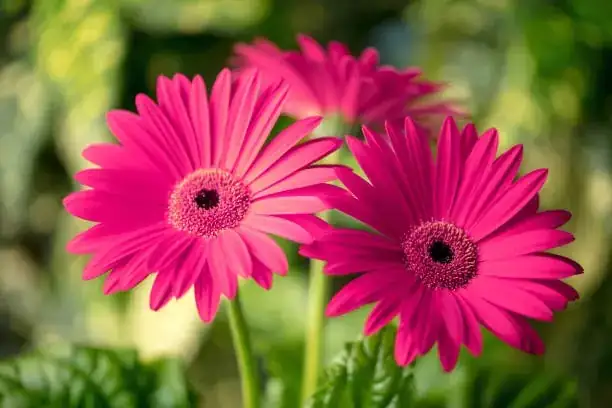
- Ray florets form the “petals”: showy, strap‑shaped, and the main color splash.
- Disc florets make the center: tight, tubular florets that mature from the outside inward, often creating a contrasting ring or dark eye.
This teamwork explains gerbera’s graphic perfection in photos and bouquets. It’s architecture, not accident.
Bloom personalities: from single to “crested”
Modern gerbera cultivars come in a spectrum of styles:
- Single: one clean row of rays around a distinct central disc.
- Semi‑double: two or so rows of rays, softening the eye.
- Double: multiple rows create a fuller ring; the center is partially obscured.
- Extra‑full “crested”: a plush, puffed center where extra, shorter rays crowd the disc for a velvety, almost dahlia‑like effect.
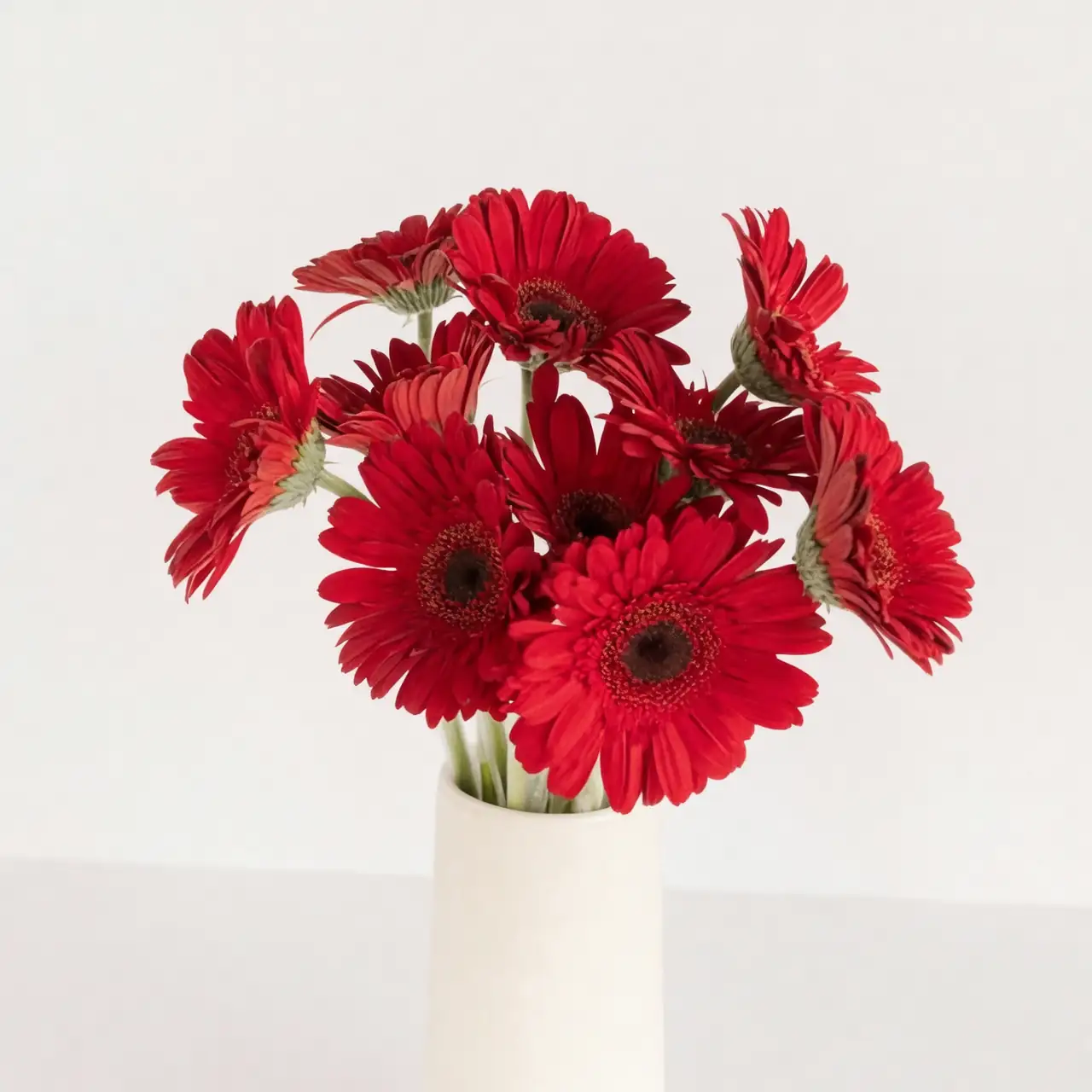
Pair those forms with a color range that spans white, cream, yellow, orange, salmon, pink, and red (often with a contrasting eye), and you’ve got a florist’s dream toolkit.
Rosette genius: life happens at ground level
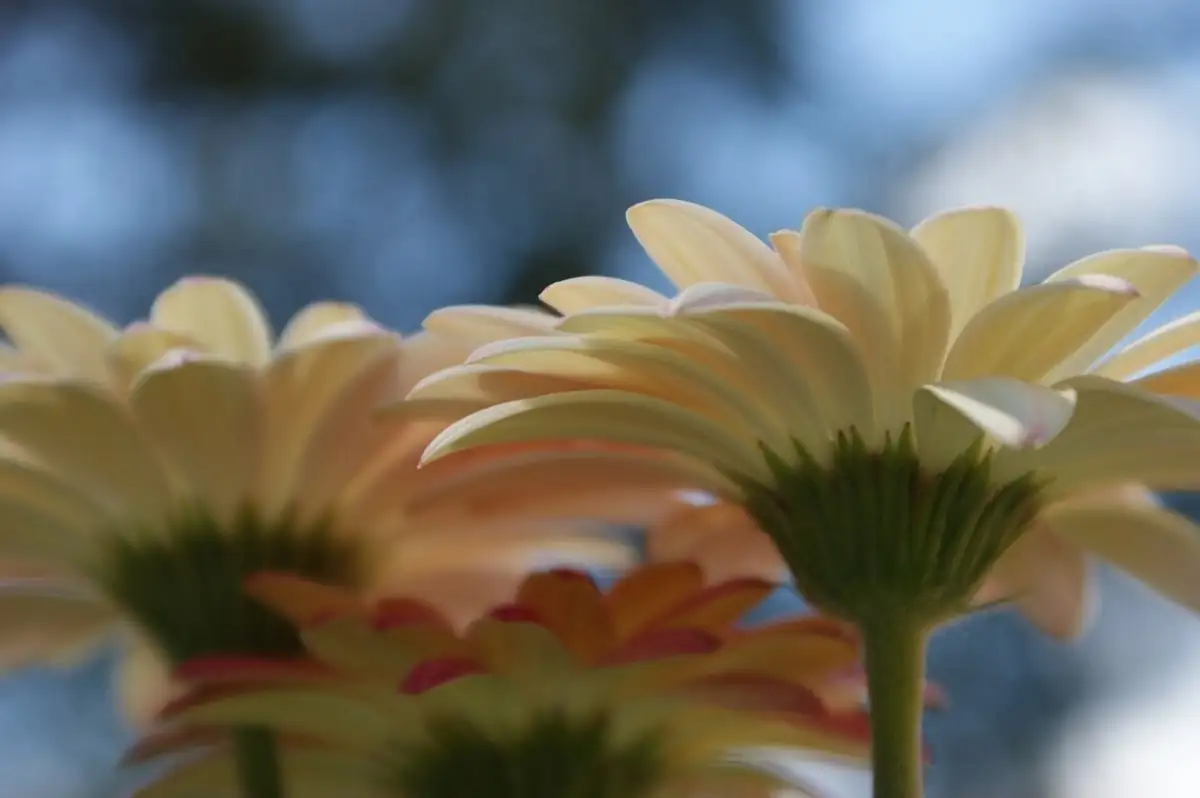
Gerbera jamesonii grows as a compact, basal rosette—a tidy cluster of leaves at the soil line—then sends up leafless, sturdy flower stems that rise above the foliage.
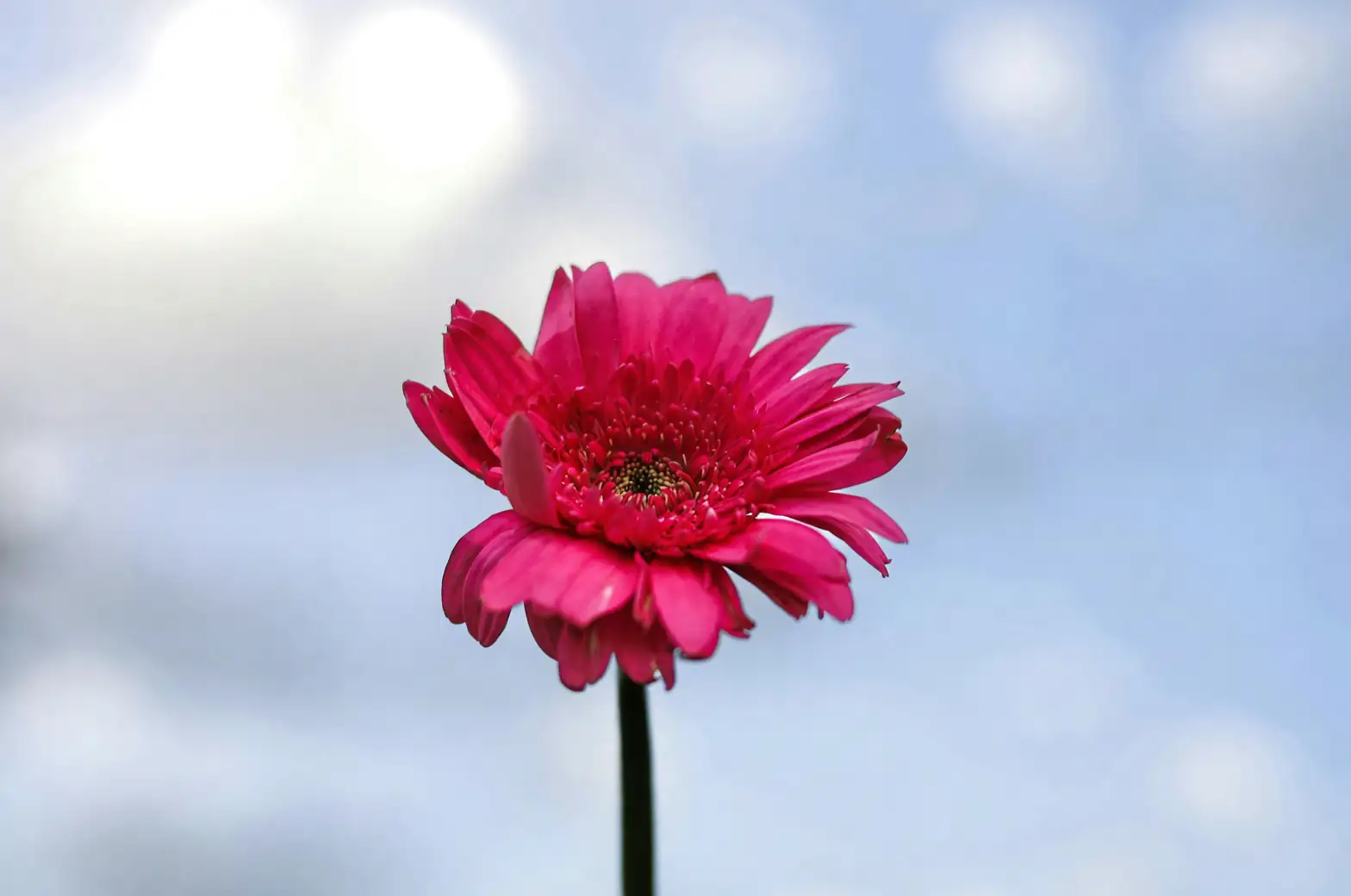
- Foliage: bright to deep green, slightly to clearly lobed with toothed edges, often softly hairy. Keep the crown open by removing tired leaves; it looks better and breathes better.
- Size: most home and container plants bloom at about 20–45 cm (8–18 in) tall, with a spread around 20–60 cm (8–24 in), depending on the cultivar and pot.
- Practical perk: because all growth emerges from that central crown, watering the soil—not the rosette—is essential. Keeping the crown dry is the #1 way to dodge rot.
Why gerbera rules the cut‑flower world
It’s not just a pretty face. A few very practical traits put gerbera near the top of global sales year in, year out:
- Bold, photogenic geometry: face‑forward blooms with a clean, graphic center.
- A painter’s palette: from whisper‑white to vivid orange and red, with modern breeding delivering hundreds of cultivars.
- Stems that perform: tall, leafless scapes present blooms cleanly without distracting foliage.
- Reliable supply: widely cultivated worldwide, including greenhouse production, so colors and forms are available nearly year‑round.
- Strong vase appeal: with the right handling (see below), their vase life is excellent and their heads stay striking to the very end.
Florists’ playbook: picture‑perfect stems, zero “bent neck”
Those statuesque stems can be fussy if mishandled. Here’s how pros keep gerberas crisp and upright.
- Selection matters
- Choose heads with mature outer florets—avoid very tight, immature centers.
- Look for clean, firm stems with no bruising or sliminess.
- Sanitation is everything
- Use a squeaky‑clean vase.
- Add floral preservative/biocide and refresh it regularly.
- Water level: shallow by design
- Keep water shallow (just a few centimeters) to reduce stem rot and lower the risk of “bent neck.”
- Change water often—daily is ideal—and re‑cut stems.
- Temperature and light
- Keep arrangements cool and out of direct sun or hot drafts. Heat speeds wilting and encourages bacteria.
- Smart support
- Use gerbera cups/collars or clear stem tubes to support the head‑to‑stem junction, especially in transport and in loose, airy designs.
- In arrangements, nest heads slightly against a vase rim or into a supportive grid so the bloom faces stay forward without strain.
Growing at home: set the stage for a long, showy season
Gerbera is a moderate‑care plant that becomes easy once you nail two keys—strong light and excellent drainage.
- Light and placement
- Bright light to full sun; aim for about 6 hours daily.
- In hot climates or behind glass, give morning sun and light afternoon shade.
- Temperature and airflow
- Happy zone: roughly 15–28°C (59–82°F), with superb flowering around 18–24°C (64–75°F).
- Not frost hardy—keep above about 10°C (50°F). Good ventilation keeps powdery mildew and gray mold at bay.
- Soil and watering
- Use a rich, free‑draining mix (perlite/grit welcome), slightly acidic around pH 5.5–6.5.
- Water thoroughly, then let the top 2–5 cm (1–2 in) dry a bit. Always water the soil, never into the rosette. Water early in the day and keep leaves dry.
- Feeding and grooming
- Feed every two weeks in active growth; swap or alternate to a bloom‑leaning formula if you’re getting leaves but few buds.
- Deadhead by cutting spent stems right at the base.
- Remove yellowing leaves to keep the crown open and airy.
- Pests and problems to watch
- Aphids, thrips, whiteflies, spider mites, and leafminers may appear—especially indoors.
- Diseases: powdery mildew, leaf spots, Botrytis, and crown/root rot (usually linked to wet crowns or soggy soil). Prevention = light + drainage + dry foliage + airflow.
Roots and routes: where it comes from and how it got famous
- Origin story: Native to southern Africa—especially South Africa and Eswatini—with a notable early collection near Barberton in the Transvaal region. The species epithet honors Robert Jameson, linked to those early discoveries.
- Name drop: The genus Gerbera commemorates Traugott Gerber, an 18th‑century German botanist.
- Rise to stardom: From these southern African origins, breeders created a rainbow of modern cultivars. By the late 20th century, gerberas had claimed a permanent spot in floristry thanks to color range, form variety, and dependable vase performance.
Flower language, with a clear-eyed look
Gerberas are cultural shorthand for happiness, cheerfulness, warmth, and admiration. Color cues often used in gifting:
- Red: love and passion
- Yellow: friendship and joy
- Pink: gentle admiration
- White: purity
- Orange: enthusiasm and energy
Where does this come from? Much of it traces to Victorian floriography and later floral‑industry storytelling—more poetic than scientific. While not botanically “proven,” these associations persist because they match what the blooms project: bold color, clean lines, and an unmistakably upbeat presence.
Quick‑hit facts to impress your plant pals
- Each “flower” is a composite head made of many individual florets.
- Flower heads are typically 5–15 cm (2–6 in) across.
- Growth is a compact rosette with upright, leafless flower stems.
- Non‑toxic to people and commonly listed as non‑toxic to cats and dogs.
- Frost‑tender; most dependable outdoors in USDA Zones 9–11 or as a summer annual elsewhere.
- Among the world’s top‑selling cut flowers—thanks to year‑round availability, graphic form, and excellent vase performance when handled correctly.
Gerbera jamesonii wears its complexity with a smile: a living infographic of color and structure. Treat the crown with care, the stems with cleanliness and support, and you’ll have a plant—and a vase—full of sunshine for months.


