
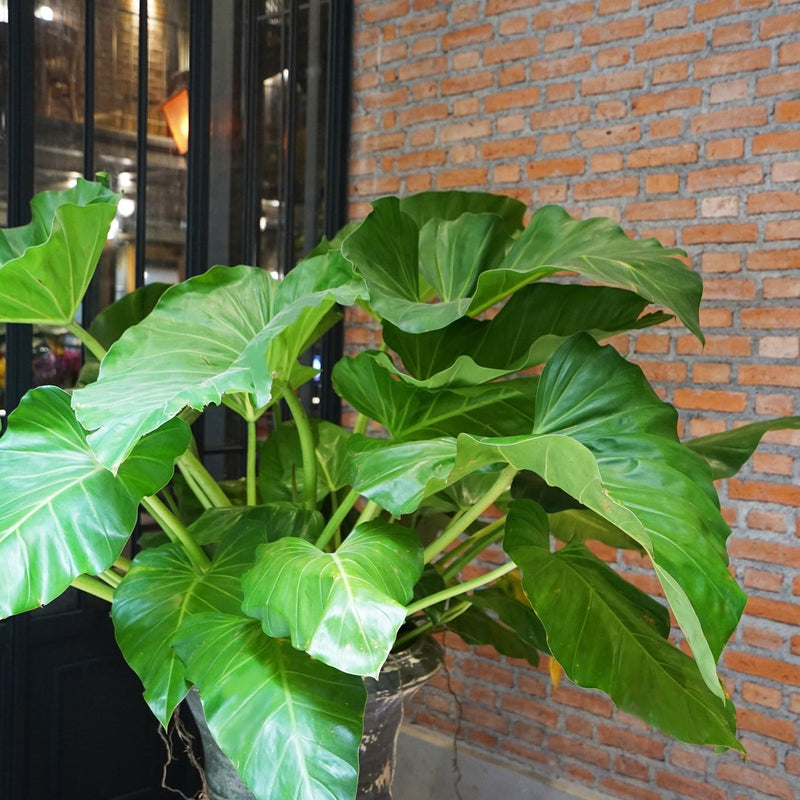
Meet Alocasia—Elephant’s Ear to many—a plant that wears drama like a cape. Those arrow-shaped leaves with bright, raised veins and the occasional velvety finish look like they were designed by a fashion house, not a rainforest. But behind the glam is a wonderfully odd biology: leaves that appear one at a time, a habit of “weeping” at night, and a ruthless (but smart) trade-off where a new leaf often costs an old one. Let’s peel back the layers, science-lite style, and learn how to read what your Alocasia is telling you.
The morning mystery: droplets, dew, or tiny vampires?
Wake up to beads of moisture along the leaf tips? That’s usually guttation—the plant’s way of releasing excess water taken up by roots when transpiration is low (think nighttime, high humidity, or still air).
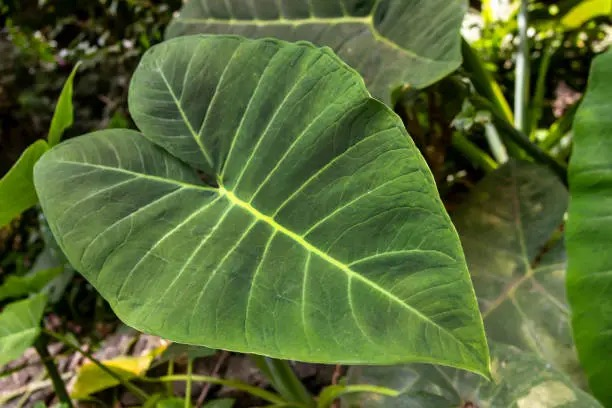
Guttation 101 (and how to spot it)
- When it happens: Night to early morning.
- Where it shows: Leaf tips and edges, often at the same spots each time.
- What it is: Xylem sap (mostly water plus minerals), pushed out through special leaf structures called hydathodes.
- After it dries: You may see a faint white rim or speckly mineral residue where a droplet was.
Guttation isn’t a cry for help. It’s usually a sign your plant is hydrated and pressure is doing what pressure does. However, when droplets linger on leaf edges without airflow, they can soften that tissue and cause sudden brown tips by morning. If you notice this pattern:
- Water earlier in the day.
- Give the plant light airflow at night (a gentle fan, a cracked door).
- Avoid leaving water in the saucer for long; empty it within about 30 minutes after watering.
Important: Never taste-test leaf liquids. Alocasia sap can irritate skin and is toxic if ingested.
Not all drips are benign: pests vs. guttation
Some insects excrete sugary honeydew that can look like “plant sweat.” Here’s how to tell:
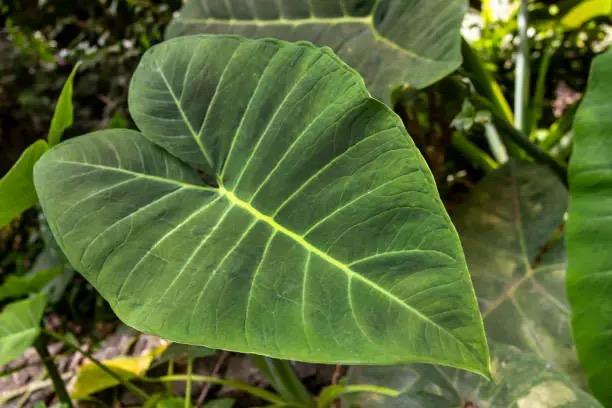
- Timing
- Guttation: Overnight; appears and disappears predictably by morning.
- Pests: Any time; often persistent.
- Texture and residue
- Guttation: Not tacky when fresh; may dry to a pale, crusty rim.
- Honeydew (from mealybugs, scale, aphids): Sticky, may attract ants and often leads to black sooty mold on surfaces below.
- Other clues
- Spider mites: Fine webbing and pale speckling (stippling) on leaves; they thrive in dry rooms.
- Mealybugs: Cottony tufts in leaf axils and along petioles.
- Scale: Fixed, dome-like bumps on stems or undersides.
If you suspect pests, wipe leaves, inspect undersides carefully, and treat with insecticidal soap or neem oil. Repeat treatments are usually needed. Isolate the plant and improve airflow.
One-leaf-at-a-time: Alocasia’s odd growth rhythm
Alocasia grows from thick underground rhizomes or tubers. In warm, bright, humid conditions, it can hit a thrilling pace—roughly a new leaf per week in peak summer. Yet growth is surprisingly sequential: a single new spear unfurls like a scroll while the plant reallocates resources internally. In many types, the oldest leaf yellows and drops right as the newcomer takes the stage. It’s not drama; it’s budgeting.
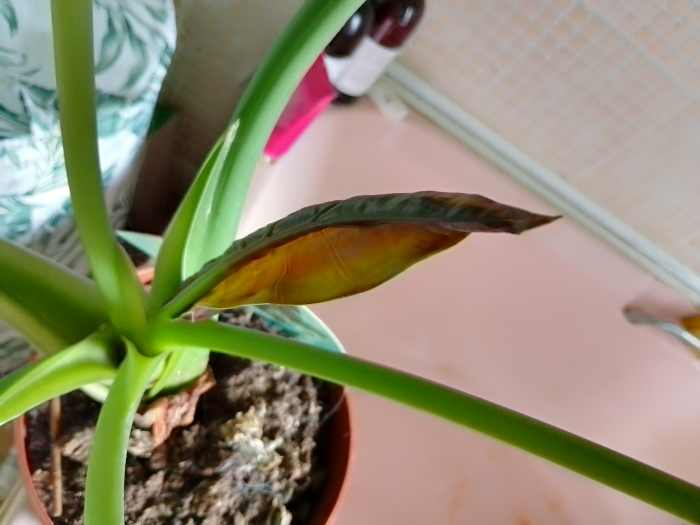
Old-leaf sacrifice vs. real trouble
- Normal trade-off
- Only the oldest leaf yellows when a new one emerges.
- The rest of the plant looks glossy, firm, and on track.
- Red flags
- Multiple leaves yellowing at once.
- Drooping, limp texture.
- Mushy or sour-smelling potting mix (root-rot risk).
- Very dim light or persistent cold.
If decline looks systemic, reassess:
- Light: Bright, indirect light (think rainforest understory) for 3–5 hours daily.
- Water: Keep the top 2–3 inches of mix dry before watering thoroughly; never let the pot sit in water.
- Warmth: Aim for 60–85°F (15–29°C), avoiding drafts.
- Humidity: 50% minimum; 65%+ is ideal. Use a humidifier if needed—but pair it with light airflow to prevent leaf-edge softening.
Many Alocasias slow down or go semi-dormant in winter. That can mean fewer leaves or even leaf drop. Keep warm, hold fertilizer, and water sparingly so the soil is only lightly moist.
Bold veins, velvet leaves: why Alocasia looks the way it does
Those graphic, white-to-silvery veins and plush textures didn’t evolve for Instagram. They’re practical rainforest solutions—from engineering to water management—later amplified by human selection.
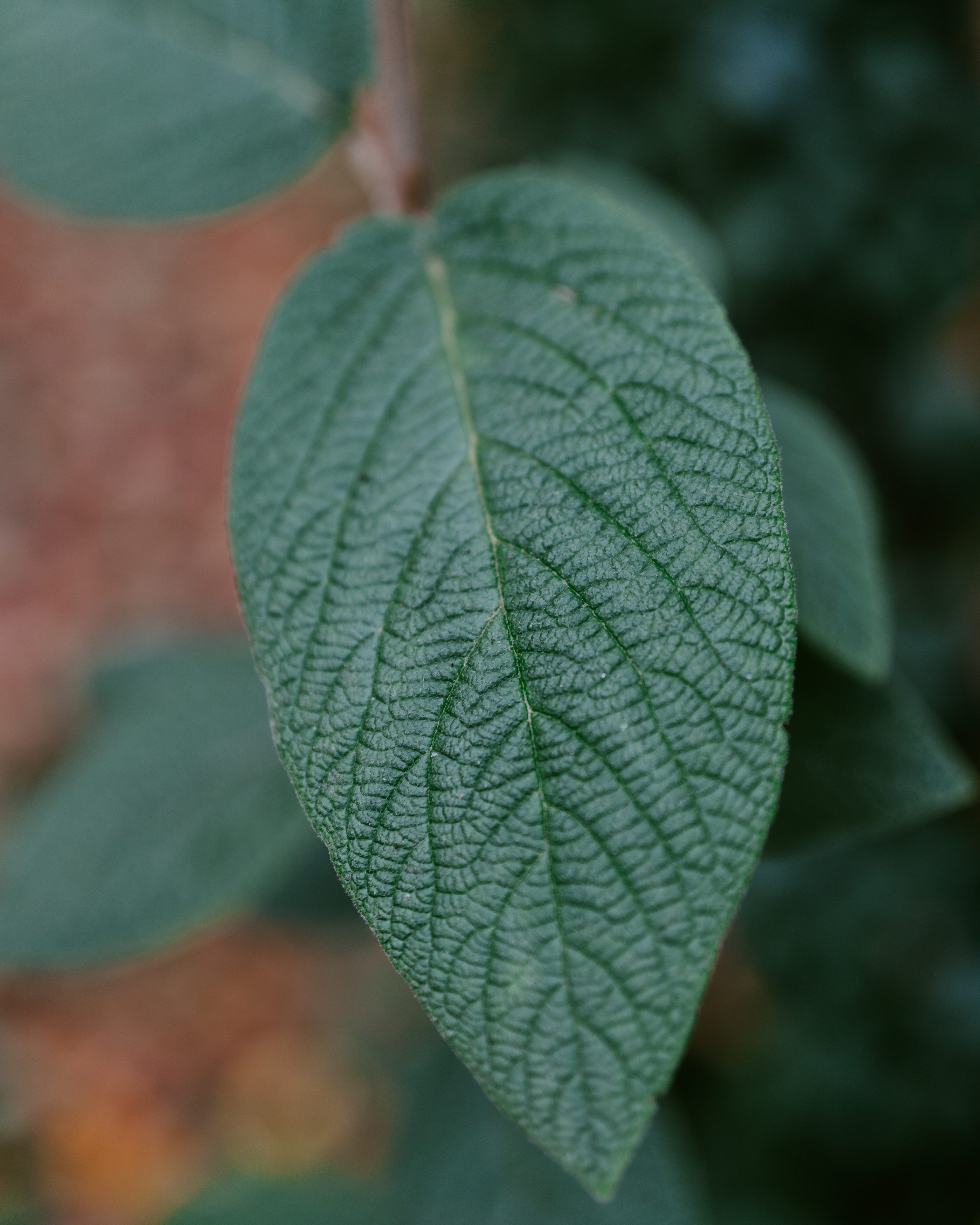
Raised, contrasting veins
- Structural support: Large, shield-like leaves are heavy. Thick ribs act like trusses, stiffening the blade so it can stand tall on a single petiole.
- Hydraulic highways: Prominent veins are plumbing—moving water and minerals quickly across a wide surface.
- Water-shedding and drip-tips: Many Alocasia leaves end in exaggerated points. These help shed tropical rain fast, keeping surfaces drier and less hospitable to fungi and algae.
- Contrast as a side effect—and a selection target: Where veins thicken, chlorophyll can be reduced and surfaces curve, catching light differently. In the wild, the benefit is strength and flow; in cultivation, people favored the stunning, high-contrast look.
Velvet, sheen, and sculpted leaf surfaces
- Velvety leaves: Microscopic surface textures can scatter light, cutting glare and softening bright flecks of sun that penetrate the canopy. That helps in low, shifting light.
- Subtle metallic sheen: Specialized epidermal cells sometimes reflect light, potentially aiding light capture while shedding water efficiently.
- Bullate (quilted) or corrugated textures: Mounded or ridged surfaces increase stiffness without adding much weight, and may discourage herbivores by making the leaf harder to chew. They also channel water into micro-drainage paths, helping leaves dry quickly after showers.
In short: the look is rainforest function first, style icon second.
Care cheat sheet (so growth feels effortless)
- Light: Bright, indirect light or partial shade. Avoid harsh, midday sun that can scorch.
- Water: Evenly moist, not soggy. Water when the top 2–3 inches are dry; reduce in winter.
- Humidity: 65%+ is bliss; try not to dip below ~50%. Pair humidity with airflow.
- Temperature: 60–85°F (15–29°C). No cold drafts.
- Soil: A chunky aroid mix—peat or coco coir plus orchid bark and perlite—slightly acidic (pH ~5.5–6.5).
- Feeding: During spring–summer, fertilize 1–2×/month at half strength or use slow-release every 6–8 weeks. Pause in winter.
- Repotting: Spring or summer; every 12–24 months depending on size. Go up just one pot size with excellent drainage.
- Pruning: Remove yellowing/damaged leaves near the base with clean tools. Wear gloves—the sap can irritate.
- Propagation: Divide rhizomes/offsets in spring; keep divisions warm, humid, and lightly moist.
Brown tips: timing and airflow matter
If the tips turn brown overnight after you’ve watered, look to guttation plus still air. Levers to pull:
- Water in the morning.
- Give gentle night airflow.
- Avoid frequent overhead wetting of leaves.
- Don’t over-correct humidity downward—keep it healthy but moving.
If edges are sharp, crispy, and sun-exposed, think light or fertilizer burn instead of guttation-related tipping.
Flowers? Sometimes—but leaves are the show
Like many aroids, Alocasia can produce a hooded spathe-and-spadix bloom (usually yellow to yellow-green). Indoors, flowering is occasional at best, and most plants channel energy into foliage.
Symbolism and “flower language”
Alocasia is often linked with resilience and growth—the plant’s statuesque stance and steady, one-leaf rhythm feel like momentum embodied. In Feng Shui, it’s sometimes associated with prosperity and career luck. These meanings are cultural, not botanical; they reflect how people respond to the plant’s form and presence rather than anything the plant “does.” Treat them as stories we tell about a bold, upward-reaching leaf.
Safety first
Alocasia (Elephant’s Ear, African Mask Plant, Giant Taro, and kin) is toxic to people and pets. It contains calcium oxalate crystals that can cause intense mouth and throat irritation if chewed, plus vomiting and diarrhea. Keep it out of reach, and wear gloves when handling or pruning.
Quick troubleshooting
- Yellowing leaves
- One oldest leaf only as a new one unfurls: normal aging.
- Many leaves: reassess watering, light, temperature, and nutrition; check roots for rot.
- Drooping
- Check soil moisture first—too wet or too dry are both culprits. Also consider low light or temperature swings.
- Dormancy
- Common in winter: slower growth or some leaf drop. Keep warm, reduce watering, and pause fertilizer.
A final nudge to observe like a naturalist
Watch a new leaf unfurl in a spiral over days. Notice how the veins dome up like bridgework. See if morning droplets appear only after late-day waterings. When you sync with Alocasia’s rhythms—hydration in balance, humidity with airflow, light without scorch—the plant responds with exactly what it’s famous for: bold, sculptural leaves that seem to materialize out of thin air, one after another. In peak summer, sometimes even one a week. That’s not just pretty—it’s performance.