
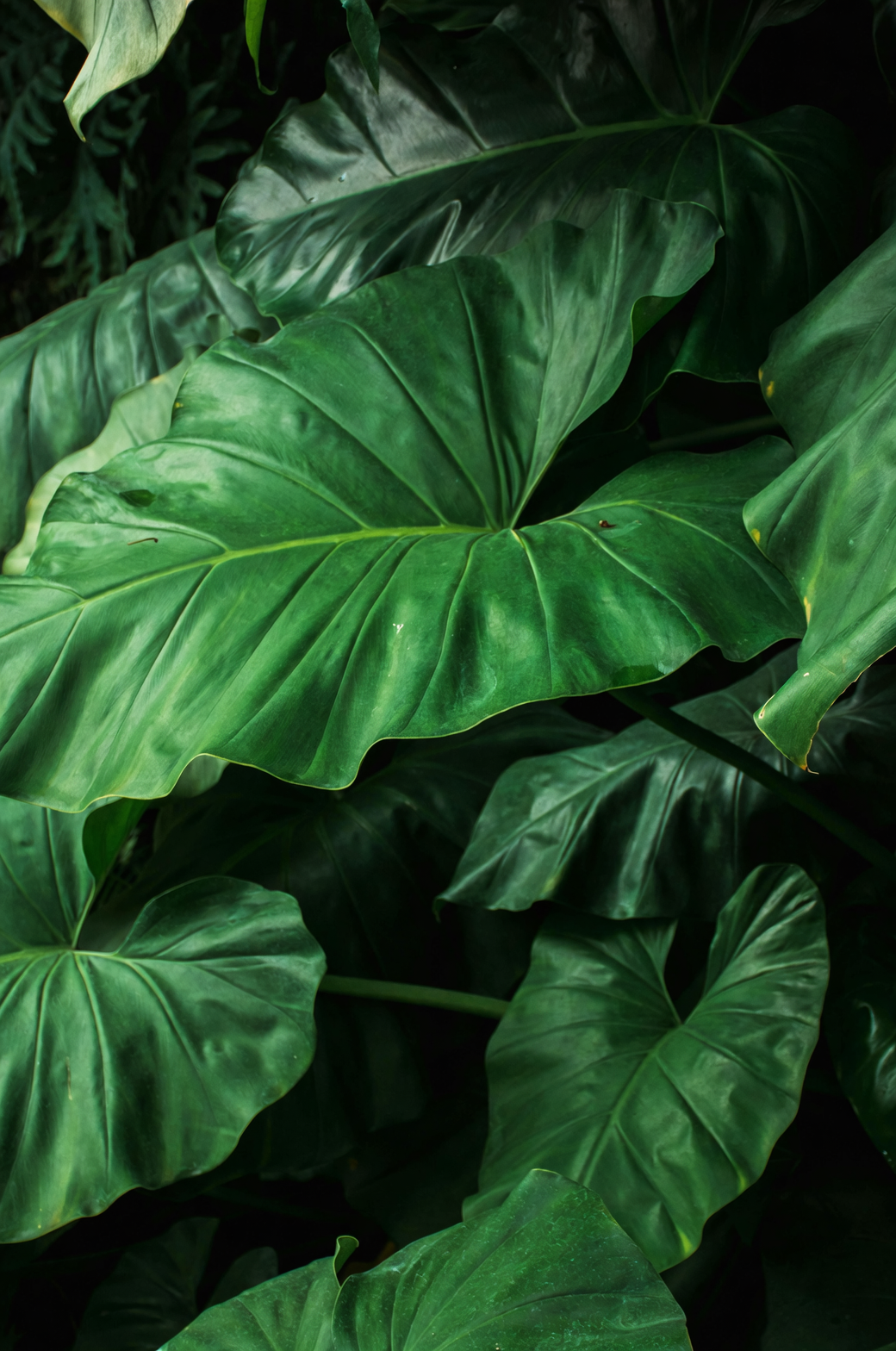
If you grow Alocasia (the dramatic “Elephant’s Ear” with sculptural, veined leaves), you already know: those bold blades invite admiration—and, unfortunately, spider mites. Mealybugs and scale sometimes join the party too. The good news? A calm, methodical IPM (integrated pest management) plan will win. Below is a practical, timeline-based battle strategy that blends isolation, deep leaf washes, smart treatment rotation, environmental tweaks, and rock-solid prevention—so your Alocasia can get back to standing tall.
Note: Alocasia sap can irritate skin, and the plant is toxic if chewed. Wear gloves, keep kids/pets away from treatments, and follow product labels exactly.
Know your enemies (and why Alocasia attracts them)
- Spider mites
- Clues: fine webbing in leaf crotches/undersides, silvery stippling, tiny moving specks (often reddish or tan).
- Favorite conditions: warm, dry air; dusty foliage; stagnant corners.
- Why Alocasia: big leaves = lots of feeding area; warm indoor spots; dry winter heat is a mite magnet.
- Mealybugs
- Clues: cottony tufts in leaf axils and along petioles, sticky honeydew, sometimes sooty mold on surfaces below.
- Bonus tell: they squish into a smear when dabbed with 70% isopropyl alcohol.
- Scale (soft or armored)
- Clues: fixed, crusty domes on stems/petioles/leaf midribs; soft scale often exudes honeydew; armored does not.
- Sneaky stage: tiny yellow “crawlers” are mobile—perfect timing for treatments.
Pro tip: Use a phone macro lens or magnifier and a bright flashlight. With Alocasia’s upright habit, check the backs of leaves, petiole junctures, and around the crown where leaves emerge.
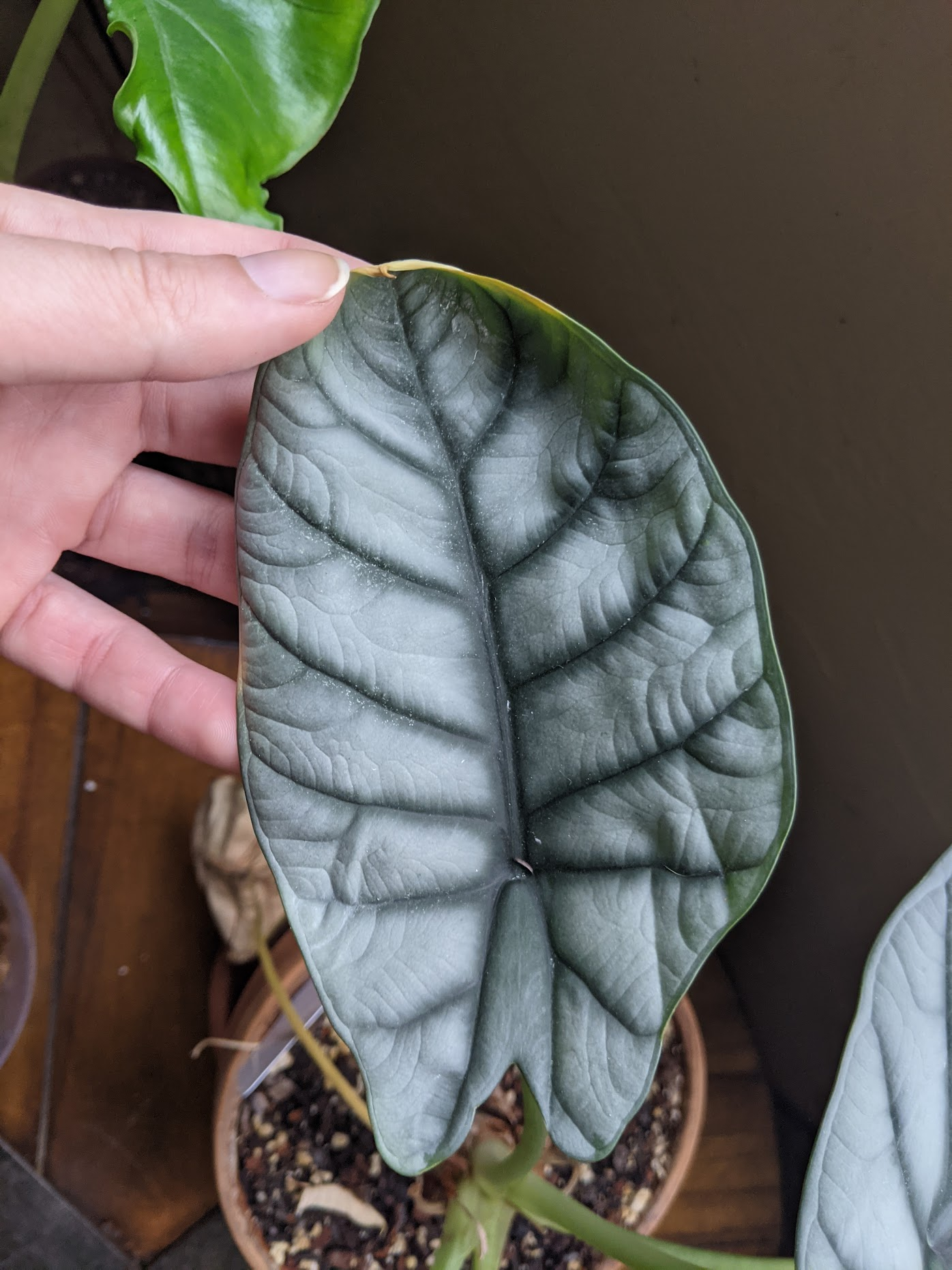
Tools and setup
- PPE and prep: gloves, eye protection, trash bags, clean towels.
- Cleaning: handheld shower or sprayer, microfiber cloths/soft brush, mild fragrance-free soap for surfaces (not for the plant unless it’s a labeled insecticidal soap).
- Treatments (choose a few to rotate):
- Insecticidal soap (potassium salts of fatty acids; labeled for houseplants).
- Horticultural oil (light mineral/seed oil) or neem oil product labeled for indoor ornamentals.
- 70% isopropyl alcohol + cotton swabs (spot-treat mealybugs/scale).
- Optional for advanced users: beneficial insects (e.g., predatory mites) or a houseplant-labeled miticide/insecticide as a last resort; always follow local regulations and labels.
- Environmental helpers: humidifier, small fan for gentle airflow, hygrometer/thermometer.
The 6‑week Alocasia IPM battle plan (timeline)
Hour 0–2: Isolate, diagnose, and triage
- Move your Alocasia to a bright, warm, quarantine zone away from direct sun and away from other plants.
- Bag and toss heavily infested leaves (aim to remove no more than ~25% of total foliage at once).
- Sanitize tools and wipe down the shelf/window area where the plant lived.
Hour 2–24: Deep leaf wash (your reset button)
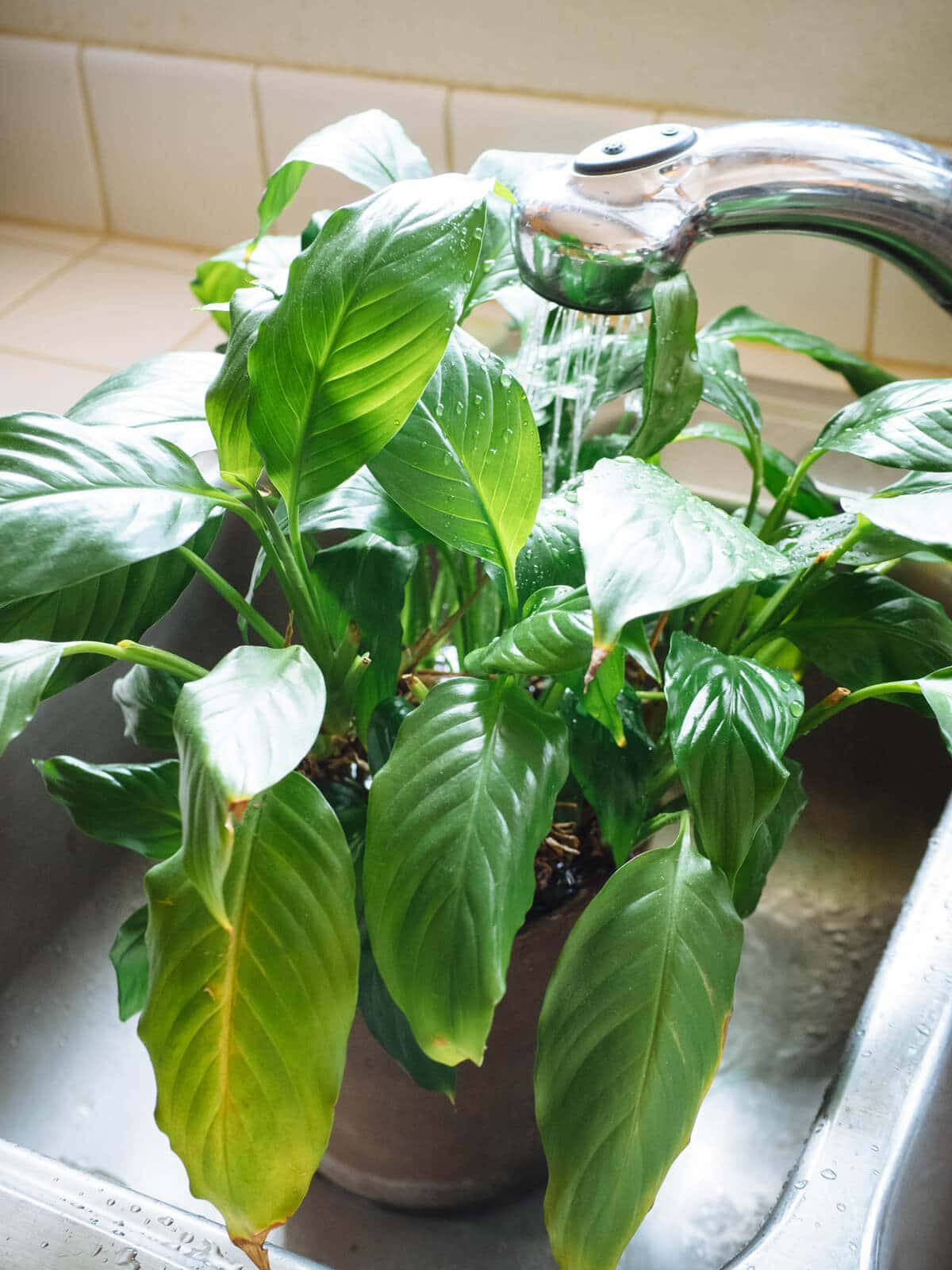
- Rinse: Take plant to a shower/tub or sink. Using cool to lukewarm water, spray leaf undersides first, then tops. Gently massage webs away.
- Wipe: Use a microfiber cloth to wipe every leaf surface and petiole.
- Spot treat: Dab visible mealybugs or scale with 70% isopropyl on a cotton swab; wait 10–15 minutes; then rinse. Test on one spot first—some Alocasia leaves (especially velvety types) can be sensitive.
Day 1: First treatment (Treatment A)
- Choose one:
- Insecticidal soap spray, or
- Horticultural oil/neem oil spray (follow label; avoid direct sun; coat tops and bottoms of leaves, petioles, leaf bases, and the crown area).
- Let the plant dry in bright, indirect light with good airflow.
Day 3–4: Follow‑up and rotate (Treatment B)
- Rinse the plant again to remove debris and any dying pests.
- Switch product class: if you used soap first, use oil now; if you used oil first, use soap now.
- Manually remove any fresh mealy clusters or scale domes you can safely lift with a swab or soft brush.
Day 7: Third pass (Treatment A again)
- Inspect carefully with a magnifier.
- Reapply Treatment A (the one you used on Day 1).
- Lightly prune any leaves that are more than 50% stippled or yellowed.
Days 10–14: Fourth pass (Treatment B) + environment reset
- Reapply Treatment B.
- Dial in conditions to make your Alocasia happy and mites miserable:
- Light: bright, indirect—about 3–5 hours of filtered brightness; no harsh midday sun.
- Temperature: warm and steady, 60–85°F (15–29°C).
- Humidity: 65%+ is ideal (not below ~50%); run a humidifier or use a pebble tray.
- Watering: keep evenly moist but never soggy; let the top 2–3 inches (5–8 cm) dry before watering; empty saucers after ~30 minutes.
- Airflow: gentle fan on low near, not directly blasting the plant.
- Clean foliage: dust encourages mites—wipe leaves every 1–2 weeks.
Why now? Spider mites boom in warm, dry air. Raising humidity and improving overall vigor makes your Alocasia less inviting and helps it outgrow minor damage.
Days 17–21: Fifth pass (Treatment A) + neighborhood watch
- Repeat Treatment A.
- Inspect any plants that shared space with your Alocasia. Consider a light, preventive soap spray on nearby plants.
- Keep your Alocasia in quarantine until you’ve seen no new signs for at least 14 consecutive days.
Weeks 3–4: Optional biological allies (if you won’t spray)
- If you’re still seeing mites but want a spray break, consider releasing predatory mites (e.g., Phytoseiulus persimilis) in the quarantine zone. Stop using soaps/oils before and after release per supplier guidance.
- Maintain humidity and mild temps so predators thrive.
Weeks 4–6: Evaluate and, if needed, carefully escalate
- Still active mites/mealy/scale after disciplined rotation?
- For mealybugs/soft scale: a horticultural oil program plus repeat alcohol spot-treatments usually wins. Persistent scale may require repeated smothering sprays to hit crawler stages.
- For spider mites: extend the soap/oil rotation another 2–3 weeks, ensuring full coverage of undersides and crevices every 3–7 days.
- Last‑resort option: a houseplant‑labeled miticide/insecticide used exactly as directed. Keep plants indoors away from pollinators; isolate from pets/children; respect reentry intervals. Do not mix sulfur products with oils, and never spray oils in direct sun or on heat-stressed foliage.
- If the plant defoliates but roots/rhizome are firm, keep it warm, humid, and evenly moist—Alocasia often rebounds with fresh growth once stress and pests are gone.
Quick ID and treatment pointers by pest
- Spider mites
- Hallmarks: stippling, fine webbing, dry leaf feel.
- Best hits: repeated insecticidal soap and horticultural/neem oil on a 3–7 day cycle for 3–4 weeks; boost humidity to 65%+; wipe leaves regularly.
- Mealybugs
- Hallmarks: cottony clumps, honeydew.
- Best hits: swab with 70% iso alcohol; follow with oil/soap sprays weekly until no new cotton appears; check crowns and undersides obsessively.
- Scale
- Hallmarks: stuck-on, domed bumps; soft scale oozes honeydew; armored scale is dry and hard.
- Best hits: gently lift what you can; oil sprays to smother; repeat to target crawler waves; patience is key.
Care habits that quietly prevent pests
- Quarantine new plants for 2–3 weeks. Inspect with a magnifier before introducing.
- Weekly 60‑second checkup:
- Flip leaves, look along midribs and petioles.
- Wipe dust; note any stippling or sticky residue.
- Monthly mini-preventive:
- A gentle leaf wash, then either a single pass with insecticidal soap or a microfiber wipe only if your plant is in peak health (avoid unnecessary sprays).
- Right-place, right-care:
- Bright, indirect light; stable warmth; humidity 65%+.
- Water rhythm: top 2–3 inches dry, then soak through and drain; reduce watering in winter dormancy.
- Avoid crowding plants and hot, dry air from heat vents.
- Feed lightly during active growth only (spring–summer), pausing in winter.
- Housekeeping:
- Clean shelves, window frames, and nearby surfaces during and after infestations.
- Discard prunings in sealed bags. Sanitize scissors after each cut.
Troubleshooting and pro tips
- Sensitive leaves (including velvety types): always “test-spray” one leaf. If any spotting occurs, rinse sooner, dilute per label, and increase interval between treatments.
- Phytotoxicity prevention: never spray oils/soaps on sunlit or heat-stressed plants; treat in early morning or evening; ensure airflow until leaves dry.
- Overwatering risk during recovery: Alocasia likes evenly moist—not wet—roots. Use a chunky, well-draining aroid mix and pots with drainage.
- Winter note: many Alocasias slow down or semi-dormant in winter. Growth may pause and some leaf drop is normal—reduce water and stop fertilizer, but keep warmth above 60°F (15°C) and humidity up.
Your at-a-glance timeline
- Hour 0–24: Isolate, prune worst leaves, rinse thoroughly, spot-treat mealy/scale, apply Treatment A.
- Day 3–4: Rinse, apply Treatment B (rotate).
- Day 7: Apply Treatment A.
- Days 10–14: Apply Treatment B; optimize humidity (65%+), light, watering, airflow.
- Days 17–21: Apply Treatment A; spot-check neighbors; continue quarantine.
- Weeks 3–4: Optionally deploy beneficial predators if you pause sprays.
- Weeks 4–6: Reassess; continue rotation or, if truly necessary, escalate with a labeled product; maintain ideal care.
Stay consistent, and remember: pest control is a rhythm, not a one-and-done sprint. With steady hands and smart timing, your Elephant’s Ear will trade webs and stipples for glossy, confident leaves again—often pushing out fresh growth quickly in warm, bright, humid conditions.