
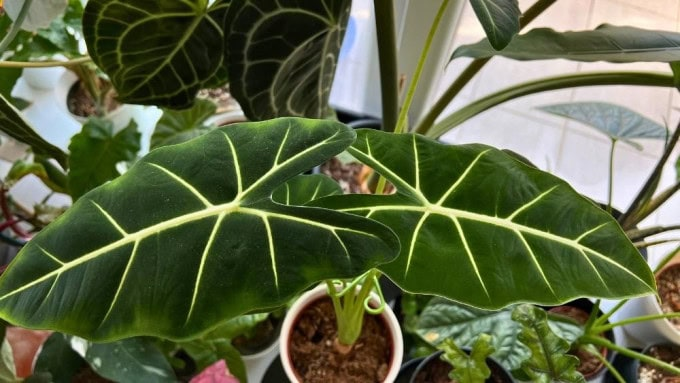
Bring the rainforest home—without the guesswork. Alocasia (aka Elephant’s Ear, African Mask Plant) is a showstopper from the tropical understory of Asia to eastern Australia. Those bold, arrow- and shield-shaped leaves look dramatic, but their care becomes easy once you sync light, water, humidity, and soil. Use this upbeat blueprint to dial it in and keep your plant pushing out glossy new leaves, week after week in peak season.
Understory Light, Demystified
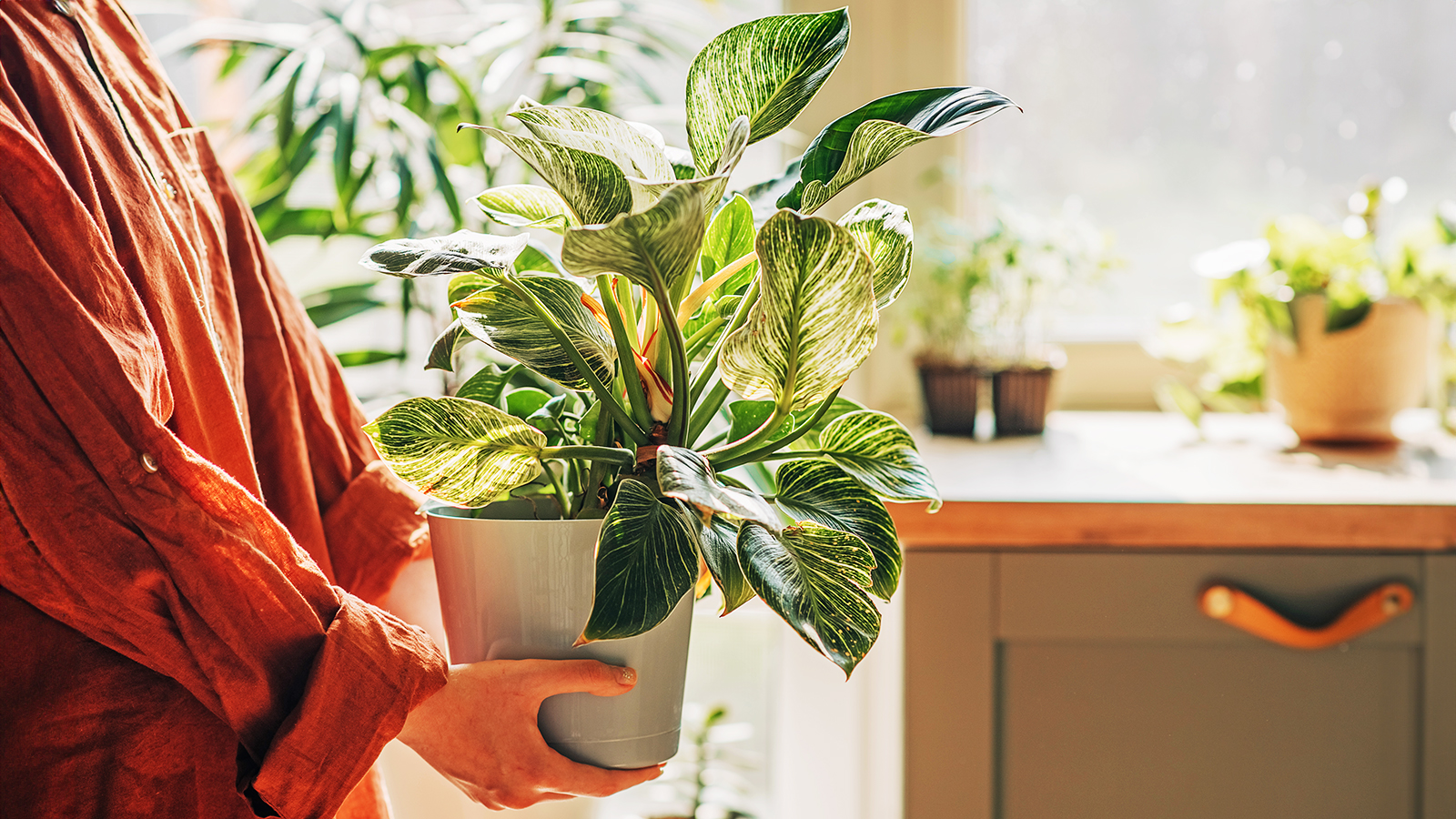
Think “bright forest shade,” not dim corners or noon sunbeams. In nature, Alocasias sit beneath taller canopies, basking in strong but filtered light.
- What it wants:
- Bright, indirect light or gentle partial shade.
- Aim for about 3–5 hours of bright, filtered light daily.
- Avoid harsh direct sun that can scorch leaves (especially midday).
- Where to put it:
- Near east- or west-facing windows is ideal.
- A bright north window can work if unobstructed.
- South windows: add sheer curtains or set the plant a few feet back.
- Simple light tests:
- Hand test: Hold your hand 12 inches above the plant. A soft, crisp shadow (not hard-edged) = great.
- Phone lux apps (approximate): 8,000–20,000 lux is “understory bright.”
- Leaf language: Pale color, long petioles, or tiny new leaves = too dim. Scorched patches = too much direct sun.
- Grow lights (winter or low-light homes):
- Use a full-spectrum LED (4000–6500K), 8–12 inches above the plant, 10–12 hours/day.
- Keep lights slightly off-center to avoid hot spots; monitor for leaf warmth.
Exactly When to Water (No Guessing)
Alocasia loves evenly moist soil—never soggy, never bone-dry. Its fleshy roots and corms need both moisture and oxygen.
- The rule:
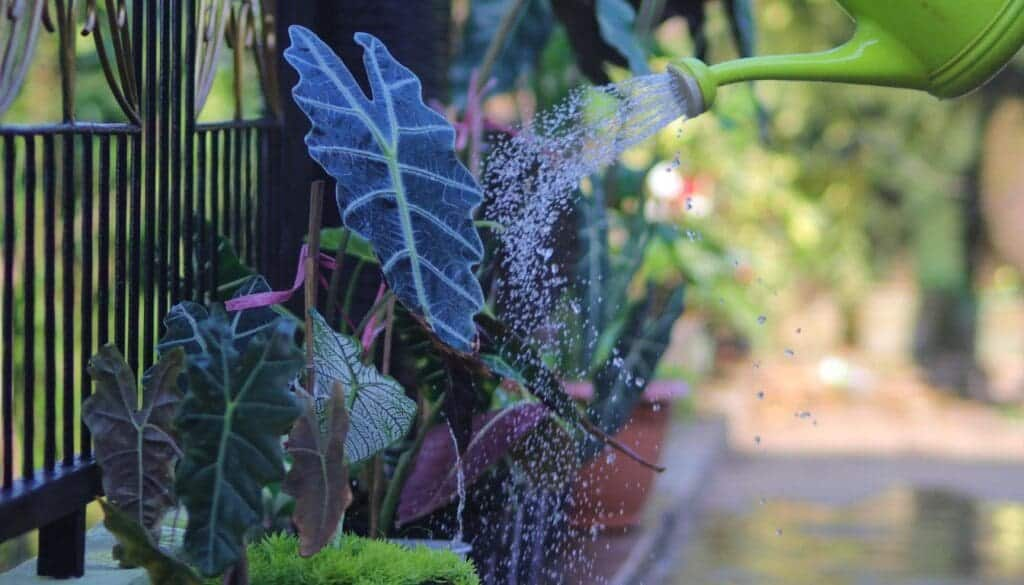
- Water when the top 5–8 cm (2–3 in) of mix feels dry.
- Then water thoroughly until excess drains, and empty the saucer within ~30 minutes.
- How to get it right:
- Finger/knuckle test: Check down to 2–3 inches.
- Lift test: Learn the pot’s “dry” vs. “just-watered” weight.
- Moisture meters can help but confirm with touch.
- Seasonal shift:
- Spring–summer: Consistent moisture; growth can be fast (often a new leaf weekly in ideal warmth and humidity).
- Fall–winter: Many Alocasias slow down or go semi-dormant. Water less—keep the mix lightly moist but never waterlogged.
- Water quality:
- If your plant is fussy (crisp tips, mineral marks), use distilled, rainwater, or let tap water sit 24 hours before use.
Humidity: Find the Sweet Spot
These are humidity lovers.
- Targets:
- Ideal: 65%+ relative humidity.
- Minimum: roughly 50%+.
- Signs it wants more:
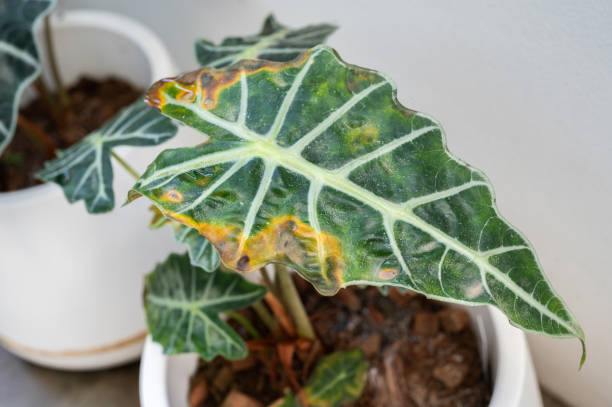
- Crispy edges, stalled new leaves, or frequent spider mites.
- How to boost:
- A small humidifier near the plant (most effective).
- Pebble trays with water (keep pot out of the water).
- Group plants together to create a microclimate.
- Keep gentle airflow—stagnant, wet air encourages leaf spots.
The Ideal Airy Aroid Soil Recipe
Alocasia roots want air pockets and even moisture, with a slightly acidic pH.
- Target pH: about 5.5–6.5
- Mix (by volume) for indoor pots:
- 40% high-quality peat or coco coir (moisture-holding base)
- 30% medium orchid bark (chunky structure)
- 20% perlite or pumice (drainage/air)
- 10% compost or worm castings (gentle nutrients)
- Optional: a small handful of horticultural charcoal for freshness
- Pot choice:
- Excellent drainage holes are non-negotiable.
- Terracotta breathes (dries faster); plastic/glazed hold moisture longer. Match your watering style.
Smart Placement Tips (Home Map)
- Best rooms: Bright living rooms, offices, bathrooms, or kitchens with good natural humidity.
- Window distance: 1–3 feet from bright windows with sheer curtains is a sweet spot.
- Drafts: Protect from cold blasts and sudden temp swings.
- Temperature: Keep it warm—about 15–29°C (60–85°F). Avoid below ~15°C (60°F).
- Rotate the pot every 1–2 weeks for even growth and to prevent leaning.
Feeding, Pruning, Repotting, Propagation
- Feeding:
- Spring–summer: Fertilize 1–2 times per month with a balanced liquid (e.g., 20-20-20) at half strength, or use a slow-release pellet every 6–8 weeks.
- Fall–winter: Pause feeding during dormancy.
- Pruning:
- Remove yellowing or damaged leaves at the base with clean, sharp shears.
- Best done in spring/summer. Wear gloves—sap can irritate skin.
- Repotting:
- Timing: Spring or summer while actively growing.
- Frequency: Smaller types every 12–18 months; large floor types every 18–24 months.
- Size up: 2.5–5 cm (1–2 in) wider for small plants; 5–10 cm (2–4 in) for big ones.
- Propagation (by division):
- In spring, unpot and gently separate offsets/rhizomes so each division has roots and a growth point.
- Replant in the airy mix; keep warm, humid, and evenly moist in bright, indirect light.
Your Seasonal Rhythm (Care Calendar)
- Spring (Mar–May):
- Growth restarts. Resume regular watering and feeding.
- Prime time to repot and divide.
- Summer (Jun–Aug):
- Peak growth: keep humidity high and light bright-but-filtered.
- Water consistently; expect rapid leaf production in good conditions.
- Fall (Sep–Nov):
- Gradually reduce fertilizer and slightly back off watering.
- Winter (Dec–Feb):
- Many types slow down or go dormant; some leaf drop is normal.
- Keep above 15°C (60°F), stop fertilizing, and water sparingly.
Troubleshooting: Read the Leaves
- Yellowing leaves:
- Most often watering trouble (too wet or too dry).
- Also possible: low light, low humidity, cool temps, nutrient gap.
- Note: It’s normal for the oldest leaf to yellow when a fresh one unfurls.
- Drooping or wilting:
- Check moisture first. Both drought and soggy roots cause droop.
- Inspect roots if you smell sourness or see mushy, dark tissue—improve drainage and trim rot.
- Overwatered look:
- Limp leaves, yellowing, water-soaked spots, fungus gnats, or a sour soil smell.
- Pests:
- Spider mites (most common indoors), mealybugs, scale, aphids.
- Response: Wipe foliage, then treat with insecticidal soap or neem. Repeat weekly until gone. Increase humidity and airflow to discourage mites.
- Leaf spots:
- Avoid constantly wet foliage and improve airflow; water the soil, not the leaves.
Quick Blueprint (At a Glance)
- Light: Bright, indirect; ~3–5 hours filtered. Avoid harsh direct sun.
- Water: When the top 2–3 inches are dry; drench and drain. Empty saucer after ~30 minutes.
- Humidity: Aim 65%+ (min ~50%).
- Soil: Airy aroid mix (peat/coco + bark + perlite + a touch of compost); pH 5.5–6.5.
- Temp: 60–85°F (15–29°C). No cold drafts.
- Feed: Half-strength balanced fertilizer 1–2×/month in spring–summer; pause in winter.
- Potting: Great drainage; repot during active growth.
- Placement: Near bright east/west windows; bathrooms/kitchens are great if bright and warm.
A Few Fun Facts to Love
- Indoors, many Alocasia types reach 60–90 cm (2–3 ft); with ideal warmth and humidity, some can grow to around 3 m (10 ft).
- In warm, bright summers, fast growers can push a new leaf about once a week.
- The aroid spathe-and-spadix flowers are interesting, but most houseplants focus on fabulous foliage instead.
Safety First
Alocasia contains calcium oxalate crystals and is toxic to people and pets if chewed or swallowed. Expect intense mouth/throat irritation, drooling, swelling, vomiting, and diarrhea. Sap can irritate skin and eyes. Place plants out of reach, and wear gloves when pruning.
Symbolism and “Flower Language”
Culturally, Alocasia is often tied to resilience and growth—those bold, upright leaves feel like a living reminder to stand tall. In some Feng Shui interpretations it’s linked with prosperity and career momentum. Think of these meanings as modern cultural associations rather than ancient botanical lore; their power lies in how the plant makes us feel: focused, forward, and fresh.
—
Once you’ve dialed in “understory bright,” water on the 2–3 inch rule, humidity in the 65%+ zone, and that airy aroid mix, Alocasia stops being fussy and starts being fun. Set the stage, then watch each new leaf unfurl like a green banner announcing you’ve cracked the code.