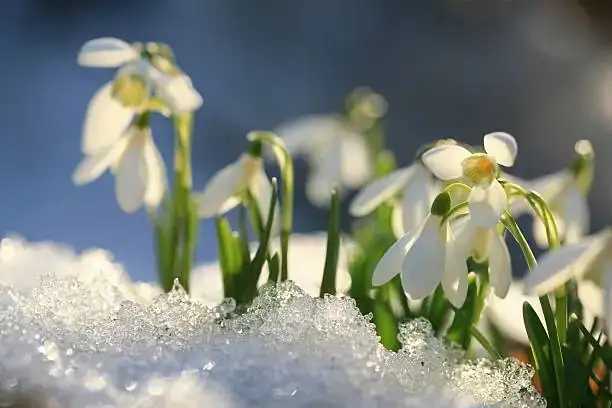
If there’s a flower that can turn a grey February into a moment of pure delight, it’s the snowdrop, Galanthus nivalis. Those milk-white bells push up through frozen soil—sometimes even snow—like tiny heralds of hope. But behind that delicate beauty lies a story of global demand, conservation, and smart buying. If you’re dreaming of drifts under your trees, this guide will help you choose nursery-propagated plants, avoid wild-dug bulbs, and navigate what it means that Galanthus is listed on CITES Appendix II.
First things first: why sourcing snowdrops ethically matters
Snowdrops are easy to love and easy to grow—and that’s exactly why they’ve been over-collected in parts of their native range. While Galanthus nivalis is native across much of Europe (from the Pyrenees to Poland and down into parts of Italy, the Balkans, Ukraine, and Turkey) and has naturalized in numerous places, wild populations of several Galanthus species face pressure when bulbs are dug for trade.
- The entire Galanthus genus is listed in CITES Appendix II. That doesn’t mean trade is banned; it means international trade is strictly regulated to make sure it’s not harmful to wild populations.
- Real-world example: studies of Galanthus woronowii (a different snowdrop species) in Georgia have involved careful field surveys, export quotas, and ongoing monitoring to ensure that any trade is non-detrimental to wild stocks. It illustrates the scale of demand—and the need for oversight.
Bottom line: when you buy nursery-propagated stock, you’re supporting legal, sustainable horticulture—and you get stronger plants that establish better in gardens.
CITES Appendix II, decoded for gardeners

Think of Appendix II as the “trade with guardrails” list. It covers all Galanthus species.
- What it means: Exported plants need CITES permits and a “non-detriment finding” from the exporting country’s scientific authority if they’re from the wild. Artificially propagated plants may move more smoothly but still require documentation for international trade.
- For you as a buyer:
- Buying within your own country from a reputable nursery is typically straightforward.
- Importing or ordering from overseas (including online) may require CITES documentation and customs clearance—even for cultivated plants.
- Always check your country’s import rules before buying internationally.
CITES protects wild plants—and smart consumers help make the system work.
Buy nursery-propagated, not wild-dug: how to spot the difference
Choose suppliers who raise their own stock or source from accredited growers. When shopping, use this quick field test:
- Signs a plant is nursery-propagated:
- “In the green” plants (late winter–early spring) are lifted/divided from cultivated clumps, with intact roots and moist soil still clinging.
- Pot-grown plants with well-rooted, uniform clumps; labels often name specific cultivars.
- Clean bulbs sold in autumn, evenly sized, firm to the touch, with no tears in the basal plate.
- Clear provenance on the label or website: “artificially propagated,” “nursery-grown,” or “field-grown from stock.”
- Red flags for wild-dug plants:
- Mud-caked, mixed-size bulbs bundled in elastic bands or net bags in late winter/early spring, often with ragged foliage.
- Leaves sheared short or torn, and bulbs with damaged basal plates.
- Suspiciously cheap “job-lot” offers of unnamed snowdrops at odd times of year.
- Sellers who can’t state where or how the stock was propagated—or who dismiss questions about origin.
- Questions worth asking:
- Are these artificially propagated? Are permits needed if shipping internationally?
- Can you share the propagation method (division, seed, tissue culture) and the origin of the mother stock?
- Are these named cultivars (traceable) or just “snowdrops”?
Ethics aside, nursery-propagated snowdrops establish faster and bloom more reliably.
The best time and way to buy
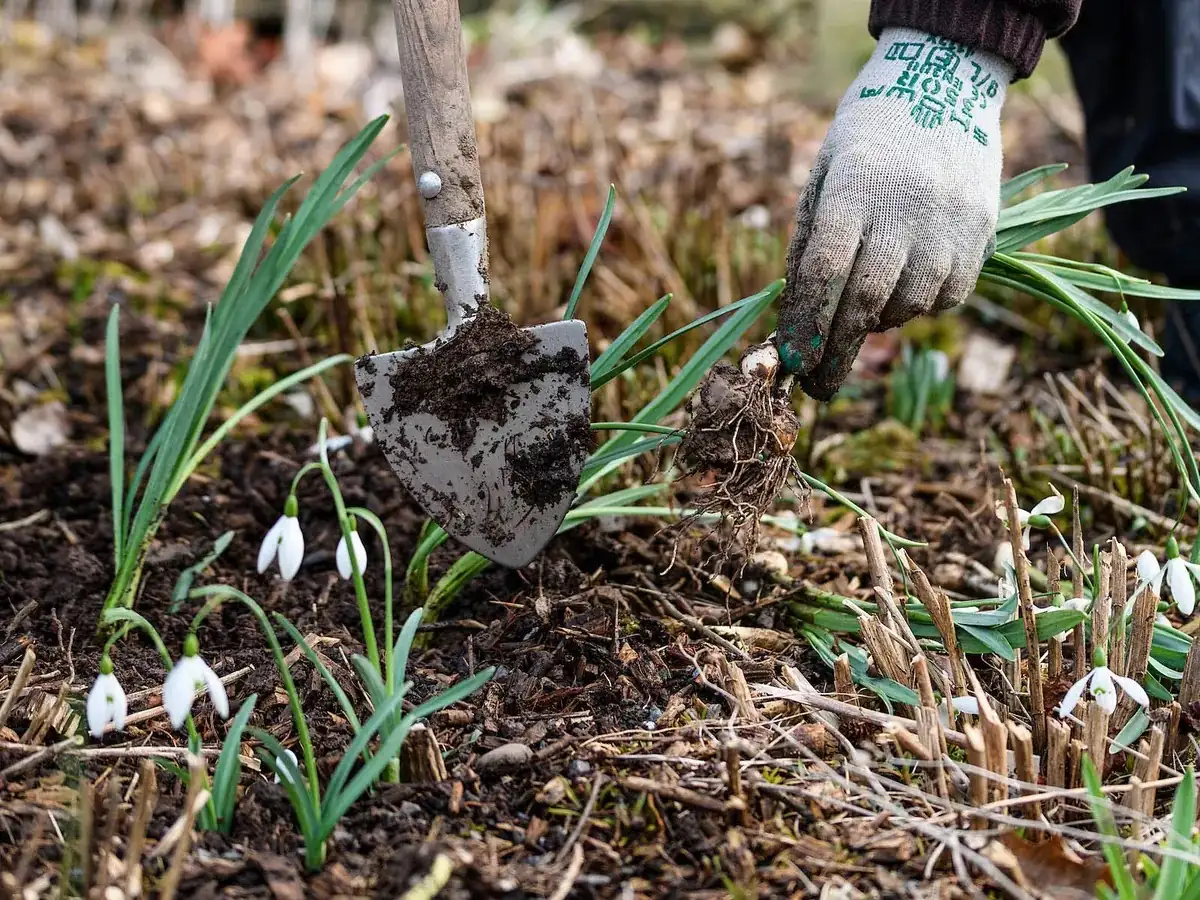
Snowdrops reward good timing.
- Buy “in the green” for best results:
- Late winter to early spring (about February–March) is prime time. You’ll receive actively growing plants with roots—ready to settle in.
- Dry bulbs in autumn can also work:
- Plant in October–November, but know that these bulbs desiccate easily and may take longer to establish. Choose firm, unshriveled bulbs; avoid soft or damaged ones.
Galanthus nivalis at a glance (what you’re getting)
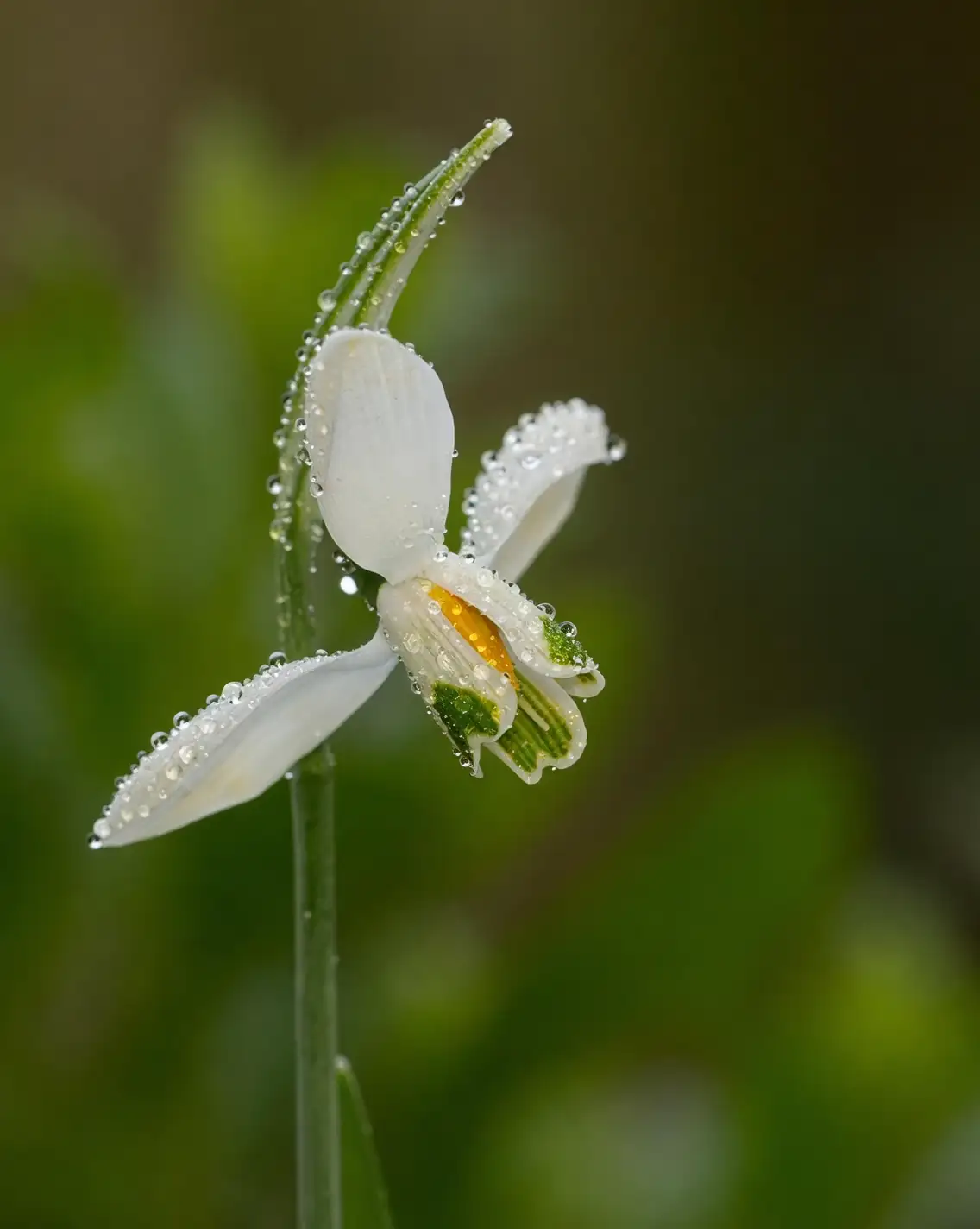
- Habit and size: 7–15 cm (3–6 in) tall; one nodding, bell-shaped white flower per stem with three outer white tepals and three shorter inner ones marked green.
- Bloom season: Late winter to early spring (commonly January–March depending on climate).
- Hardiness: USDA Zones 3–7; some species/cultivars can stretch into Zone 8, but snowdrops are happiest in cooler climates.
- Site: Full sun in spring or partial shade; they thrive under deciduous trees and shrubs—bright winter/early spring light, then dappled summer shade.
- Soil: Humus-rich, fertile, well-drained soil; often happy in alkaline/limestone soils when organic matter is abundant.
- Naturalizing: Forms clumps through offsets; can self-seed into charming drifts where conditions suit.
Planting and early care (for long-lived clumps)
- Planting depth:
- Dry bulbs: 7–8 cm (about 3 in) deep.
- In the green: Replant at the same depth they were growing, without letting roots dry out.
- Watering: Keep soil lightly moist during active growth and flowering. After bloom, maintain modest moisture until foliage yellows; keep drier during summer dormancy (but never waterlogged).
- Feeding: Not heavy feeders. A light bulb fertilizer in early spring or after flowering supports strong bulbs and better bloom.
- Foliage rule: Don’t cut leaves early—let them yellow and wither naturally to recharge the bulbs.
- Dividing: If clumps get crowded or flowering dwindles, lift and divide right after flowering while “in the green,” then replant immediately.
Choosing cultivars (and understanding price tags)
From classic G. nivalis to special selections, choice affects both aesthetics and price.
- For naturalizing: Start with robust G. nivalis from reputable nurseries—ideal for path edges, rock gardens, or under deciduous canopies.
- For collectors: Named cultivars offer subtle differences—broader leaves, unusual markings, larger flowers, or later blooming. Prices rise with rarity and slow propagation.
- Buyer beware: If a rare cultivar is shockingly cheap from an unknown vendor, think twice. Counterfeits and wild-dug bulbs occasionally surface in the trade.
A premium price often reflects years of careful propagation—not just a name on a label.
Legal and ethical buying, in practice
- Domestic purchases: Generally straightforward from registered nurseries; keep receipts and labels as proof of source.
- Cross-border purchases: Ask the seller about CITES permits and phytosanitary documents before buying. Without the right paperwork, shipments can be seized.
- Community impact: Supporting nurseries that propagate snowdrops helps decouple garden demand from wild harvesting, creating a virtuous cycle.
Safety, pests, and companions
- Toxicity: All parts contain alkaloids (including lycorine). Toxic to humans and pets (cats and dogs). Keep away from children and animals; do not ingest. Note: galantamine from snowdrops has pharmaceutical use, but don’t self-medicate.
- Wildlife savvy: Usually resistant to deer, rabbits, and rodents. Squirrels may dig bulbs occasionally; good drainage reduces disease issues.
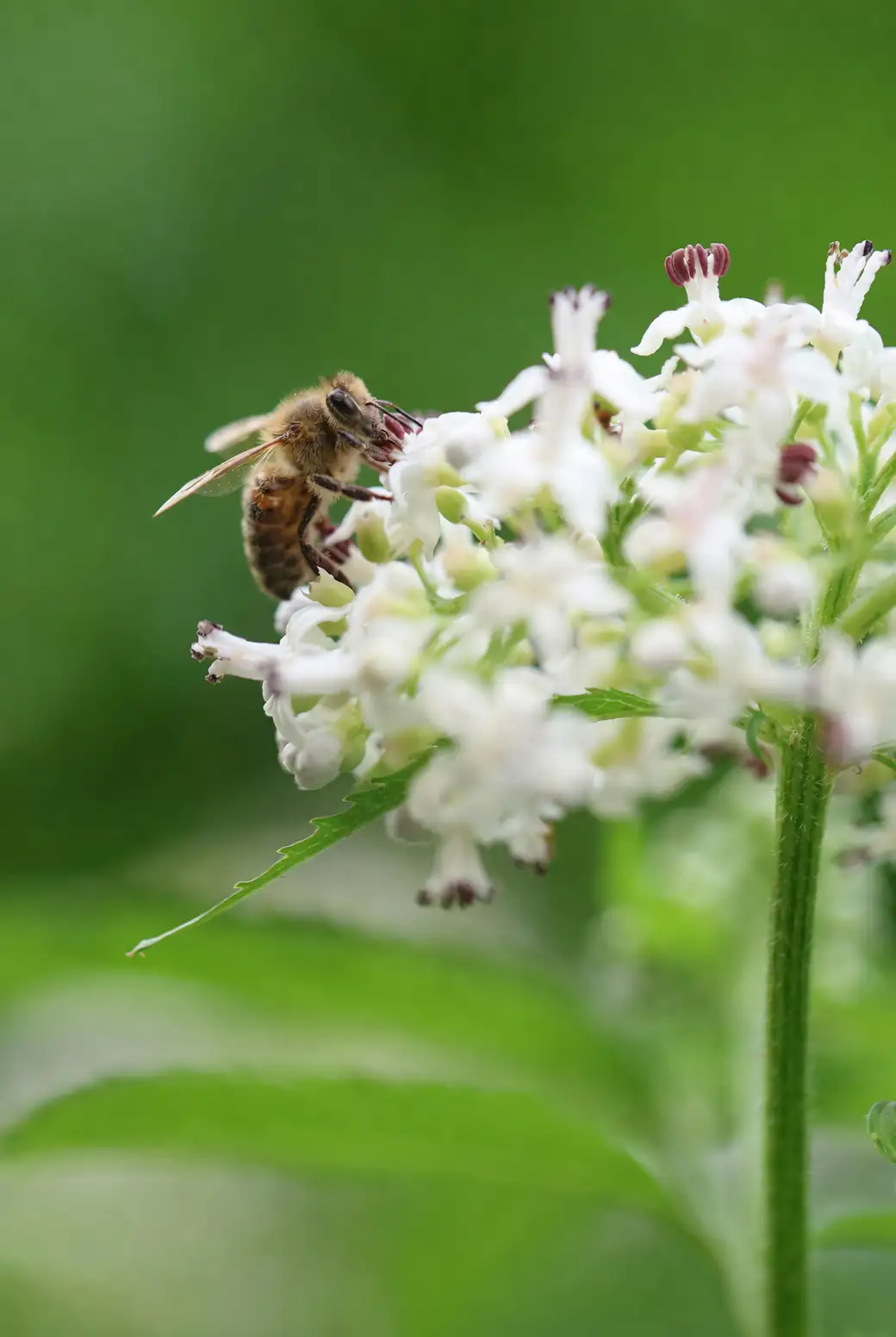
- Ecological bonus: Snowdrops are a valuable early nectar and pollen source for pollinators when little else is in bloom.
Symbolism and “flower language”: hope with nuance
Snowdrops have been cultivated for centuries and are steeped in symbolism: hope, renewal, purity, consolation, and new beginnings. In Christian lore they’re associated with the Virgin Mary; in Victorian times, a single snowdrop brought indoors was sometimes deemed unlucky, yet great drifts were seen as comforting and auspicious. This split reflects how “flower language” often blends folklore, seasonal timing, and cultural context. The snowdrop’s earliest blooms, pushing through winter’s grip, naturally suggested purity and the promise that cold days won’t last. In other words: the meaning isn’t a fixed code—it’s the season itself, made visible.
Quick buyer’s checklist
- Choose nursery-propagated plants (ask about origin and propagation method).
- Prefer “in the green” purchases (late winter–early spring) for easy establishment.
- If buying dry bulbs in fall, pick firm, undamaged stock and plant promptly.
- Verify paperwork for international orders (CITES and phytosanitary documents).
- Avoid suspiciously cheap, mixed “job-lots” with ragged foliage or muddy bulbs.
- Keep labels and receipts; note cultivar names and planting spots.
- Plant in humus-rich, well-drained soil with bright spring light and summer shade.
- Let foliage die back naturally; divide after flowering if clumps get dense.
Frequently asked by first-time buyers
- When is the best time to plant snowdrops?
- “In the green” just after flowering (late winter–early spring) is simplest and most reliable. Dry bulbs are planted in fall but can be slower to establish.
- Will they come back every year?
- Yes. In cool climates with well-drained, humus-rich soil, they’re perennial and often multiply.
- Why aren’t mine flowering?
- Common culprits: bulbs dried out before planting, too-warm site or insufficient winter chill, wrong planting depth (aim about 7–8 cm for dry bulbs), or overcrowding—divide after flowering.
A gentle close
Planting snowdrops is like setting hope on a timer—the tiny bells will ring right on schedule at winter’s end. Choose nursery-propagated plants, respect CITES rules when buying across borders, and you’ll not only get better, longer-lived clumps—you’ll help ensure these “February fairmaids” keep glinting in woodlands and gardens for generations to come.