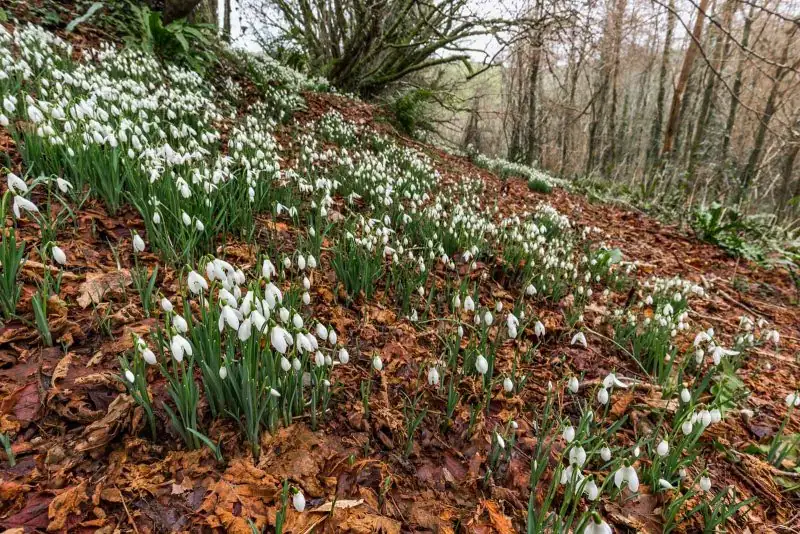
It takes a certain kind of courage to bloom into a pale sky while frost still sketches the ground. Snowdrops (Galanthus nivalis) have it in spades. These tiny bells are design gold—perfect for gardens that wake up in bright spring light and then slip into summer shade, for color-layering with hellebores and winter aconite, and for path-edge displays that glow when winter feels longest.
Design for bright spring light, summer shade
Snowdrops adore a seasonal light switch: sunny or bright conditions before trees leaf out, then soft shade all summer. That’s why they excel beneath deciduous canopies and at the feet of shrubs.
The deciduous-canopy strategy
- Site: Under maples, birch, beech, hazel, or deciduous hedges where winter/early-spring light is generous and summer shade is protective.
- Soil: Humus-rich, fertile, and well-drained. Work in leaf mold or compost; a slightly alkaline tilt is welcome.
- Moisture: Evenly moist during growth and bloom, never waterlogged. Let the soil trend drier in summer dormancy.
- Light: Full sun in late winter/early spring is ideal; part shade the rest of the year suits them.
- Spacing: Plant in small drifts, not single soldiers. Tuck 7–15 bulbs per pocket, repeated rhythmically. Space bulbs 5–8 cm (2–3 in) apart, 7–8 cm (about 3 in) deep.
Pro tip: Mix the common snowdrop (G. nivalis, usually 7–15 cm/3–6 in tall) up front with a few clumps of a taller species like giant snowdrop (G. elwesii, 15–30 cm/6–12 in) behind for subtle height layering and a longer show.

Color-layering with hellebores and winter aconite
Late winter color is a precious commodity. Play it like a symphony with three interlocking voices: winter aconite (Eranthis hyemalis), snowdrops (Galanthus nivalis), and hellebores (Helleborus).
The bloom calendar
- Early notes (often Jan–Feb): Eranthis hyemalis open glowing golden cups that read like sunshine on the ground.
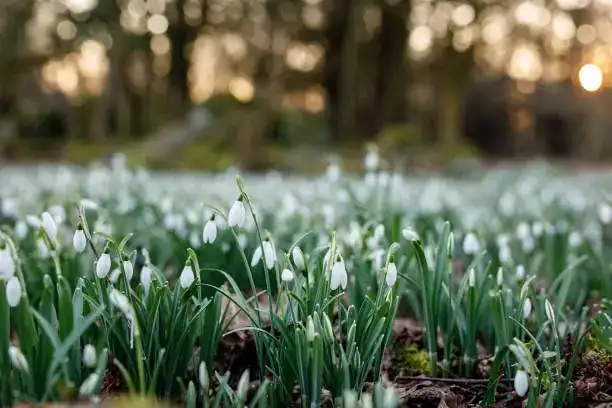
- Mid chorus (Jan–Mar): Snowdrops bring crisp, luminous white with green-tipped inner segments.
- Sustained finale (Feb–Apr): Hellebores bridge into spring with flowers ranging from white and green to apricot, pink, plum, and near-black. Their evergreen (or winter-green) foliage keeps the composition going after bulbs disappear.
Planting plan that makes the colors sing
- Front row sparkle: Scatter Eranthis in small clusters right at the front of borders or along path edges; they naturalize beautifully in woodland conditions.
- White river: Behind and between the aconite pockets, stream drifts of snowdrops. Aim for repeated clusters every 45–60 cm (18–24 in) so the eye can “connect the dots.”
- Backdrop and cover: Set hellebores as anchor clumps just behind the snowdrops. Their broad leaves will expand in summer to shade and cool the dormant bulbs beneath—free mulching at its finest.
- Keep it visible: Plant snowdrops in front of or beside hellebores rather than inside hellebore clumps, so the little bells aren’t lost in January foliage.
Palette idea:
- Eranthis hyemalis: electric gold
- Galanthus nivalis: pure white with a fresh green wink
- Hellebores: choose one color family per bed—moody plums for drama, lime-and-white for a clean woodland look, or soft apricots and pinks for warmth
Add low, winter-bright foliage accents—heuchera with caramel or chartreuse leaves, wintergreen ferns, or the silvered leaves of cyclamen—to extend texture and color when blossoms fade.
Path-edge displays that glow in late winter
Think of your winter paths as light corridors. When the sun is low and the trees are bare, snowdrops can make every walk feel like a small celebration.
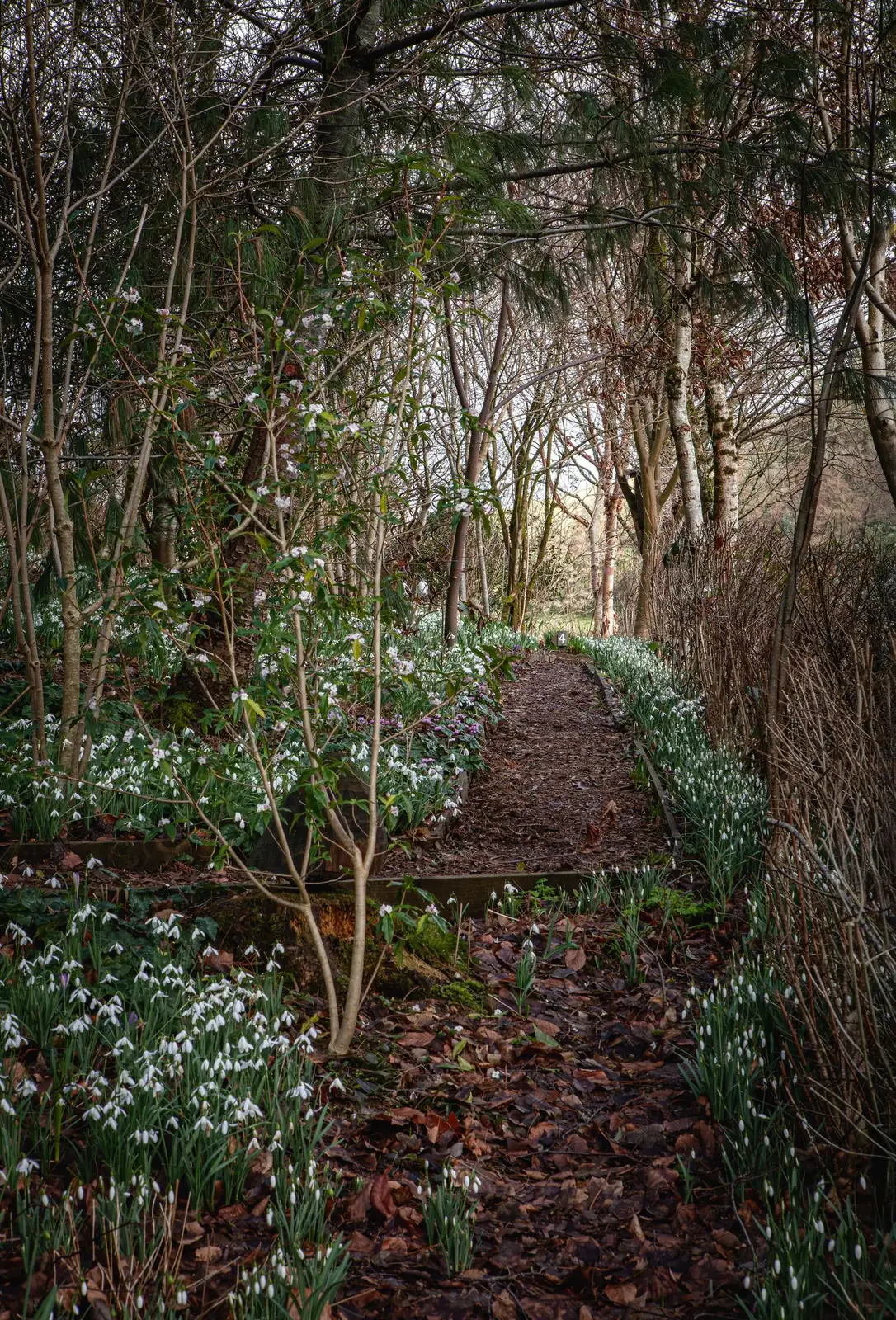
How to build the “glow”
- Repetition is rhythm: Plant snowdrops in repeating clumps every 45–60 cm (18–24 in) along the edge. Each clump: 9–15 bulbs.
- Contrast matters: White pops against dark leaf litter, bark mulch, or the glossy green of low evergreens. Even a simple band of fine gravel can catch light and amplify the bloom’s glow.
- Edge companions:
- Eranthis hyemalis in pockets between snowdrop clumps for sparks of gold.
- Dwarf box, low ferns, or evergreen carex to frame the white bells.
- Cyclamen coum (magenta/pink blooms and patterned leaves) for a jewel-tone contrast.
- Curves and pauses: Follow gentle bends in a path with wider drifts at the “pauses” (corners, benches, gates). It looks natural and invites lingering.
Container idea for steps and stoops:
- Pot up snowdrops “in the green” in shallow bowls or troughs with gritty, humus-rich soil. Tuck in Eranthis for gold, and add a small hellebore as a living centerpiece. After bloom, transplant the bulbs to the garden.
Planting and care, made simple

- Best planting window: “In the green” (late winter to early spring, just after flowering) is easiest for strong establishment. Fall planting of dry bulbs (Oct–Nov) works if bulbs are fresh and firm.
- Depth and spacing: Set dry bulbs about 7–8 cm (3 in) deep, 5–8 cm (2–3 in) apart. Replant “in the green” at the same depth they were growing.
- Watering: Keep evenly moist through active growth and a few weeks after bloom. Then ease off. Avoid soggy summer soil.
- Feeding: Light touch only—an early-spring bulb fertilizer or gentle balanced feed after flowering supports bulb strength.
- Aftercare: Let leaves yellow and wither naturally. Don’t braid or cut them early—the foliage is your flower budget for next year.
- Multiplying the show: Divide crowded clumps right after flowering while still “in the green.” Replant divisions immediately to the same depth and keep them watered until settled.
Site recipes you can copy
- Woodland edge ribbon:
- Front 20 cm (8 in): Eranthis pockets
- Middle 30–40 cm (12–16 in): Snowdrop drifts
- Back 40–60 cm (16–24 in): Hellebore clumps every 60–75 cm (24–30 in)
- Shrub skirt:
- Under deciduous shrubs, mass snowdrops 15–20 cm (6–8 in) out from the drip line; interplant with Eranthis; place hellebores between shrubs as anchors.
- Lawn sparkle:
- Naturalize in grass where you can delay the first mow until foliage yellows. Plant in asymmetric clusters to mimic nature.
Troubleshooting and quick wins
- Not flowering? Common culprits: bulbs dried out before planting, planted too shallow/deep (target ~7–8 cm), clumps overcrowded (divide), insufficient winter chill, or a site that’s too warm.
- Pests and diseases: Generally minimal. Toxic alkaloids deter deer and rabbits. Squirrels may dig out of curiosity—lay light twiggy brush or a temporary mesh over new plantings.
- Safety note: All parts are toxic to humans and pets if ingested. Plant with care and keep away from curious mouths.
- Hardiness: Dependably hardy in USDA Zones 3–7 (some types can manage Zone 8). They relish cold winters and cool springs.
- Climate-wise placement: North- or east-facing beds preserve bloom longer; the flowers shrug off freezes typical of late winter.
Why snowdrops feel like hope
Flower language and folklore trail behind snowdrops like a soft scarf—symbols of hope, renewal, purity, and consolation. The meaning is no mystery: at a time when most plants are asleep, these milk-white bells push through frozen soil and even snow. In Christian tradition they’re linked with the Virgin Mary and known as “St. Agnes’ flower.” Victorian superstition oddly warned that a lone snowdrop could be unlucky inside a house, yet sweeping drifts outdoors were cherished for their comfort. Either way, the modern reading is clear and universal: a gentle promise that winter won’t last forever.
Fast facts for designers
- Botanical name: Galanthus nivalis (snowdrop; Amaryllidaceae)
- Size: Typically 7–15 cm (3–6 in) tall
- Season: Late winter to early spring (often Jan–Mar)
- Light: Full sun in spring; part shade after leaf-out
- Soil: Humus-rich, well-drained; tolerates alkaline soils
- Habit: Perennial bulb; forms clumps and can naturalize
- Wildlife note: Early nectar for pollinators; deer/rabbit resistant
- Best uses: Woodland edges, beneath deciduous shrubs/trees, path edges, rock gardens, front-of-border, lawns (delayed mow), containers
Plant them where winter light finds them, weave in gold and hellebore velvet, and repeat along your paths. When the year is still rubbing sleep from its eyes, your garden will already be smiling.