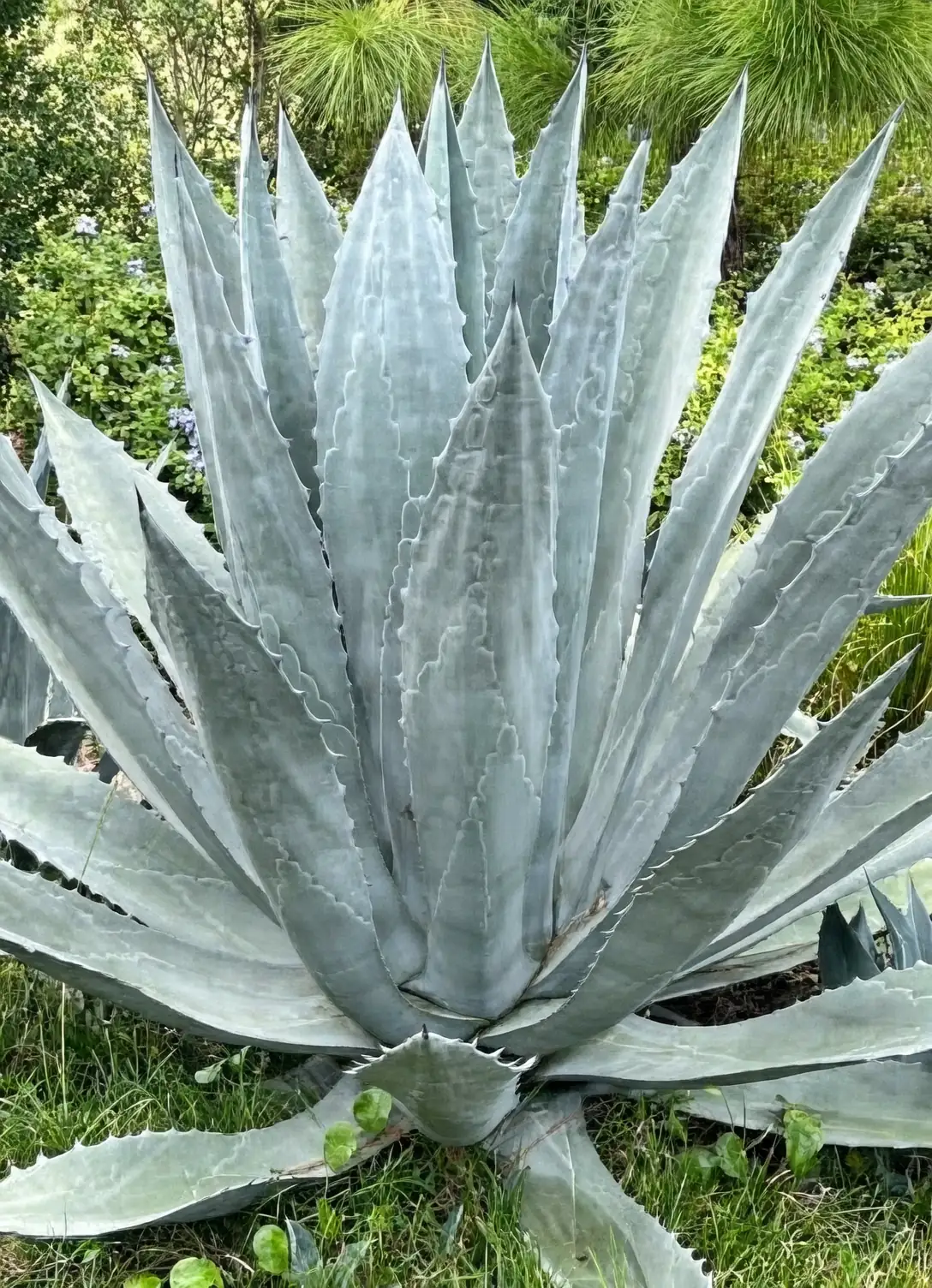
Stand before a mature Agave americana and you’ll understand why it’s called the Century Plant: a living sculpture in blue-gray armor, broad as a dining table and edged in teeth. But let’s bust a big myth before we go any further—this magnificent maguey is not the source of tequila. Its story is richer: fiber for rope, sweet sap for traditional drinks like pulque, and a finale bloom so spectacular it rewrites what patience looks like in a plant.
Meet the Century Plant (Agave americana)
- Identity check
- Family: Asparagaceae; Genus: Agave; Species: Agave americana
- Also known as: Century Plant, American aloe (a misnomer), maguey, American agave
- Native range: Mexico; now widely naturalized in warm, dry regions worldwide
- Form and flair
- Habit: Evergreen rosette, slow-growing, architectural
- Leaves: Thick, sword-like, gray‑green to blue‑gray, often with a paler midrib; armed with sharp marginal teeth and a rigid terminal spine
- Size: In-ground rosettes commonly 1–2 m (3.3–6.6 ft) across; leaves 1–2 m (3.3–6.6 ft) long; containers stay smaller (about 35 × 35 in/90 × 90 cm)
- The once-in-a-lifetime show
- Monocarpic: blooms once after 10–25 years (not 100!), then the flowering rosette dies
- Flower stalk: a towering, branched spear 7–8 m (23–26 ft) tall with clusters of yellow‑green blooms
- Continuity: offsets (“pups”) carry on the lineage
Myth-busting: Tequila is Agave tequilana, not Agave americana
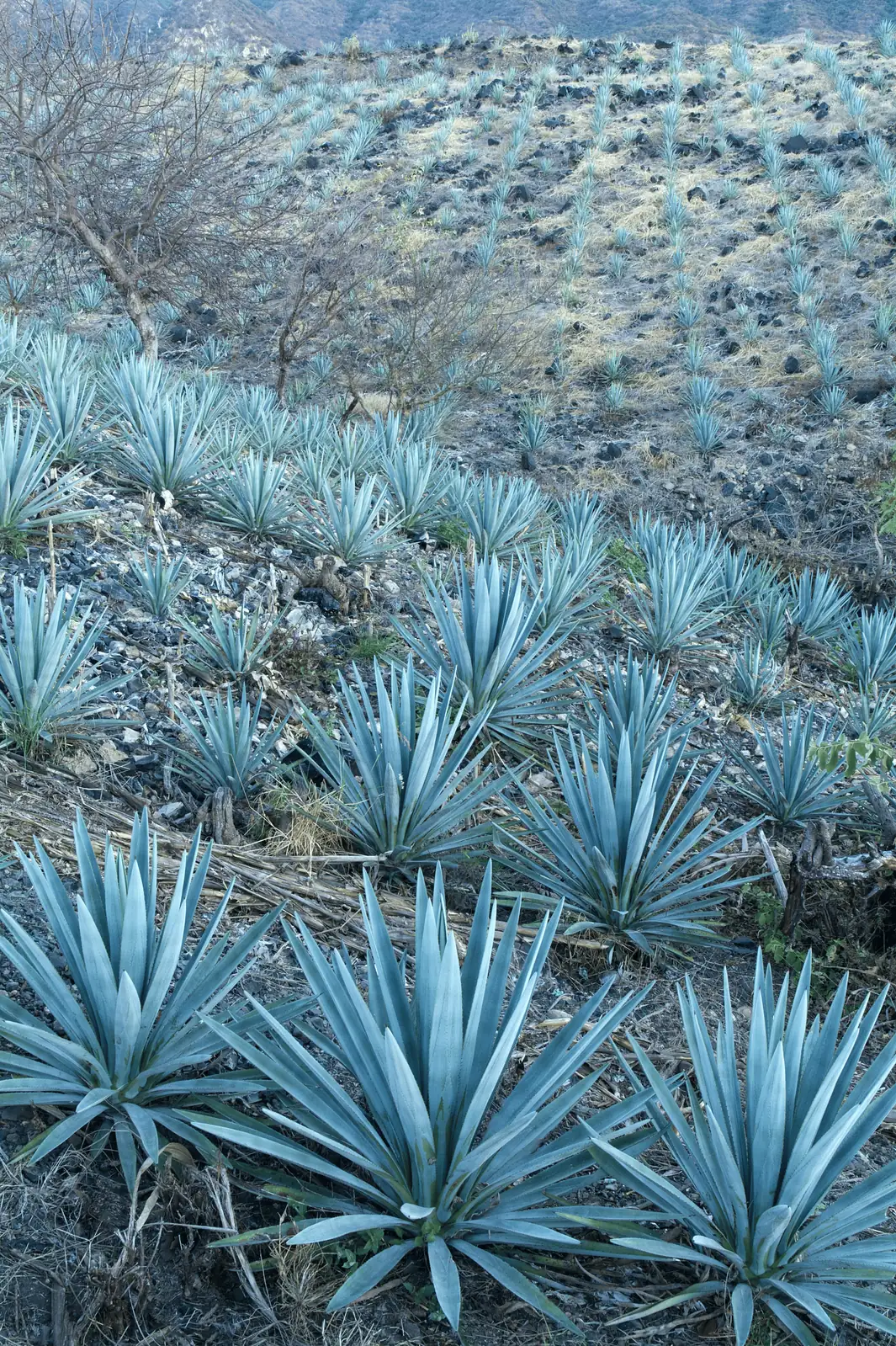
- Tequila’s true source
- Classic tequila is made from blue agave—Agave tequilana—specifically bred and cultivated for its starchy hearts (piñas). That’s what ferments and distills into tequila’s distinctive spirit.
- Where Agave americana shines instead
- Fibers: Historically valued for strong cordage and rope in dryland cultures; while other agaves powered major fiber industries, A. americana contributed sturdy local fibers for rope, twine, and crafts.
- Sap traditions: Its sweet sap—aguamiel—has been tapped and fermented into pulque, a foamy, low-alcohol beverage with deep roots in Mesoamerican culture. Think of pulque as the ancestral cousin to modern agave spirits: fresh, perishable, and rich in heritage.
- Sweet sap products and household uses: In addition to fermentation, agave saps and sugars have long played roles in regional foodways and home remedies.
In short: tequila belongs to A. tequilana; A. americana’s legacy leans fiber, sap, and striking ornament.
Heritage spotlight: Maguey, Mayahuel, and everyday life
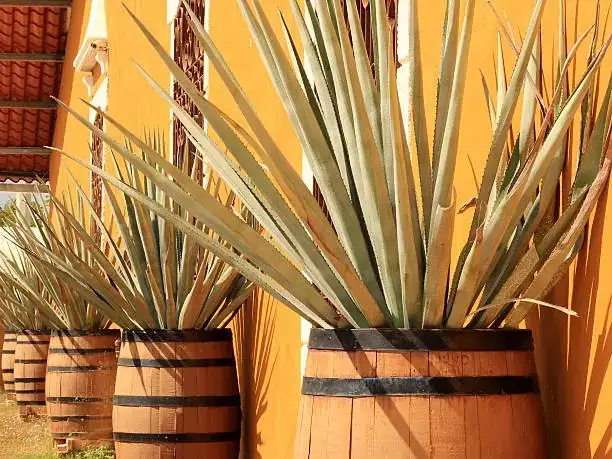
- Cultural resonance
- Agaves are woven into Mesoamerican life and legend. The Aztec goddess Mayahuel symbolizes agave’s gifts—nourishment, fertility, and sustenance.
- The nickname “Century Plant” romanticizes the wait to bloom; the reality—10–25 years—still speaks to patience, endurance, and a dramatic last flourish.
- Pulque in context
- Tapped from the plant’s core as aguamiel and fermented fresh, pulque is a living heritage beverage traditionally enjoyed close to where it’s made.
- A. americana is one of several maguey species historically used for pulque; the practice reflects deep ecological and cultural knowledge of dryland plants.
Growing Agave americana: a living sculpture with simple needs
- Light
- Best in full sun: aim for 6–8 hours daily for stout growth and good color
- In very hot regions, a touch of afternoon shade helps prevent scorch
- Temperature and hardiness
- Prefers 15–25°C (59–77°F); tolerates roughly 10–30°C (50–86°F)
- Protect from hard frost and prolonged freezes; generally suited to USDA Zones 8–11
- Soil and drainage
- Must have fast drainage: cactus/succulent mix with coarse sand/grit plus pumice or perlite
- Never let water pool in the rosette or sit in a saucer
- Watering
- Water deeply, then let the mix dry fully before watering again
- In bright, warm conditions: typically every 1–2 weeks for established containers; less in cool/low light
- Winter: keep mostly dry—just enough to prevent extreme shriveling
- New pups: wait for cut surfaces to callus; water only after the mix dries
- Feeding
- Light feeding in spring–summer: either a low-nitrogen cactus fertilizer every 4–6 weeks, or a balanced liquid feed at half strength about every 2 weeks
- Stop in winter; avoid heavy feeding that forces weak growth
- Space and placement
- Give generous clearance from walkways—those spines are no joke
- Indoors: brightest window (south or west); rotate for even growth and ensure airflow
- Containers: use a heavy, stable pot with excellent drainage
- Repotting and propagation
- Repot every 1–3 years or refresh mix; you can root-prune to manage size
- Easiest propagation is by offsets (“pups”): remove when sizable, allow to callus, pot into gritty mix
- Seasonal checklist
- Spring: resume watering, begin light feeding, repot/divide pups
- Summer: full sun, deep-but-infrequent watering; offer a bit of shade in extreme heat; watch for agave snout weevil outdoors
- Fall: taper watering; stop feeding
- Winter: bright, dry, frost protection
The bloom that ends the show (and begins a colony)
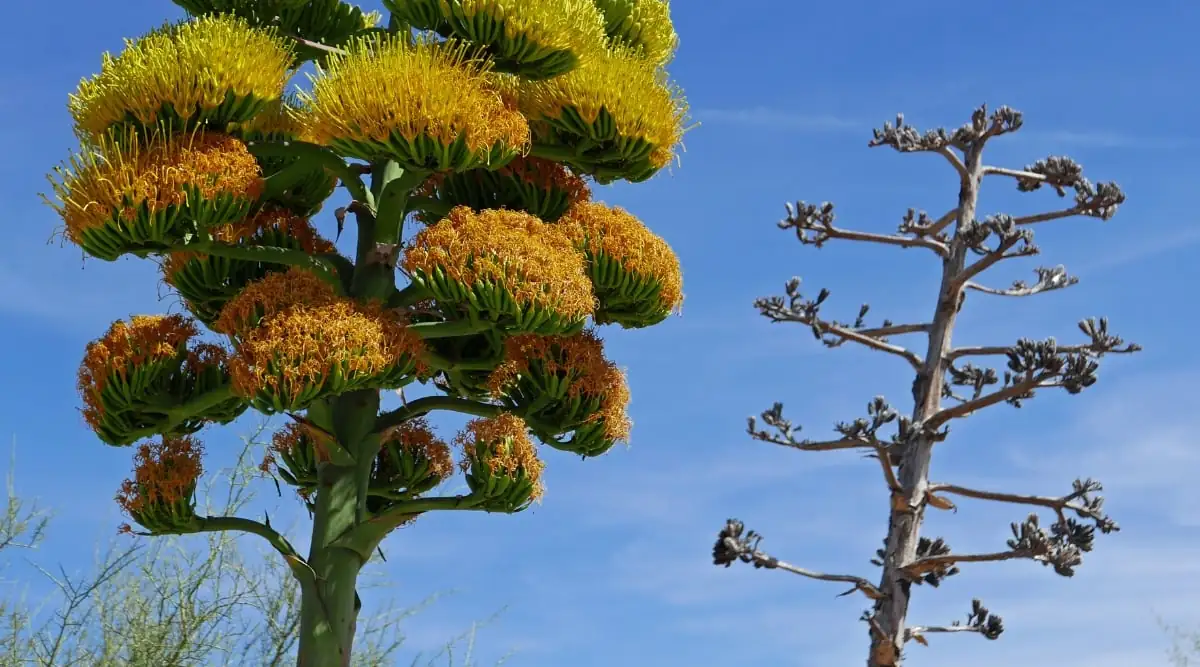
- Expect the towering spike in spring to summer on mature plants
- Flowers attract night pollinators like bats and moths in native ranges
- After blooming, the rosette declines and dies—nature’s trade-off—but offsets often persist, forming striking clumps over time
Safety first: spines, sap, and smart handling
Agave americana is as armored as it looks—and its sap can pack a chemical punch. Treat it with the same respect you’d give a toolbox full of sharp blades.
- Know the risks
- Spines: marginal teeth and a rigid terminal spine can puncture skin and eyes
- Sap: can irritate or blister skin and cause burning or itching; ingestion may cause gastrointestinal upset
- Pets: mildly to moderately toxic to cats and dogs—keep out of reach
- What’s in the sap?
- Agave saps may contain irritating compounds including calcium oxalate crystals and saponins, which can trigger irritant contact dermatitis in susceptible people. Rarely, more severe reactions have been reported.
- Smart handling
- Wear thick gloves, long sleeves, and eye protection when pruning or moving plants
- Avoid power tools that can spray sap; cut by hand where feasible and work on cool days when sap flow is lower
- Wash off exposure promptly with soap and water; seek medical attention if symptoms are severe or persist
- Site plants well away from high-traffic paths, children’s play areas, and pet routes
Pests and problems (and how to beat them)
- Root and crown rot
- Cause: overwatering or poorly drained soil
- Fix: remove affected tissue if possible, repot into fresh, dry, gritty mix, and correct watering/soil
- Insects
- Mealybugs and scale hide in leaf axils; treat with manual removal or horticultural soap/oil and improve airflow
- Outdoors, agave snout weevil can bore into the crown and cause sudden collapse—remove affected plants promptly and consider preventative cultural practices
- Yellowing or browning leaves
- Yellowing often signals too much water or too little light
- Brown tips can follow irregular watering or salt buildup—water deeply but infrequently, and occasionally flush pots with clean water
Buying guide: choose a champion
- Look for firm, evenly colored leaves and a stable, non-wobbly crown
- Avoid plants with soft, blackened tissue at the base—often a sign of rot
- Inspect leaf axils for mealybugs or scale; skip heavily scarred or spotty specimens
Symbolism and “flower language”
Agave’s cultural symbolism rings true because it mirrors the plant’s biology. Its evergreen stoicism in harsh places speaks to endurance and resilience; the defensive armature suggests protection; and its long wait to bloom—followed by one breathtaking finale—embodies patience and devotion. The popular “Century Plant” name fed a myth of 100‑year flowering, but the real timeline (often 10–25 years) is no less meaningful: great payoffs can take time, and sometimes, everything goes into a single, unforgettable act.
Quick recap: where Agave americana truly excels
- Not for tequila—that’s blue agave (Agave tequilana)
- Outstanding as a dramatic ornamental for xeriscapes and big, sunny containers
- Deep heritage uses: tough fibers for cordage and a sweet sap historically fermented into pulque
- Easy care with sun, sharp drainage, and sparse watering
- Handle carefully: spines puncture; sap can irritate or blister; keep away from kids and pets
If you want a plant that looks like sculpture, thrives on neglect, and carries centuries of human history in its leaves, Agave americana is your maguey. Just give it sun, space, and respect—and prepare for a finale that quite literally stops traffic.