

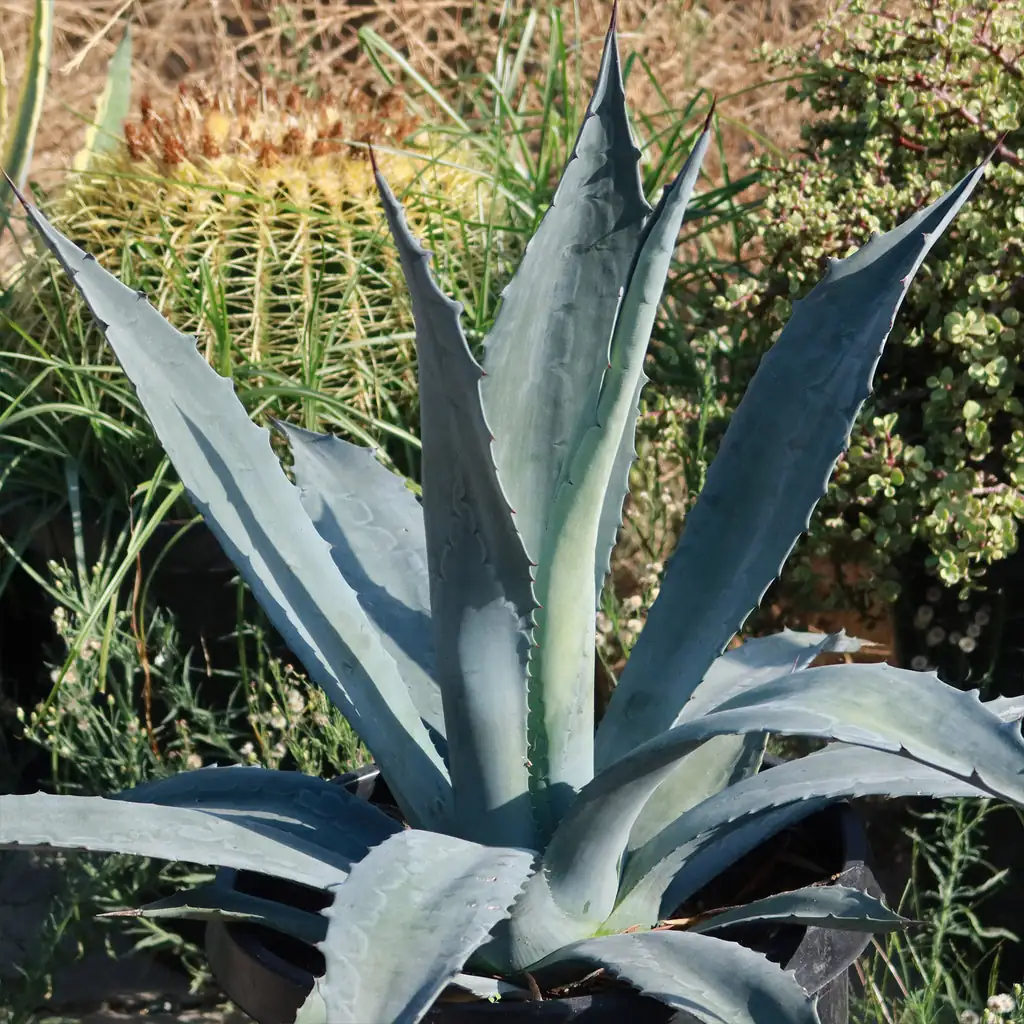
Agave americana, the Century Plant, is living sculpture with a warning label. Those blue‑gray blades radiate like a sunburst, throwing big drama across a patio or xeriscape. But their teeth and terminal spines demand thoughtful choreography. Here’s a design-forward playbook to place this plant for maximum impact—and minimum mishaps—with smart traffic-flow mapping, kid/pet buffers, pot stability, light angles, and textural pairings.
Know Your Star: why Agave americana commands space
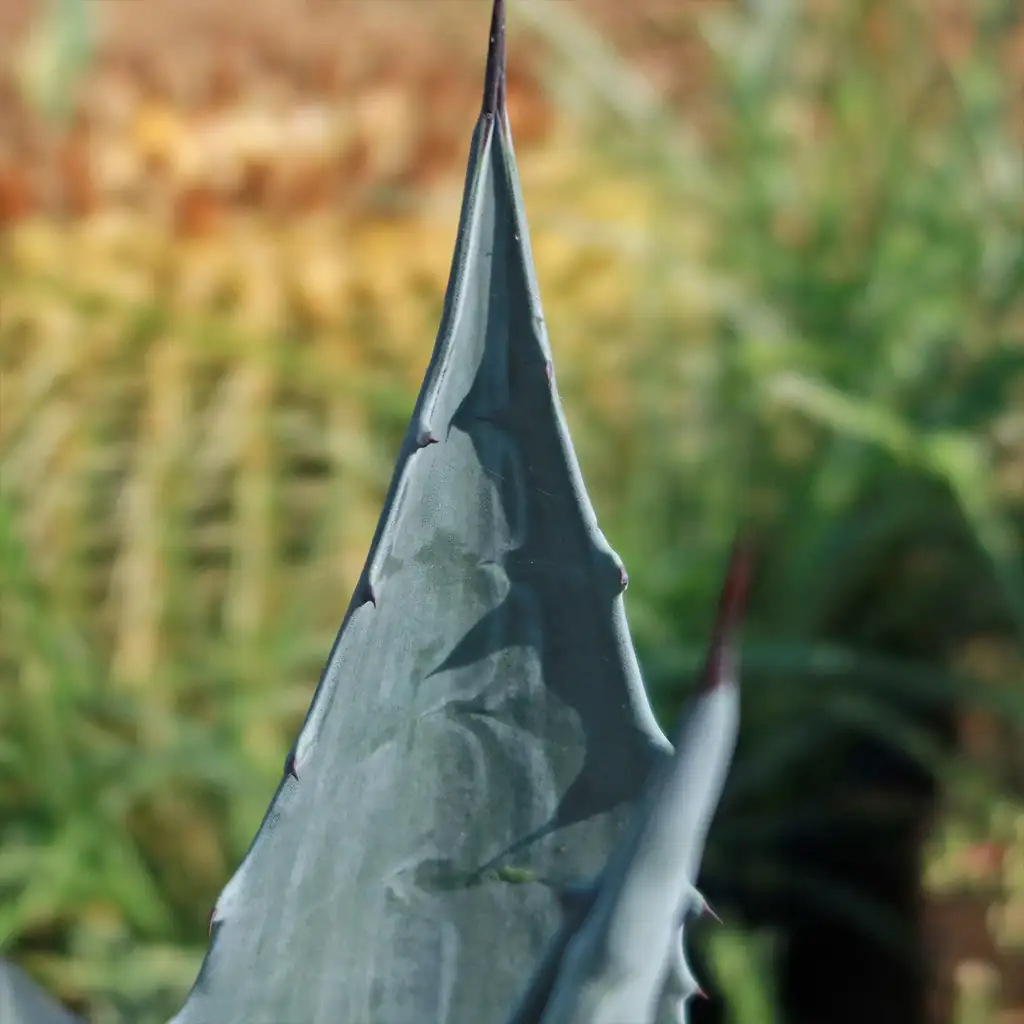
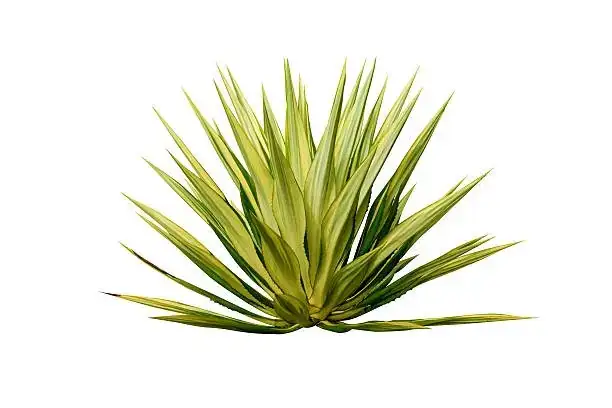
- Form and color: a bold, evergreen rosette of thick, blue‑gray to gray‑green, sword-shaped leaves edged with sharp teeth and tipped with a rigid spine.
- Scale: in containers, commonly up to about 90 × 90 cm (35 × 35 in); in warm, dry ground, 1–2 m (3.3–6.6 ft) across. Individual leaves can reach 1–2 m (3.3–6.6 ft) long.
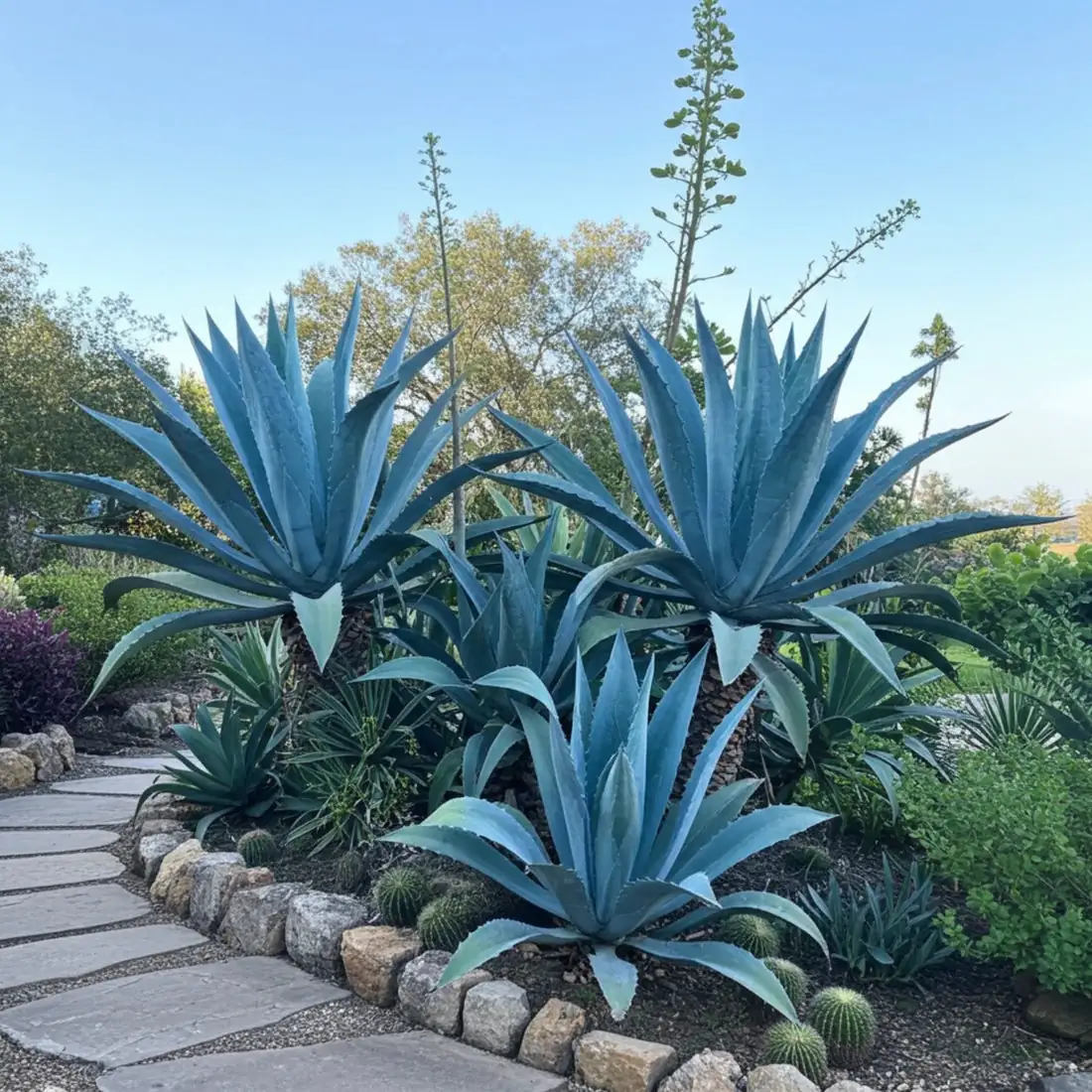
- The finale: after 10–25+ years, a mature rosette sends up a 7–8 m (23–26 ft) flower spike, then the blooming rosette declines; offsets (“pups”) usually remain.
- Habitat: thrives in full sun with fast-draining soil; excellent in large containers or xeriscapes. Best outdoors in USDA Zones 8–11; indoors needs the brightest window.
Design translation: this is a centerpiece, not a corridor plant. Give it room, and it will give you architecture.
Map the Movement: traffic flow first, plant second
Before you buy a pot, study how people (and pets) move.
- Walk your space at busy times and note desire lines: door-to-gate, kitchen-to-grill, garage-to-trash, kids’ play loops.
- Sketch “red zones” (tight turns, narrow paths, door swings, car doors) and “green zones” (dead corners, view termini, sunlit landings).
- Sightlines: place agave where it terminates a view—end of a path, opposite a doorway, or centered on a patio axis—never where a distracted elbow will meet a spine.
Clearance rules of thumb
- From any walkway edge: keep the rosette at least 60–90 cm (2–3 ft) back. For larger ground-grown plants, increase to 1.2–1.8 m (4–6 ft) from the path centerline.
- From seating and grills: 1–1.5 m (3–5 ft) minimum.
- Doorways/garage zones: outside the door-swing radius and at least 1 m (3 ft) from where car doors open.
Indoors
- Choose the brightest south- or west-facing window, but not a hallway or tight pass-through. A low profile bench or side table nearby? Keep a clear bubble around the leaf tips.
Safety Made Beautiful: kid-and-pet buffers that look intentional
You’re not hiding the spines—you’re designing around them.
- Buffer math: plan the pot’s center at least 30–45 cm (12–18 in) beyond the longest current leaf tip for container plants; reassess yearly as it grows.
- Soft barricades: create a 30–60 cm (12–24 in) “no-touch ring” with:
- Rounded boulders or chunky driftwood
- A low, open steel or wood edging
- A carpet of soft, ground-hugging plants (in dry gardens, consider Dymondia or a mat of delosperma ice plant) placed beyond leaf tips so they don’t invite reach-ins
- Height illusion: elevate the pot on a plinth or tuck it behind a low wall. People respect edges; you get drama without proximity.
- Container corral: group agave in its own “island” with companion pots that act as a human buffer.
Pet note: the sap is irritating and the plant is mildly to moderately toxic to cats and dogs. Keep it out of chase lanes and sunbathing spots.
Potting for Presence—and Stability
A heavy, stable pot keeps the sculpture upright and your nerves steady.
Choose the right vessel
- Shape: low center of gravity, wide footprint, thick walls. Squat cylinders, drum forms, and deep bowls beat tall, tippy urns.
- Material: concrete, stone, high-fired ceramic, or steel. If using lightweight fiberstone/resin, discreetly add internal ballast.
- Drainage: multiple large holes are non-negotiable. Use a breathable mesh over holes to keep mix in and water moving. Elevate pots on feet—no standing water in saucers.
Sizing and ballast
- Pot diameter roughly 1.5–2× the rosette width, with room to grow.
- If you add ballast (e.g., bricks or gravel bags), isolate it below the soil line with a permeable barrier so water freely drains through the potting mix.
- Set the pot perfectly level and shim on firm, compacted base material. Lockable casters on a low dolly can help with rare relocations.
Soil and watering discipline
- Use a gritty, fast-draining cactus/succulent mix amended with coarse sand/grit and perlite or pumice.
- Water deeply, then let the mix dry completely before watering again. In bright, warm weather that may be every 1–2 weeks; far less in cool or low light. Keep winter on the dry side.
- Never let water pool in the rosette or sit in a saucer.
Repot rhythm
- Refresh mix and upsize or root-prune every 1–3 years. A heavy pot with strong drainage keeps tipping anxiety low.
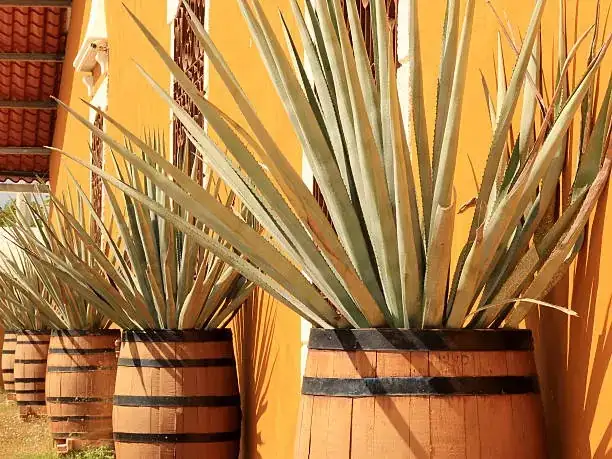
Light the Drama: aim for that blue‑gray glow
Glaucous leaves act like velvet in good light. Use angles and backdrops to make them sing.
- Full sun target: 6–8 hours daily for best color and form. In very hot climates, a touch of late-afternoon shade helps prevent scorch.
- “Glow hours”: early morning and late afternoon raking light exaggerates leaf shadows and edge teeth—orient the rosette so a handsome leaf profile faces that light.
- Backdrops that flatter:
- Pale stucco, limewash, or white brick = luminous, ethereal blue
- Charcoal walls, rusted steel, or dark fencing = dramatic silhouette
- Blue-glazed pottery echoes the leaf bloom for a refined, monochrome statement
- Indoors: brightest south/west exposure. Rotate the pot every few weeks for even symmetry. Good airflow reduces rot risk.
Pair Like a Pro: containers, topdressings, and textures
Let the Century Plant be the spike; everything else should flatter the form.
Containers and color story
- Chic neutrals: matte charcoal, smoke, or off‑white concrete
- Desert luxe: rusted corten, weathered steel
- Coastal cool: midnight blue or indigo glaze to harmonize with the blue-gray foliage
Topdressings that finish the look
- Pale crushed granite or buff pea gravel for airy lightness
- Black lava or charcoal pea pebble for high contrast and crisp lines
Companion plants (in separate pots or at a safe distance)
- Soft foils: feathery grasses like blue fescue (Festuca glauca) or lomandra; silver mounds of Artemisia; trailing Othonna capensis
- Succulent friends with kinder edges: Portulacaria afra, echeverias, or sedums
- Avoid pairing with other spiky or armed plants at close quarters—too many hazards in one vignette
Composition tricks
- Rule of thirds: one statement agave, two softer companions staggered in height
- Repetition of materials (same pot finish, different sizes) keeps the scene elegant, not busy
Scale and Placement by Size
- Young container plants (up to ~35 in/90 cm across): perch on steps, pedestals, or flanking entries—still keep that 60–90 cm (2–3 ft) clearance from traffic edges.
- Maturing specimens: shift to ground-level platforms, corners of sun terraces, or the terminus of a path where viewers can step back and admire.
Handling, Health, and Simple Care
Minimal fuss; maximum respect.
- Light: full sun outdoors; brightest possible indoors.
- Water: deep, infrequent; keep winter dryish; never let water sit in the rosette.
- Soil: fast-draining, gritty mix; excellent drainage is essential.
- Temperature: prefers warm; protect from frost and prolonged freezes, especially in containers.
- Feeding: light touch in spring–summer (low‑nitrogen cactus feed every 4–6 weeks, or balanced half‑strength every ~2 weeks). Stop in winter.
- Grooming: remove only dead/damaged outer leaves with thick gloves; spines are sharp and sap can irritate skin.
- Pests: watch for mealybugs/scale in axils and, outdoors, agave snout weevil. Good airflow and dry crowns prevent rot.
- Propagation: offsets (“pups”) are easiest—let cut surfaces callus, then pot into gritty mix.
Safety protocol
- Wear thick gloves and eye protection when moving or pruning. Use tools or a folded towel to cradle leaves.
- Keep clearances generous; avoid hallways and high-traffic pinch points.
- For households with kids/pets, prioritize elevated or recessed placements with physical buffers.
The Long Game: bloom theater and succession
One day, your agave may launch a towering, branching stalk with masses of yellow‑green flowers—a once-in-a-lifetime spectacle. After flowering, that rosette naturally declines. Let pups around the base carry the legacy forward, or move one to a new pot to continue the design.
Symbolism and story: the meaning behind the armor
Agave has long stood for endurance, resilience, and protection—thriving where other plants surrender. Because each rosette blooms just once after many years, it’s also associated with patience and a dramatic last flourish. In Mesoamerican tradition, agaves were sources of fiber and sustenance, weaving toughness and nourishment into their cultural identity.
—
Place Agave americana like you would a modern sculpture: where light kisses its edges, where people admire from a safe step back, and where the container reads as architecture. Do that, and your Century Plant becomes the room’s calm, confident star—no caution tape required.


