

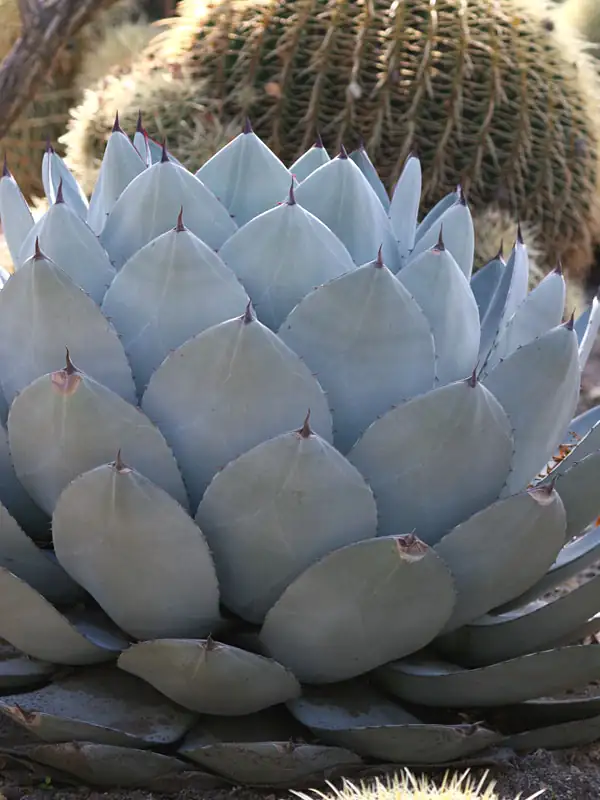
Meet the Century Plant, the desert headliner that saves its energy for one breathtaking finale—then throws a sky-high party, invites bats to the night shift, and leaves a crowd of pups to keep the music going. Agave americana is equal parts sculpture and survivalist, all cool blue-gray swagger with a science story under the hood.
Meet the headliner: Agave americana at a glance
- Family: Asparagaceae (Asparagus family)
- Also known as: Century Plant, American Agave, American Aloe, Maguey
- Native range: Primarily Mexico; now widely naturalized in warm, dry regions around the world
- Look: Bold, evergreen rosette of thick, blue-gray to gray-green leaves lined with sharp teeth and tipped by a rigid spine
- Party trick: Monocarpic—blooms once after many years, then the flowering rosette dies, leaving offsets (“pups”) to carry on
Snackable surprises
1) The once-in-a-lifetime bloom (aka the megaspike)
- Timing: Often after 10–25 years (sometimes longer, depending on conditions)
- Season: Usually spring to summer
- The show: A towering bloom stalk rockets up like a giant asparagus spear, branching near the top and reaching about 7–8 m (23–26 ft). It’s festooned with masses of yellow‑green, bell-like flowers.
- Afterparty: The blooming rosette naturally declines and dies—but not before it has passed the baton to its pups around the base.

2) The night shift: bats invited
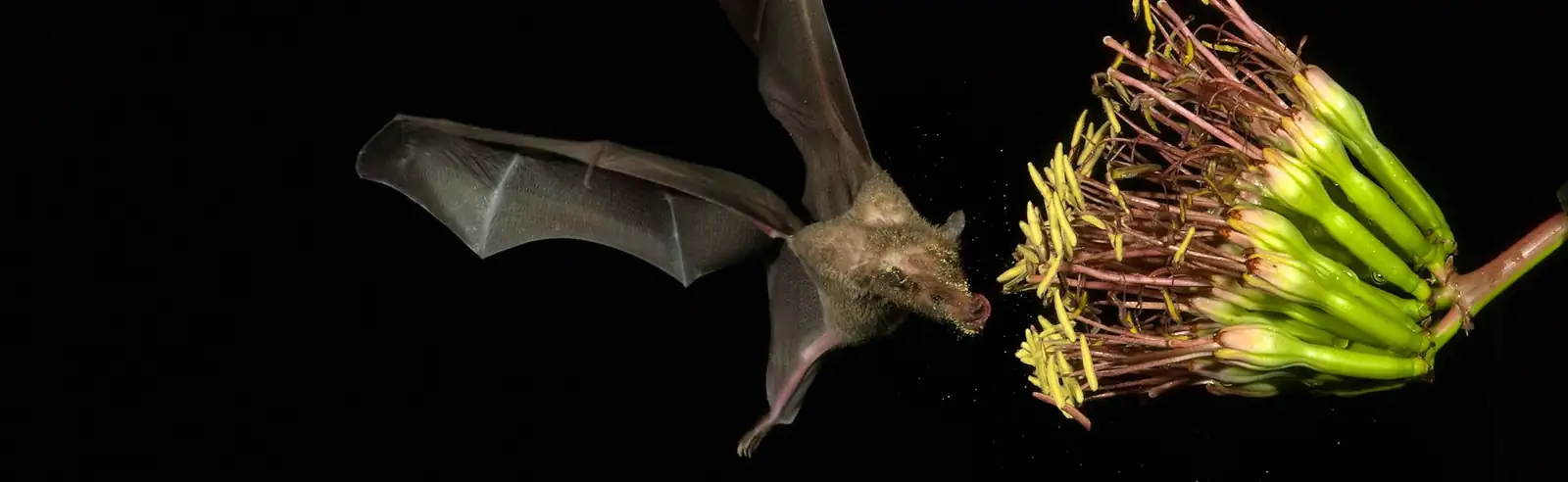
- Many agaves, including A. americana in its native range, are classic night-scented nectar bars for bats (and often moths). Those heavy, nectar-rich flowers open when the desert air cools, pairing fragrance with high-energy fuel—perfect for pollinators on the wing after dark.
3) Pups: the family that keeps the party going
- A. americana readily produces offsets around its base, forming colonies over time.
- Gardeners often lift and pot these pups to start new plants—how the legacy continues after the main rosette’s big finale.
4) Leaves with memories: “bud imprints”
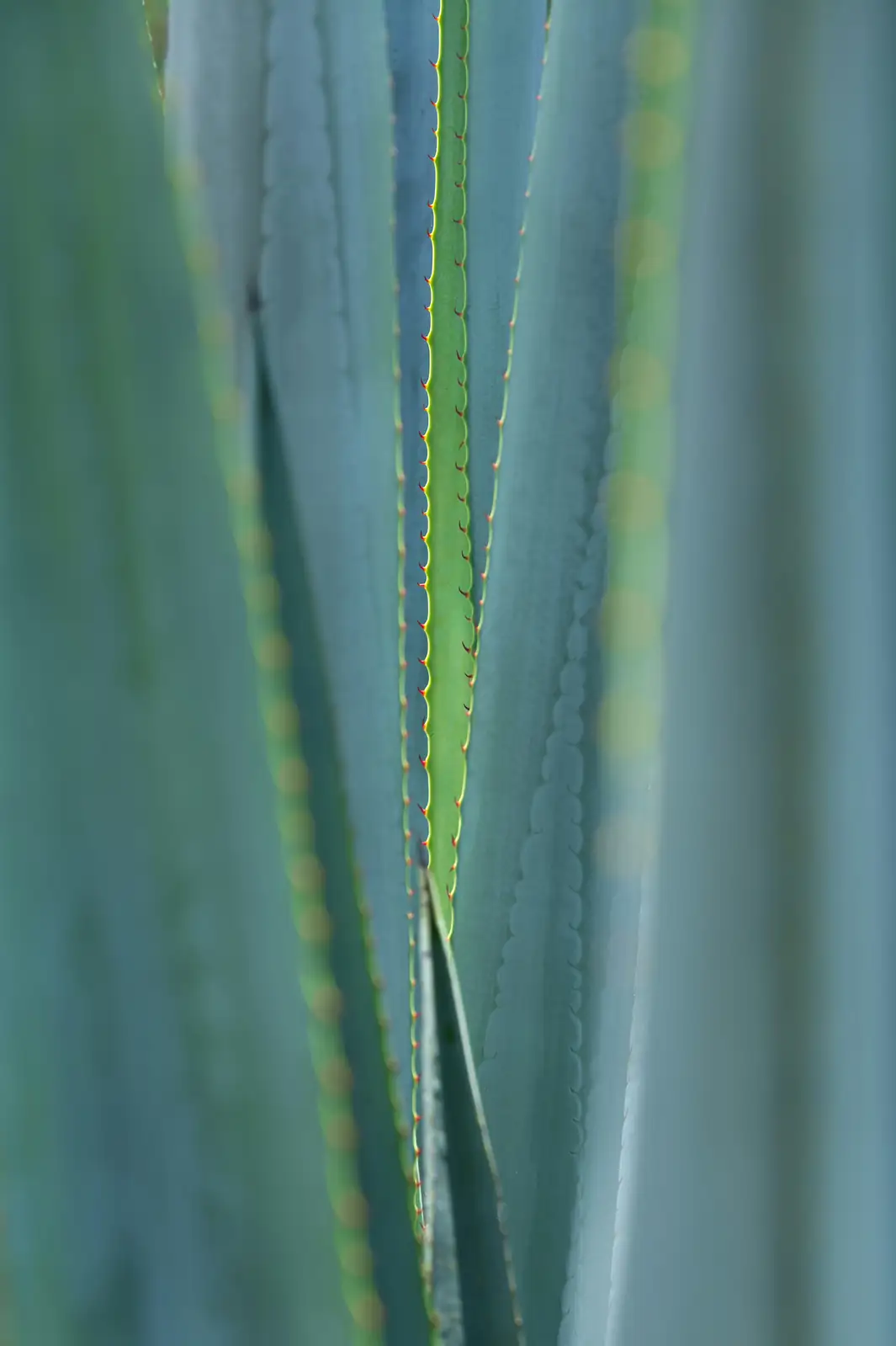
- Look closely and you’ll see pale, ghostly patterns pressed into each leaf—the toothy outlines of neighboring leaves from when they were all tightly folded together in the bud. They’re like botanical fingerprints, subtle and mesmerizing.
5) That blue-gray glow is a wax “bloom”
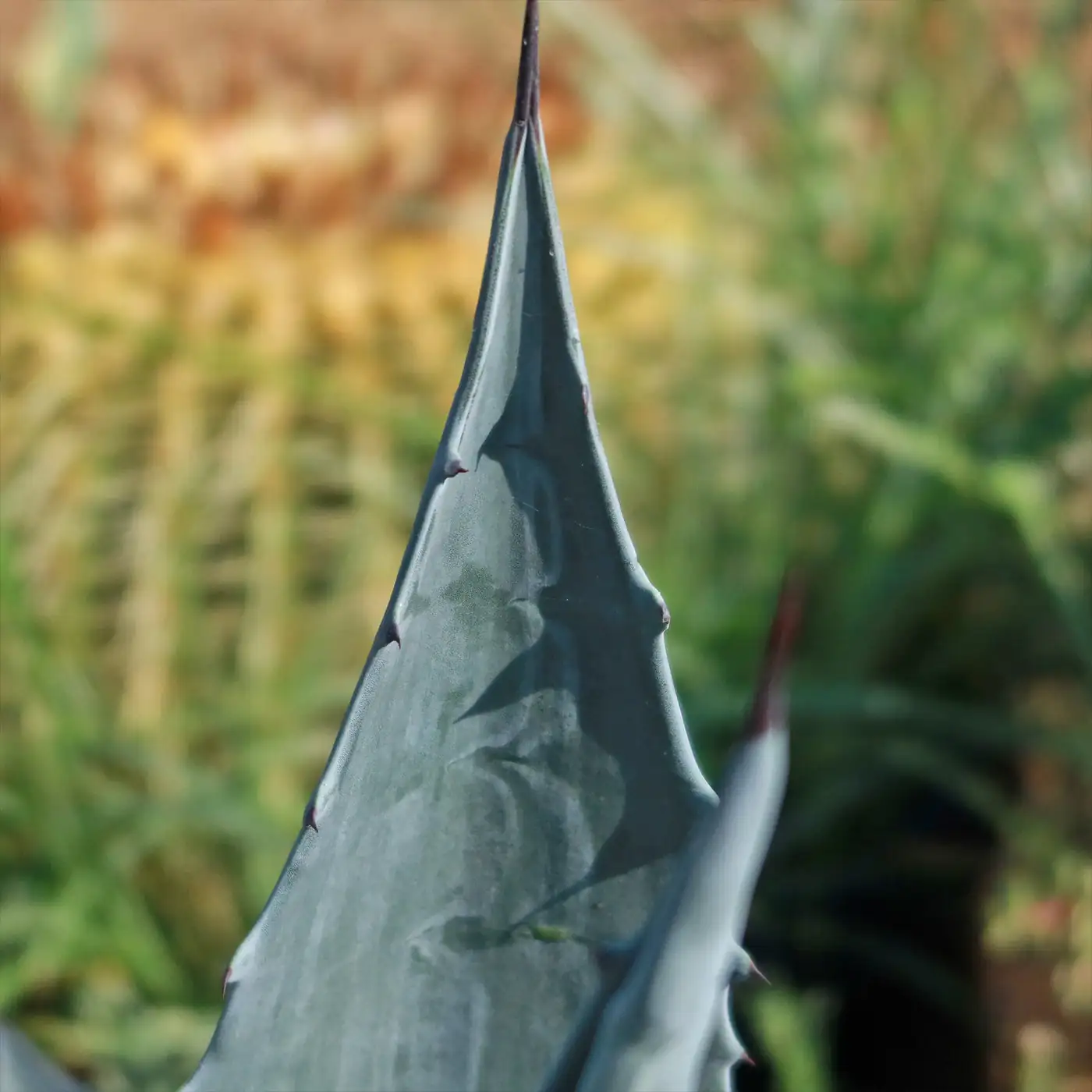
- The cool, slatey tones come from a natural, protective wax coating (a bloom) that scatters light and reduces water loss. It can rub off—so handle leaves gently if you want to keep that glaucous sheen pristine.
6) How it sips: CAM metabolism
- Agave americana runs on CAM (Crassulacean Acid Metabolism), a water-saving strategy in which stomata open at night to take in CO₂, then close by day to preserve moisture. It’s desert-smart photosynthesis—and one reason this species thrives in heat and drought.
7) Architectural armor and etiquette
- The leaves are edged with sharp teeth and end in a needle-like spine; the sap can irritate skin. Think of it as museum-quality art with its own velvet rope: give it space, wear thick gloves when handling, and keep it away from narrow paths.
How big is the show?
- In-ground rosette: commonly 1–2 m (3.3–6.6 ft) across in warm, dry climates
- Individual leaves: about 1–2 m (3.3–6.6 ft) long, 15–20 cm (6–8 in) wide
- Flower stalk: about 7–8 m (23–26 ft) tall when it finally blooms
- In containers: typically to about 90 × 90 cm (35 × 35 in), still bold but more compact
Light, soil, water: set the stage
Sun
- Best color and strength in full sun: aim for 6–8 hours of direct light. In very hot regions, a touch of afternoon shade can prevent scorch.
Soil
- Fast drainage is non-negotiable. Use a cactus/succulent mix with plenty of coarse sand, grit, perlite, or pumice. Never let water sit in the rosette or saucer.
Water
- Water deeply, then let the mix dry out thoroughly before watering again.
- Frequency varies with light and temperature: in bright warmth, every 1–2 weeks for established container plants; far less in cool or low light.
- Winter: keep mostly dry—just enough to prevent excessive shriveling.
- New offsets: allow cut surfaces to callus; then water sparingly only after the mix dries.
Feeding
- Light feeding during active growth (spring through summer/early autumn):
- Option A: a low‑nitrogen cactus fertilizer every 4–6 weeks
- Option B: a balanced liquid feed at half strength about every 2 weeks
- Stop feeding in winter; avoid heavy fertilization.
Temperature and hardiness
- Prefers about 15–25°C (59–77°F), tolerates roughly 10–30°C (50–86°F).
- Protect from hard frost; best for USDA Zones 8–11. Shelter containers near 0°C (32°F).
Humidity and airflow
- Dry to average humidity is fine; good airflow helps prevent rot. Avoid persistently damp conditions.
Pruning and repotting
- Minimal pruning—remove dead or damaged outer leaves with care.
- After blooming, you can cut the spent stalk, but the flowering rosette will still decline naturally.
- Repot every 1–3 years, refreshing the gritty mix; use a heavy, stable pot with strong drainage. Root-prune if you need to keep size in check.
Pests and problems
- Generally tough. Watch for mealybugs and scale (especially in leaf axils), aphids on flower stalks, and outdoors, agave snout weevil.
- The big risk is root/crown rot from overwatering or poor drainage. Prevent by using a gritty mix, bright light, and drying cycles.
Propagation: your own pup parade
- Offsets (pups): the easiest route.
- Detach a well-formed pup.
- Let any cut surfaces callus.
- Pot into a fast-draining mix; water sparingly after dry-downs.
- Seeds: possible but slower.
- Some agaves also make bulbils on the flower stalk; if present, they’ll drop and root.
Design notes: living sculpture with presence
- Place it where its silhouette can shine—in xeriscapes, desert-style beds, gravel gardens, and large containers on sunny patios or balconies.
- Give it generous clearance from foot traffic; spines and narrow walkways don’t mix.
- Indoors, choose the brightest window (south or west), rotate occasionally for even growth, and keep watering conservative.
Culture, uses, and myth-busting
- Agave americana has supported people for centuries: strong leaf fibers for ropes and cordage; sweet sap products; artisanal embroidery threads (for crafts like piteado).
- Tequila trivia: iconic, yes—but traditional tequila comes from blue agave (Agave tequilana), not typically from A. americana.
- The “Century Plant” nickname? Romantic but off by decades—expect one spectacular bloom after many years, often around 10–25, not 100.
Symbolism and “flower language”
- Symbolism: endurance, resilience, and protection—an elegant survivor armed for sun and drought. Because it blooms only once, it’s also a symbol of patience, devotion, and a last, luminous flourish.
- Flower language (花语) context: Modern “meanings” often arise from cultural storytelling rather than ancient doctrine. For Agave americana, the decades-long wait culminating in one towering spike naturally inspires themes of long-held intention, climax, and legacy—beautiful metaphors grounded in the plant’s real life cycle.
Quick FAQ
- Does the Century Plant really take 100 years to bloom?
- No. Most bloom once after many years—often around 10–25, sometimes longer with tough conditions. The blooming rosette then declines, but offsets usually remain.
- Can I grow Agave americana indoors?
- Yes, if you can provide very bright light (ideally several hours of direct sun), a fast-draining cactus mix, and deep-but-infrequent watering. Keep it away from walkways—those spines are serious.
- Why are my agave leaves turning yellow?
- Most often overwatering, especially in cool or dim conditions. Improve drainage, let the soil dry completely, and move it to stronger light.
- Are the spines and sap dangerous?
- They can be. Spines puncture; sap may irritate or blister sensitive skin. Wear thick gloves and eye protection when handling.
One last look
A blue-gray rosette that stores the desert’s secrets, a waxed shine that shrugs off heat, night-blooming flowers that beckon bats, and a single, sky-scraping finale—Agave americana doesn’t just live in your garden. It stages a spectacle, raises a family of pups, and leaves you with stories as sharp as its spines.


