

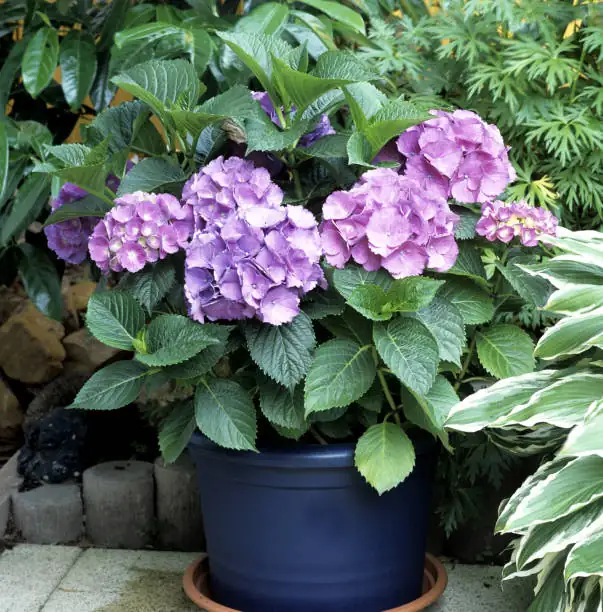
Bigleaf hydrangea (Hydrangea macrophylla) was practically born for patio life—sumptuous mopheads or lacecaps, glossy leaves, and a flair for changing color with soil chemistry. To keep those blooms lush in a container, think like a stage manager: give it the right-sized pot, a rich growing medium, a calm, bright set (morning sun, afternoon shade), a steady water script (ideally automated), and an annual costume change (repot) before opening night in late spring.
Meet the plant, meet its sweet spot
- Botanical profile: Hydrangea macrophylla (aka Bigleaf, French, Mophead, Lacecap hydrangea); family Hydrangeaceae; native to East Asia—primarily Japan, also China and nearby regions.
- Habit: Bushy, multi-stemmed, deciduous shrub with large, serrated, glossy leaves.
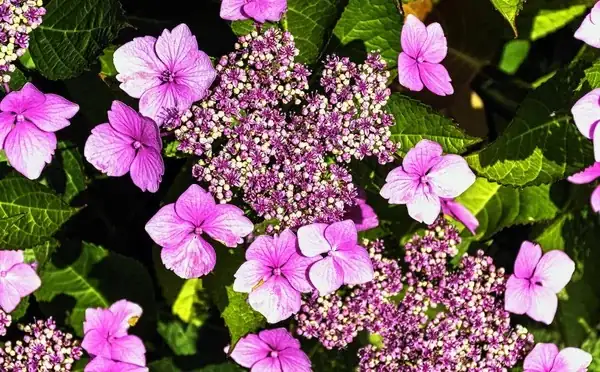
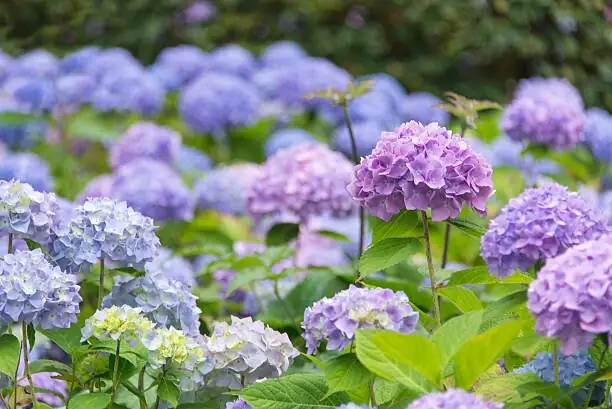
- Bloom style: Rounded “mopheads” or flatter lacecaps, typically 6–8 inches across, late spring through summer; many cultivars shift bluer in acidic soil (with available aluminum), pinker in more alkaline soil. White forms generally stay white.
- Light: Morning sun with afternoon shade or bright dappled light is the sweet spot; in cooler climates it can handle more sun if the potting mix stays evenly moist (aim for roughly 3–6 hours of sun daily).
- Hardiness and container reality: Most reliably flowers in USDA Zones 6–9. Buds are the tender part—containers are more exposed than in-ground shrubs, so protect from hard freezes and drying winds.
Container-first tactics that make all the difference
1) Pot size: start smart, size up with purpose
- For a long-term patio shrub: Choose a container at least 18–24 inches wide and deep. This volume buffers moisture, roots, and summer heat. Expect to step up pot size every year or two as the plant grows.
- For a young purchase: Many come in 6–8 inch nursery pots—plan to move up 2–4 inches in diameter at spring repotting.
- Weight and mobility: Pot where it will live, or use a rolling caddy/caster base. Grouping pots also creates a milder microclimate.
2) Pot material and drainage: hydrangeas hate soggy feet
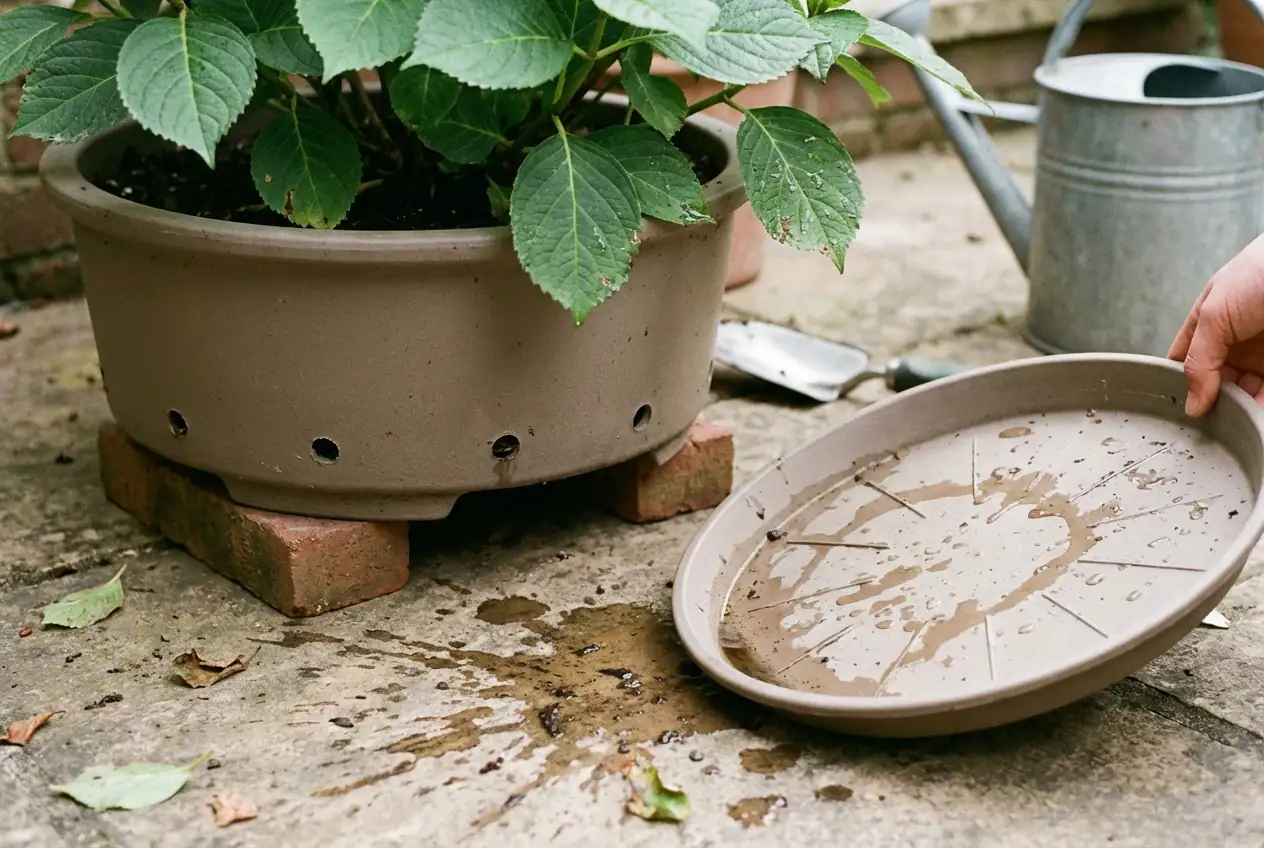
- Must-haves: Multiple drainage holes and fast runoff. Add pot feet to lift the container; if using a saucer, empty promptly after watering.
- Cold-climate caution: Avoid untreated clay, terra-cotta, or non-frostproof ceramic that can crack when soil freezes. Weatherproof, frost-rated materials are safer for multi-year container displays.
- Wind sense: Choose a squat, stable pot in breezy sites; tall, narrow containers tip easily once blooms balloon.
3) The mix: organic-rich, moisture-retentive, yet well-drained
- A reliable recipe:
- 50–60% quality potting mix or screened loam
- 20–30% peat moss or coco coir (for moisture retention and gentle acidity)
- 10–20% perlite or coarse sand (for drainage)
- A shovel of fine bark or leaf mold adds structure and slow-decaying organic matter
- pH and color play:
- Acidic (often below ~pH 6) + available aluminum → bluer tones
- More alkaline (often above ~pH 7) → pink/red tones
- White cultivars usually remain white
- Never use heavy garden soil alone in containers; it compacts and waterlogs.
4) Positioning: morning sun, afternoon shade, and wind shelter
- Aim for:
- 3–6 hours of morning sun or bright dappled light
- Afternoons shaded, especially in hot summers, to prevent scorch and prolong bloom life
- Wind sheltering tricks:
- Tuck pots near a wall, fence, or among taller evergreens to blunt prevailing winds
- Cluster containers to reduce gusts; stake in extra-windy balconies
- Keep off blazing, reflective surfaces (white walls, metal railings) that overheat leaves and roots
5) Watering like a pro—then automating it
- The principle: Even moisture—never bone-dry, never swampy. Water in the morning so foliage dries by evening.
- How often:
- Growing season baseline: deep watering about 1–2 times weekly
- Heat waves, small pots, or windy sites: may need water every 1–2 days
- Winter: water sparingly but don’t allow the root ball to fully dry
- Automation options:
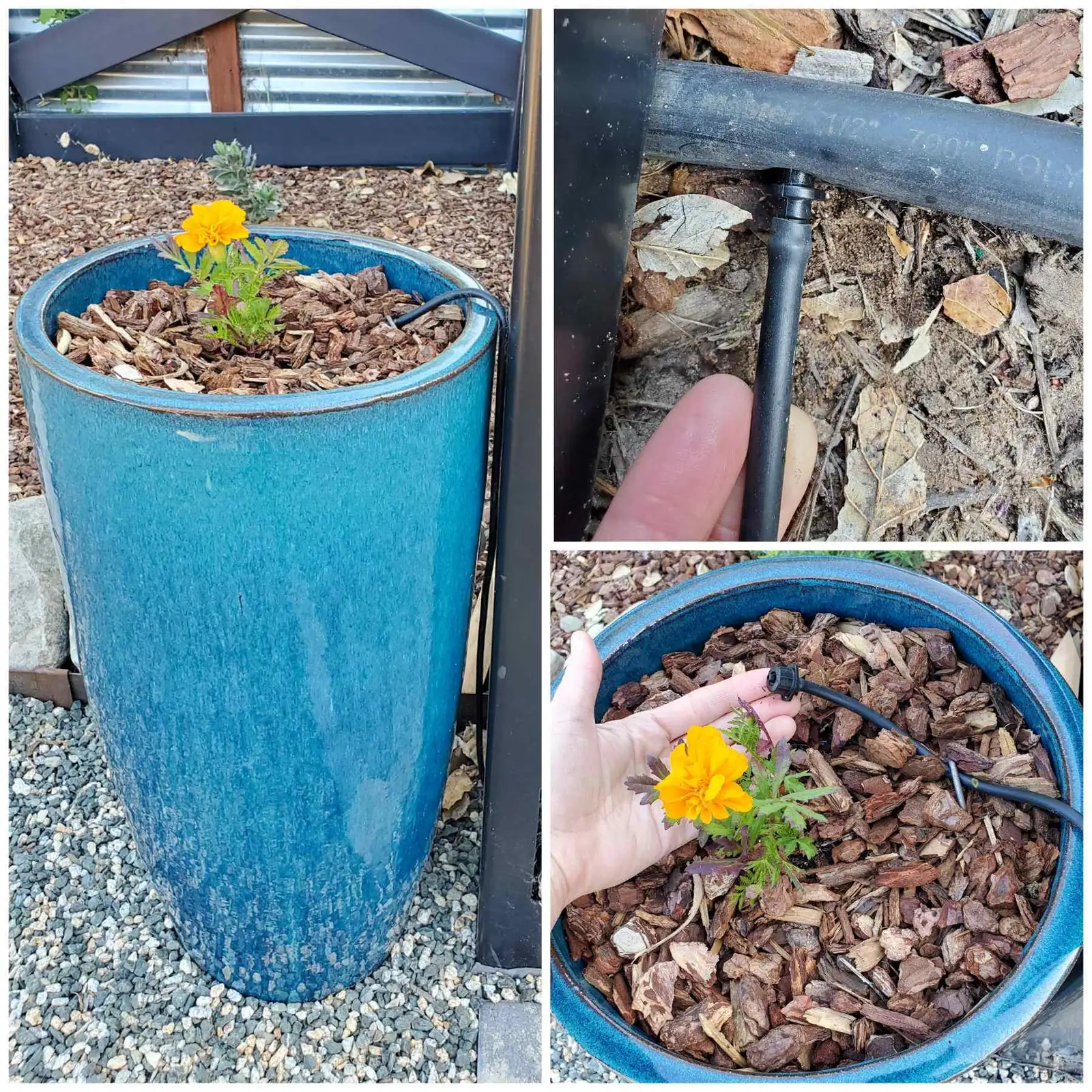
- Drip irrigation: Run a 1/4-inch line to the pot with two 0.5 gph emitters positioned opposite each other. Use a simple battery timer; start with 20–30 minutes, 3–5 mornings per week, then adjust by feel and season.
- Self-watering containers: High-quality, frost-appropriate systems keep moisture more even; still check the reservoir and never allow potting mix to stay saturated.
- Smart add-ons: A mulch cap (fine bark, leaf mold) reduces evaporation; a moisture meter or finger test (top 1–2 inches just drying) keeps you honest.
- Avoid: Chronic wetting of leaves late in the day (encourages disease) and standing water in saucers (root rot risk).
6) Feeding for container vigor (and color goals)
- Spring to midsummer:
- Use a balanced fertilizer (e.g., 10-10-10) or an acid-forming fertilizer, following label rates.
- For potted plants, many gardeners feed lightly every 2 weeks, or use a slow-release product per label.
- Ease off after mid-summer so stems mature before winter.
- Color nudges:
- Aluminum sulfate to encourage blue (where appropriate and labeled for this use)
- Garden lime to push pink/red (as soil and cultivar allow)
- Changes are gradual—think months, not days.
7) Repot timing and technique
- Best time: Spring, just as growth resumes.
- How-to:
- Slip the plant out; trim circling roots and tease them outward.
- Move up one pot size (about 2–4 inches wider).
- Replant at the same depth; refresh with organic-rich, well-drained mix.
- For very large containers, consider annual top-dressing (remove the top 2–3 inches of mix, replace with fresh compost-rich blend).
8) Pruning and deadheading in pots
- Many bigleaf hydrangeas bloom mostly on old wood. To avoid removing next year’s buds:
- Deadhead and lightly shape right after flowering.
- Every year or two, remove up to one-third of the oldest stems at the base to refresh growth.
- Pinching young shoots around 6 inches tall can encourage branching on juveniles.
- Always check your cultivar’s bloom habit (some rebloom on new wood too) before heavier pruning.
A seasonal game plan for container success
- Spring
- Repot or top-dress; set drip/self-watering; begin feeding.
- Position for morning sun, protect from spring gales.
- Scout for aphids and leaf spots early.
- Late spring–summer (peak bloom)
- Keep evenly moist; mulch the surface; deadhead to tidy.
- In heat waves, increase watering frequency and shade the pot, not just the canopy (wrap with burlap or move slightly).
- Late summer–autumn
- Taper feeding after mid-summer; maintain moisture but don’t overwater as nights cool.
- Protect developing buds from early cold snaps and dry winds.
- Winter
- Bigleaf hydrangea appreciates a cool rest; buds are tender.
- In cold regions, move the pot to a sheltered, unheated location (protected porch, against a house wall, or an unheated garage with light). Keep above hard-freeze extremes when possible and water sparingly.
- Avoid keeping it warm indoors long-term; treat indoor stints as brief layovers, not a permanent move.
Troubleshooting the balcony diva
- Midday wilt but soil is moist: likely heat stress. Provide more afternoon shade, shade the pot, and improve airflow.
- Yellowing leaves, especially with droop: often overwatering or poor drainage; check holes, elevate the pot, reduce frequency.
- Scorch/brittle edges: too much sun or hot wind exposure; reposition for afternoon shade and shelter.
- Powdery mildew or leaf spots: improve airflow, water at soil level in the morning, remove affected leaves; consider labeled controls if needed.
- Pests (aphids, thrips, spider mites, Japanese beetles): begin with a strong water spray and insecticidal soap; escalate only as needed.
Meaning and color language—why hydrangeas say “heartfelt”
Hydrangeas often symbolize gratitude, grace, and abundance—fitting for such generous clusters. The link between blue blooms and apology traces back to a Japanese tale of an emperor gifting blue hydrangeas as a sign of remorse and understanding. In Victorian floriography, their lavish looks sometimes read as boastfulness—big show, few seeds. Today, most gardeners embrace their color-coded emotions: blue for contrition and calm, pink for affection, white for purity, purple for deeper understanding. Treat these meanings as cultural stories rather than rules—beautiful context to the spectacle you’re growing.
Compact, container-ready picks to consider
- Hydrangea macrophylla selections often suited to pots: ‘Wee Bit Grumpy’, ‘Cityline Paris’, ‘Endless Summer Pop Star’, ‘Paraplu’
- Tip: When overwintering outdoors in cold regions, choosing cultivars rated a zone hardier than your garden can help buds survive in above-ground pots.
Safety note
Hydrangea is mildly toxic if ingested by people or pets (cyanogenic glycosides). Keep leaves and florets out of reach and enjoy it as a strictly ornamental plant.
Quick container blueprint (tear-and-use)
- Pot: 18–24 inches wide, frostproof, multiple drain holes, on pot feet or a rolling caddy
- Mix: Organic-rich, airy blend (potting mix + peat/coco + perlite + fine bark); pH tuned for your preferred color
- Light: Morning sun, afternoon shade; 3–6 hours of sun; protected from wind
- Water: Morning, evenly moist; set up drip (two 0.5 gph emitters) or a high-quality self-watering system; mulch surface
- Feed: Balanced or acid-forming fertilizer through early–midsummer; stop to allow wood to mature
- Prune: Deadhead and lightly shape after bloom; don’t remove old-wood buds; renew by taking out up to one-third of oldest stems
- Repot: Each spring or when rootbound; step up 2–4 inches; refresh mix
- Winter: Shelter buds from hard freezes and drying winds; keep cool, not warm; water sparingly but don’t let the root ball desiccate
Get these container basics right, and Hydrangea macrophylla will repay you with opulent, long-lasting blooms that look like you fussed endlessly—while your drip line and smart pot quietly do the heavy lifting.


