
If you’ve ever stood in a nursery holding two Arabian jasmines and wondering “single stars or double rosettes?”, you’re in good company. Jasminum sambac has a wardrobe of beloved cultivars, from simple, starry blossoms that pour out scent to lush, rose-like doubles that look too ornate to be real. Here’s a friendly face-off to help you pick the perfect plant—for tea scenting, tight balconies, or that knockout patio perfume.
Arabian jasmine at a glance
- Botanical: Jasminum sambac (Arabian jasmine), family Oleaceae
- Native to tropical Asia; a warm-loving, frost-tender evergreen to semi-evergreen shrub that can be kept compact in pots or trained as a small climber
- Classic features: glossy dark-green leaves; waxy, intensely fragrant white blooms, often strongest in warm evening air
- Blooming rhythm: summer to autumn in most climates; with strong light and warmth, it reblooms repeatedly and may flower almost year-round in frost-free conditions
Meet the contenders
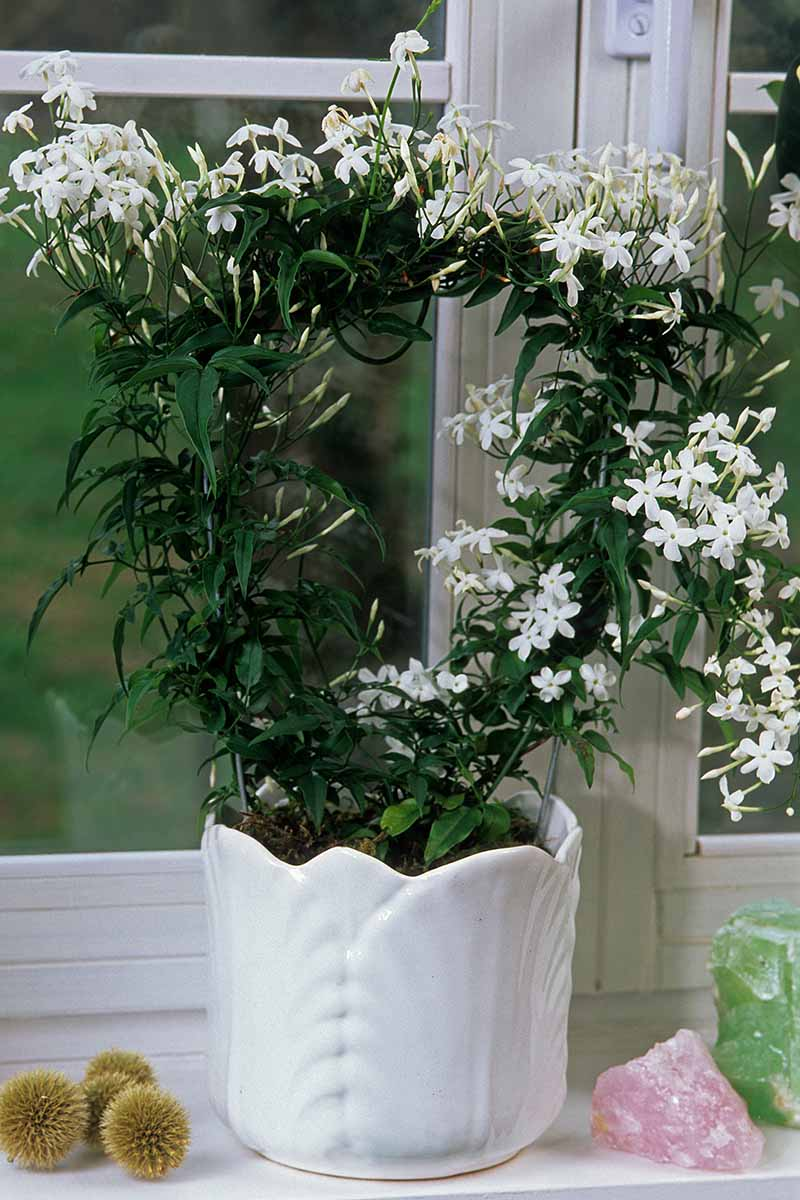
‘Maid of Orleans’ (single, starry)
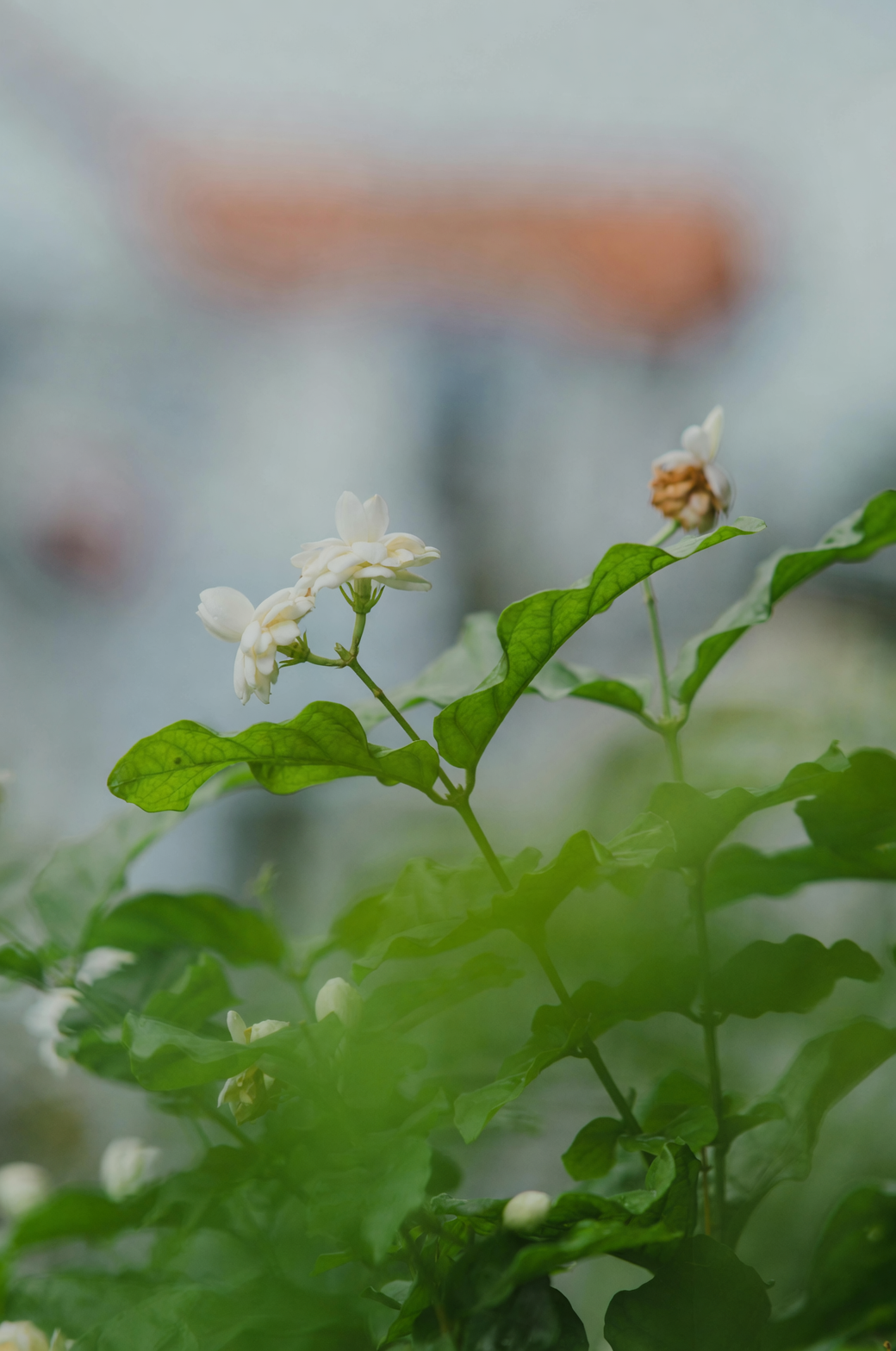
- Bloom look: Single, rounded petals—think bright white stars.
- Fragrance: Pure, sweet sambac perfume that’s quick to broadcast as buds open (often noticed most at dusk on warm days).
- Rebloom habit: Fast and generous in strong sun; clusters open progressively, keeping the show going.
- Size/control: Naturally cooperative in containers; easy to keep tidy around 30 cm/12 in with pinch-pruning.
- Best for: Tea scenting workhorse (abundant, quick-to-open flowers), compact spaces, beginners who want near-constant fragrance.
‘Belle of India’ (semi-double to double; often elongated petals) and ‘Mysore Mulli’ (a close look-alike)
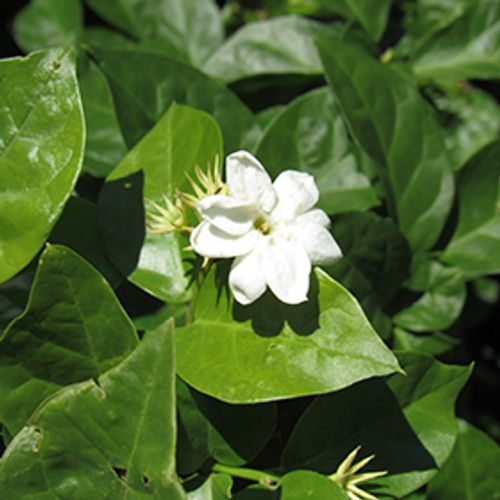
- Bloom look: Elegant, slender petals that can be single to semi-double; some plants show both forms over the season.
- Fragrance: Sweet and refined; many growers find it a touch “airy” compared with the lush doubles.
- Rebloom habit: Reliable in warm, bright conditions; slightly more episodic than singles if light or feeding slip.
- Size/control: Bushy but can clamber; looks great on a small trellis. Easy to shape by pinching after flushes.
- Best for: Tea scenting (excellent aroma release), fans of graceful, elongated petals, small trellised displays.
‘Grand Duke of Tuscany’ (double to “triple,” rosette/mini-rose style)
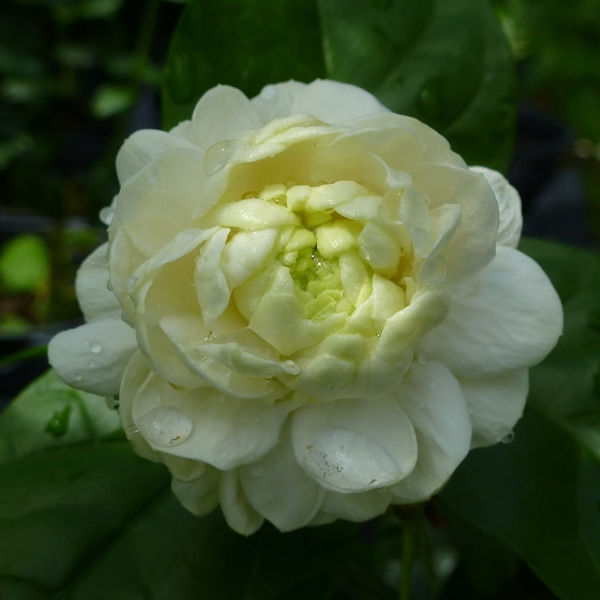
- Bloom look: Dense, rose-like rosettes—ornamental showstoppers that can be larger and longer-lasting than singles.
- Fragrance: Sumptuous and concentrated; a little bloom perfumes a lot of air.
- Rebloom habit: Slower cycles and fewer flowers at once than singles; the trade-off is drama per bloom.
- Size/control: Bushy but can go leggy without frequent pinching. Responds beautifully to firm pruning after each flush.
- Best for: Statement containers, cut blooms for floating bowls, collectors who prize form and fragrance intensity. Used for tea by some growers, though singles/semi-doubles typically provide more blossoms per day.
Bonus bench player: ‘Arabian Nights’
- Bloom look: Double flowers reminiscent of ‘Maid of Orleans’ but rosette-like; foliage often similar to slender-leafed forms.
- Why consider it: A neat middle ground if you want compact plants and fuller blooms without going full “Grand Duke.”
The face-off
1) Single vs. double rosette blooms (beauty and impact)
- Singles (‘Maid of Orleans’): Clean, classic stars; clusters create a constellation effect that reads fresh and natural.
- Doubles (‘Grand Duke’ and some ‘Belle’/‘Mysore’ forms): Lux mini-roses with a sculpted, waxy look and longer-lasting individual blooms.
Verdict: For visual drama-per-bloom, doubles win. For twinkling abundance, singles steal the show.
2) Fragrance strength and style
- Singles: Open quickly and scent the air readily—perfect for evening breezes.
- Doubles: Often perceived as deeper and more “concentrated.” A few rosettes can rival a whole spray of singles.
- All sambacs: Peak perfume in warm weather, usually most noticeable in the evening.
Verdict: Tie—choose your style: immediate diffusion (single) or lush intensity (double).
3) Rebloom frequency and speed
- Singles: Generally the sprinters—frequent clusters, progressive opening, fast turnaround after a good prune.
- Semi-doubles (‘Belle’/‘Mysore’): Solid rebloomers; a touch more cyclical if conditions dip.
- Big doubles (‘Grand Duke’): Showy but more measured; fewer buds at once and slower between flushes.
Verdict: Singles lead for continuity; doubles for memorable “acts.”
4) Size and control in pots
- All cultivars: Easy to keep compact (around 30 cm/12 in) with regular pinching; a 15–20 cm (6–8 in) pot suits most home growers.
- ‘Maid of Orleans’: Naturally neat and cooperative.
- ‘Belle’/‘Mysore’: Great on a mini-trellis; trim after each flush to keep lines clean.
- ‘Grand Duke’: Prune more firmly to prevent legginess and keep a bushy silhouette.
Verdict: For the smallest footprint with minimal fuss, singles edge ahead. Doubles need a little more haircutting.
5) Best for tea scenting
- Singles and semi-doubles: Typically favored for tea scenting because they open abundantly and release aroma swiftly—ideal when you need many fresh blossoms daily.
- Doubles (‘Grand Duke’): Gorgeous and richly scented; can be used, but yields per day are often lower.
Verdict: Singles/semi-doubles are the practical tea champs. Doubles are the deluxe accent.
6) Best for compact spaces
- Top picks: ‘Maid of Orleans’ for tiny balconies and sunny windows; ‘Belle of India’ if you want a slender, trellised accent.
- Consider: ‘Grand Duke’ for a single statement container where one or two blooms can perfume the whole nook—just commit to regular pinching.
Care moves that tip the match
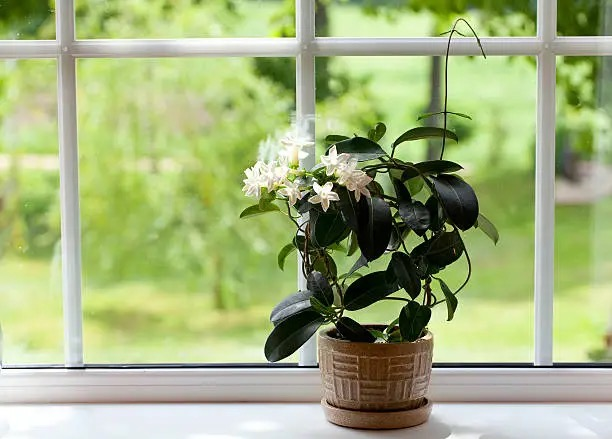
Want more blooms, stronger scent, and tidy plants? These are the winning plays:
- Sunlight: Give full sun to very bright light—aim for 6–8+ hours of direct sun. In extreme afternoon heat, brief shade is fine, but low light means fewer buds and weaker scent.
- Warmth: Happy between 15–24°C (59–75°F) and vigorous in real warmth (25–35°C / 77–95°F). Protect from cold; keep above 10°C (50°F). Near 0°C (32°F) can cause severe dieback.
- Watering: Keep evenly moist in growth—water thoroughly, then let the top 2–3 cm (about 1 in) dry before watering again. In hot weather, pots may need water every 2–3 days (small pots even daily). Reduce in winter.
- Feeding: Fertilize weekly or every 1–2 weeks spring to early fall. If bloom is shy, switch to a phosphorus/potassium-forward formula and avoid overdoing nitrogen.
- Pruning: Pinch tips often to build density. After a main flush, prune back firmly—new shoots carry the next wave of buds. Remove weak or crowded stems anytime.
- Humidity and airflow: Moderate to high humidity (50%+) reduces leaf drop and spider mites; keep air moving.
- Soil and pots: Use a rich but free-draining mix (loam-based with perlite/vermiculite; slight acidity to neutral). Step pots up slowly and ensure strong drainage holes.
- Training: Singles/semi-doubles shine on small trellises; doubles appreciate shaping to keep that compact, bouquet-like form.
Quick picks: who should plant what?
- I want nonstop flowers for windowsill fragrance and tea: ‘Maid of Orleans’
- I love elegant petals and a neat trellised look: ‘Belle of India’ or ‘Mysore Mulli’
- I crave mini-rose blooms and room-filling evening scent: ‘Grand Duke of Tuscany’
- I want a compact double without going huge: Look for ‘Arabian Nights’ or other small-rosette selections
Flower language, meaning, and why it sticks
Arabian jasmine has long symbolized love, purity, and gentle devotion—sentiments woven through weddings, leis, and evening garlands from South and Southeast Asia to Hawaii. The very name “jasmine” traces to Persian “yasmin,” often glossed as “gift from God,” a nod to the plant’s almost otherworldly perfume that swells at dusk. Gardeners add a modern layer of meaning: “sunshine toughness.” Give it real sun and a good haircut after each flush, and it answers with renewed abundance—quiet resilience in bloom.
Troubleshooting the face-off
- Not flowering well? Usually it’s light. Move to more direct sun, feed modestly (not too much nitrogen), prune after flushes, and keep moisture steady.
- Yellowing leaves or leggy growth? Often low light or uneven watering; bolster light, check drainage, and resume balanced feeding.
- Pests to watch: Spider mites (especially in dry indoor air), aphids, whiteflies, scale, thrips. Improve airflow, rinse foliage, and treat early with insecticidal soap or horticultural oil.
Final take
- Choose singles for continuous bloom and practical tea-scenting power.
- Choose doubles for sculptural rosettes and opulent, long-lasting fragrance.
- Whichever camp you join, the same playbook wins: strong sun, steady moisture, regular feeding, and a confident post-bloom prune. Do that, and your sambac—single or double—will make evenings feel like a fragrant holiday.