
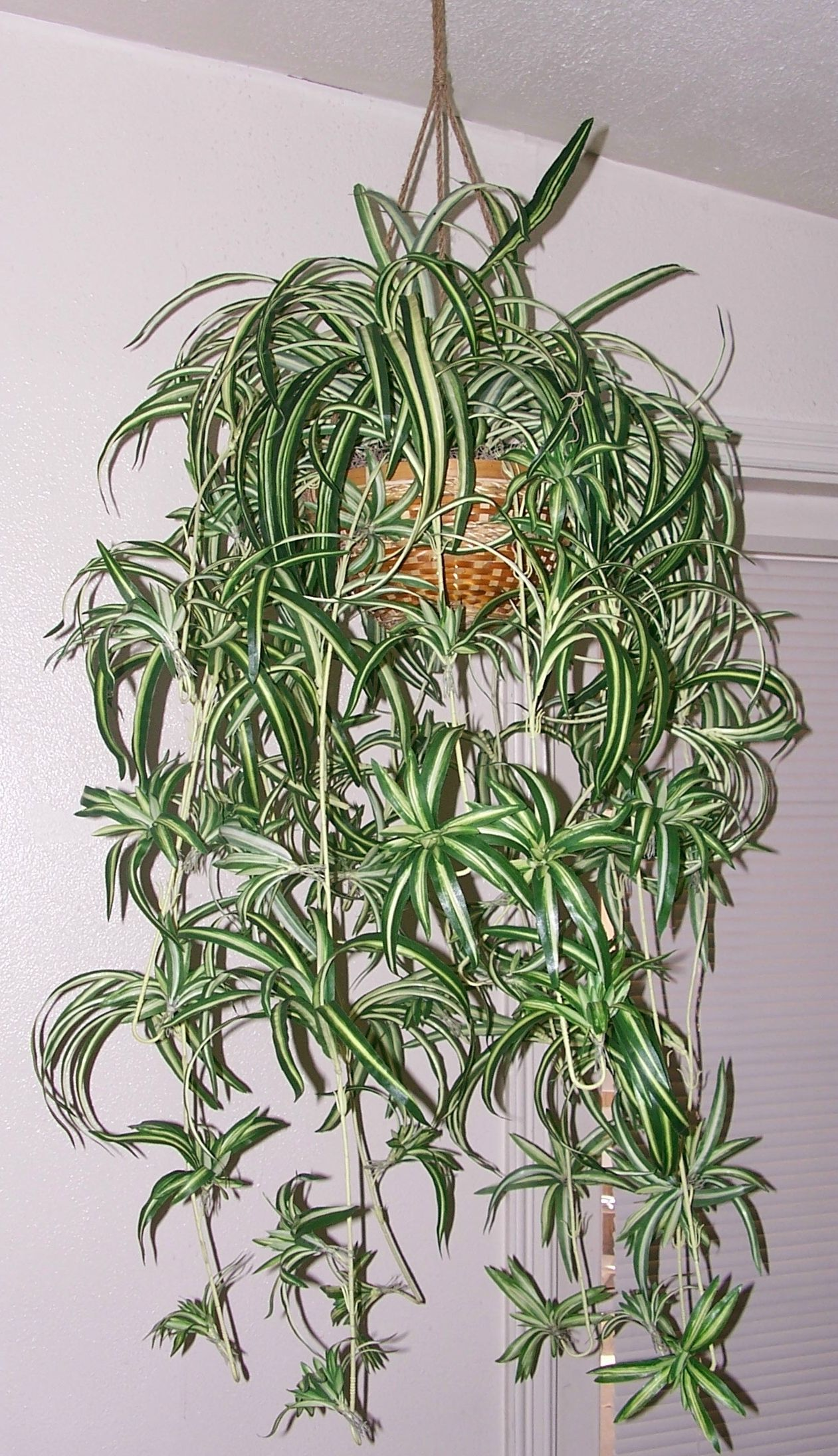
Meet Chlorophytum comosum: the feel-good classic that actually fits real life. You know it as the spider plant—a fountain of striped ribbons that tosses out baby “spiders” on long, arcing runners. It’s a forgiving, shareable houseplant that can make a room feel livelier fast, without asking you to become a full‑time plant caretaker.
Below is your clear-eyed guide: what lab studies do (and don’t) mean for your living room, how to style spider plants for a fresher-feeling home, and the practical care that keeps those leaves crisp and the plantlets coming.
Get to know the plant
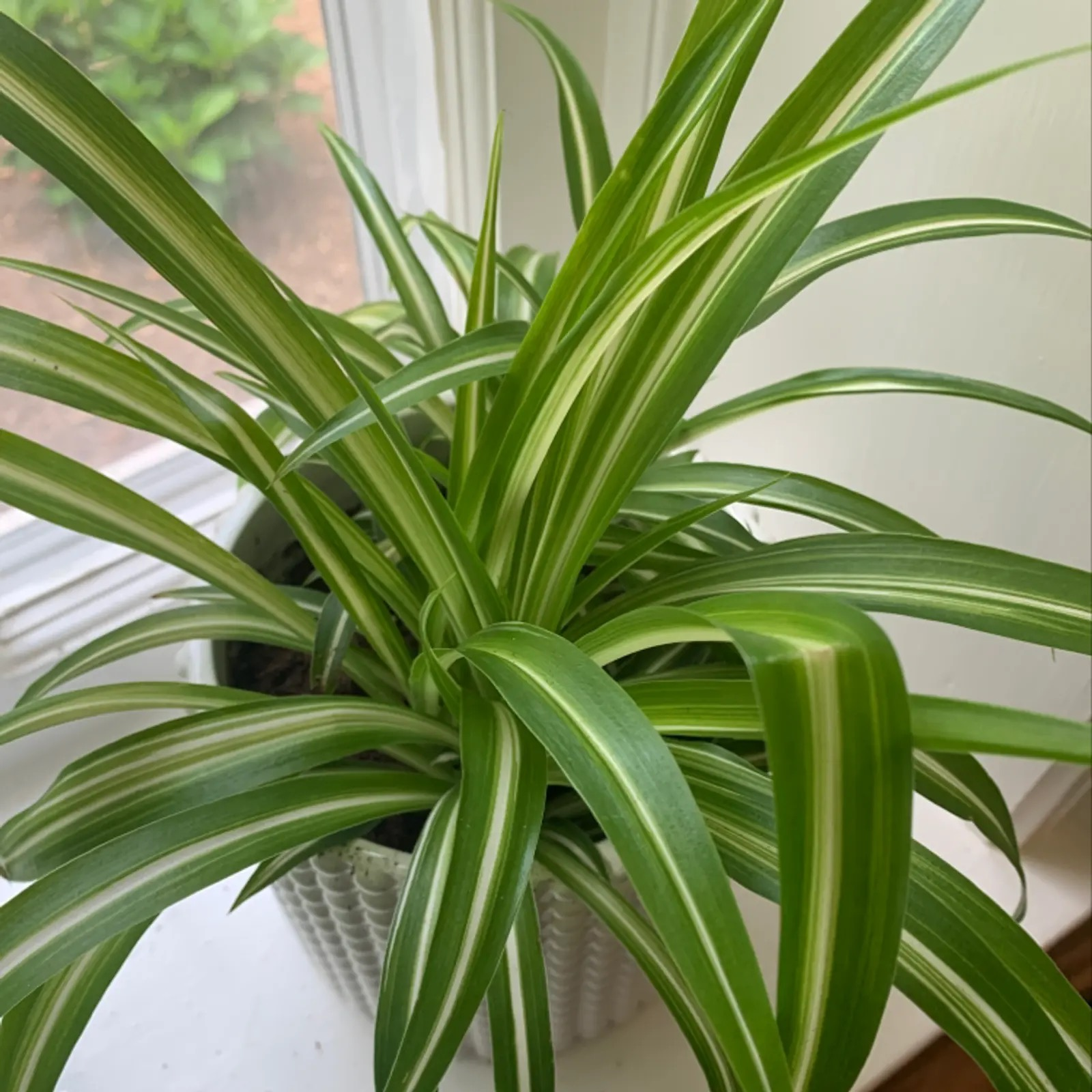
- Scientific name: Chlorophytum comosum (family Asparagaceae)
- Common names: Spider Plant, Airplane Plant, Ribbon Plant, Spider Ivy, St. Bernard’s Lily
- Origin: Native to southern Africa, especially coastal and inland South Africa; now a global houseplant staple
- Habit and size: Clump-forming rosette, typically 20–45 cm (8–18 in) tall, 30–60 cm (12–24 in) wide; runners can trail 30–90+ cm (12–35+ in)
- Leaves: Narrow, arching, slightly channeled; forms range from solid green to crisp variegation (white/cream or yellow striping)
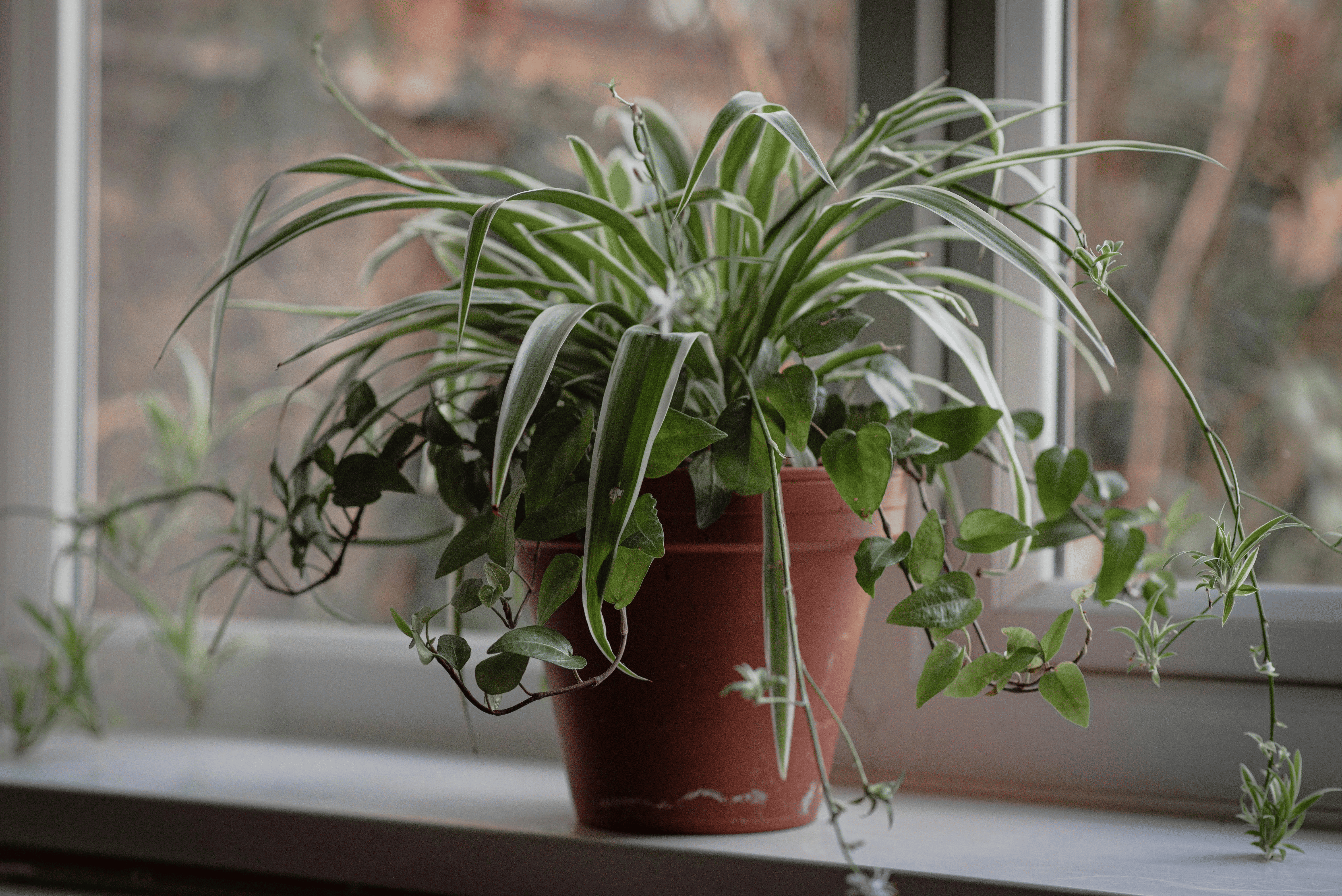
- Flowers and “spiders”: Tiny white stars along runners; baby plantlets root easily, making it one of the fastest plants to share
Popular cultivars you’ll see:
- ‘Vittatum’ (white center stripe)
- ‘Variegatum’ (white margins)
- ‘Reverse Variegatum’ (reversed striping)
- ‘Bonnie’ (curly, variegated leaves)
- ‘Hawaiian’ (juvenile variegation that may fade with maturity)
The “clean air” question: lab glory vs living-room reality
You’ve heard it: spider plants “purify” the air. The story traces back to sealed-chamber experiments that tested plants’ ability to remove certain volatile organic compounds (VOCs). In chambers, plants (and the microbes in their potting soil) did remove pollutants.
Here’s the context that matters at home:
- Real rooms breathe. Typical ventilation in homes and offices already clears VOCs far faster than a few potted plants can. To match normal air exchange, you’d need an impractical number—on the order of dozens to hundreds of plants per square meter of floor.
- Replication is mixed. Follow‑up work has shown that while plants can take up some VOCs, the whole‑room effect in real buildings is small and variable.
- What plants reliably do: photosynthesize (making spaces feel more alive), offer a moist leaf surface that gently buffers very dry air nearby, and unlock strong biophilic benefits—reduced stress, better mood, and a subtle “fresh” perception.
Bottom line for expectations:
- A spider plant won’t replace ventilation, filtration, or source control for indoor pollutants.
- It can absolutely make a room feel fresher, greener, and more welcoming—especially when you pair it with good airflow and light.
How to make your space feel fresher (for real)
Think of the spider plant as the star of a simple, layered design plan.
Light it right
- Best look: bright, indirect light. East windows or a bright north exposure are perfect; a few feet back from a south/west window works if you filter midday sun with a sheer.
- What you’ll notice: clearer striping, sturdier leaves, and more runners. In low light, it survives, but variegation softens and “babies” slow down.
Place with purpose
- Hang it high. In a basket or on a top shelf, the cascading runners create movement that draws the eye—and that visual “flow” is a big part of the freshness effect.
- Float the green. Let runners trail past a mirror or across a blank wall; the reflected greenery doubles the airy feel without adding clutter.
- Bright bathrooms welcome it. The humidity keeps leaf tips nicer, and the plant’s arching habit softens hard tile lines.
Style moves that amplify “fresh”
- Go white or pale pots to highlight striping; matte ceramics feel clean, woven hangers add softness.
- Group 3‑5 plants of varied textures (a fern’s frill, a rubber plant’s gloss, plus your spider plant’s stripes) near a window with gentle airflow. You’re designing a “green zone” that your brain reads as fresh, not trying to build a living air filter.
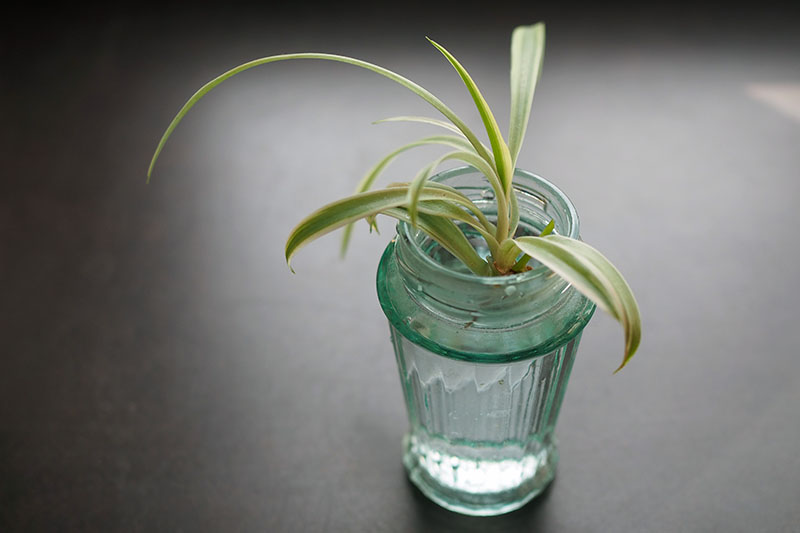
- Try water culture for a minimal look: root a plantlet in a clear glass vessel. Keep only roots submerged; crown above the waterline. Change water weekly in warm seasons and every two weeks in cool seasons; add dilute nutrients during active growth.
Air and humidity, the smart way
- Vent first. Crack windows when weather allows or run mechanical ventilation; use a HEPA purifier for particulates if needed.
- Source control. Choose low‑VOC paints and cleaners; store solvents tightly sealed. Plants work best as the finishing touch after you control sources and airflow.
- Gentle humidity boost. Spider plants tolerate average indoor humidity but look best around 50%+. In very dry rooms, a pebble tray or occasional midday mist on bright days reduces tip browning.
Care that keeps it thriving (and photogenic)
Light, temperature, humidity
- Light: bright, indirect; avoid harsh midday sun. Gentle winter sun is fine.
- Temperature sweet spot: 18–24°C (64–75°F); keep above ~7°C (45°F). Heat stress can show above ~30°C (86°F), especially with strong sun.
- Humidity: adaptable; moderate humidity keeps tips cleanest.
Watering
- Aim for “evenly moist, never soggy.” Water thoroughly when the top 2–3 cm (about 1 in) of mix dries, then drain fully.
- Rhythm: roughly twice weekly in warm, bright conditions; often weekly or less in winter—always adjust to your light and temperature.
- Brown-tip prevention: if your tap water is high in fluoride/chlorine, switch to filtered/rain/distilled. Flush the pot monthly with lukewarm water (~25°C/77°F) to wash out salts.
Soil and potting
- Mix: loose, fertile, and free‑draining—houseplant mix plus perlite and/or coarse sand.
- Pot size: slightly snug encourages runners. Repot every 2–3 years or when roots circle the pot or poke from drainage holes. Step up just 1–2 in (2.5–5 cm).
Feeding
- During active growth (spring to early autumn): balanced liquid fertilizer every 2–3 weeks, or lightly every 10–14 days at a dilute rate.
- Ease off in winter. Avoid heavy nitrogen on variegated types (it can dull the stripes).
Pruning and grooming
- Trim brown tips along the leaf’s natural point; remove yellow or damaged leaves at the base.
- Edit runners to suit your style: let them cascade for drama or trim for a tidy rosette.
- Rotate the pot regularly for even, symmetrical growth.
Propagation (almost too easy)
- Plantlets: detach babies with visible roots and pot into moist mix—or root in water for 1–2 weeks, then pot up. You can also pin a still‑attached plantlet into a neighboring pot until it roots, then snip the runner.
- Division: split a crowded clump in spring to rejuvenate.
- Seed: possible at 18–24°C (64–75°F), but variegated types usually won’t come true from seed.
Seasonal rhythm
- Spring: repot/divide; resume regular feeding; increase watering as days lengthen.
- Summer: main growth; bright, indirect light and midday shade; mist occasionally in very dry air.
- Autumn: scale back water and feed; bring plants indoors before cool nights (aim above 10°C/50°F when transitioning).
- Winter: brightest indirect light available; water sparingly (often weekly or less); keep above 7°C (45°F) and avoid cold drafts.
Troubleshooting: quick fixes that actually work
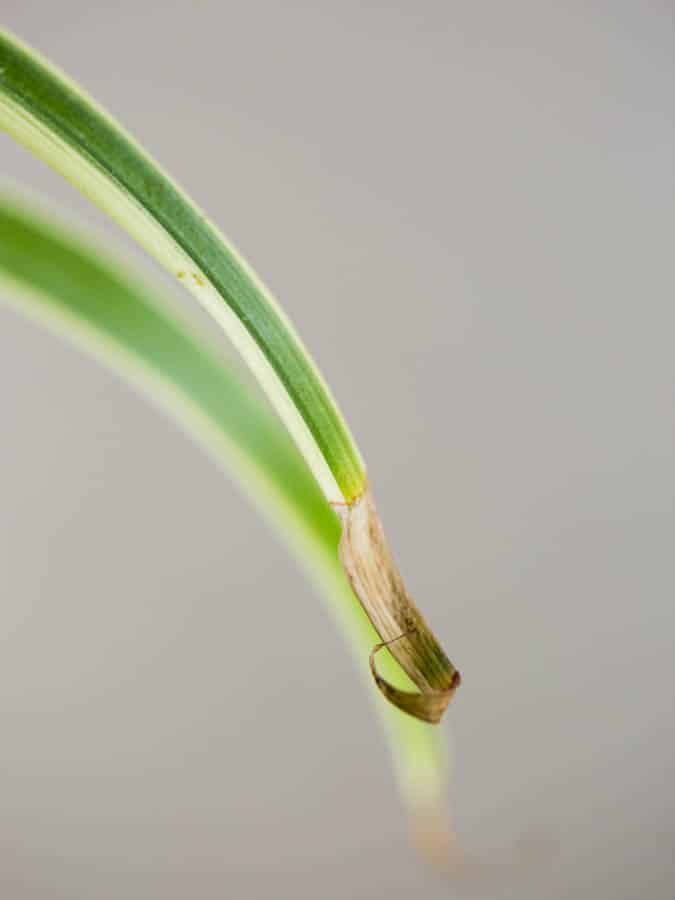
- Browning tips?
- Common causes: mineral/fluoride buildup, very dry air, irregular watering, or fertilizer salts.
- Fix: improve water quality, flush the mix monthly, water on cue (top ~1 in dry), nudge humidity up, then tidy the tips with shears.
- No babies yet?
- The plant usually needs brighter indirect light and a bit of maturity. Keep it slightly snug in its pot and avoid heavy nitrogen. Patience plus good light equals runners.
- Pests or funk?
- Spider mites, mealybugs, scale, and occasional aphids can appear—especially in dry or stagnant conditions. Rinse foliage, then use insecticidal soap or neem/horticultural oil.
- Root rot and gray mold thrive in soggy, poorly ventilated setups. Improve drainage, water less often, and increase airflow.
Safety and pets
- Generally non‑toxic to people and most pets. Cats may find the leaves irresistible; nibbling can cause mild stomach upset, and some reports note a mild catnip‑like effect if they overindulge. Hang baskets or place plants out of reach if you live with a determined feline.
Symbolism (and a reality check on “flower language”)
Spider plants are widely embraced as emblems of resilience and renewal—tough, generous, and always ready to share a baby plant with a friend. Traditional “flower language” (the Victorian floriography of cut blooms) doesn’t really include this foliage plant; its modern meaning comes from lived experience: a forgiving companion that bounces back and multiplies. In that sense, gifting a spider plant says “fresh starts,” “welcome,” and “I believe in your growth.”
Fast facts to remember
- Thrives in bright, indirect light; tolerates lower light with softer striping and fewer runners.
- Keep evenly moist, never waterlogged; flush monthly to reduce leaf-tip browning.
- Likes 18–24°C (64–75°F); protect from chill below ~7°C (45°F) and strong heat/sun combos.
- Slightly snug pots encourage more runners; rotate for symmetry.
- Water culture works long-term if roots only are submerged; refresh water regularly and feed lightly.
One last word on “fresh air”
If your goal is truly cleaner indoor air, start with ventilation, filtration, and low‑VOC choices. Then add plants—especially a vigorous, bright spider plant—to lift the mood, soften the space, and create that instant, living “ahh” your senses read as fresh. It’s the most realistic, delightful way to get the best of both worlds.