
Picture a green fountain that learned to travel. It springs from a rocky riverbank in South Africa, arches into a tufted spray of leaves, then sends out gleaming runners tipped with tiny, ready-made offspring. Those little explorers carried Chlorophytum comosum—the spider plant—from forested valleys near Swellendam to living rooms and offices around the world, where it cascaded from macramé hangers and became the cheerful emblem of the 1970s houseplant boom.
From South African understory to windowsill star
Follow the map north from the Western Cape to the Soutpansberg Mountains in Limpopo and you trace the spider plant’s home ground: coastal and inland habitats, river-valley shade, thickets, even cliffs. In this range of light-dappled environments, the plant’s strategy is simple and brilliant:
- Form a dense, evergreen rosette of narrow, arching “ribbon” leaves.
- Store water in thick, fleshy roots for resilience.
- Launch long, wiry runners that hold starry white flowers and then “babies” (plantlets) with tiny aerial roots—instant new plants wherever they touch down.
This life habit explains why the species took so naturally to pots and hanging baskets. Indoors, with bright, indirect light and a little patience, you soon get a lively mobile of plantlets swaying like charms on a bracelet.

A name with green roots: Chlorophytum comosum
Etymology tells its own story:
- Chlorophytum: from Greek, essentially “green plant”—a nod to the lush, leafy character.
- comosum: Latin for “tufted” or “hairy,” evoking the plant’s fountain-like rosette and its tousled, runner-studded silhouette.
Taxonomically, the spider plant sits in the Asparagaceae family. Early South African botanical work—much of it tied to the intrepid 18th‑century collector Carl Peter Thunberg—brought the species to scientific attention. Originally described as Anthericum comosum (Thunb.), it was later placed in Chlorophytum (becoming Chlorophytum comosum), a renaming that stuck as the plant’s fame grew.
You might also meet it under a chorus of common names: spider plant, airplane plant, ribbon plant, spider ivy, and St. Bernard’s lily—each hinting at its arching leaves and dangling “spiders.”
The plant hunter’s passage and a century-spanning rise
By the late 1700s, South African treasures like the spider plant were streaming into European collections. Conservatories took to it quickly: a tough, handsome novelty that tolerated a range of indoor conditions. But the global craze came later.
- Mid‑20th century: As modern homes sealed tighter and windows got bigger, the spider plant’s air‑freshening reputation and forgiving nature made it a go‑to interior green.
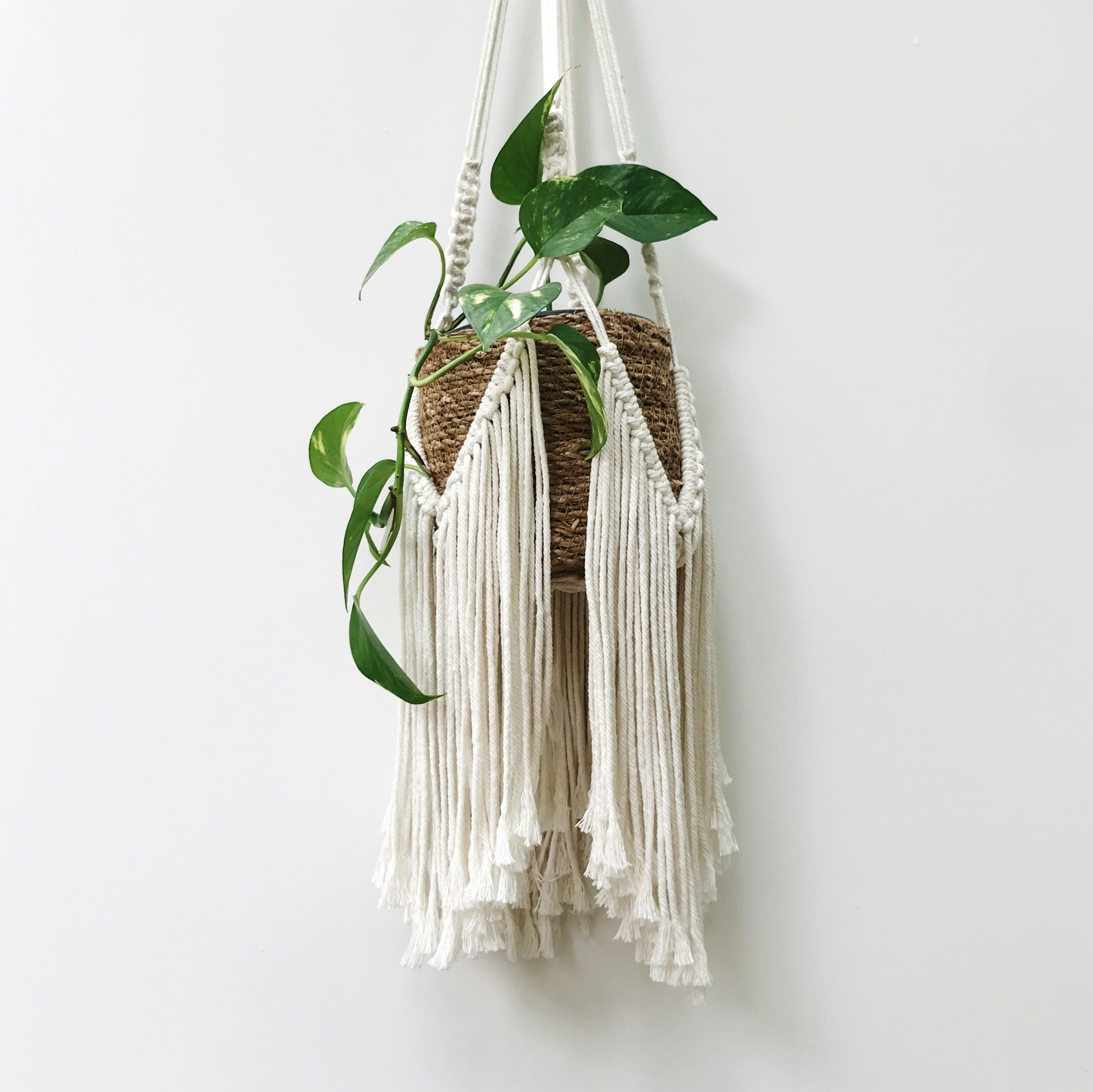
- The 1970s boom: Macramé hangers, sunrooms, and avocado‑green everything—perfect conditions for a plant designed to dangle and multiply. Its runners swept like beaded curtains, and the babies turned it into the ultimate pass‑along gift. A friend cut one “spider,” you rooted it in a jar on the kitchen counter, and by spring your living room had its own mini‑jungle.
That generous, shareable habit is a big part of why the species still reads as retro‑cool and forever fresh.
What it looks like up close
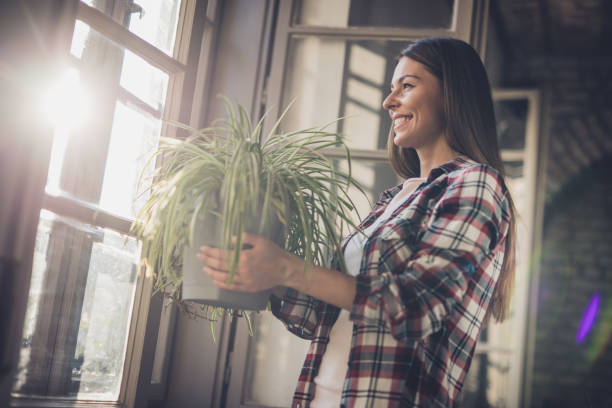
- Habit and size: A clump-forming evergreen perennial, typically 20–45 cm (8–18 in) tall and 30–60 cm (12–24 in) across. Runners often trail 30–90 cm (12–35 in) or more.
- Leaves: Narrow, strap-like, and slightly channeled rather than flat, often crisply variegated (green with white or yellow striping) or solid green.
- Flowers and “spiders”: Small, star-shaped white flowers appear along the runners, often followed by plantlets with ready-to-root aerial nubs. Indoors, flowering peaks in spring–summer but can pop up whenever conditions are warm and bright.
Popular cultivars have their own flair:
- ‘Vittatum’ (white center stripe)
- ‘Variegatum’ (white edges)
- ‘Reverse Variegatum’ (reverse striping)
- ‘Bonnie’ (curly leaves)
- ‘Hawaiian’ (variegation that may mellow with maturity)
Why it wins indoors—then and now
- Beginner-friendly: Thick, water-storing roots offer a safety net against missed waterings.
- Adaptable light tolerance: It thrives in bright, indirect light but keeps its cool in lower light.
- Fast propagation: The plantlets are irresistible—clip, root, share, repeat.
- Air-freshening reputation: Long praised for making rooms feel fresher, it became a staple in homes and offices alike.
Care that keeps the fountain flowing
Light
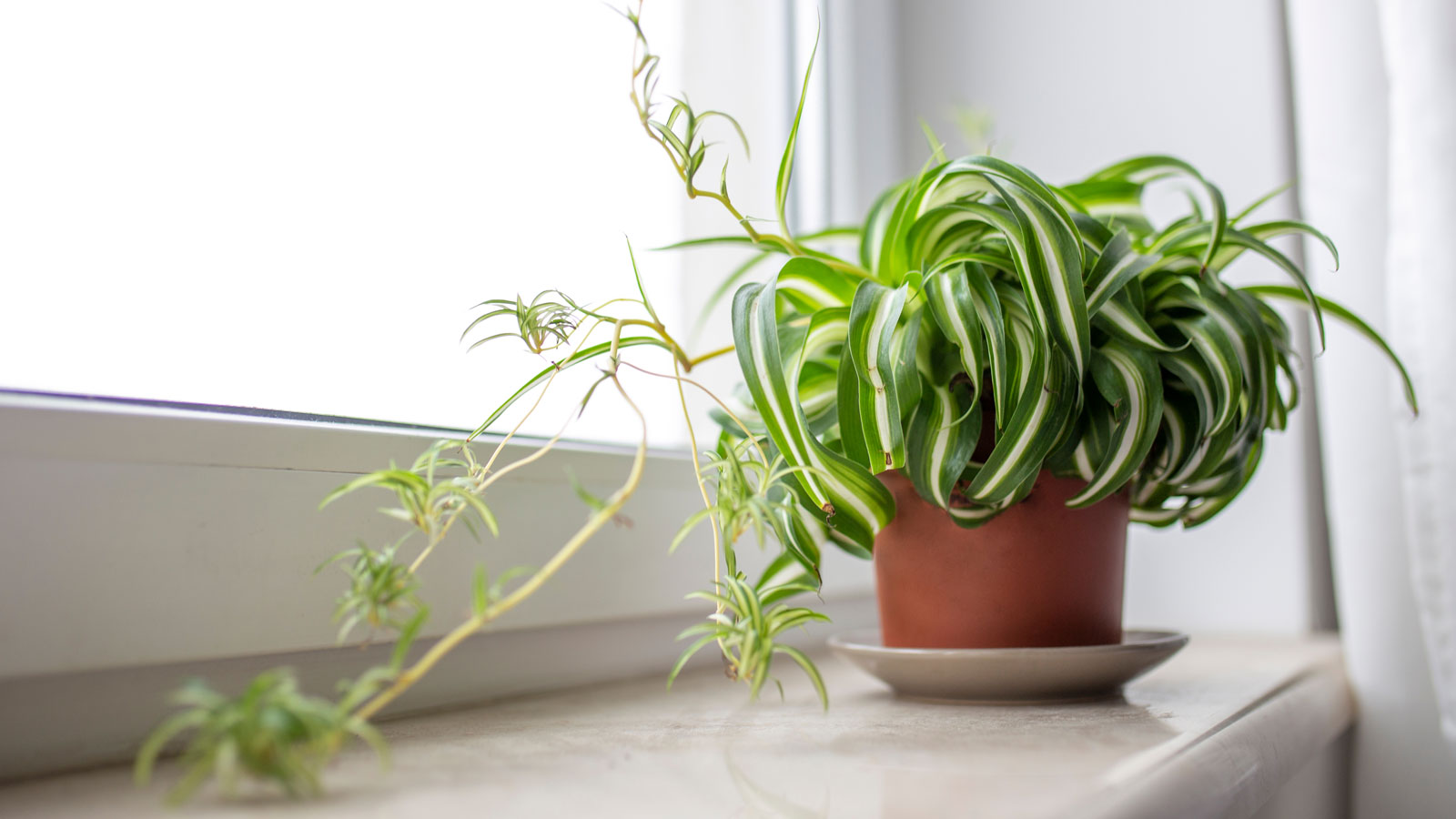
- Best: Bright, indirect light for bold striping and lots of runners.
- Tolerant: Partial shade and lower light (expect fewer babies and softer variegation).
- Avoid: Harsh midday sun that can scorch leaves.
Water
- Aim for evenly moist, never soggy. Water when the top 2–3 cm (about 1 in) of mix dries.
- Always drain excess; don’t let it sit in a saucer.
- Monthly flush with lukewarm water helps clear mineral salts; consider filtered or rainwater if your tap is high in fluoride/chlorine.
Temperature and humidity
- Comfort zone: 18–24°C (64–75°F). Keep above ~7°C (45°F).
- Shield from heat spikes above ~30°C (86°F), especially with strong sun.
- Average indoor humidity is fine; ~50% keeps leaf tips looking their best.
Soil and feeding
- Potting mix: Loose, fertile, and free-draining (all‑purpose houseplant mix + perlite/coarse sand).
- Fertilize spring to early autumn with a balanced liquid feed every 2–3 weeks (lighter, more frequent is fine). Go easy on nitrogen to keep variegation crisp.
Pruning, grooming, and repotting
- Trim brown tips following the leaf’s natural taper; remove yellowed leaves at the base.
- Leave runners for drama or clip for a tidy look.
- Repot every 2–3 years into a pot just one size up; slightly snug roots often trigger more runners.
Propagation (ridiculously easy)
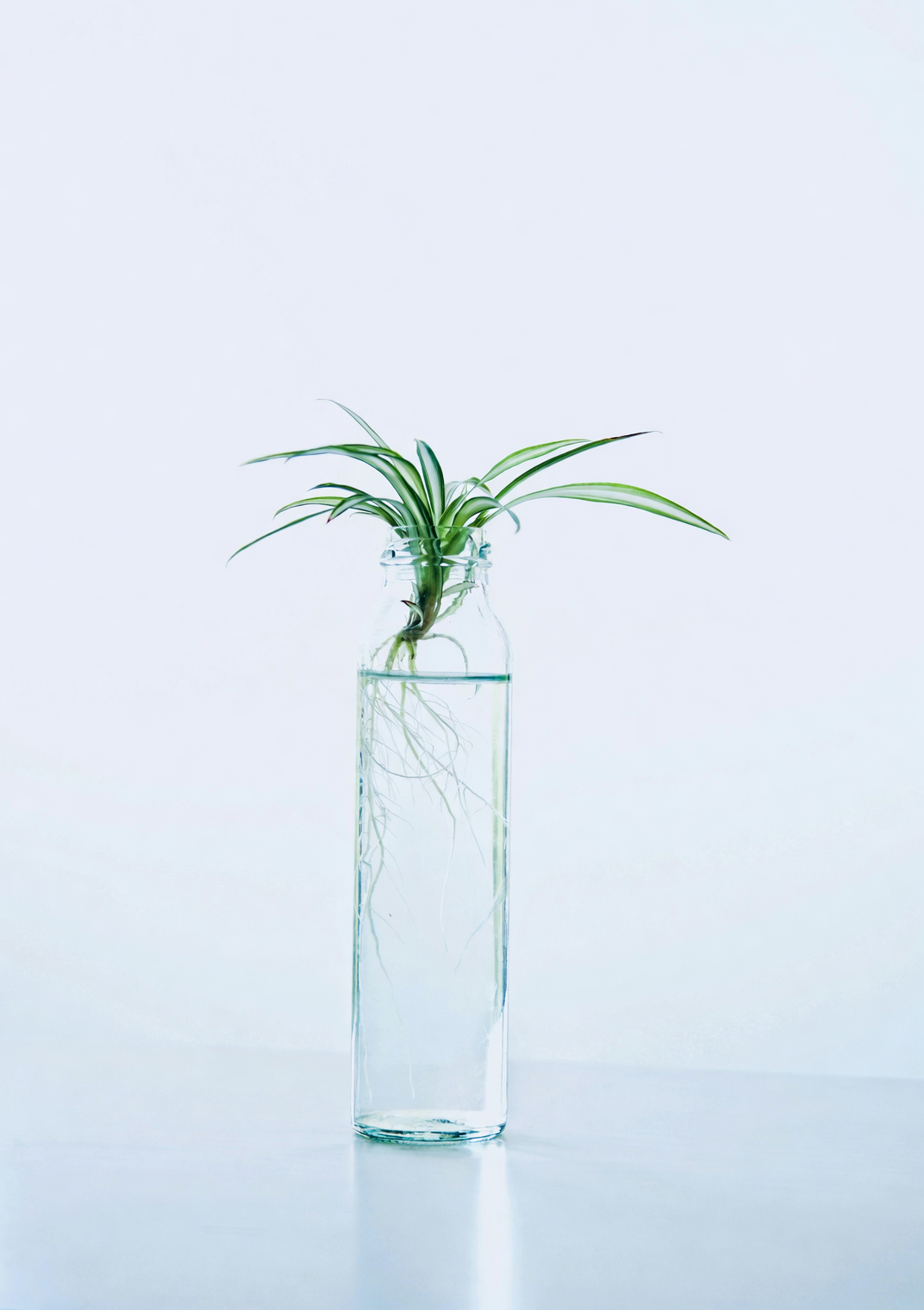
- Plantlets: Detach babies with visible roots and pot directly, or root in water for 1–2 weeks first.
- On-the-run method: Pin a still-attached baby onto a nearby pot; snip the runner once it roots.
- Division: Split crowded clumps in spring to refresh older plants.
- Water culture: Yes, it can live in water long-term—keep the crown above the waterline, refresh water regularly, and feed lightly.
Placement ideas
- East or bright north windows; a few feet back from south/west sun; behind sheers is perfect.
- Hanging baskets, high shelves, bright offices, and bathrooms (good light, good mood).
Troubleshooting the classic “brown tips”
- Usual causes: Dry air, irregular watering, and mineral/fluoride or fertilizer salt buildup.
- Fixes: Switch to filtered/rainwater if needed, flush soil monthly, water on a steady rhythm, and nudge humidity up a bit.
- Bonus tip: Rotate the pot for even, symmetrical growth.
Pests and health
- Generally unbothered, but watch for spider mites (especially in dry air), mealybugs, scale, and occasional aphids.
- Rinse leaves, then treat with insecticidal soap or neem/horticultural oil if needed.
- Good drainage prevents root rot; avoid stagnant, cool, wet conditions that invite fungal issues.
Safe for homes with curious companions
Spider plant is generally considered non-toxic to humans and most pets. Cats, however, often see those dangling leaves as toys; nibbling can cause mild stomach upset, and some owners report a mild catnip‑like fascination. Hang it high if your feline is a dedicated grazer.
The “flower language” of a pass‑along plant
Spider plant doesn’t carry a famous, old‑world floriographic meaning, but modern houseplant culture has given it one by observation:
- Resilience and renewal: It bounces back from neglect and keeps sending out fresh growth.
- Generosity and community: Those plantlets are little gifts—literal offshoots to share with friends.
- Welcome and freshness: Its airy cascade brings a bright, lived‑in sense of home.
In other words, its “meaning” grew not from a Victorian codebook but from everyday experience on windowsills and office shelves.
Quick reference: the essentials at a glance
- Family and genus: Asparagaceae; Chlorophytum
- Origin: Southern Africa—especially South Africa from the Western Cape up to Limpopo (Swellendam to the Soutpansberg)
- Size: 20–45 cm tall; 30–60 cm spread; runners 30–90+ cm
- Best light: Bright, indirect
- Temperatures: 18–24°C ideal; keep above ~7°C
- Signature move: Long runners studded with baby plantlets
From veld to vintage and beyond
The arc is irresistible: a tufted understory survivor learns to travel by runners, rides a wave of curiosity into 18th‑century Europe, then swings glamorously through the 1970s in macramé slings—before settling into its current role as the world’s friendliest houseplant. Keep it bright, keep it lightly watered, and it will keep doing what it has always done best: grow, share, and make your space feel alive.