

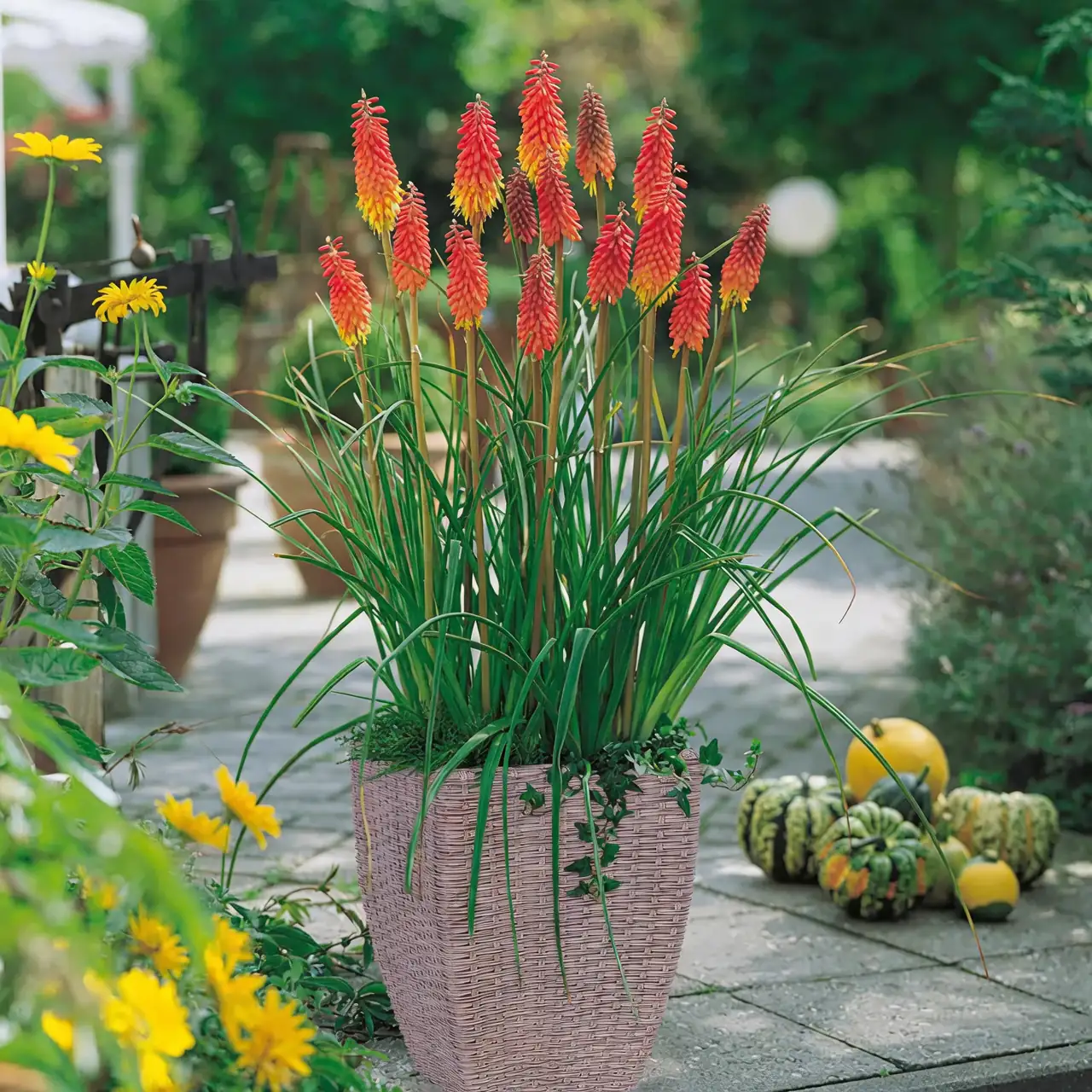
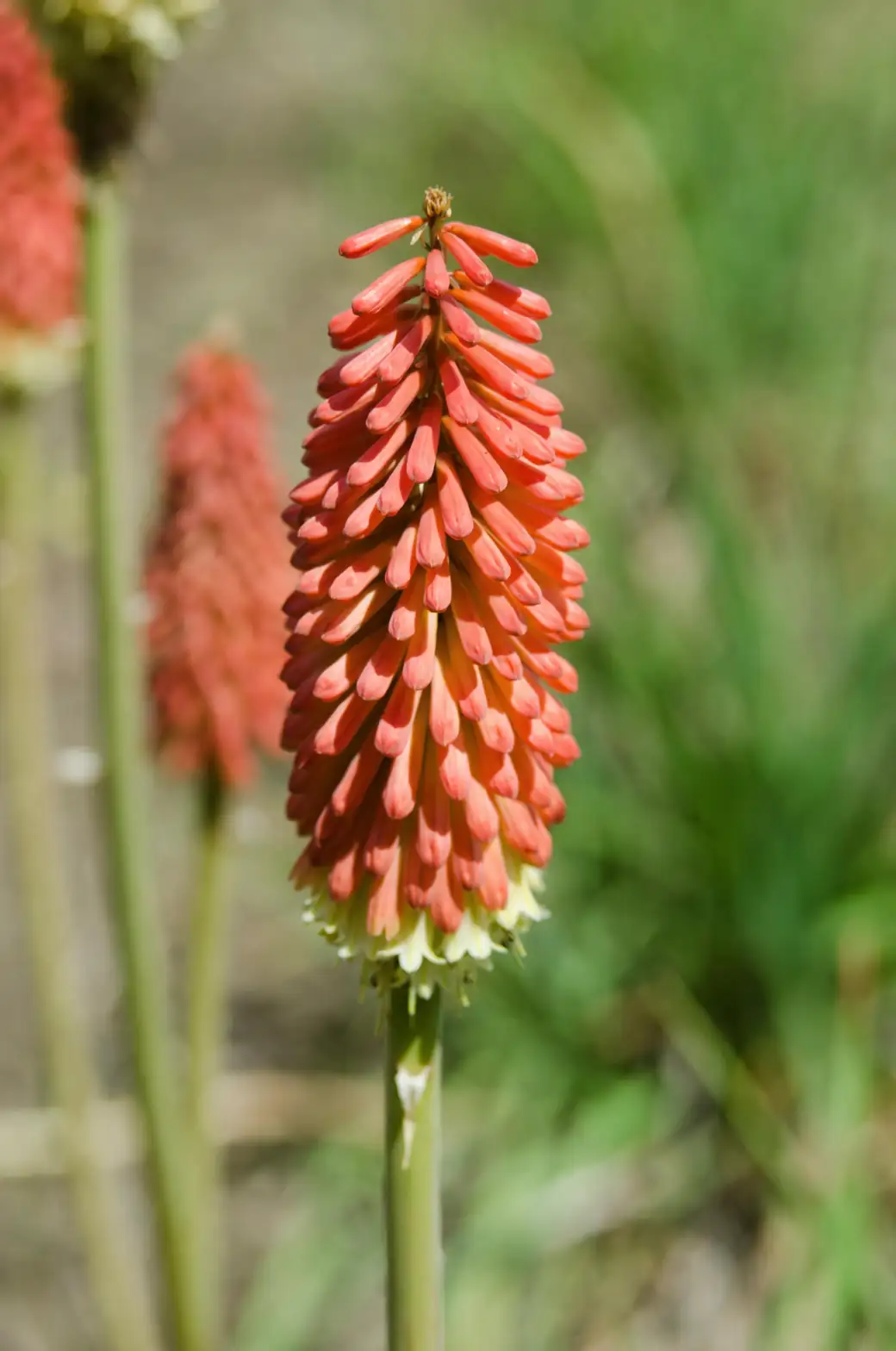
If your patio needs a little campfire magic, plant a Red Hot Poker in a pot. Kniphofia uvaria brings vertical sparks of red, orange, and gold all summer, and it’s surprisingly container-friendly when you give it sun, sharp drainage, and a crown that stays dry. Here’s how to nail the pot size, mix, watering cadence, division timing, and the all-important freeze–thaw protection.
Meet the plant (container edition)
- Botanical: Kniphofia uvaria (Red Hot Poker, Torch Lily, Tritoma)
- Habit: Upright, clump-forming perennial with rhizomatous roots; slowly enlarges
- Size: Commonly 2–6 ft tall, 1–3 ft wide (dwarf types 18–24 in tall)
- Sun: Full sun (6–8 hours). In very hot regions, a touch of afternoon shade helps.
- Hardiness: USDA Zones 5–9; keep crowns drier in winter for best survival
- Container note: Dwarf varieties are easiest to keep in pots; larger forms can be potted, but expect to divide more often or transplant to the ground after a season or two
Choose the right container
Pot size and shape
- Minimum: Start with at least 9 in (22 cm) wide for a young plant or division.
- Better for staying power: 12–16 in (30–40 cm) wide and 12+ in deep to buffer moisture and roots from heat/cold.
- Dwarf selections: A 12-in pot can host a dwarf clump for several years with regular division.
- Full-size selections: Use 14–18 in wide if you want a season or two in a pot before dividing or transplanting.
Tall, straight-sided or slightly flared pots help roots run without circling too quickly and shed water well.
Material and winter durability
- Frost-resistant ceramic, high-quality plastic, or fiberglass are safer in freeze–thaw than thin terracotta (which can crack).
- Light-colored pots reflect heat in scorching climates; dark pots warm faster in spring.
- Ensure generous drainage holes and use pot feet or bricks to lift the container so water clears fast.
The “drainage layer” myth (don’t do it)
- Skip gravel or shards at the bottom—they raise the perched water table and keep roots wetter, not drier.
- Instead, line holes with a small piece of mesh to keep mix in place, and rely on a fast-draining medium.
Build the perfect potting mix
Red Hot Poker loves moisture that moves. Think airy, gritty, and moderately fertile.
- Base: High-quality, peat-free potting mix (or a standard soilless container mix).
- Aeration/mineral grit: 25–40% total of pumice, perlite, and/or coarse horticultural sand for sharp drainage.
- Organic matter: 10–20% finished compost for nutrients—keep it modest to avoid sogginess.
- pH target: 6.0–7.5.
- Optional charge: Mix in a light, balanced, slow-release fertilizer at planting if growth has been weak; avoid heavy nitrogen.
Pro tip: Top-dress the finished surface with 0.5–1 in of fine gravel. It sheds water from the crown and keeps foliage clean.
Planting step-by-step (crown safety first)
- Hydrate the plant: Water the nursery pot a few hours before planting so roots are flexible.
- Prep the container: Add your mix, tapping to settle without compacting.
- Set the crown high: Position the plant so the crown (where leaves meet roots) sits level with the soil surface or slightly above it. Never bury it deeper than about 3 in (7.5 cm).
- Fill and firm: Backfill, firm gently, and leave a slight saucer-free surface so water runs off the crown.
- Water through: Soak once until it drains from the bottom, then let excess escape fully—no saucers holding water.
Watering cadence in containers
Kniphofia tolerates short dry spells once established, but container soil dries faster than ground soil. Aim for “evenly moist, never sodden” in the growing season.
- Establishment (first 6–8 weeks): Water when the top 1–2 in of mix are dry—often 2–3 times weekly in warm weather. Water deeply until it runs out the bottom.
- Active growth/flowering: Roughly target the equivalent of 1 inch of water per week, adjusting for heat and rainfall. In heat waves, expect every 1–2 days for smaller pots.
- Shoulder seasons: Reduce frequency; still avoid letting the crown stay wet and cold.
- Winter (dormant or semi-dormant): Keep just barely moist—water sparingly and only on mild days if soil is dry at root depth.
Useful cues:
- Weight test: Lift the pot; water when it feels light for its size.
- Finger test: Dry top couple inches? Time to water.
- Always empty saucers; morning watering helps foliage dry quickly.
Feeding and grooming
- Feeding: Work in compost before planting. If vigor is low, use a balanced slow-release fertilizer in spring. Heavy nitrogen means leaves at the expense of flowers—go easy.
- Deadheading: Remove spent spikes at the base to tidy and encourage repeat bloom on varieties that rebloom.
- Leaf care: Strip ratty leaves as needed. In colder zones, leave foliage over winter to help shield the crown; cut back in early spring.
Dividing and repotting in pots
Container clumps gradually crowd themselves, reducing flowering. Plan on every 2–3 years.
When to divide:
- Early spring as growth begins, or fall after flowering in mild regions.
Signs it’s time:
- Fewer flowers, smaller spikes, or roots circling the pot.
How to divide:
- Unpot the clump and shake/tease away old mix.
- Slice between natural offsets so each division has a solid crown and good roots.
- Trim any blackened or mushy tissue (discard diseased parts).
- Replant divisions into fresh, gritty mix with the crowns set high (level with or slightly above the soil surface).
- Water in lightly and keep evenly moist until re-established.
Freeze–thaw protection for crowns in containers
Winter survival in pots hinges on two words: cold and wet. Cold is manageable; wet crowns are the real danger—especially during freeze–thaw cycles that wick water into the crown and rot it.
Zones 7–9
- Leave outdoors in full sun with excellent drainage.
- Tie foliage loosely into a fountain to shed rain and snow away from the crown.
- Mulch around (not over) the crown with dry materials like straw or pine needles to insulate the root zone.
- Raise pots on feet and shelter from relentless winter rain under wide eaves or a cold frame.
Zones 5–6 (and anywhere with yo-yo winters)
Choose one or combine:
- Rain-shelter plus insulation: Move pots to a south-facing wall under an overhang; wrap the pot (not the crown) with burlap or bubble wrap for insulation; keep the mix barely moist.
- Cold, bright indoor rest: Overwinter in an unheated garage, porch, or shed with bright light (ideally 35–50°F / 1–10°C). Water sparingly—just enough to prevent bone-dry roots.
- Heeling-in: Sink the whole pot into a well-drained garden bed or mulch pile for winter, crown above grade and kept dry with a tied foliage “roof.”
Key rules:
- Keep the crown high and dry; never pack wet mulch over it.
- Avoid sealed plastic wraps that trap condensation at the crown.
- Water only on thawed days if needed; check monthly so roots don’t desiccate.
- Resume normal watering when spring growth restarts; untie and cut back old leaves then.
Common container pitfalls (and quick fixes)
- Crown planted too deep → Replant with crown at or slightly above the surface; top with gravel.
- Mix too moisture-retentive → Reblend with 25–40% pumice/perlite/coarse sand.
- Over-potting a tiny plant → Start around 9–12 in wide; size up as roots fill to prevent soggy voids.
- Under-potting a vigorous clump → Shift to 14–16 in wide or divide.
- Chronic wet feet → Add pot feet, move out of rainy exposure, and ensure no saucers hold water.
- Sparse blooms → Increase sun to 6–8 hours, divide crowded clumps, and avoid high-nitrogen feeding.
Sun, companions, and style
- Sun: Full sun is non-negotiable for strong flowering. In extreme heat, a whisper of afternoon shade reduces stress.
- Companions for mixed pots: Choose plants that like sharp drainage and moderate moisture—think blue fescue (Festuca glauca), low sedums, lavender, gaura, santolina, or airy ornamental grasses. Skip thirsty, shade-loving neighbors.
- Finishing touch: A thin gravel mulch both looks crisp and protects the crown.
Quick seasonal calendar for potted Red Hot Poker
- Spring: Cut back old foliage; top-dress with compost; divide/repot if crowded; start slow-release feed if needed.
- Summer: Water deeply when the top 1–2 in dry; deadhead to extend bloom.
- Fall: In mild regions, divide after flowering; begin reducing water as temps fall.
- Winter: Tie foliage; mulch around the root zone with dry materials; keep crown drier; use shelter/indoor cold storage in colder zones.
Pests, diseases, and safety
- Generally easy-going in sun with drainage. Watch for thrips and aphids on soft growth; slugs/snails on leaves.
- Most problems trace back to soggy crowns—sharp drainage and smart watering are your best defenses.
- Safety: Generally considered non-toxic to people and pets. As with any ornamental, nibbling can upset sensitive stomachs.
Symbolism and “flower language”
Those torchy blooms practically announce themselves—so it’s no surprise Red Hot Poker is often linked with passion, strength, and confidence. In some folklore, its fiery colors were thought to ward off negativity. Treat these meanings as poetic, not prescriptive; they reflect how gardeners have long read emotion and story into plants that command attention.
—
Give Red Hot Poker the container trifecta—sun, grit, and a dry crown—and it will repay you with months of hummingbird-magnet blooms. Even in a pot, this is a perennial that stands tall, braves heat, and brings the glow.


