

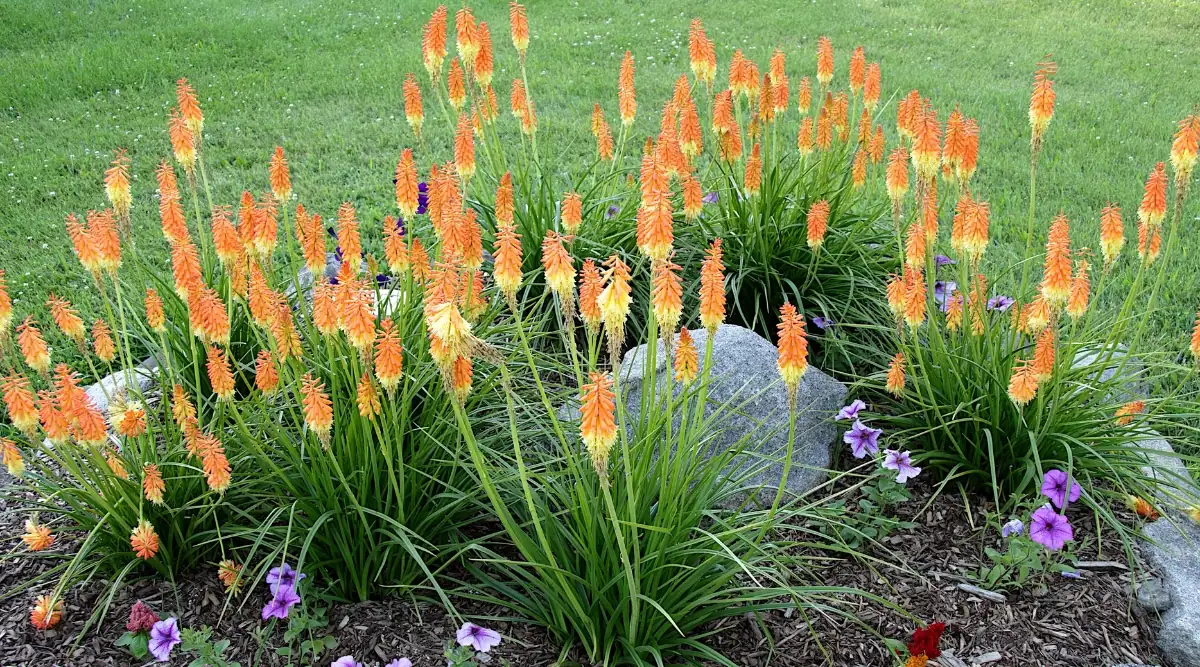
Imagine lighting up your garden with a series of glowing torches that guide hummingbirds, butterflies, and bees from spring to frost. That’s the magic of Red Hot Poker (Kniphofia uvaria): blazing, nectar‑rich spires that read like runway lights to winged visitors. Pair those torches with a smart sequence of tubular‑flower allies, a trickle of water, and a little cover, and you’ll turn any sunny patch into a pollinator airport—arrivals and departures all day long.
Meet the runway lights: Red Hot Poker at a glance
- Botanical name: Kniphofia uvaria (aka Red Hot Poker, Torch Lily, Poker Plant; family Asphodelaceae)
- Origin: Eastern and southern Africa, especially South Africa
- Habit and size: Upright, clump‑forming perennial with robust rhizomes; typically 2–6 ft tall, 1–3 ft wide (dwarf selections 18–24 in)
- Foliage: Narrow, sword‑like green leaves in dense, grass‑like fountains; evergreen to semi‑evergreen in mild climates
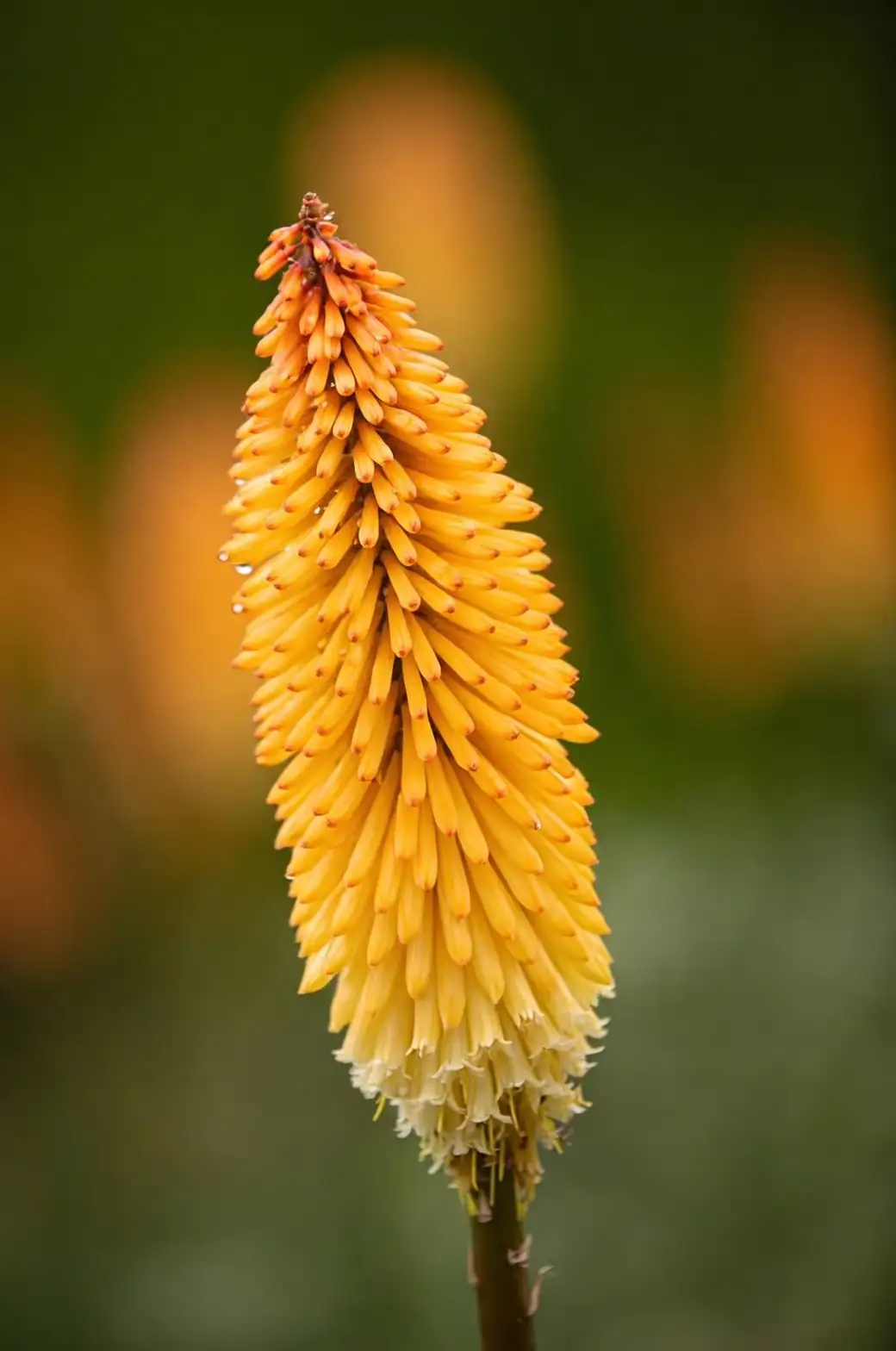
- Flowers: Tall spikes packed with 100–300+ tubular blooms that open from bottom to top, often shifting from red/orange to yellow/cream—instant ombré
- Bloom season: Early summer through fall (commonly June–October; variety and climate dependent). Some rebloom with deadheading.
- Best for: Full sun, excellent drainage; USDA Zones 5–9 (winter protection improves survival in colder zones)
Why pollinators line up:
- Tubular flowers fit hummingbird bills and long‑tongued bees perfectly.
- Sequential opening means fresh nectar for weeks.
- Bold color cues (red, orange, apricot, yellow) act like aerial flares.
Build a pollinator runway: staggered bloom allies
Think in layers and months. Aim for at least three nectar sources in bloom at any time. Choose compact or tall forms to fit your space, but keep sun and drainage in mind (full sun is ideal for Kniphofia).
Early runway lights (spring to early summer)
- Native honeysuckle (Lonicera sempervirens): Coral-red tubes; a stellar early signal for hummingbirds.
- Columbine (Aquilegia spp.): Nodding spurs packed with nectar; good near light shade edges.
- Salvia (S. nemorosa, hardy hybrids): Purple‑blue spires get bees buzzing early.
Mid‑season main stage (summer)
- Red Hot Poker (Kniphofia uvaria): The star—fiery spikes June onward.
- Beardtongue (Penstemon barbatus): Lipstick‑red tubes; terrific beelines for hummers.
- Hummingbird mint (Agastache spp.): Spicy‑scented spikes in hot hues; long bloom.
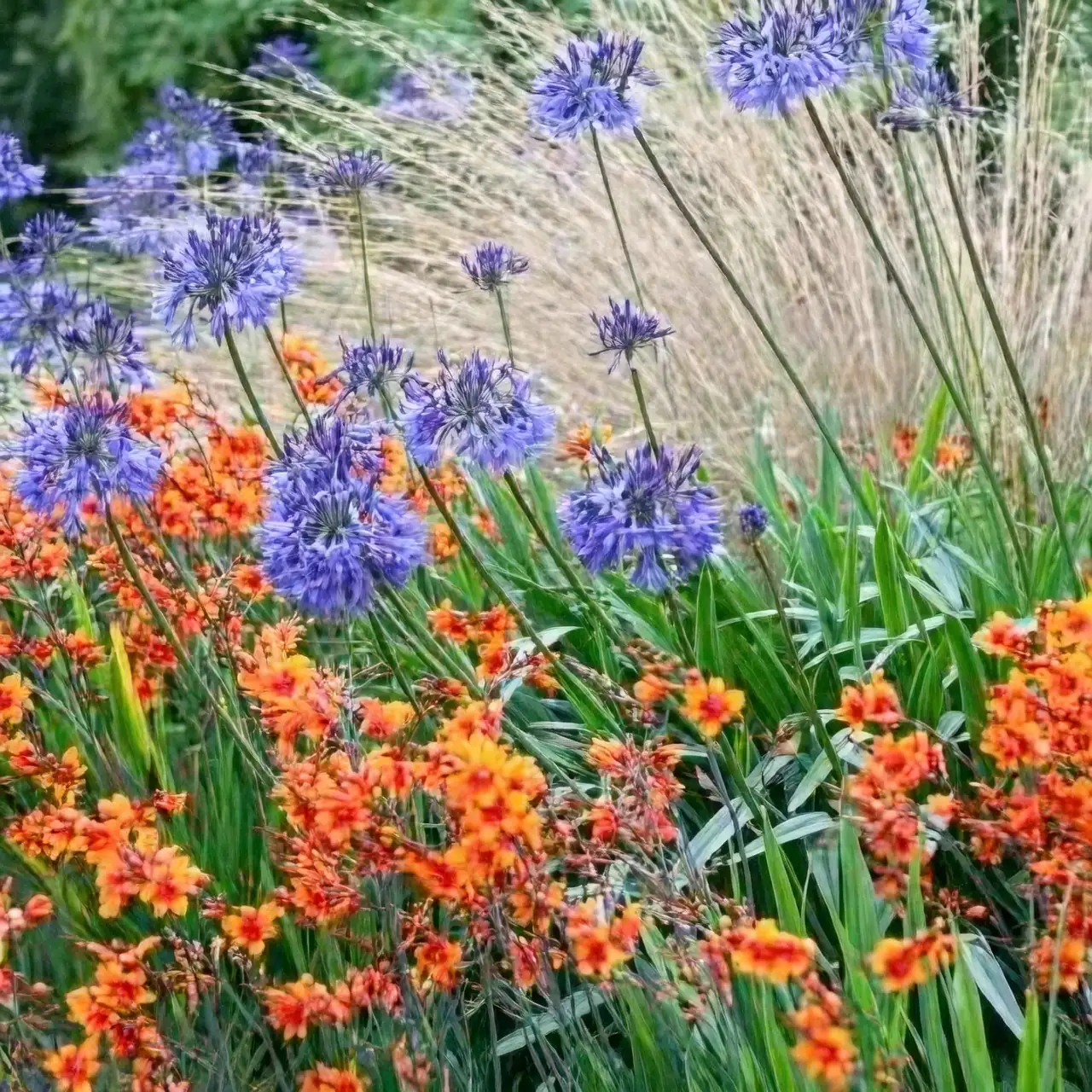
- Montbretia (Crocosmia): Arching sprays of orange/red trumpets—classic hummer lure.
- Bee balm (Monarda didyma): Tubular fireworks; a butterfly crowd‑pleaser too.
Late‑season keep‑’em‑coming (late summer to fall)
- Cuphea (C. ignea, C. ‘Vermillionaire’): Tiny cigar‑shaped flowers nonstop (annual in many zones).
- Fuchsia (trailing forms; annual in many zones): Dainty tubes, perfect for porch planters.
- Calibrachoa (Million Bells): Trumpet blooms in embery tones for containers.
- Native goldenrod (Solidago): Not tubular, but late nectar that bolsters beneficial insects (hummers also eat insects for protein).
Tip: Diversity matters. Mix colors and flower forms, but keep a strong showing of bright tubulars in red, orange, and magenta to cue hummingbirds quickly.
Three simple planting plans (with counts and spacing)
1) The 6×8 “Runway Bed” (full sun, well‑drained)
Front to back layering for continuous bloom and easy viewing from a patio.
- Centerline beacons
- 3 Red Hot Poker (Kniphofia uvaria), spaced 24–30 in; staggered triangle down the bed
- Supporting tubes
- 5 Penstemon barbatus, spaced 18 in, flanking the kniphofia
- 5 Agastache (compact forms), spaced 18 in, alternating with penstemon
- Seasonal sizzle
- 7 Crocosmia corms in two drifts along the front edge
- Ground and gap fillers (annuals)
- 7 Calibrachoa in matching ember tones tucked near edges (containers or pockets)
Mulch lightly with gravel or coarse bark to keep crowns dry.
2) The 12‑ft “Beacon Border” (narrow strip, repeated rhythm)
Repeat a 4‑ft module three times for a tidy, high‑impact edge.
- Module (repeat x3):
- 1 Kniphofia uvaria (center of module), 24–30 in from path
- 2 Salvia (front), 15 in apart
- 2 Agastache (mid/front), 18 in apart
- 2 Penstemon (mid/back), 18 in apart
Interplant with 5–7 Crocosmia corms per module for summer zing.
3) Patio “Tower & Trailers” Container Trio (sunny, great drainage)
Use dwarf or compact kniphofia varieties.
- Pot A (at least 14–16 in wide, gritty mix): 1 dwarf Kniphofia + 3 Calibrachoa trailing at rim
- Pot B: 1 upright Penstemon (compact) + 3 trailing nasturtiums (bonus hummer visits)
- Pot C (bright shade to morning sun): 1 Fuchsia (upright or trailing) + moss top‑dress to retain moisture
Note: For all containers, ensure drainage holes and avoid waterlogged crowns. Divide/refresh every 2–3 years.

Add water and cover: the airport amenities
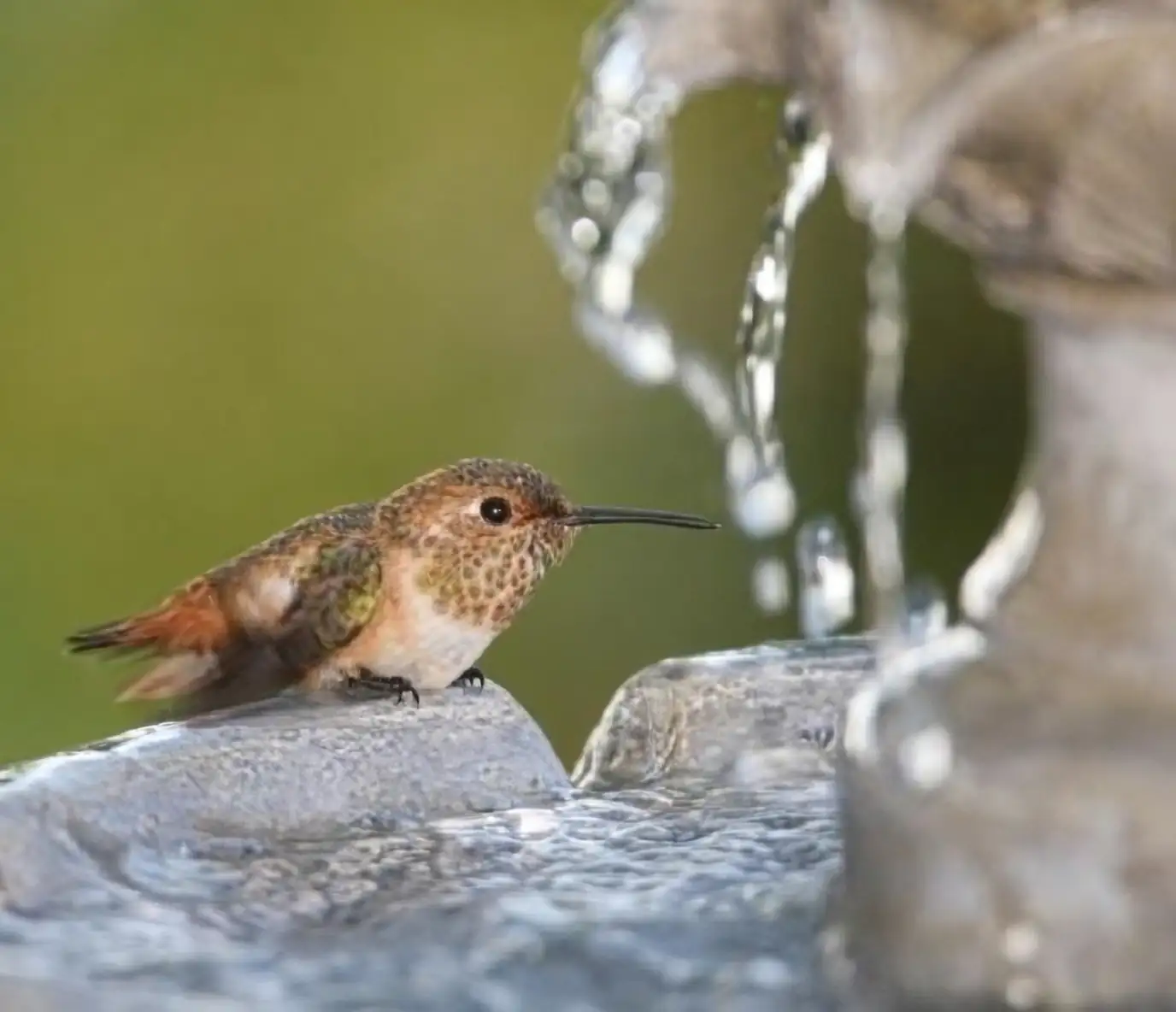
- Water feature: A shallow basin (1–2 in deep) with a gentle bubbler or dripper. Moving water is a hummingbird magnet and safer for bees.
- Mister moments: Set a fine mister to run briefly in late morning—hummers will fly through for “showers.”
- Perches and cover: Layer in airy shrubs (rosemary, native small conifers, or open‑branched deciduous shrubs) within 10–20 ft of flowers for quick retreats and guard posts.
- Insect‑friendly zone: Hummingbirds are also insectivores. Leave a small “messy corner” with leaf litter and avoid over‑tidying—more insects mean better bird nutrition. Spider silk is prized hummingbird nest material; let a few webs be.
Nectar‑friendly care for Red Hot Poker
- Sun: Full sun is best (6–8 hours). In very hot regions, a touch of afternoon shade helps.
- Soil: Excellent drainage is essential; aim for pH 6.0–7.5. Add compost before planting, but avoid heavy, soggy mixes.
- Planting depth: Set divisions so the crown is shallow—not buried more than about 3 in.
- Watering: About 1 in per week during establishment and bloom (adjust to heat/rain). Once established, they handle short dry spells, but steady moisture = better spikes. Never leave crowns sitting wet.
- Feeding: Usually minimal. Top‑dress with compost in spring; if needed, a balanced slow‑release feed. Go easy on nitrogen to prevent leafy, flower‑light growth.
- Deadheading: Remove spent spikes at the base to tidy and encourage rebloom in repeat‑flowering selections.
- Division: Every few years (early spring or fall after flowering) to maintain vigor; ensure each division has a healthy crown and roots.
- Wintering (USDA 5–6 especially): Tie foliage loosely into a sheaf to shed water, mulch with dry straw/leaves to protect from freeze‑thaw, and keep crowns drier.
- Pests/diseases: Generally trouble‑free in sun and drainage. Watch for thrips, aphids on new growth, slugs/snails. Most issues trace to wet crowns—sharpen drainage, space for airflow, avoid constant overhead watering.
- Containers: Start with a pot at least 9 in wide with ample drainage; monitor moisture more frequently; repot/divide every 2–3 years.
A season‑by‑season runway checklist
- Spring: Cut back winter‑tattered leaves; top‑dress with compost; divide crowded clumps; plant allies for early bloom.
- Summer: Water during dry spells; deadhead spent spikes; refresh annual allies for color and nectar continuity.
- Fall: Divide in mild climates after flowering; reduce watering as growth slows; add late‑season bloomers for next year.
- Winter: In colder zones, mulch crowns with dry material; keep crowns from staying soggy; leave foliage standing as protection and cut back in early spring.
Troubleshooting no‑show spikes
- Not enough sun (aim for 6–8 hours)
- Waterlogged or heavy soil (improve drainage)
- Overcrowded clump (divide)
- Too much nitrogen
- Plants still maturing (seed‑grown plants can take time)
Cut‑flower tip
Harvest when the lower third of florets are open for a 5–7 day vase life. Strip lower foliage and recut stems under water.
Safety note
Red Hot Poker is generally considered non‑toxic to people and pets. As with any ornamental, nibbling may still cause mild tummy upset in sensitive individuals.
Flower language and lore
Torch‑like blooms naturally invite symbolism: passion, strength, confidence, and standing tall. While you won’t find Red Hot Poker featured in classic Victorian flower dictionaries, modern gardeners often read its “flame” as protective—a living ward against gloom. In some folklore, fiery hues are linked with driving away negativity. In short, it’s a plant that broadcasts optimism.
Quick design tips to keep traffic high
- Plant in generous drifts so hummers can tank up efficiently.
- Use warm, “beacon” colors up front; cooler tones (like purple salvias) add contrast behind.
- Place a small water feature within sightlines of your favorite chair—you’ll get a front‑row seat to the fly‑bys.
- Skip pesticides; they reduce the very insects birds and nestlings need.
- Keep the runway open: give each Kniphofia 24–30 in of breathing room for airflow and crown health.
When you combine Red Hot Poker’s glowing spikes with a chorus of tubular allies, a sip of shimmered water, and a little safe cover, your garden becomes more than beautiful—it becomes essential habitat. Ready for takeoff? The pollinators are.


