

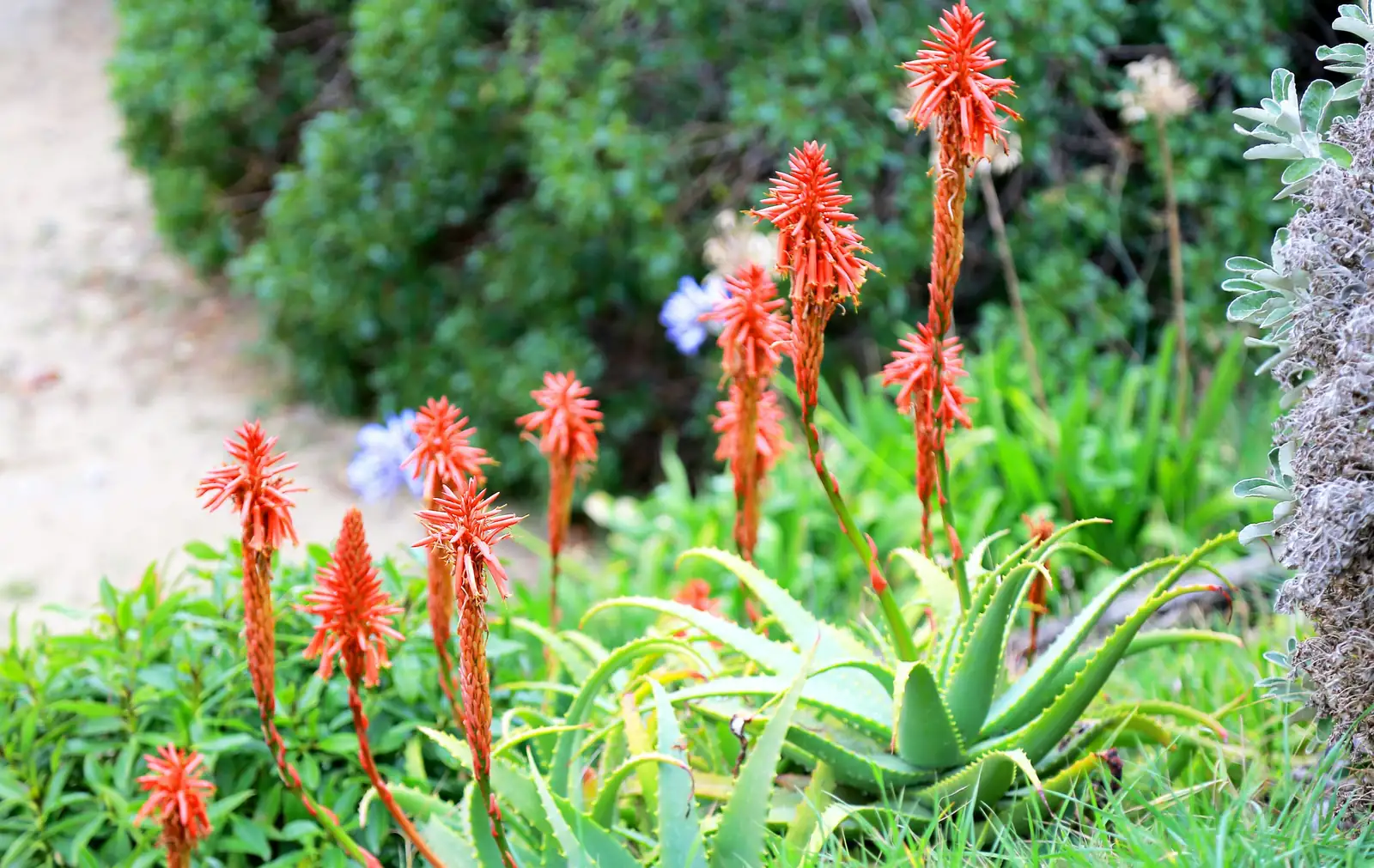
If your border needs exclamation points, Red Hot Poker (Kniphofia uvaria) writes them in bold. Those glowing torch spikes rise cleanly from fountain‑like foliage, igniting drifts of grasses and riffing beautifully with salvias, agastache, echinacea, and every cool blue or purple you can throw at them. Below, you’ll find design-forward pairing ideas, practical spacing, and month‑by‑month bloom successions so the show never fizzles.
Meet the vertical accent

- Look: Upright, clump‑forming perennial with narrow, sword‑like leaves and torch‑shaped flower spikes that open bottom to top, often in ombré shades from red and coral to apricot, yellow, chartreuse, and cream.
- Size: About 2–6 ft tall, 1–3 ft wide; dwarf forms often 18–24 in tall.
- Season: Early summer through fall (commonly June–October, variety and climate dependent); some rebloom with deadheading.
- Site: Full sun (6–8 hours). Light afternoon shade can help in very hot regions. Needs excellent drainage.
- Zones: Commonly USDA 5–9.
- Vibe: Bold vertical accent, drought‑tolerant once established, a hummingbird and pollinator magnet, with foliage that can be evergreen or semi‑evergreen in mild climates.
Color strategy: cool the fire, don’t fight it
Red Hot Poker’s warm spectrum loves a foil. Blues and purples calm the heat; silvery foliage cools it further. Use this simple palette framework:
- Fire anchors: Choose 1–2 Kniphofia cultivars in a tight color band (e.g., apricot/soft orange, or coral‑to‑yellow) to avoid a chaotic mix.
- Coolers: Layer blues/purples—salvias, agastache in blue/lavender tones, nepeta, Russian sage (Salvia yangii/Perovskia), eryngium, and veronica.
- The weave: Repeat 1–2 ornamental grasses to stitch everything together and carry the design after the pokers pause between flushes.
Designer tip: Apricot and soft mango kniphofias are exceptionally chic with inky stems of Salvia nemorosa ‘Caradonna’ and smoky blues like eryngium.
The grass weave: structure, motion, and late light
Use grasses to echo Kniphofia’s verticals, soften edges, and extend interest into fall.

- Narrow uprights for rhythm
- Calamagrostis acutiflora forms (e.g., ‘Karl Foerster’): early plumes, tidy columns that repeat cleanly behind pokers.
- Panicum virgatum (e.g., ‘Northwind’): steely verticals, late-season haze; great as grid posts along a long border.
- Airy veils for glow
- Nassella tenuissima (Mexican feather grass): fine texture that halos torch spikes.
- Pennisetum alopecuroides types: arching, tactile plumes; weave through mid‑border.
- Blue accents low and repeatable
- Festuca glauca (blue fescue): cool, mounding color chips along the front edge to temper warm blooms.
Spacing guide for grasses
- Upright clumps: 24–36 in apart.
- Airy/arching mids: 18–24 in apart.
- Low fescues: 12–15 in apart, repeated like stepping stones.
The color chorus: salvias, agastache, and echinacea
- Salvias (blues/purples)
- S. nemorosa ‘Caradonna’, ‘May Night’, ‘Blue Marvel’: early summer kickstart; deep stems read “ink” against the torches.
- Spacing: 18–24 in apart; shear after first flush for repeat bloom.
- Agastache (hyssop)
- ‘Blue Fortune’, ‘Blue Boa’, ‘Kudos’ series: hazy spires mid‑summer to fall; bees adore them.
- Spacing: 18–24 in; great link between pokers and grasses.
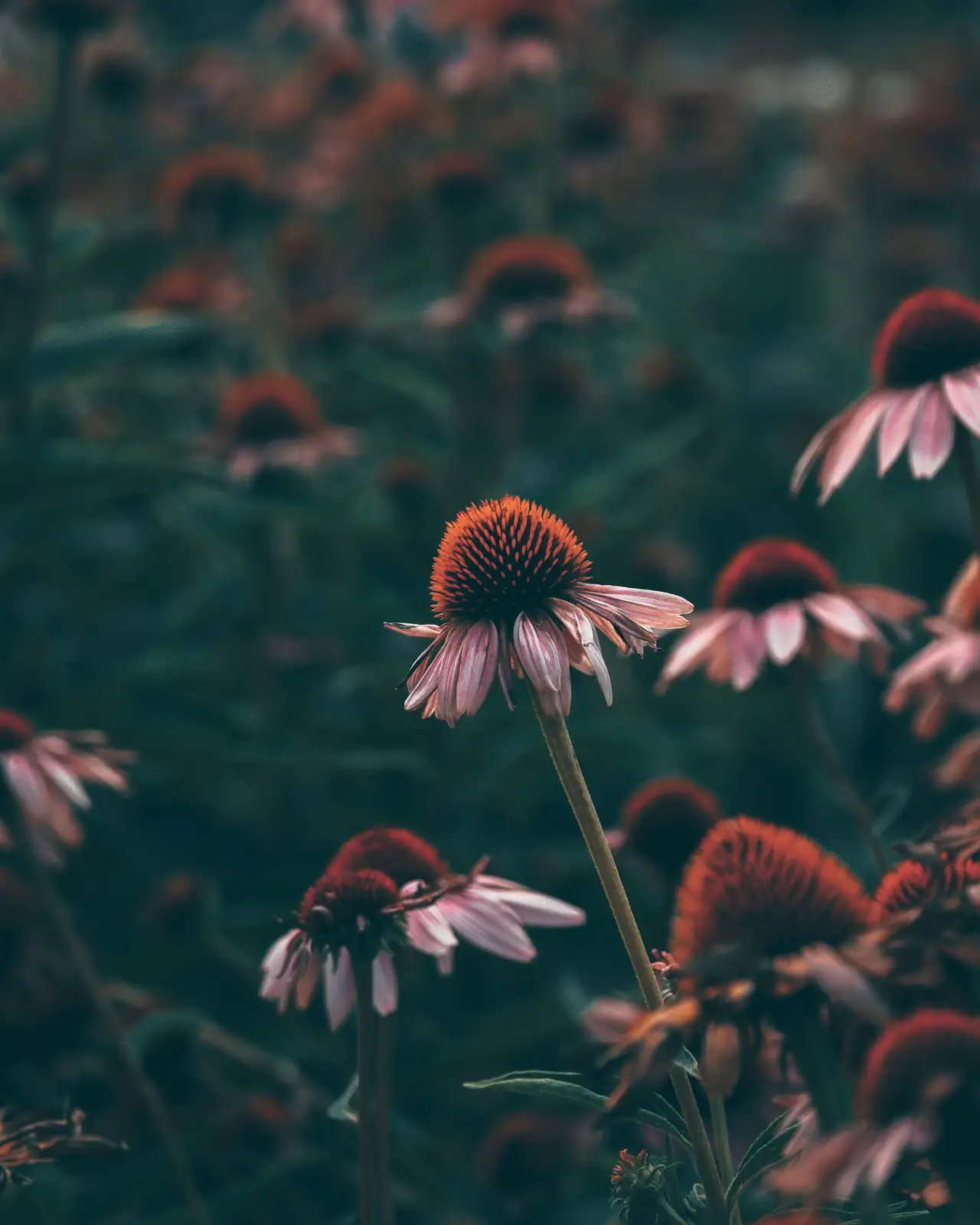
- Echinacea (coneflower)
- E. purpurea ‘Magnus’, ‘Pica Bella’, ‘White Swan’: steady midsummer disks that ground the spikes; seedheads add autumn texture.
- Spacing: 18–24 in; repeat in loose triangles to pull the eye down the border.
Cool blues and purples to temper the heat
- Nepeta (catmint) ‘Walker’s Low’, ‘Cat’s Pajamas’: long, billowy season; front‑edge river. Space 18–24 in.
- Salvia yangii (Russian sage; formerly Perovskia): silvery stems, blue mist July–fall; mid‑back anchor. Space 24–36 in.
- Eryngium planum (sea holly): sculptural thistles, electric blue cones. Space 18 in.
- Veronica spicata (speedwell): tidy blue wands that echo poker spikes at a smaller scale. Space 12–18 in.
- Lavender and low artemisia: aromatic, silvery coolants that make warm spikes sing.
Bloom‑succession maps
Because local timing shifts with climate, use these month‑by‑month guides as a flexible scaffold. Deadhead kniphofias that rebloom to tighten the gaps.
Zones 5–6 (cooler summer)
- Late May–June
- Salvia nemorosa peaks
- Nepeta begins its long run
- Early cultivars of Kniphofia start (soft yellows/apricots often lead)
- July
- Kniphofia in full stride; first big flush
- Echinacea and Veronica come on strong
- Russian sage builds color
- August
- Kniphofia continues (especially if deadheaded)
- Agastache hits its stride
- Grasses plume (Calamagrostis earlier; Panicum/Pennisetum now)
- September–October
- Late kniphofia cultivars and rebloomers
- Agastache, Russian sage, nepeta still showy
- Grasses carry structure and tawny light
Zones 7–9 (warmer summer)
- May–June
- Salvia nemorosa and nepeta early; some kniphofia already spiking
- July
- Prime kniphofia show; begin deadheading promptly
- Echinacea and agastache overlap beautifully
- August–October
- Second kniphofia rounds on reblooming types
- Agastache/russian sage peak, grasses at full drama
- Nepeta and veronica offer cool punctuation as nights cool
Spacing and layout recipes for cohesive, vertical borders
Recipe A: The Apricot & Ink Border (20 ft long × 4 ft deep; Zones 5–9)
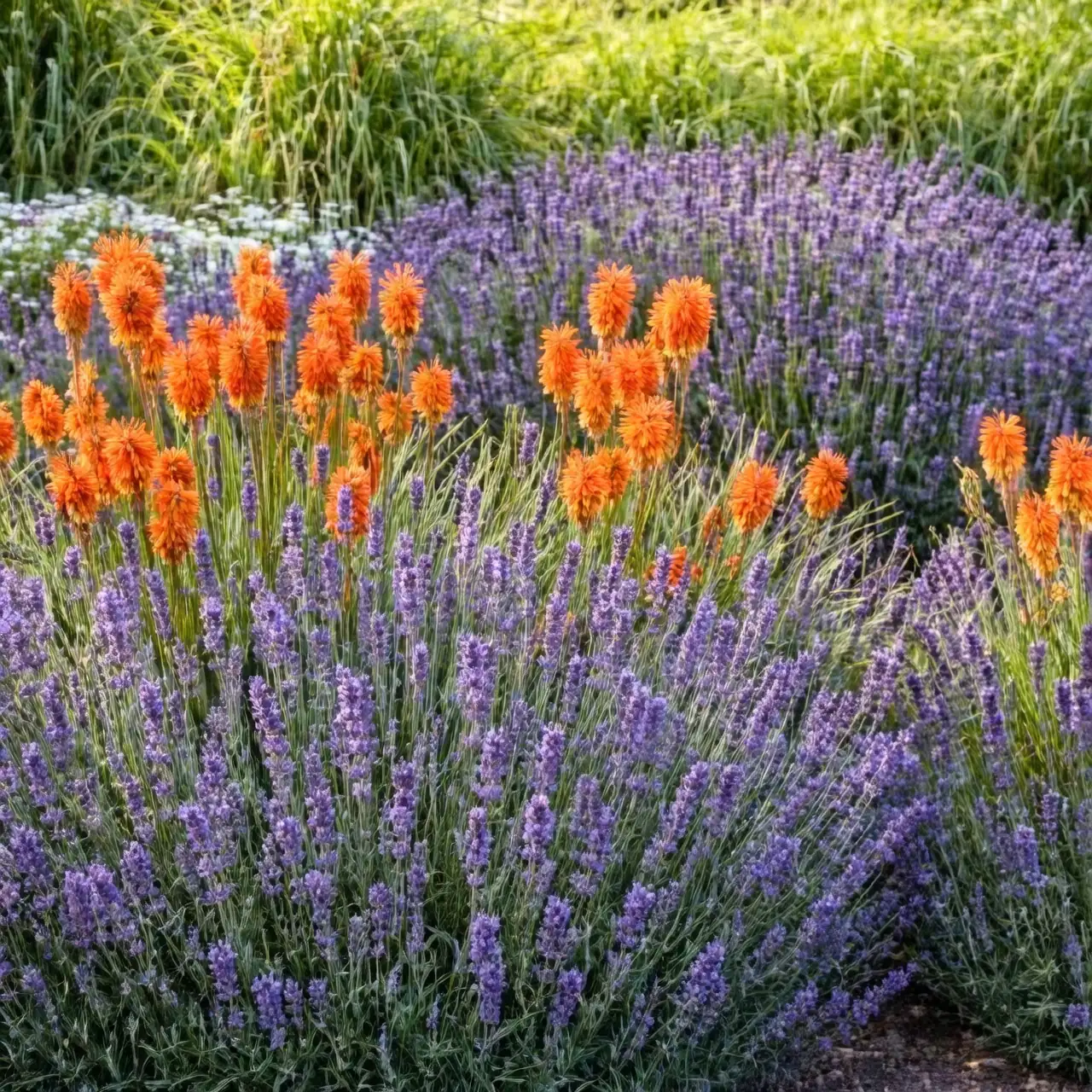
Aim: Soft apricot kniphofia punctuated by inky salvias and blue haze, stitched with vertical grasses.
- Back row (every 4–5 ft)
- 4 Panicum ‘Northwind’ (space 48–60 in): steady verticals and fall structure.
- 3 Salvia yangii/Russian sage (space 30–36 in) between panicums for blue mist.
- Mid row (the accents)
- 9 Kniphofia uvaria in groups of 3 (space 24–30 in within groups; groups ~4 ft apart). Choose softer hues (apricot/cream/yellow) for elegant contrast.
- 6 Agastache ‘Blue Fortune’ (space 18–24 in) interplanted between poker groups.
- Front row (river and repeats)
- 10 Salvia nemorosa ‘Caradonna’ (space 18 in) as drifts in front of poker groups.
- 8 Festuca glauca (space 12–15 in) to cool edges.
- 6 Veronica spicata (space 12–15 in) to echo verticals at knee height.
Planting notes
- Set kniphofia crowns shallow, never deeply buried (generally no more than about 3 in below soil level).
- Keep a consistent 18–24 in runway in front for airflow and clean sightlines.
- Mulch lightly; avoid burying crowns.
Recipe B: The Fiery‑Meets‑Prairie Weave (30 ft long × 6 ft deep; Zones 5–9)
Aim: Bolder color with strong movement; great along a sunny fence or path.
- Back anchors
- 6 Calamagrostis ‘Karl Foerster’ (space 48 in) in an even cadence.
- 6 Panicum (space 48 in) staggered 2–3 ft in front of the calamagrostis for depth.
- Vertical color columns
- 12 Kniphofia uvaria (tall forms; space 24–30 in) in repeating pairs between grasses.
- Mid‑plane coolers
- 12 Agastache (space 18–24 in) and 8 Echinacea (space 18–24 in) scattered in offset triangles.
- Front veils
- A continuous nepeta ribbon (plants 18–24 in apart) with 12 eryngium punctuation points (18 in apart) tucked just behind the nepeta line.
Container‑friendly tweak: Substitute a few dwarf kniphofias (18–24 in tall) at path bends and echo with low blue fescues and compact salvias.
Practical care for seamless design performance
- Drainage first: Kniphofia dislikes soggy crowns. Amend heavy soils and avoid siting where water lingers.
- Watering: About 1 in per week during establishment and active growth; containers need more frequent checks. Let soil dry slightly between waterings.
- Feeding: Work in compost at planting; go easy on nitrogen. A light, balanced slow‑release feed in spring only if vigor is low.
- Grooming: Deadhead spent spikes to tidy and encourage repeat on reblooming varieties. Remove ratty leaves as needed.
- Division: Every few years, divide in early spring or fall after flowering to maintain bloom strength.
- Winter strategy (cold zones): Leave foliage standing to shield the crown; tie it loosely to shed wet. Mulch with dry material around (not smothering) the crown.
Pests and problems
- Generally unfussy in sun with sharp drainage. Watch for thrips or aphids on new growth; slugs/snails on young leaves. The big risk is crown/root rot from wet conditions—prevent by planting high and watering smart.
Cut‑flower and wildlife notes
- Cut when the lower third of florets open; expect 5–7 days in the vase.
- Nectar‑rich torches draw hummingbirds, butterflies, and bees, adding motion and life to your border.
Flower language and symbolism
Red Hot Poker is often linked with passion, strength, and confidence—fitting for a plant that brands the air with living torches. These associations don’t come from a single historic “dictionary,” but from the plant’s bold stance and fiery color in garden culture. In some folklore, flame‑hued blooms symbolized protection, as if a ring of torches could keep negativity at bay. In design, that translates to a focal plant that emboldens surrounding palettes and “guards” a border’s energy—standout, not stand‑alone.
Smart plant picks to get the look
- Warm anchors (choose one hue band)
- Soft apricot/cream: ‘Tawny King’, pale yellow forms, or similar selections.
- Mango/coral: ‘Mango Popsicle’, coral‑tinted cultivars.
- Classic ember: taller orange‑to‑red types for punctuation in larger spaces.
- Cool companions
- Salvias: S. nemorosa ‘Caradonna’ or ‘May Night’
- Agastache: ‘Blue Fortune’, ‘Blue Boa’, or a compact ‘Kudos’ selection
- Echinacea: ‘Magnus’, ‘Pica Bella’, or ‘White Swan’
- Blues/purples: Nepeta ‘Walker’s Low’, Russian sage (Salvia yangii/Perovskia), eryngium, veronica
- Grasses: Calamagrostis for early pillars; Panicum or Pennisetum for late summer movement; Festuca for cool edging
Final placement checklist
- Sun: 6–8 hours daily.
- Spacing: Kniphofia 24–30 in (tall forms), 15–18 in (dwarfs). Salvias/agastache/echinacea 18–24 in. Russian sage 24–36 in. Veronica 12–18 in. Grasses as noted above.
- Rhythm: Repeat the same few plants every 3–5 ft to unify the border.
- Sightlines: Stagger heights for layered views—grasses and pokers at the back/mid, blue veils and drift plants toward the front.
- Continuity: Deadhead and shear where appropriate to “reset” waves of color and keep the vertical accents reading crisp.
Design it once with flow and restraint, and Kniphofia uvaria will light the border all season—sparks of color not just seen, but felt.


