

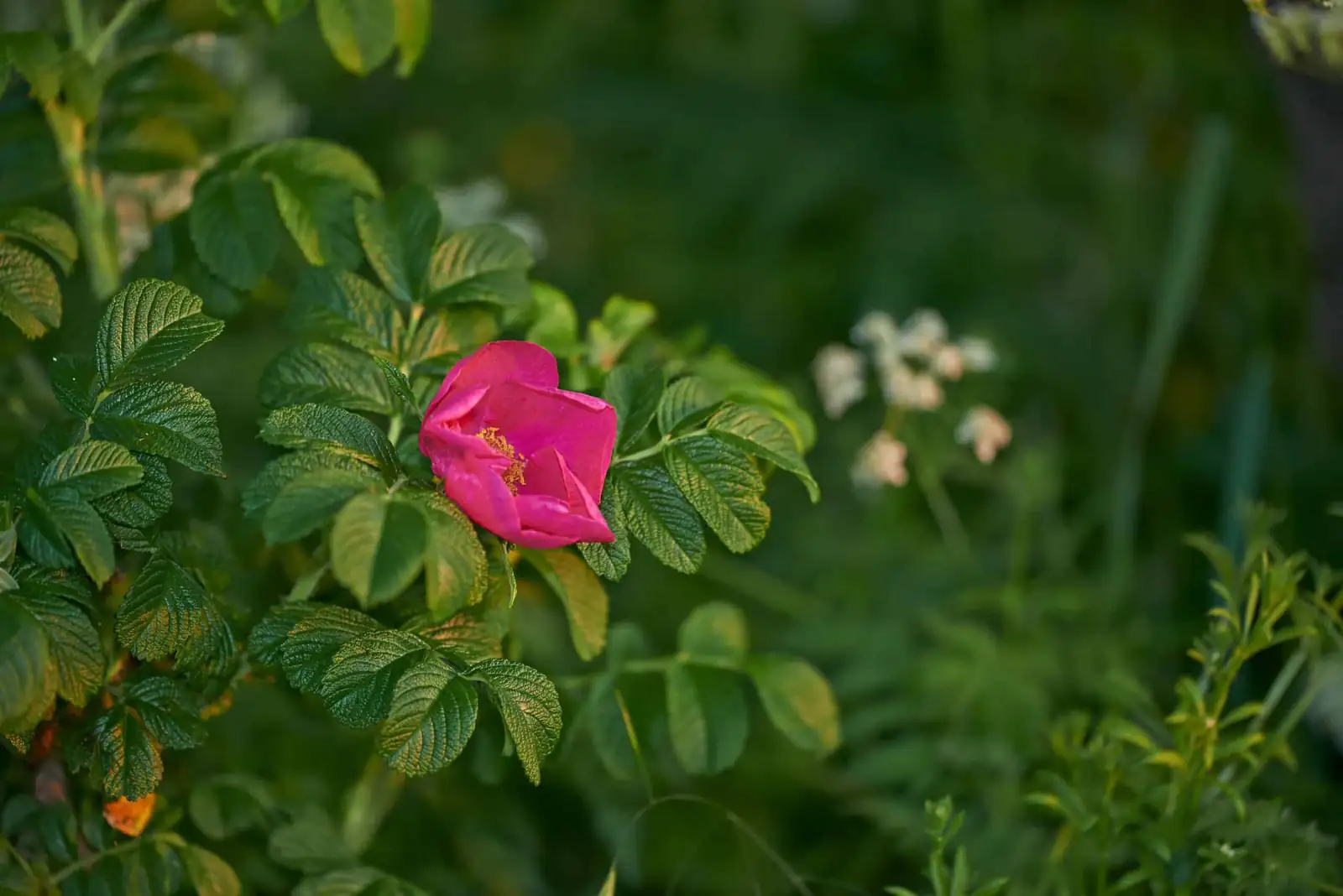
Rugosa roses that stop wind, feed birds, and hold a dune in place? That’s the design-meets-ecology magic of Rosa rugosa. With wrinkled, glossy foliage, scented single blooms, and luminous tomato‑red hips, this tough coastal shrub doubles as a beautiful, living infrastructure—screening wind, stabilizing sandy slopes, and building thorny, wildlife-rich hedges that look good 12 months a year.
Below, a field‑tested guide to spacing, pruning, erosion‑smart planting, and responsible management where rugosa can spread.
Why Rosa rugosa for windbreaks and wildlife hedges
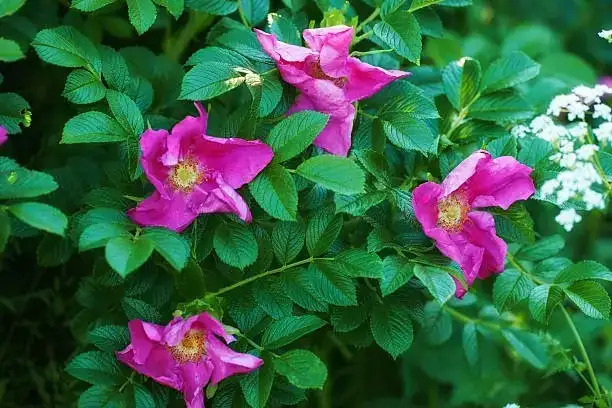
- Beauty with backbone: Fragrant flowers (typically pink to white) through late spring into summer, followed by abundant, showy hips that persist into winter.
- Salt, sand, and city smart: Thrives in full sun and well‑drained soils, including sandy and gravelly sites; tolerant of salt spray and urban conditions with good drainage.
- Habitat in a hedge: Nectar for pollinators, dense thorny shelter for nesting and cover, and nutrient‑rich hips for birds and small mammals.
- Low‑input durability: Once established, plants are resilient and need modest care with the right siting and pruning.
Note: Many shrub roses reach 1–2 m (3–6 ft) with a similar spread, and Rosa rugosa commonly forms rounded, thorny thickets via suckering—excellent for screens and erosion control when managed thoughtfully.
Sun, soil, and siting basics
- Sunlight: Full sun is best—aim for 6+ hours, especially morning sun.
- Soil: Well‑drained loam is ideal (pH about 6.0–7.0), but rugosa also performs on sandy or gravelly soils. Avoid poorly drained spots.
- Air and humidity: Moderate humidity with good airflow helps keep foliage healthy. Water at the base to keep leaves dry.
- Temperature: Thrives in temperate climates and is notably cold‑hardy; choose locally adapted selections for best results.
Designing windbreaks that work
A good windbreak is porous, not solid—think sieve, not wall. Porous hedges slow and lift wind rather than creating turbulence.
- Target porosity: About 40–60% foliage density for effective wind reduction.
- Protection distance: Expect meaningful protection downwind for an area roughly 5–10 times the hedge height.
- Layering for strength:
- Front (windward): Deep‑rooted grasses or low shrubs to catch ground‑level gusts.
- Midstory: Rosa rugosa as the primary, thorny, wildlife‑rich hedge.
- Back (leeward): Taller, compatible shrubs or small trees where space allows, ensuring everyone gets sun.
Ideal spacing for hedges and windbreaks
Rosa rugosa typically grows 4–6 ft tall and wide; spacing determines how quickly plants knit into a barrier and how dense it feels.
- Tight wildlife hedge (fast knit, dense screen):
- Single row: 24–36 in (60–90 cm) between plants.
- Double row (staggered): 24–36 in (60–90 cm) in‑row; 24–36 in (60–90 cm) between rows.
- Windbreak with gradual fill (more space, lower cost):
- Single row: 4–5 ft (1.2–1.5 m) apart; expect suckers to close gaps in 2–4 years.
- Double row (staggered): 4 ft (1.2 m) between rows; 4–5 ft (1.2–1.5 m) in‑row.
- Edge control where spread is a concern:
- Install a mowing strip (e.g., 24–36 in wide) along the outside edge and maintain it.
- Consider a 18–24 in (45–60 cm) deep root/rhizome barrier on the side facing sensitive habitats.
Erosion‑smart planting on dunes, banks, and coastal sites
Rugosa’s natural home includes windswept, sandy coasts—lean into that ecology.

- Timing: Plant in early spring or fall when soil is workable and rains help establishment.
- Plant material: Use healthy bare‑root or container plants (about one year old). Container plants establish faster on critical erosion sites.
- Preparation:
- On dunes/slopes, stagger plants on contour, not in rows straight up/down.
- Use biodegradable erosion controls (jute/coir netting, coir logs) between plants on steeper grades.
- Avoid heavy soil amendments in sand; improve moisture retention with a 5–7 cm mulch of shredded bark or seaweed‑free composted mulch (keep mulch a few inches away from stems).
- Watering to establish: Aim for about 1–2 in (2.5–5 cm) of water per week during the first growing season, delivered as deep, infrequent soaks. Morning watering keeps foliage dry.
- Salt and wind: Rugosa tolerates salt spray well; wind fencing can help young plantings on very exposed dunes.
Pruning for dense screens (without losing the hips)
Pruning timing and technique shape density and wildlife value.

- When to prune: Late winter to early spring while dormant. This is the main structural prune.
- For a tight hedge:
- Year 1: After planting, head back stems by one‑third to stimulate branching.
- Year 2–3: Tip‑prune long shoots to encourage side branching; remove weak, crossing, or damaged canes.
- Ongoing: Each late winter, remove a portion (up to one‑third) of the oldest canes at the base to maintain a vigorous, youthful thicket.
- Hips vs. repeat bloom:
- If hips are a wildlife goal, minimize summer deadheading—spent blooms become fruit.
- If more flowers matter than hips, remove spent blooms through summer to encourage rebloom.
- Airflow matters: Keep the outer shape full but thin congested interiors to maintain airflow, which supports leaf health.
Care that keeps the hedge humming
- Water: Deeply and consistently in the first season; mature plants appreciate consistent moisture but dislike waterlogged soils.
- Feeding: Light, balanced feeding in spring, then a bloom‑supporting formula as buds set. Stop fertilizing 6–8 weeks before first frost.
- Mulch: Refresh annually to conserve moisture and suppress weeds, keeping it off the canes.
- Health: Choose disease‑resistant selections, space for airflow, and water at the base. Remove any diseased leaves from plants and the ground. Common rose issues include black spot, powdery mildew, rust, thrips, aphids, and mites, but rugosa is generally robust with good culture.
Wildlife value by design
- Spring–summer: Single, open blooms are pollinator‑friendly for bees and butterflies.
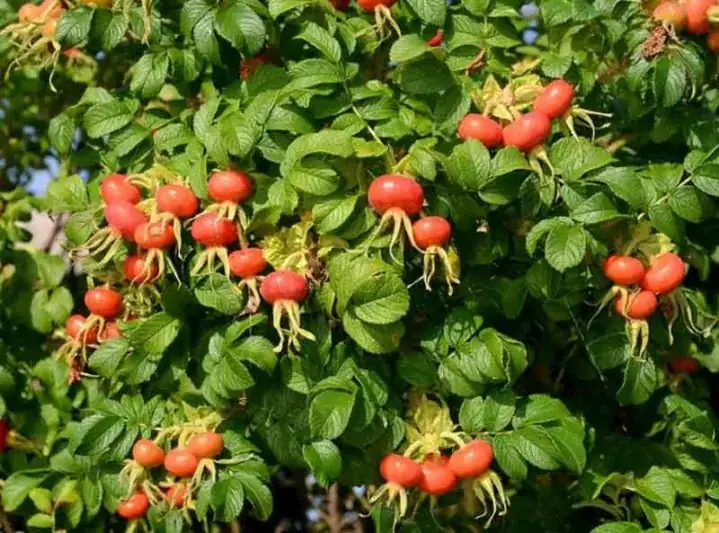
- Fall–winter: Hips provide food for birds and small mammals and hold ornamentally on the shrub.
- Cover and nesting: Dense, thorny canes create a formidable shelter belt—great for wildlife and for gently guiding people away from fragile dune zones.
Responsible management where rugosa can spread
Rugosa can sucker beyond planting lines and the seeds in hips can travel with wildlife and water. In some regions it is considered invasive or noxious. Be a good neighbor to nearby natural habitats.
- Before you plant:
- Check local and state guidance on status and restrictions.
- Keep plantings set back from intact natural dunes or sensitive shorelines if spread risk is high.
- Design for containment:
- Use mowing strips, regular edge mowing, or root barriers on the outward edge.
- Site hedges where you can access both sides for maintenance.
- Hip management:
- If there’s high risk of spread into nearby natural areas, remove or collect hips before they fully ripen and disperse.
- Dispose of prunings and hips in green waste or trash—do not dump in wildlands.
- Ongoing control:
- Promptly remove suckers that appear beyond the intended hedge line.
- For major reductions, use phased removal: cut canes and dig or extract roots over successive seasons to deplete reserves.
- Consider regional alternatives where rugosa is restricted:
- North American coasts and lakeshores: native shrub roses (e.g., Rosa carolina, R. virginiana) or other coastal natives like beach plum (Prunus maritima), bayberry/wax myrtle (Myrica pensylvanica), willows, or red osier dogwood—chosen to match your site’s sun, soil, and moisture.
Quick specs for designers
- Height/spread: Commonly 3–6 ft tall and wide; forms suckering thickets.
- Sun: Full sun for best flowering and vigor.
- Soil: Well‑drained; thrives in sandy, slightly acidic to neutral soils.
- Water: About 1–2 in per week during establishment; avoid overhead watering.
- Maintenance: Medium—seasonal pruning, mulching, and light feeding.
- Safety: Generally non‑toxic; hips and petals are edible. Prickles are the main hazard—site accordingly.
Planting recipes: hedge and windbreak layouts
Compact privacy and wildlife hedge (suburban lot)
- Spacing: Single row at 24–30 in centers.
- Form: Head back lightly in year 1; renew 1/3 of oldest canes annually from year 3 onward.
- Edges: 30 in mowing strip on both sides; seasonal hip collection if spread risk exists.
Coastal windbreak on sandy soil (salt‑spray exposed)
- Rows: Two staggered rows, 4 ft apart; plants 4–5 ft apart in each row.
- Understory: Native dune grasses in front for sand capture and root reinforcement.
- Establishment: Coir netting across slope, 2–3 in coarse mulch, deep watering through first dry season.
Roadside barrier and habitat strip
- Spacing: Single row at 3 ft centers for quick canopy closure.
- Safety: Set back from pathways; use the thorny habit to guide foot traffic and protect planted zones.
- Maintenance: Late‑winter thinning for airflow; allow hips to persist through winter for wildlife, then remove excess to limit seed dispersal.
A brief note on rose symbolism
Roses are cultural icons—symbols of love, beauty, and devotion. With Rosa rugosa, the story shifts from bouquet romance to ecological love language: simple, open flowers that welcome pollinators, and glowing hips signaling sustenance and shelter. That’s a “flower language” rooted not in Victorian code but in living systems—form following function in service of landscapes and the species that share them.
Troubleshooting: fast answers
- Sparse hedge after two years?
- Check sun (6+ hours), water deeply in dry spells, and perform a late‑winter renewal prune to stimulate new canes. If spacing exceeds 5 ft, expect longer fill time or rely on suckering to knit gaps.
- Lots of leaves, few flowers?
- Too much nitrogen or too little sun. Shift to balanced/bloom‑supporting feeding and ensure full sun exposure.
- Fungal spotting on leaves?
- Improve airflow by thinning congested canes, water at soil level, and clean up fallen foliage. Mulch to reduce soil splash.
- Concerned about spread?
- Install or maintain edge controls, collect hips before dispersal, and promptly remove outlying suckers.
Designing with Rosa rugosa is a balancing act: celebrate its toughness and habitat value while stewarding its enthusiasm. Managed well, it’s a beautiful, living structure that breaks wind, feeds wildlife, and keeps soil where it belongs—exactly where great landscape design meets ecology.


