

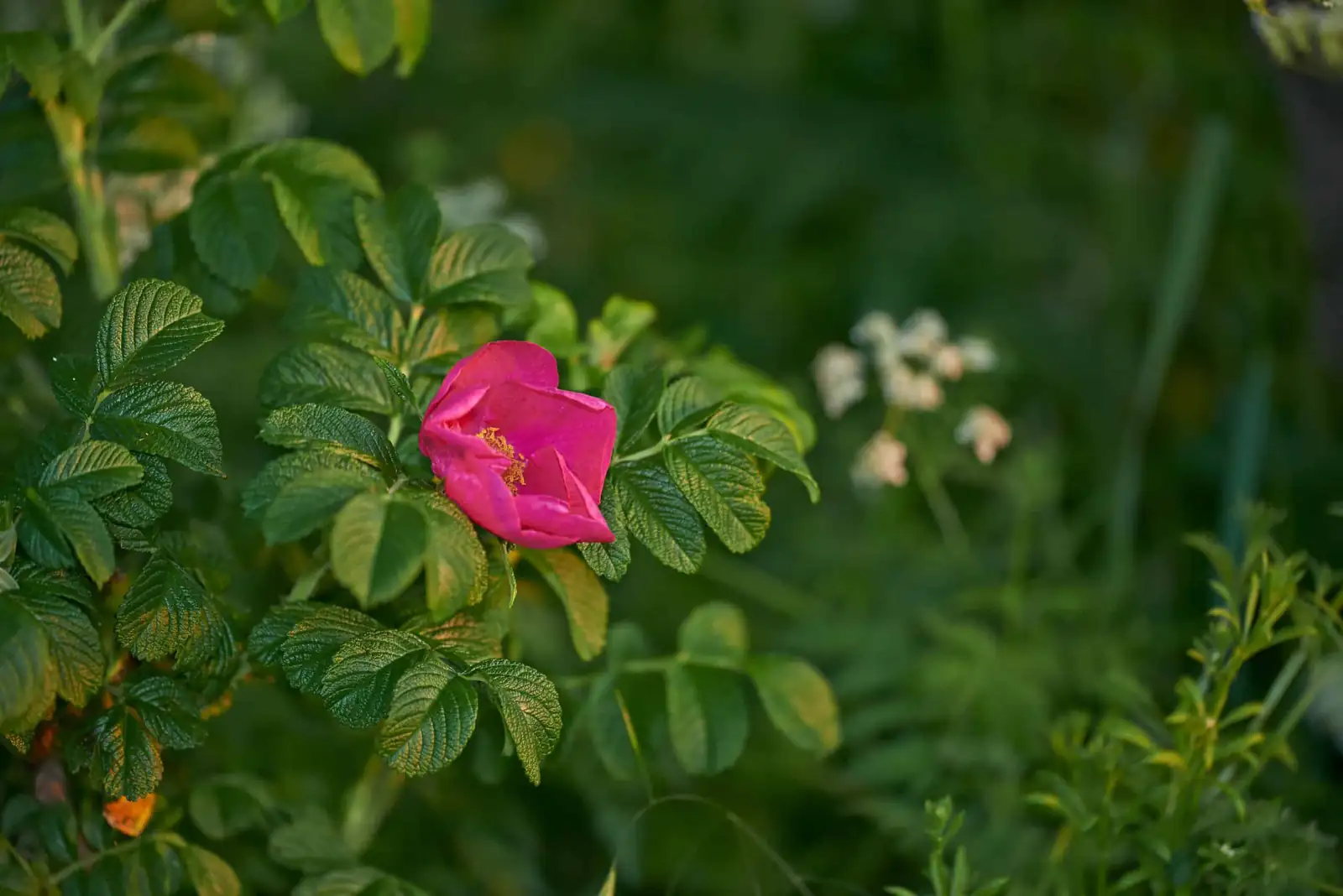
Rosa rugosa, the beach‑tough, honey‑scented rose that laughs at wind and salt, is also one of the easiest roses to clone. Whether you’re coaxing a hedge to fill in fast or multiplying a favorite clone, this masterclass walks you through three pro‑level routes—lifting and dividing suckers, rooting softwood vs. hardwood cuttings, and budding onto rootstocks—with precise timing, hormone tips, and the aftercare that seals success.
Pro tip to set the stage: choose healthy, disease‑free mother plants growing in full sun with airy spacing. Roses root and establish best in well‑drained, fertile loam at a slightly acidic to neutral pH (about 6.0–7.0), with steady moisture that never becomes waterlogged.
Your propagation playbook at a glance
- Lift and divide suckers: late fall after leaf drop or very early spring before budbreak.
- Softwood cuttings: late spring to early summer, just as new stems firm up below fading blooms.
- Hardwood cuttings: late fall through winter once canes are fully mature and dormant.
- Budding (T‑bud; chip bud): mid‑ to late summer when rootstock bark “slips” easily; chip bud any time the wood isn’t slipping (often late summer to early autumn), then force the bud next spring.
(Flip these by ~6 months for the Southern Hemisphere.)
—
1) Lifting and dividing suckers (your fastest track to a clone)
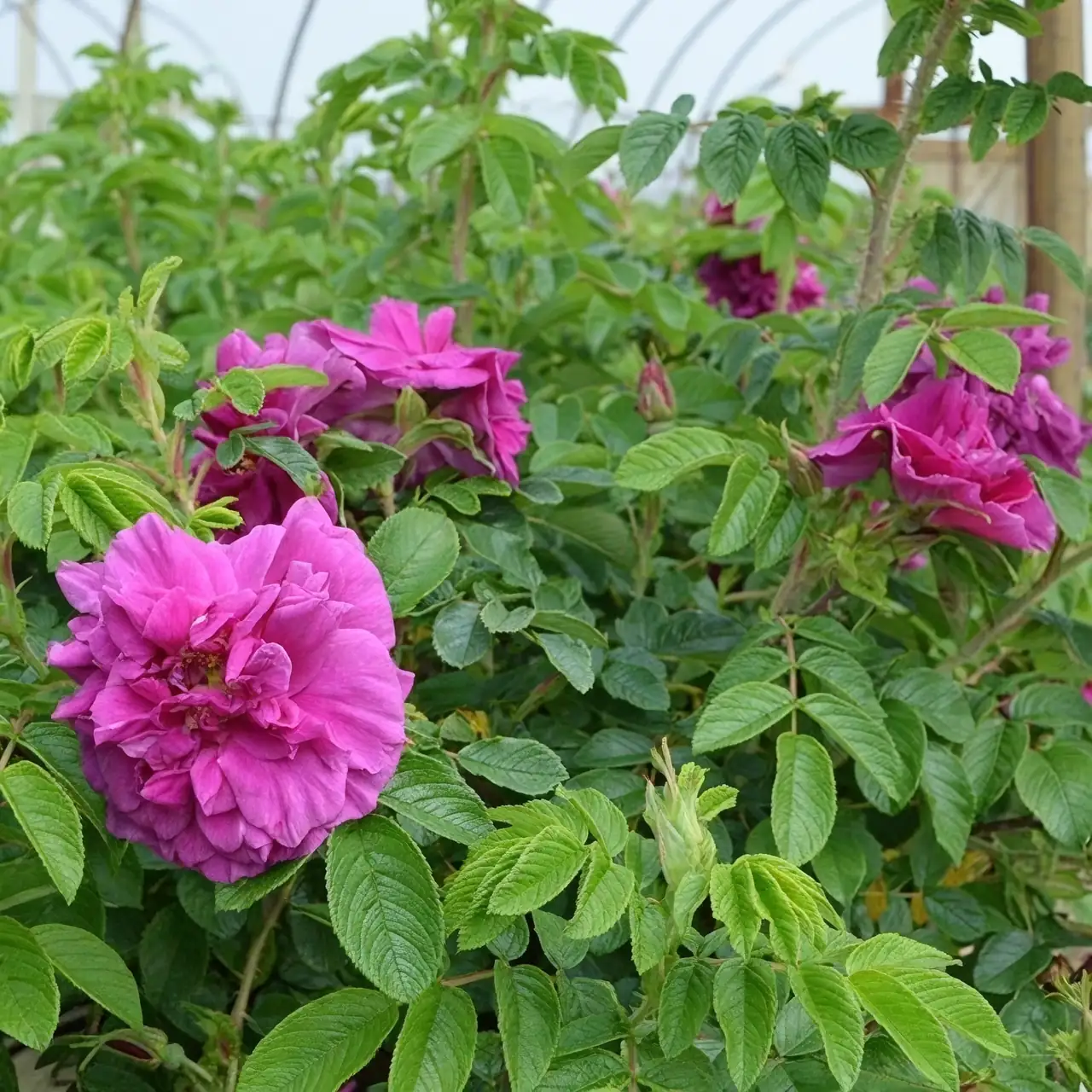
Rugosas naturally send up suckers from shallow, running roots—nature’s hint that division is fair game.
When
- Best: late fall after leaf drop, or very early spring before growth resumes.
- Soil should be workable (not frozen or waterlogged).
What to look for
- Suckers 15–60 cm (6–24 in) from the mother plant with their own feeder roots.
- Aim for pieces with at least one strong cane and several fibrous roots.
Tools and prep
- Clean, sharp spade or hori‑hori, bypass pruners, and a bucket of water.
- Gloves and long sleeves—those prickles mean business.
- Pre‑water the area the day before to reduce root breakage.
How to lift and divide
- Trace the sucker back to where it joins the parent’s root. Gently excavate to expose its junction.
- Sever cleanly with a sharp spade or pruners, preserving as many feeder roots as possible.
- Trim the top growth by about one‑third to balance the reduced root mass.
- Pot immediately into a deep container (3–5 L) with a gritty, well‑drained mix (e.g., 2 parts quality potting mix, 1 part coarse sand/perlite), or replant in a prepared bed at the same depth it grew before.
- Water in thoroughly to settle soil around roots; mulch lightly to moderate temperature and moisture.
Aftercare
- Light, regular moisture—keep evenly moist, never soggy; water at the soil line, ideally mornings.
- Bright light but not harsh midday sun for 2–3 weeks; then transition to full sun.
- Pinch off flower buds the first season to channel energy into roots and canes.
—
2) Softwood cuttings (quickest rooting, highest take rate)
Softwood cuttings are the sprinters of rose propagation: fast to root, eager to grow.
Timing window
- Late spring to early summer, when new canes are flexible but not floppy.
- Ideal pieces are pencil‑thick, taken just below a bloom that’s fading or just dropped petals.
Cutting prep
- Sterilize tools with alcohol. Work early in the day when shoots are well hydrated.
- Take 10–15 cm (4–6 in) cuttings with at least 2–3 nodes.
- Make a basal cut just below a node; lightly wound the base (a 1–2 cm vertical scrape on one side) to expose cambium.
- Remove lower leaves; keep the top pair for photosynthesis. Strip prickles on the lower half only if needed to avoid tearing the stem.
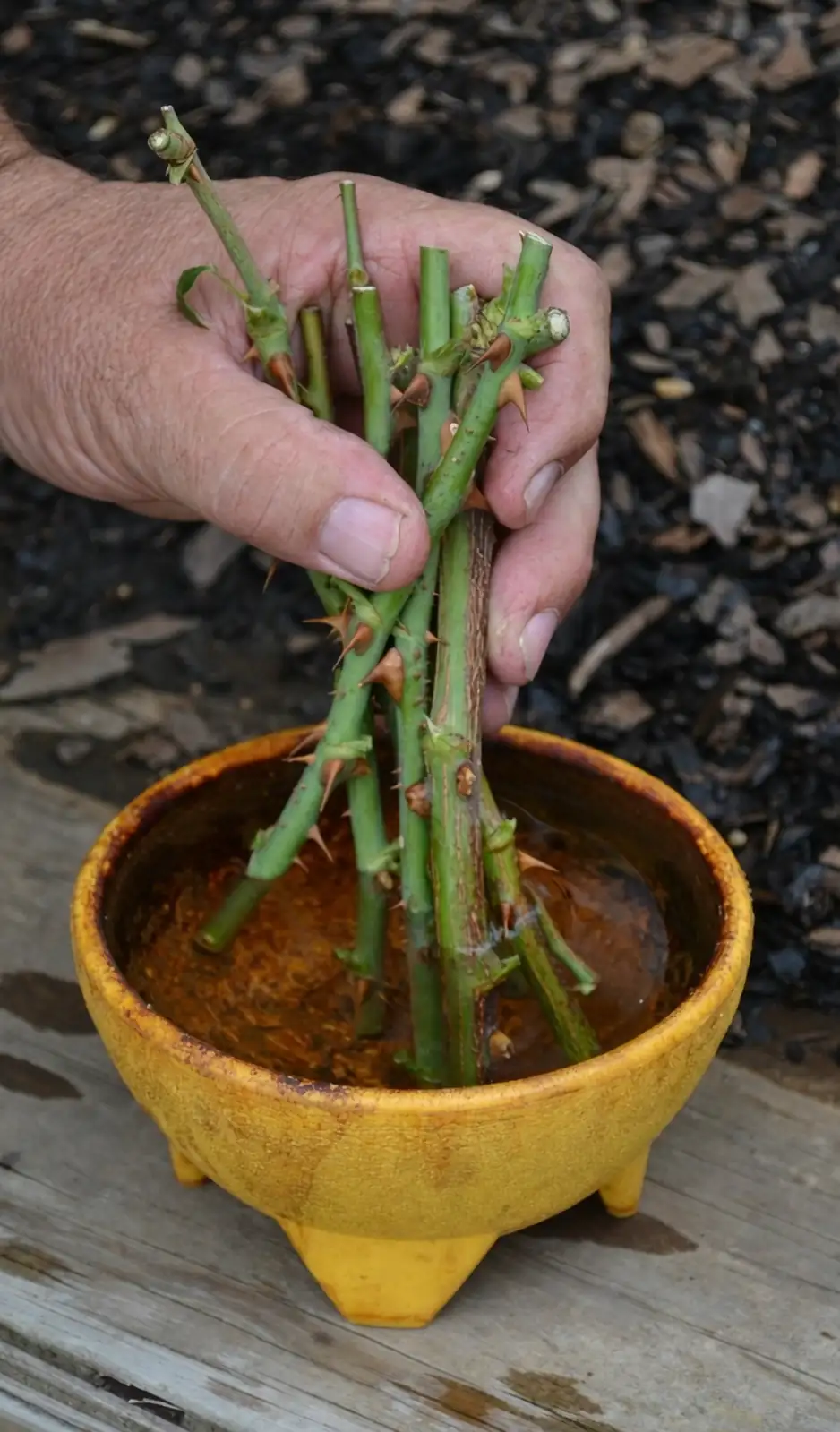
- Optional: dip base in rooting hormone. For softwood, use a light indole‑3‑butyric acid (IBA) powder (0.1–0.3%) or a quick dip at 1,000–2,000 ppm. Tap off excess.
Rooting media and environment
- Use a sharply drained, sterile medium: 1:1 perlite and coarse sand, or 1:1:1 perlite:sand:peat/coir.
- Stick cuttings so 3–5 cm (1–2 in) is buried; firm gently.
- Bottom heat (about 21–24°C / 70–75°F) speeds rooting; keep air a touch cooler.
- Light: bright, indirect. Avoid hot, direct midday sun at this stage.
- Humidity: 80–90% via intermittent mist, a clear dome with a small vent, or a simple humidity tent. Allow the leaf surface to dry between mist cycles to reduce fungal risks.
- Airflow: crucial. Crack domes daily; use a small fan for gentle movement.
Watering and disease hygiene
- Pre‑moisten the medium; then water only when the top layer begins to dry.
- Water at the base—keep foliage dry to discourage powdery mildew and botrytis.
- Remove any yellowing leaves promptly.
Rooting timeline and potting on
- Callus: ~1–2 weeks; roots: ~3–6 weeks, depending on temperature and variety.
- Tug test: gentle resistance = rooting. Or observe white root tips at drainage holes.
- Pot up into a free‑draining rose mix; feed lightly with a balanced fertilizer at quarter strength after new growth appears.
- Harden off to full sun over 7–10 days. Pinch tips once to encourage branching.
—
3) Hardwood cuttings (set‑and‑forget field method)
Slower than softwood but ideal if you’re propagating many plants with minimal fuss.
Timing window
- Late fall to winter, from fully mature, dormant canes.
Cutting prep
- Choose pencil‑thick, current‑season wood; avoid diseased or damaged canes.
- Cut 15–20 cm (6–8 in) lengths with 3–4 nodes.
- Make a straight cut just above a bud at the top and a slanted cut at the base (helps remember which end is “down”).
- Lightly wound the basal 2 cm to stimulate callus.
- Optional hormone: a stronger IBA powder (0.8–1%) or quick dip at 2,000–3,000+ ppm. Tap off excess.
Sticking outdoors or in cold frames
- Site: sheltered, bright but not scorching; well‑drained sandy loam.
- Open a slit/trench and set cuttings so 1–2 nodes are buried (about half to two‑thirds of the length), spacing 10–15 cm (4–6 in) apart.
- Firm in and water well; mulch lightly to buffer freeze‑thaw.
- Label clearly and forget the fuss—keep evenly moist through winter and spring.

Timeline and transplanting
- Roots often form by spring; don’t rush. Let them bulk up through summer.
- Transplant to final positions in early fall (or the following spring in colder climates).
- Remove the first year’s flowers to prioritize establishment.
—
4) Budding onto rootstocks (for standards, site‑specific vigor, or nursery‑clean lines)
Rugosas thrive on their own roots and often sucker freely; that alone makes them great candidates for cuttings and division. But budding is useful when you want uniform standards (tree roses), specific soil adaptations, or to scale up in a nursery system.
Rootstock choices (match to your site and goals)
- Rosa multiflora: widely compatible, good vigor in many soils.
- Dr. Huey: vigorous, common in production; compatibility can vary by scion.
- Rosa canina: traditional in Europe; strong framework, good graft unions.
- Fortuniana: excellent vigor and nematode tolerance in warm, sandy soils; not for cold climates.
Note: Compatibility can vary by cultivar; trial small numbers first.
T‑budding (when bark slips)
- Timing: mid‑ to late summer when rootstock is actively growing and bark “lifts” cleanly.
- Prepare scion wood: select current‑season shoots; leaves removed, petioles left as handles; keep cool and slightly moist.
- On the rootstock, make a clean T‑shaped cut; gently lift bark flaps.
- Slice a bud shield from the scion (a thin sliver of bark with bud and a “boat” of cambium); slide it under the flaps.
- Wrap snugly with budding tape or parafilm, leaving the bud itself exposed.
- After 10–14 days, check take: the petiole “handle” often yellows and drops if the union is alive.
- Forcing: in late winter or very early spring, head the rootstock back just above the bud to push growth. Stake new shoots; remove any rootstock suckers promptly.

Chip budding (when bark doesn’t slip)
- Timing: late summer into early autumn.
- Cut a small notch (“chip”) in the rootstock and match a similarly cut bud chip from the scion.
- Bind tightly with tape or parafilm; after union, force as above.
Bench grafting (optional)
- Late winter on dormant rootstocks; whip‑and‑tongue or omega grafts.
- Callus at ~21°C (70°F) with high humidity; plant out after danger of frost, then head back to the graft and stake.
—
Hormone use: how much and when
- Softwood cuttings: 0.1–0.3% IBA rooting powder, or liquid quick‑dip 1,000–2,000 ppm.
- Hardwood cuttings: 0.8–1% IBA powder, or liquid quick‑dip 2,000–3,000+ ppm.
- Always tap off excess hormone; more is not better. Keep containers uncontaminated by pouring a small amount into a separate dish.
—
Aftercare that makes or breaks success
- Light: Rugosas love sun. Give new plants 6+ hours daily once rooted; start with bright shade, then harden off.
- Water: Deep, consistent moisture during active growth—about 2.5–5 cm (1–2 in) weekly from rain/irrigation. Always water at soil level; mornings are best.
- Nutrition: Start with a balanced feed once cuttings are actively growing, then shift to a bloom‑supporting formula as buds set. Stop fertilizing 6–8 weeks before your first hard frost.
- Airflow: Space well and prune to an open habit to reduce black spot, rust, and powdery mildew pressure.
- Hygiene: Clean tools, remove fallen leaves, and keep foliage dry to thwart fungal disease.
- Winter prep: In cold regions, heel in young plants or mulch crowns after the ground cools. Protect graft unions on budded plants. Reduce watering during dormancy.
—
Troubleshooting by method
- Suckers collapse post‑division
- Cause: too little root mass or top too large.
- Fix: trim the top back harder; provide shade and strict moisture management for 2–3 weeks.
- Softwood cuttings rot at the base
- Cause: overwatering, stagnant air, heavy medium.
- Fix: lighten the mix (more perlite), increase airflow, let leaves dry between mist cycles, use lighter hormone.
- Softwood cuttings wilt persistently
- Cause: humidity too low or light too intense.
- Fix: raise humidity; move to bright but indirect light; use an anti‑transpirant if necessary.
- Hardwood cuttings fail to root
- Cause: wood too old/too young, polarity reversed, buried too shallow, or bone‑dry trench.
- Fix: use current‑season pencil‑thick wood; mark “top” and “bottom”; bury two nodes; maintain steady moisture.
- Bud unions don’t take
- Cause: dry scion, poor cambial contact, bark not slipping (for T‑bud), or incompatibility.
- Fix: use fresh, hydrated scion; make precise cuts; switch to chip budding when bark won’t slip; trial different rootstocks.
—
A simple first‑year calendar for success (Northern Hemisphere)
- Late winter to early spring: Major prune on stock plants; divide suckers before budbreak. Force previous season’s buds by heading back above the union.
- Late spring to early summer: Take and root softwood cuttings; harden rooted cuttings into full sun.
- Mid‑ to late summer: Bud onto actively growing rootstocks; maintain even moisture and remove stock suckers.
- Fall: Start hardwood cuttings outdoors; transplant well‑rooted softwood cuttings and established layers; taper fertilizer; mulch after soil cools.
—
Why Rosa rugosa is a dream to propagate
- Own‑root vigor: Even as cuttings, rugosas establish quickly and maintain genetic fidelity—no surprises from seed.
- Tough constitution: With good sun and drainage, they shrug off wind, salt, and many common rose ailments when given airflow and watered at the base.
- Built‑in helpers: Suckering gives you ready‑made divisions, while naturally firm summer shoots deliver high softwood take rates.
With sharp tools, clean technique, and timing tuned to your climate, you’ll turn one beach rose into a whole, fragrant hedge—each plant a textbook example of why roses, the “Queen of Flowers,” have ruled gardeners’ hearts and borders for millennia.


