
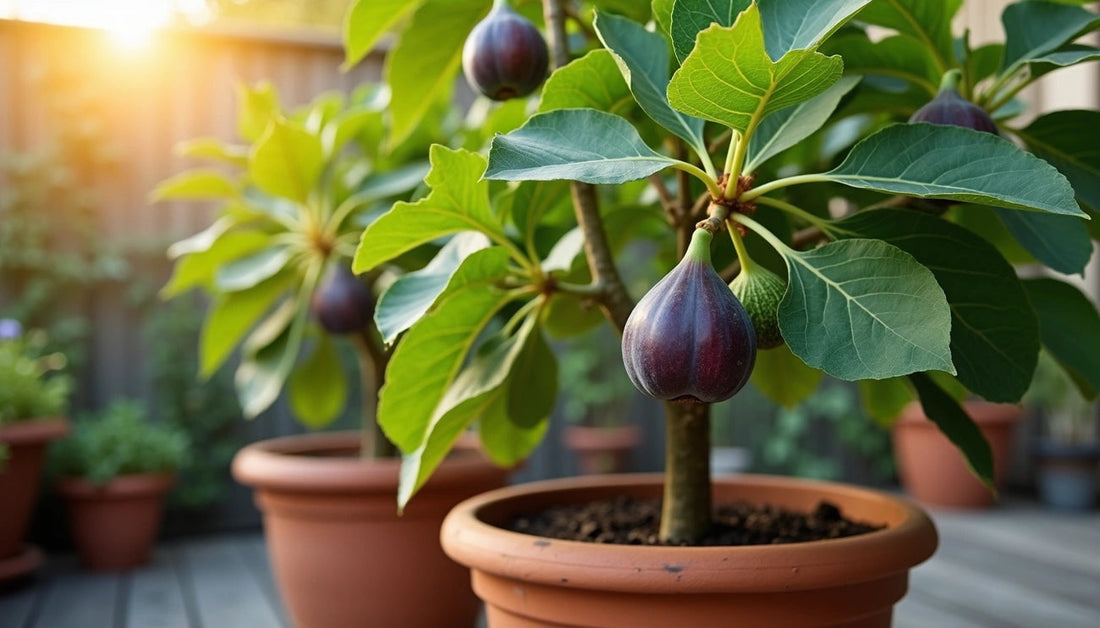
If you’ve ever wished your balcony could double as a Mediterranean courtyard, the common fig is your muse. Ficus carica brings generous harvests, sculptural leaves, and a talent for tight quarters—especially when you pair smart cultivar choices with right‑sized pots, root management, and elegant cordon or espalier training. Think living architecture that also happens to taste like summer.
Below is your design‑meets‑horticulture playbook for figs in small urban spaces.
Meet Ficus carica: the urban fruit with style
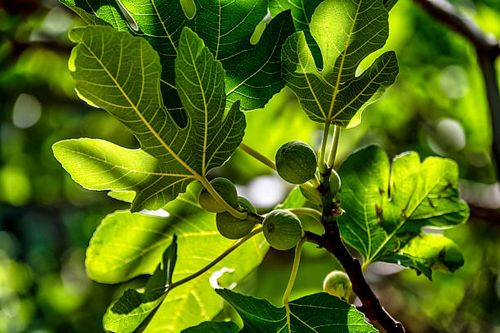
- Deciduous and self‑fertile: Unlike many tropical Ficus, the common fig drops its leaves in winter and doesn’t need a partner to fruit. Most home cultivars bear without pollination.
- Compact by design: Mature trees can reach 10–30 ft in the ground, but figs respond beautifully to pruning and are exceptionally container‑friendly.
- Long, sweet season: Many varieties give two crops—an early breba on last year’s wood, and a main crop from late summer to fall on new growth.
- Sun lover: Aim for 6–8 hours of direct sun. A south‑facing wall or bright patio is ideal.
- Climate notes: Generally happiest in USDA Zones 7–10. Cold‑tolerant selections can manage Zone 6 with protection. Brief dips to about 15°F (−9°C) can cause dieback.
Choose the right cultivar for compact spaces
Start with genetics that work with you, not against you. Look for naturally compact, container‑proven, or cold‑tough varieties.
- Dwarf and compact options (great for pots and small courtyards)
- Little Miss Figgy: Dwarf selection of Violette de Bordeaux; tight habit, deeply lobed leaves, rich dark fruit.
- Violette de Bordeaux: Naturally compact, intensely flavored dark figs; a classic for containers.
- Petite Negra: Fruits young and stays small—excellent for balconies.
- Climate‑savvy, reliable standbys
- Celeste: A favorite for small spaces; often resists splitting and has a “closed eye” that helps in humid climates.
- Brown Turkey: Adaptable, forgiving, and productive in a range of conditions.
- Chicago Hardy: Not truly arctic, but among the tougher picks for colder zones with winter protection.
- Black Mission: Deep, jammy flavor; great where summers are long and warm.
- Kadota: Green‑when‑ripe fruit—handy where birds are relentless; good for preserves.
Pro tip: In humid regions, prioritize cultivars known to resist splitting and souring (Celeste, Kadota). In cool‑summer climates, select early‑ripening types so fruit matures before fall chill.
Pot sizing and soil architecture: the foundation of a balcony orchard
Right‑sized containers and sharply drained media keep figs compact, productive, and manageable.
Pot size roadmap
- Year 1–2: 3–7 gal (11–26 L) to get roots established and encourage early fruiting via gentle root restriction.
- Fruiting size for compacts: 10–15 gal (38–57 L).
- Maximum for larger or vigorous cultivars: 15–25 gal (57–95 L). Bigger isn’t always better—overly large pots encourage excessive leaf growth and fewer figs.
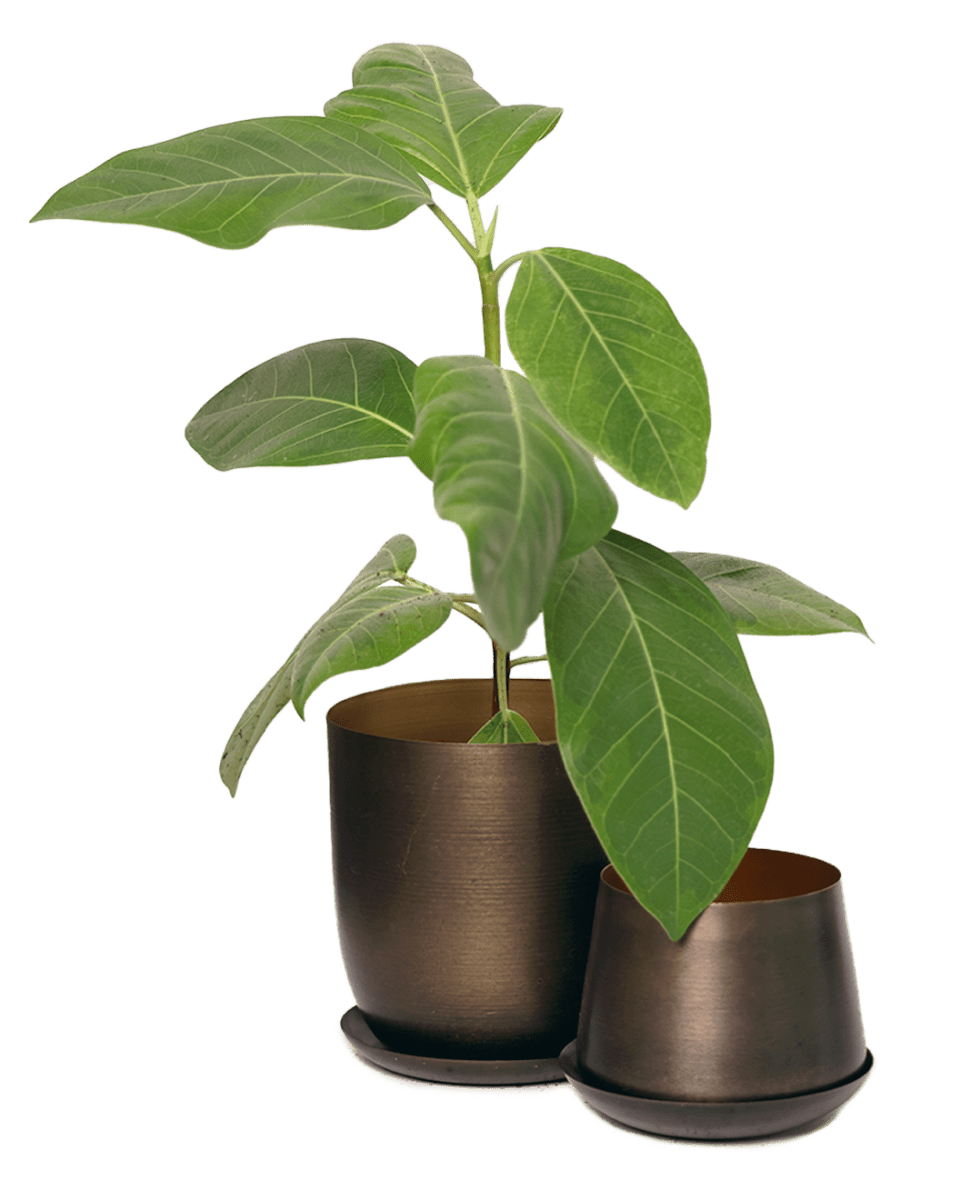
- Material & mobility: Use lightweight composite or resin planters on locking casters; large pots can weigh 100–200+ lb when wet. Ensure generous drainage holes.
Soil mix
- Blend for drainage and breathability:
- 2 parts high‑quality potting mix
- 1 part coarse perlite or pumice
- 1 part fine bark or compost
- Target pH ~6.0–7.5. Avoid heavy garden soil or waterlogged conditions.
Repotting and root pruning
- Timing: Late winter to early spring while dormant.
- Frequency: Every 2–3 years (annually for fast growers).
- Method:
- Slide the root ball out; slice off 10–25% of the outer mat of roots with a clean knife.
- Loosen circling roots; refresh 30–50% of potting mix.
- Replant in the same container or step up just one size.
Root pruning keeps figs compact and fruit‑forward, and it refreshes tired potting media.
Train for tight spaces: cordons and espaliers
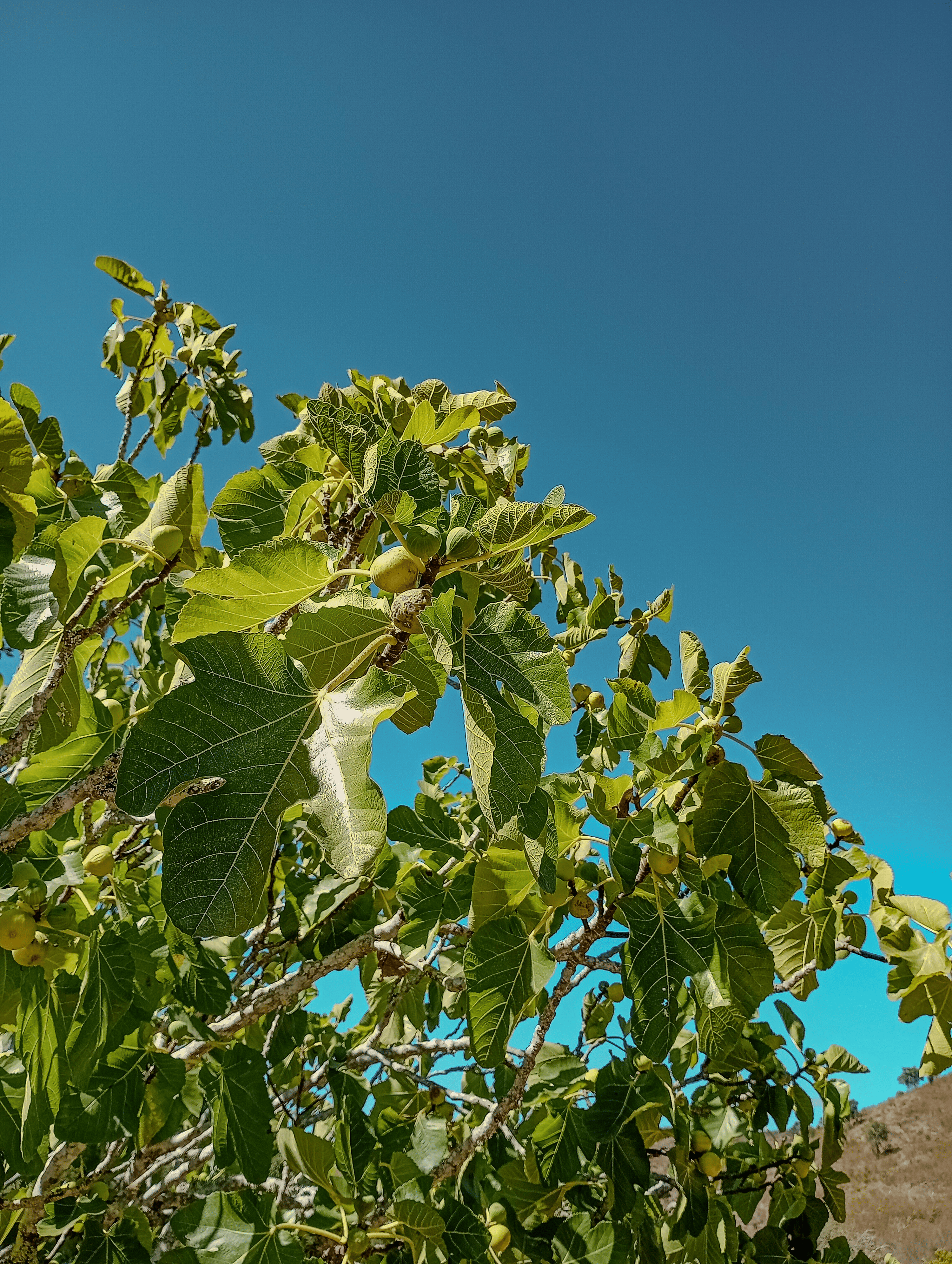
Espalier is living graphic design: a two‑dimensional tree flattened on wires, a fence, or a wall. Figs are naturals for this. Historically, figs were even trained against Egyptian walls to capture warmth—old technique, very modern footprint.
Best urban forms
- Single cordon: One main stem trained horizontally or vertically. Minimalist and perfect for very narrow spots.
- Double horizontal cordon (T‑shape): One trunk with two opposing arms along a wire—great fruiting surface, simple lines.
- Fan espalier: Several radiating arms tied to a trellis. Softer, sculptural look for courtyards.
- Low cordon for cold climates: Keep one or two arms just above ground and prune hard in fall; cover the low arms with mulch or insulation to overwinter in place—no tipping or wrapping a tall tree.
Hardware and layout
- Wires at 12–18 in (30–45 cm) vertical spacing; stainless steel or galvanized.
- Sturdy anchors in masonry or fence posts; keep a few inches of air gap from walls for airflow.
- Tie with flexible rubber ties or gardeners’ tape; avoid girdling.
Training steps (fig‑specific)
- Year 1:
- Plant at a slight angle if you plan a horizontal arm; head the leader at the height of your first wire to push strong laterals.
- Select 1–2 laterals to become arms; remove extras.
- Year 2:
- Extend arms along the wire; tie shoots as they elongate.
- Summer: When side shoots on the arms reach 5–6 leaves, pinch back to 4–6 leaves to encourage fruiting spurs.
- Winter pruning (dormant season):
- Maintain structure; remove congested or crossing growth.
- For breba + main crops: Keep some one‑year‑old laterals (they carry the breba). On older spur shoots, cut back to 1–2 buds to renew fruiting wood.
- Ongoing:
- Maintain a flat plane. Replace older, tired spurs with fresh shoots from the arms.
Design note: A dark trellis behind those bold fig leaves creates instant drama. In tiny spaces, a single horizontal cordon at railing height doubles as an edible “handrail.”
Water, feed, and sun: dialing in container care
- Sun: 6–8+ hours of direct sun. A south‑facing wall lends reflected heat that speeds ripening.
- Water:
- Keep evenly moist during fruit swell; never soggy.
- In containers, water when the top 2–3 in (5–8 cm) feel dry. In heat waves, this may be daily.
- Empty saucers after watering; figs dislike wet feet.
- Feeding:
- Early spring: Apply a balanced fertilizer (e.g., 8‑8‑8 or 10‑10‑10).
- Spring–summer for young plants: Light, periodic feeding about every 4 weeks can build structure—don’t overdo it or you’ll trade figs for foliage.
- Established plants: Fertilize mainly if growth is weak (under ~12 in/30 cm of new growth per year).
Overwintering small‑space figs
- Containers in cold zones:
- After leaf drop, move to a sheltered, unheated spot (garage, shed, stairwell) around 34–50°F (1–10°C). Light isn’t needed while dormant.
- Water sparingly—just enough to keep the root ball from bone‑drying (every 3–4 weeks).
- In‑ground, cold climates:
- Low‑cordon method: Prune back in fall, lay protective mulch over the ground‑level arms, and cover. Uncover in spring and retrain.
- Mild climates:
- Figs can handle light frost; brief dips to about 15°F (−9°C) may cause dieback. Mulch roots and protect young growth during cold snaps.
Styling ideas for small urban spaces
- Pots as pedestals: Charcoal or terracotta‑hued planters set off the deep‑green leaves and dusky fruit. Use matching containers for a cohesive look.
- Linear art: A double horizontal cordon spans a narrow balcony like a living picture rail.
- Privacy with purpose: A fan‑trained fig on a slim trellis becomes an edible screen without hogging floor space.
- Underplanting (sparingly): In larger pots, tuck in shallow‑rooted, drought‑tolerant accents like thyme or low sedums at the rim. Keep soil open around the trunk and avoid crowding the fig’s root zone.
- Mobility: Low‑profile casters make seasonal sun‑chasing and winter moves painless.
Safety style tip: Wear gloves when pruning or training. Fig latex (the milky sap) can irritate skin; keep prunings away from pets.
Troubleshooting and city‑savvy fixes
- Yellowing leaves: Most often moisture swings or poor drainage; check root zone first. Also consider nutrient balance.
- Fruit splitting/souring: Common in humid or rainy spells. Keep watering even, choose varieties with a closed eye (e.g., Celeste), and provide airflow.
- Diseases: Fig rust (yellow spotting and leaf drop), leaf spots, anthracnose on fruit. Remove fallen leaves/fruit, avoid overhead watering, ensure airflow. Copper‑based fungicides are sometimes used for rust where appropriate.
- Pests: Sap beetles, borers, and nematodes in ground soil; birds are the big “pest” in cities—netting or choosing green‑when‑ripe types (Kadota) helps.
Harvest with confidence
Figs don’t meaningfully ripen off the tree, so pick at peak:
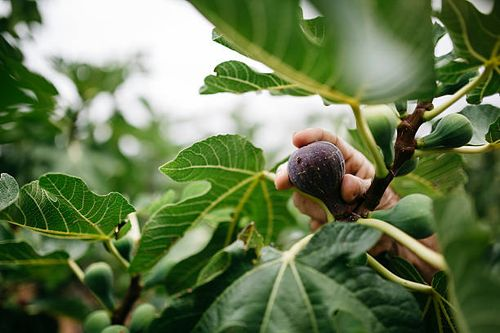
- Look for soft, heavy fruit that droops on its stem and shows a slight neck wrinkle.
- A tiny “honey drop” at the eye can signal readiness.
- Breba crop: Early summer on last year’s wood.
- Main crop: Late summer to fall on new growth.
Enjoy fresh, dry for later, or bake into tarts and jams. Nutritionally, figs bring fiber and minerals like potassium and calcium—sweet, with substance.
A quick calendar for urban fig keepers
- Spring: Prune for structure (late winter to early spring), feed, repot/root prune if needed, train to wires.
- Summer: Water consistently, pinch and tie new growth on espaliers, harvest breba (if present), thin congested shoots for airflow.
- Fall: Harvest main crop; reduce watering as growth slows; clean up leaves and fallen fruit.
- Winter: Protect in cold zones; move containers to shelter; water sparingly while dormant.
A note on flowers and symbolism
Figs seem to fruit without flowers because the “flowers” hide inside the fig’s syconium—an inside‑out floral chamber where tiny blooms develop and then mature into the luscious “fruit” we eat. Across cultures, fig trees symbolize prosperity, peace, knowledge, and abundance—apt company for a plant that turns a strip of railing or a sun‑splashed wall into a private orchard.
—
With a compact cultivar, a right‑sized pot, and a crisp cordon or espalier, Ficus carica becomes both sculpture and sustenance. In a world of small footprints, few plants give back so generously—or look so good doing it.