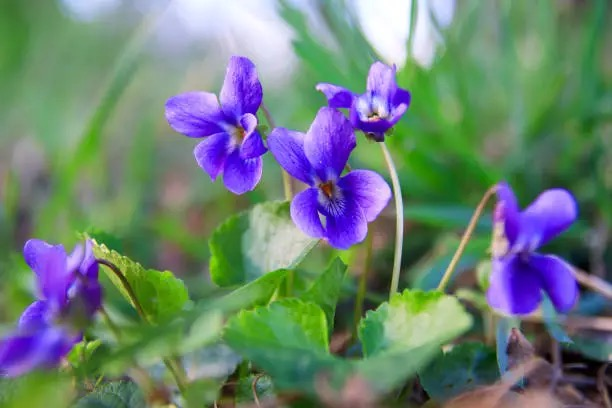
Open the door to a shady patch of early spring, and sweet violet greets you with a perfume so soft it feels like a whisper. Those dainty purple blooms aren’t just pretty—they’re delicious. In the kitchen, Viola odorata offers candied confetti for cakes, an old-fashioned tea syrup that blushes pink with a squeeze of lemon, and fresh petals to scatter over salads. Here’s how to harvest ethically, keep those fragile aromas intact, and cook with confidence (flowers and young leaves, yes; roots, absolutely not).
Meet sweet violet (Viola odorata): small plant, big charm
- A low-growing, mat-forming perennial with heart-shaped leaves and nodding, five-petaled flowers (typically deep violet-purple; sometimes white or lavender).
- Famous for a sweet, powdery fragrance. Some forms are intensely scented; the perfume can seem to “vanish” after you sniff—more on that quirky magic below.
- Native to Europe, North Africa, and West Asia, it thrives in cool, shaded spots and makes a romantic ground cover in woodland gardens.
- Culinary note: Flowers and young leaves are edible and traditionally used in teas, candies, and syrups.
How to recognize it quickly
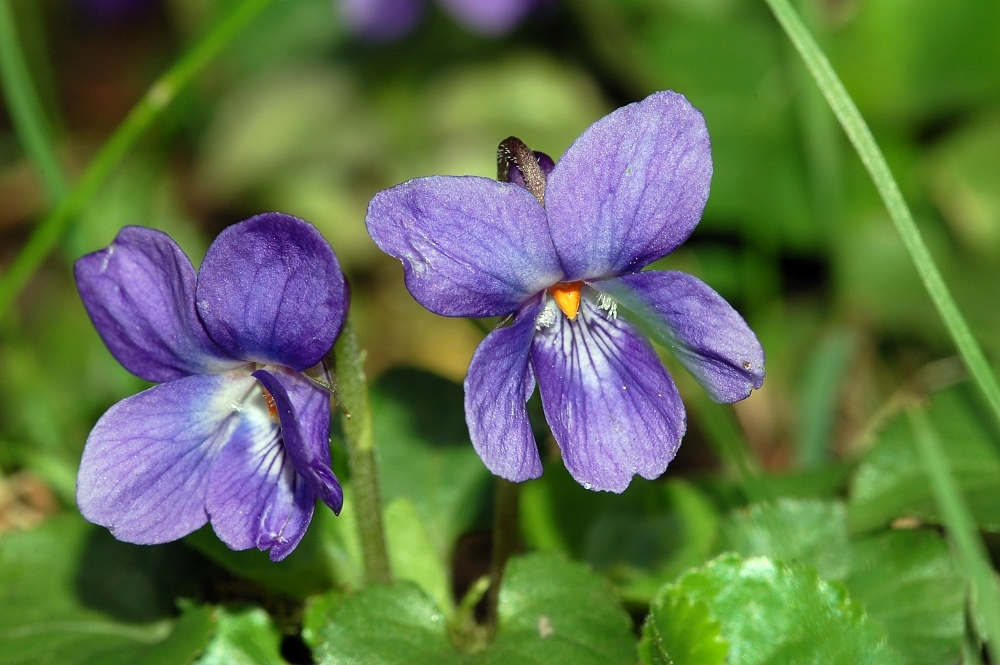
- Leaves: Heart-shaped, softly hairy, scalloped edges, growing in a basal rosette.
- Flowers: Small (about 1.5–2 cm across), with a nectar spur at the back; they often nod slightly. Look for darker veining on the lower petals.
- Scent: Follow your nose. Viola odorata is notably sweet-scented, while many other violets are faint or scentless.
Ethical harvesting and safety first
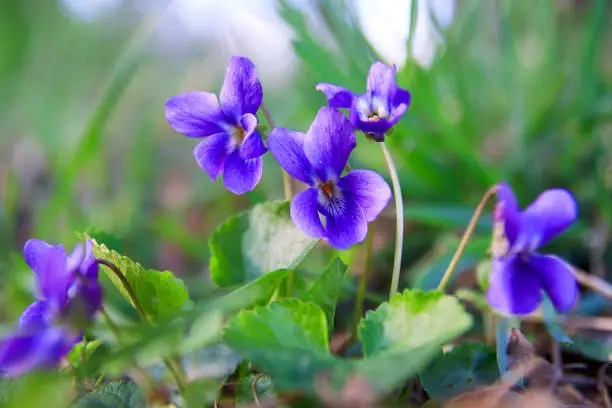
- Harvest lightly: Take just what you need and leave plenty for pollinators and reseeding. A good rule is to gather no more than one in three open blooms from a patch and rotate your picking spots.
- Let it multiply: Sweet violet spreads by creeping stolons and also sets seed from tiny, non-showy, self-pollinating flowers (cleistogamous flowers). Leaving blooms helps the colony stay vigorous.
- Snip, don’t tug: Use scissors to remove flowers with the tiniest bit of stem. Tugging can uproot runners.
- Clean source only: Pick from unsprayed gardens or known organic areas—never roadsides, lawns, or parks treated with herbicides or pesticides.
- ID caution: Do not confuse sweet violets with African violets (Saintpaulia), a houseplant that is not edible.
- Safety: Flowers and leaves are generally considered non-toxic for people and pets. Do not eat the roots; they can cause nausea or vomiting.
Keeping petals fragrant and perky
- Best time to pick: Mid-morning on a dry day, after the dew has lifted but before the sun warms the patch. Heat saps fragrance and wilts petals.
- Gentle handling: Carry blooms in a shallow container lined with a dry towel. Avoid crushing.
- Quick clean: If needed, give a swift dip in cool water and lay on towels to dry completely—moisture shortens their life and spoils candying.
- Short, cool storage: Layer blooms between paper towels in a lidded container in the fridge. Use within 24–48 hours for peak perfume.
- Why the scent “disappears”: Sweet violet contains beta-ionone, which momentarily desensitizes your scent receptors. Step away for a few minutes and the perfume returns; the flowers didn’t lose it—you did!
The kitchen playbook
1) Candied violets (sparkly keepsakes for cakes and cookies)

These old-world treats preserve both color and a whisper of aroma in crisp sugar crystals.
Ingredients (makes 60–80 candied blooms)
- 1 to 1½ cups fresh, dry sweet violet flowers, stems trimmed
- 1 egg white, lightly beaten with 1 teaspoon water (or 2 tablespoons aquafaba for an egg-free option)
- ½ to ¾ cup superfine (caster) sugar, plus extra for dusting
- A soft, clean paintbrush; tweezers; parchment-lined tray
Method
- Dry and ready: Ensure blooms are perfectly dry.
- Brush: Holding a flower by the stem or with tweezers, lightly paint all sides with egg white or aquafaba. Less is more—you want a thin, even film.
- Sugar coat: Sprinkle with superfine sugar until fully coated. Tap off excess.
- Shape and dry: Set on a parchment-lined tray, petals face up. Gently nudge petals into a natural shape. Air-dry 12–24 hours in a cool, low-humidity spot until crisp.
- Store: Layer between wax paper in an airtight tin with a small sachet of dry sugar or a food-safe desiccant. Keeps 3–4 weeks, sometimes longer.
Tips
- Superfine sugar clings best. Pulse regular sugar briefly in a food processor if needed.
- Humidity is the enemy; if they soften, re-dry in a barely warm oven (no more than 80°C / 175°F) with the door cracked.
- Uses: Crown cupcakes, shortbread, pavlovas, rice pudding, or nibble with tea.
2) Violet tea syrup (a color-shifting charmer)
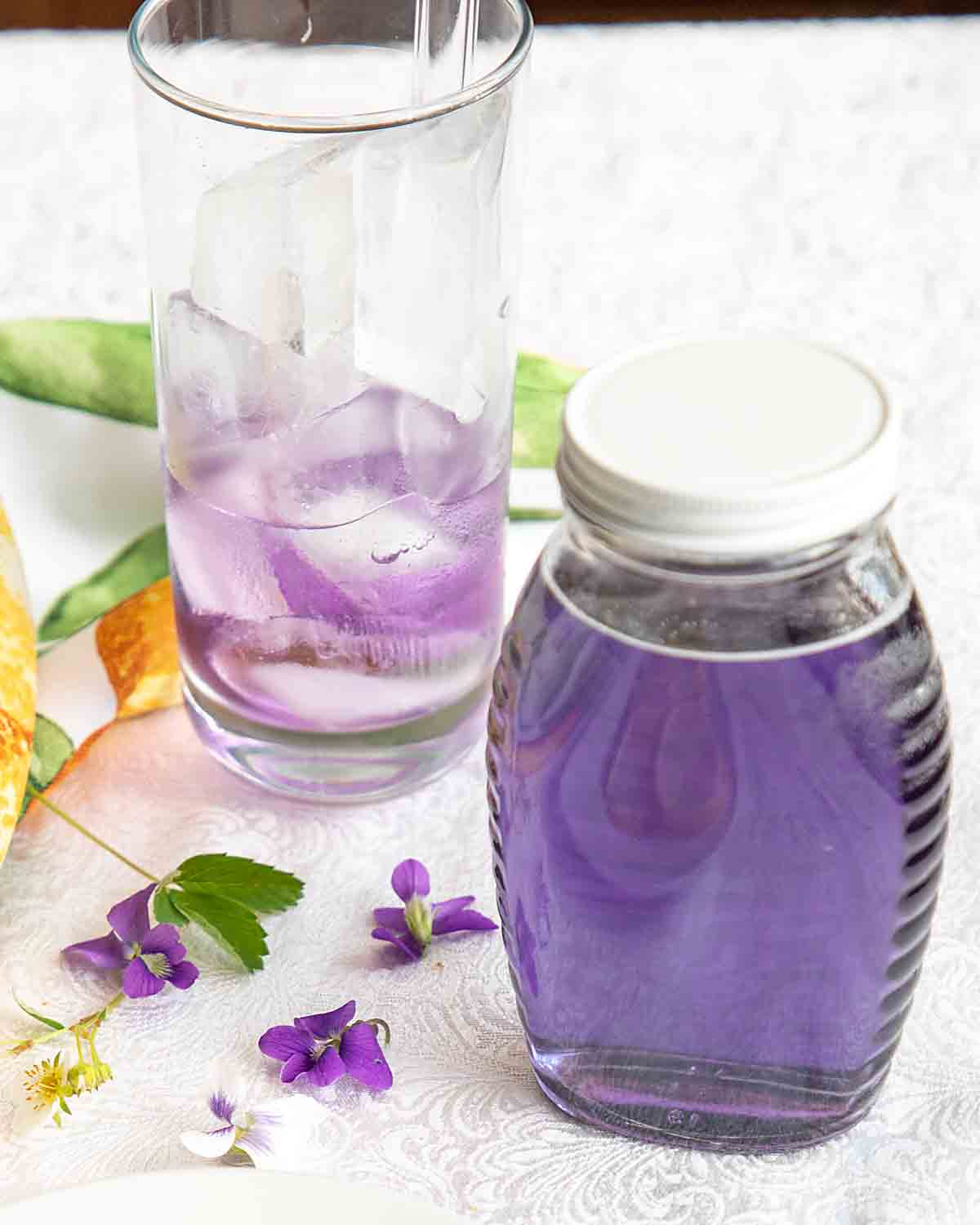
This syrup captures spring’s hue and a light floral note—watch it turn from blue-violet to pink with a squeeze of citrus. It’s stunning in lemonade, spritzers, cocktails, shaved ice, and drizzle cakes.
Ingredients
- 1 cup (lightly packed) sweet violet petals, meticulously clean and dry
- 1 cup just-off-the-boil water
- 1 cup granulated sugar
- Optional: 1–2 teaspoons lemon juice (for pink), or keep neutral for bluer tones
Method
- Infuse: Place petals in a heatproof jar. Pour over hot water (not a rolling boil to better preserve color). Cover and steep 15–30 minutes until deeply tinted.
- Strain: Press gently to extract color without mashing.
- Sweeten: Stir in sugar until dissolved (warm gently if needed). Cool.
- Adjust: Add a few drops of lemon juice to coax a rosy hue, or leave as-is for blue-violet.
- Store: Refrigerate in a sterilized bottle up to 2–3 weeks. Freeze in ice cube trays for longer keeping.
Serving ideas
- Violet lemonade: 1 ounce syrup + 8 ounces sparkling water + squeeze of lemon.
- Tea latte: 1 tablespoon syrup in hot black or green tea, finished with steamed milk.
- Cakes: Brush onto sponge layers as a floral soak before frosting.
3) Salad sprinkles and leafy greens
Petals and baby leaves add woodland elegance and gentle nourishment.
- Petal confetti: Scatter over spring salads with tender greens, strawberries, shaved fennel, and young goat cheese. Finish with a light lemon-honey vinaigrette.
- Leaf chiffonade: Very young leaves (the size of a thumbprint) are mild; slice thinly and fold into salads. Older leaves are best lightly wilted in olive oil with a pinch of salt and garlic.
- Finishing salt: Mix 2 tablespoons chopped petals with ¼ cup flaky sea salt. Air-dry and jar—pinch over buttered radishes, soft cheeses, or grilled fish for a floral finish.
Note: Violets are rich in vitamins A and C. As with any new wild food, enjoy moderate amounts and see how you feel.
Grow your own (and harvest with a clear conscience)
Want a steady, safe supply? Sweet violet is delightfully easy to grow.
- Light: Partial to full shade—dappled woodland light is ideal. Avoid harsh, hot sun.
- Soil: Fertile, humus-rich, well-draining; neutral to slightly acidic (pH 6.0–7.0).
- Water: Keep consistently moist (not soggy). Bottom-water containers to keep leaves dry and reduce mildew.
- Climate: Cool grower, happiest around 15–20°C (60–70°F). Hardy in USDA Zones 3–9; mulch in very exposed, cold sites.
- Care: Deadhead for tidiness and possible autumn rebloom. Thin crowded mats in fall to boost airflow. Divide clumps in spring or fall to expand your patch or share with friends.
Troubleshooting freshness and flavor
- Petals taste flat? Pick earlier in the day and avoid heat—fragrance is volatile.
- Flowers limp in the bowl? They likely had residual moisture. Dry fully before candying or storing.
- Patch looks tired in summer? Plants may go semi-dormant in heat; keep roots lightly moist and wait for autumn revival.
Flower language, folklore, and the “vanishing” scent
In the Victorian language of flowers, violets symbolized modesty, faithfulness, and remembrance—qualities tied to their humble habit of blooming close to the ground and their return each spring. Earlier still, violets appear in Greek and Roman lore; one tale has Persephone gathering violets when Hades spirited her away, linking the bloom to seasonal return and memory.
Their perfume’s shy act has a scientific twist: beta-ionone in sweet violet temporarily numbs scent receptors, so after the first heavenly sniff your nose stops “hearing” it for a bit. Give it a few minutes—the fragrance will find you again.
Quick safety and use FAQ
- Can I eat any violet I find? Focus on correctly identified sweet violet (Viola odorata) from clean, unsprayed areas. Many violets are edible, but never eat houseplant African violets. When in doubt, don’t.
- Are the roots edible? No. Eat flowers and young leaves only—avoid roots, which can cause nausea or vomiting.
- Pet safety? Generally non-toxic to dogs and cats (again, flowers and leaves). Keep all roots off-limits.
- How long do fresh blooms last? Best within 1–2 days refrigerated; candy or syrup them to enjoy longer.
Sweet violet rewards a gentle touch: harvest with care, keep things cool and dry, and it will repay you with spring’s most poetic flavors—on your cakes, in your glass, and scattered like woodland stardust across your plate.