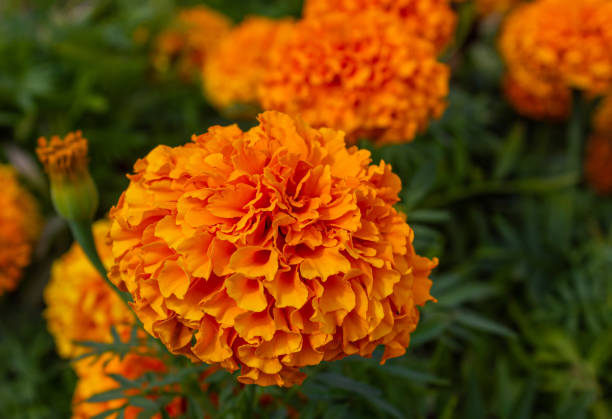
Bright, sunburst blooms with a whiff of citrus and spice…and underground chemistry that outsmarts microscopic pests. African marigold (Tagetes erecta) is the garden equivalent of a cheerful extrovert with a secret double life—one part confetti, one part bio‑lab. Let’s peel back the petals and sniff out the surprises: the scent compounds, the nematode‑taming roots, the golden lutein that colors our food, and the story of how October claimed marigold as a birth flower.
Meet Tagetes erecta: the big pom‑pom marigold
- Origin: Native to Mexico and Central America (despite the “African” nickname).
- Aliases you’ll hear: African Marigold, American Marigold, Aztec Marigold, Big Marigold, Mexican Marigold, plain “Marigold.”
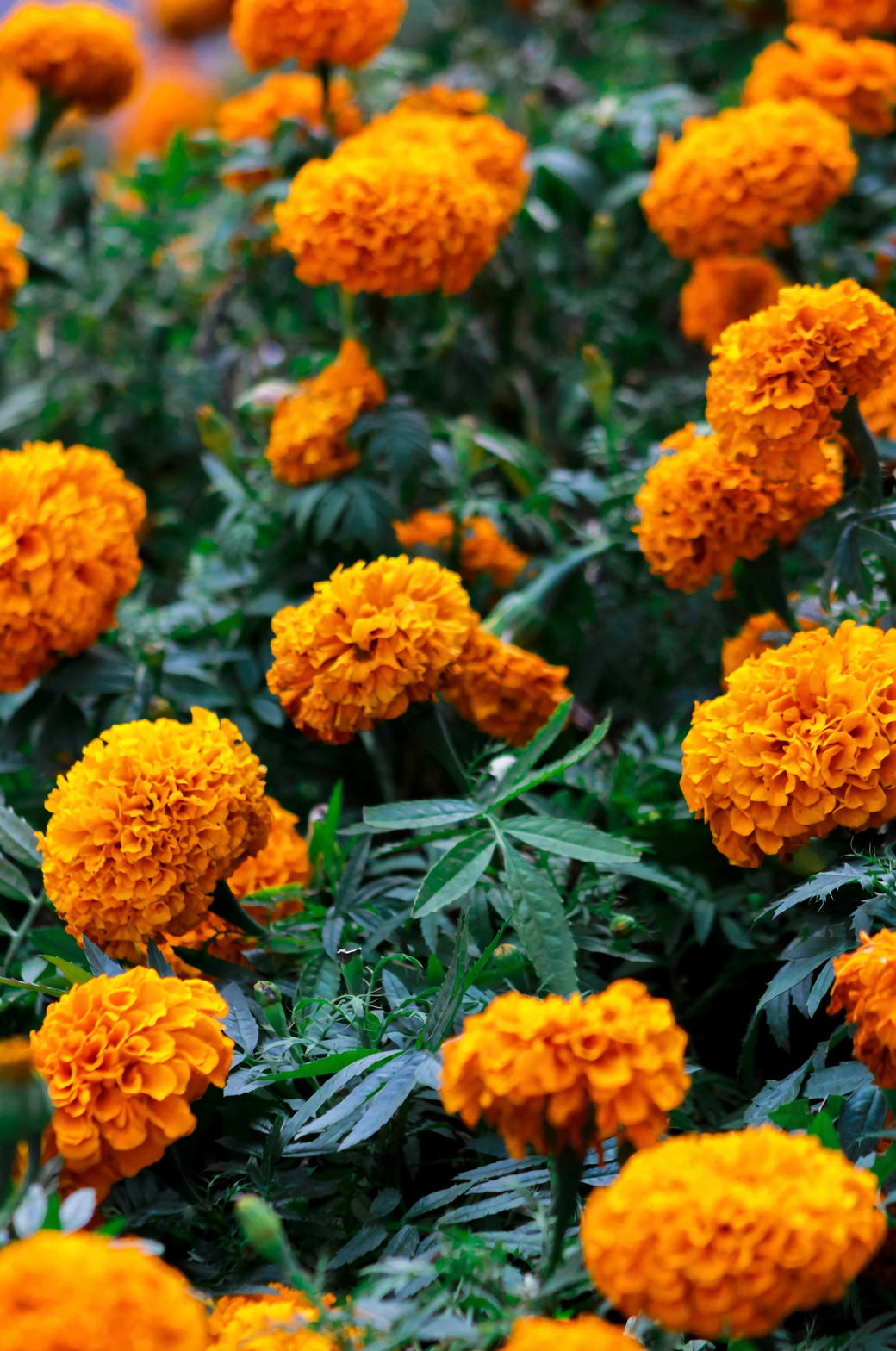
- Look and habit: Upright, bushy plants with strongly aromatic, pinnate foliage and huge ruffled, pom‑pom blooms in glowing yellow, gold, and orange—sometimes with creamy or warm red tones. Most grow 30–90 cm tall; compact selections stay under 30 cm, and big cuts can reach about 120 cm.
- Bloom window: Summer to fall—often late spring to first frost in warm climates.
The scent story: what’s in that unmistakable marigold aroma?
Crush a leaf or brush past a plant and you’ll get a bold, resinous-green, citrus‑tinged perfume. That signature scent comes from a cocktail of aromatic compounds, notably:
- Bright, zesty monoterpenes such as limonene and ocimene that lend citrus‑peel and green notes.
- Floral-herbal players like linalool that soften the edges.
- Marigold‑specific ketones (such as tagetone/dihydrotagetone in Tagetes oils) that add a fruity‑green, slightly spicy twist.
Why it matters:
- In the garden, the strong aroma is one reason marigolds are popular in mixed beds—some pests think twice around those scented leaves.
- In fragrance craft, marigold (Tagetes) extracts can add a fresh, green, fruity accent—like sun‑warmed citrus peel in a meadow breeze.
Underground superpowers: roots that help suppress nematodes
Marigold doesn’t just smell assertive—it behaves that way below ground. Its roots and residues can reduce populations of several plant‑parasitic nematodes, including two notorious groups:
- Root‑knot nematodes (Meloidogyne spp.)
- Lesion nematodes (Pratylenchus spp.)
A star player here is alpha‑terthienyl, a thiophene compound marigolds produce that can be toxic to certain soil organisms (especially in light/oxygen), helping tip the balance against problem nematodes.
How gardeners and growers put this to work:
- As a cover crop or dense border: Plant marigolds as a dedicated stand before a susceptible veggie crop. The effect comes from the whole root zone, not a token plant or two.
- Give it a season: Let plants grow vigorously in full sun and warmth; more roots mean more suppressive impact.
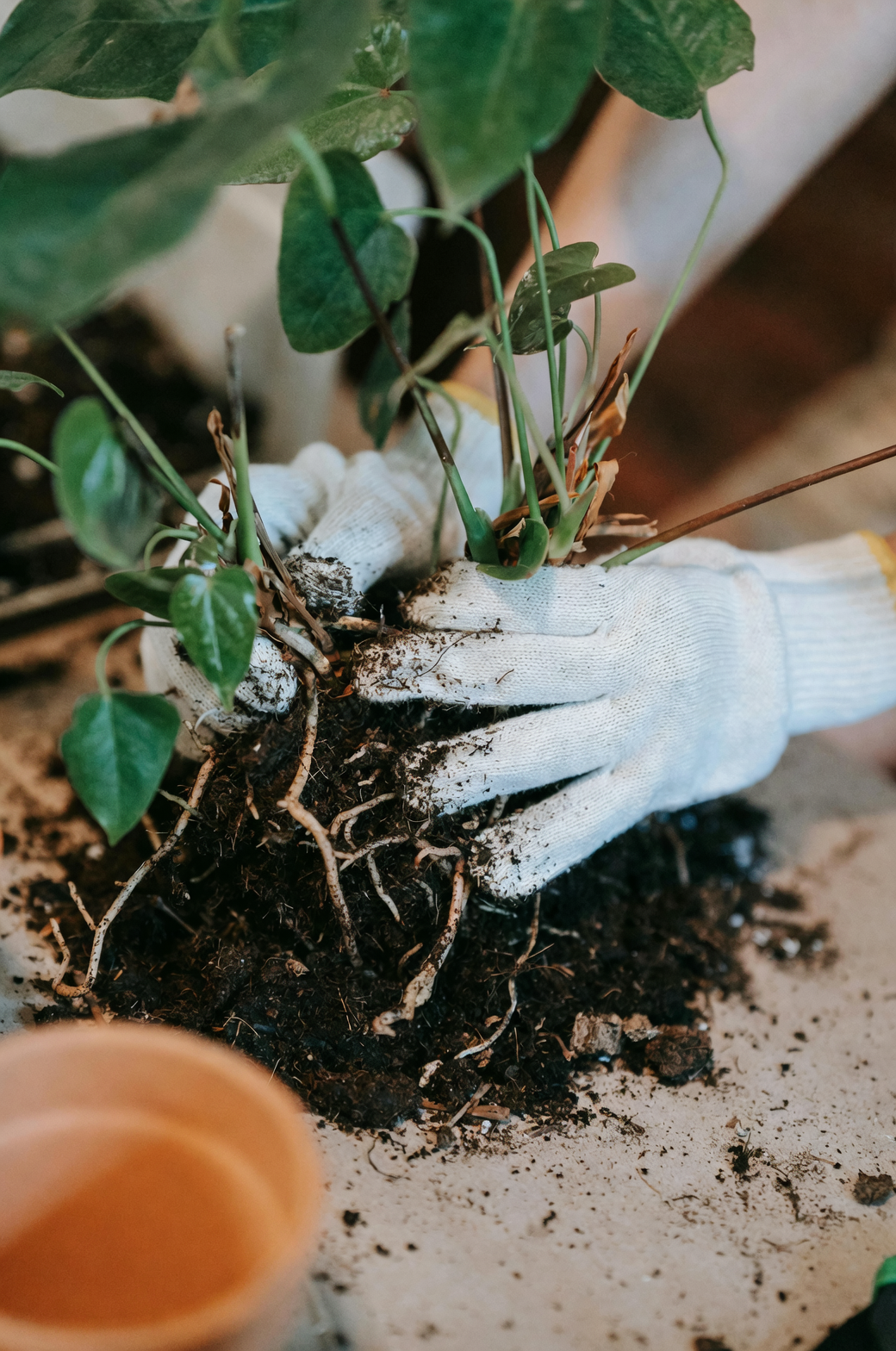
- Incorporate residues: After flowering, chop and mix the tops/roots into the soil to release bioactive compounds as they break down.
- Use as part of a system: Combine with rotation, resistant varieties, and good soil health. Effectiveness varies by nematode species and marigold cultivar—this is a smart tool, not a silver bullet.
Petal to plate: lutein, the golden pigment pipeline
Those saturated gold and orange heads are little pigment factories. Petals of Tagetes erecta are a leading commercial source of lutein—a carotenoid prized for:
- Natural coloring in foods and feeds (think sunny yellows and warm golds).
- Deepening egg‑yolk color in poultry feed, a long‑standing agricultural use.
Kitchen curiosity:
- In some regions, marigold petals are used sparingly as garnish or seasoning, but the flavor is strong and not everyone enjoys it. If you experiment, only use unsprayed flowers grown for edible use, and try a small amount first.
- Note the name trap: Pot marigold (Calendula) is a different plant entirely and more commonly used as an edible flower.
Safety note: Tagetes can be mildly irritating; the sap may bother sensitive skin, and pets may get an upset stomach if they chew a lot.
Why October claims marigold as a birth flower
Many modern “birth flower” lists pair marigold with cosmos for October. The fit is poetic and practical:
- Seasonal spotlight: African marigolds are in peak stride from late summer through fall—exactly when October wants its floral icons.
- Harvest palette: Their gold‑to‑orange spectrum echoes autumn leaves, low‑angled sunlight, and harvest festivals.
- Cultural nearness: In Mexico, marigolds (cempasúchil) are central to Día de los Muertos around early November—close enough to October that the association of remembrance and guiding light spills beautifully into the month.

And the deeper “flower language”? It’s a mosaic:
- Mesoamerica: A flower of remembrance, guiding loved ones home—bright as a beacon.
- South Asia: Wreaths of marigolds celebrate purity, prosperity, and auspicious beginnings.
- Chinese traditions: Linked with longevity and respect for elders—fitting its Chinese name, 万寿菊, “ten‑thousand‑longevity chrysanthemum.”
- Western lore: “Mary’s gold” in European tradition; Victorian floriography sometimes cast marigold with ambivalence (even jealousy or grief), yet modern lists lean toward warmth, creativity, and enduring affection.
In short, October’s marigold is sunshine with gravitas—joy on top, remembrance underneath.
Grower’s minute: easy rules for lush pom‑poms
- Sun: Full sun is non‑negotiable—aim for 6–8+ hours daily. In very hot regions, a sip of light afternoon shade can reduce stress.
- Temperature: Thrives in warm weather around 18–27°C (65–80°F); it’s frost‑sensitive. Extreme, stagnant heat (around/above 32°C/90°F) can slow blooming.
- Soil and water: Well‑drained loam or potting mix; let the top layer dry slightly between deep waterings. Avoid soggy soil to prevent root/stem rot.
- Feeding: Moderate is perfect—too much nitrogen = leaves over blooms. A light, regular feed and a bloom‑boost before peak flowering keeps the show going.
- Grooming: Pinch early to encourage branching; deadhead to extend the fireworks. If plants stretch mid‑season, cut back for a fresh flush.
- Habit and use: Compact types shine in window boxes and pots; taller sorts fill borders and make superb cut flowers.
Quick myths and gotchas
- “African” marigold is Mexican at heart. That nickname came from an old horticultural trade route, not geography.
- One plant won’t patrol the whole plot. For nematode help, think stands and rotations, not single specimens.
- Calendula ≠ Tagetes. Both are called marigold in English, but they’re different genera with different culinary traditions.
- Overwatering is the fast lane to flop. When in doubt, check drainage first.
A final sniff of sunshine
Tagetes erecta is the rare plant that delights the eye, tickles the nose, nudges pests off balance, and lends its golden glow to our foods—all while asking for little more than sun and a well‑drained seat. Grow it for the color, stay for the chemistry, and let October borrow its warmth for birthdays, memories, and bright wishes.