
Step into the sun with a flower that’s worn many names and crossed oceans without losing its swagger. Tagetes erecta—better known to many as African marigold, American marigold, Aztec marigold, or simply cempasúchil—bursts out of history in ruffled gold, a beacon from Mesoamerica that charmed Europe in the 16th century and then conquered gardens worldwide. This is its lively origin story—and how a misnomer hitchhiked along for the ride.
Born in the sun: Mesoamerican roots
Long before it lit up global flowerbeds, Tagetes erecta was a native of Mexico and Central America. In Nahuatl, the Aztec language, it was called cempohualxochitl—often rendered today as cempasúchil or cempazúchitl—“twenty-flower,” a poetic nod that suits its full, many-petaled heads.
- Cultivated on chinampas (the famed “floating gardens”) and gathered in the wild, the plant was prized for ceremony, medicine, and decoration.
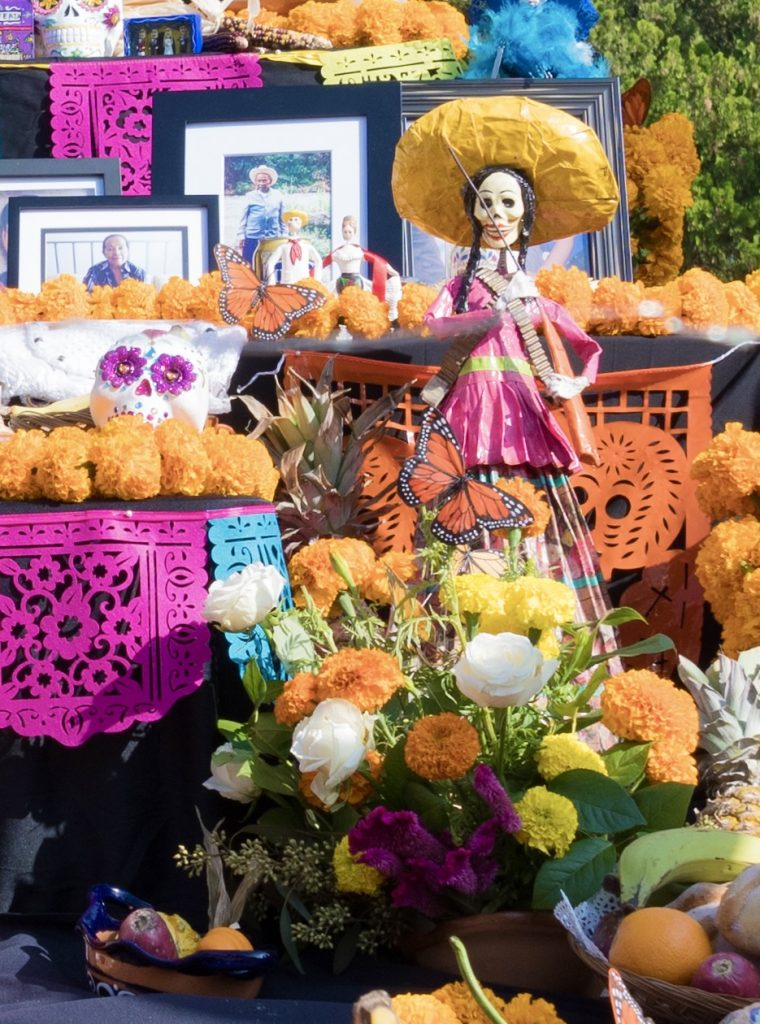
- Its vivid color and pungent fragrance made it a sacred companion in rituals; the bloom remains a guiding light in Día de los Muertos, where petals are strewn in paths to welcome beloved spirits home.
- Over centuries, Indigenous growers selected for bolder color and larger blooms—traits that still define African marigolds today.
Imagine the markets of Tenochtitlán: baskets of blazing gold blossoms, their resinous scent cutting through the air. This is where the marigold’s world tour begins.
A 16th‑century voyage—and a brand‑new name
Spanish explorers carried seeds to Europe in the 1500s, where gardeners quickly fell for their easy nature and generous bloom. From there, marigolds spread outward to Africa and Asia on trade winds and ship decks, then into the pages of seed catalogues—and here’s where the name confusion took root.
How did “African marigold” stick?
- The plant is native to the Americas, yet European horticulture widely labeled Tagetes erecta “African marigold.” Why? Blame a cocktail of trade routes, marketing flair, and the urge to sort similar species quickly.
- In European gardens, T. erecta needed a distinct tag from its smaller cousin, T. patula—prompting the tidy contrast of “African” versus “French” marigold. The distinction persisted, even though T. erecta’s true homeland is Mexico and Central America.
- Today, you’ll still find it sold as African marigold, American marigold, Aztec marigold, Mexican marigold, and more. Whichever name you choose, its origins remain proudly Mesoamerican.
From ofrendas to garlands: how marigold charmed the world
- Mexico and Central America: A flower of remembrance and welcome during Día de los Muertos—its glow said to help spirits find their way.
- South Asia: A staple of festivals and temples, marigold garlands carry meanings of purity, luck, and prosperity; its saturated color reads like a celebration in motion.
- China: Associated with longevity and respect for elders—echoed in the Chinese name 万寿菊 (“ten-thousand-shou chrysanthemum”), evoking long life.
- The West: Alongside its cheer, marigold has been linked at times with remembrance and even the more shadowed sentiments of jealousy or grief—proof that symbolism shifts with culture and century.
Wherever it landed, marigold slipped easily from sacred aisle to garden row, brightening borders, balconies, and market stalls.

The plant behind the legend
Meet the exuberant, hard-working marigold gardeners adore:
- Habit: Upright, bushy, and sturdy; typically 30–90 cm tall (some reach about 120 cm), with branching stems and aromatic, finely divided, mid‑ to gray‑green foliage.
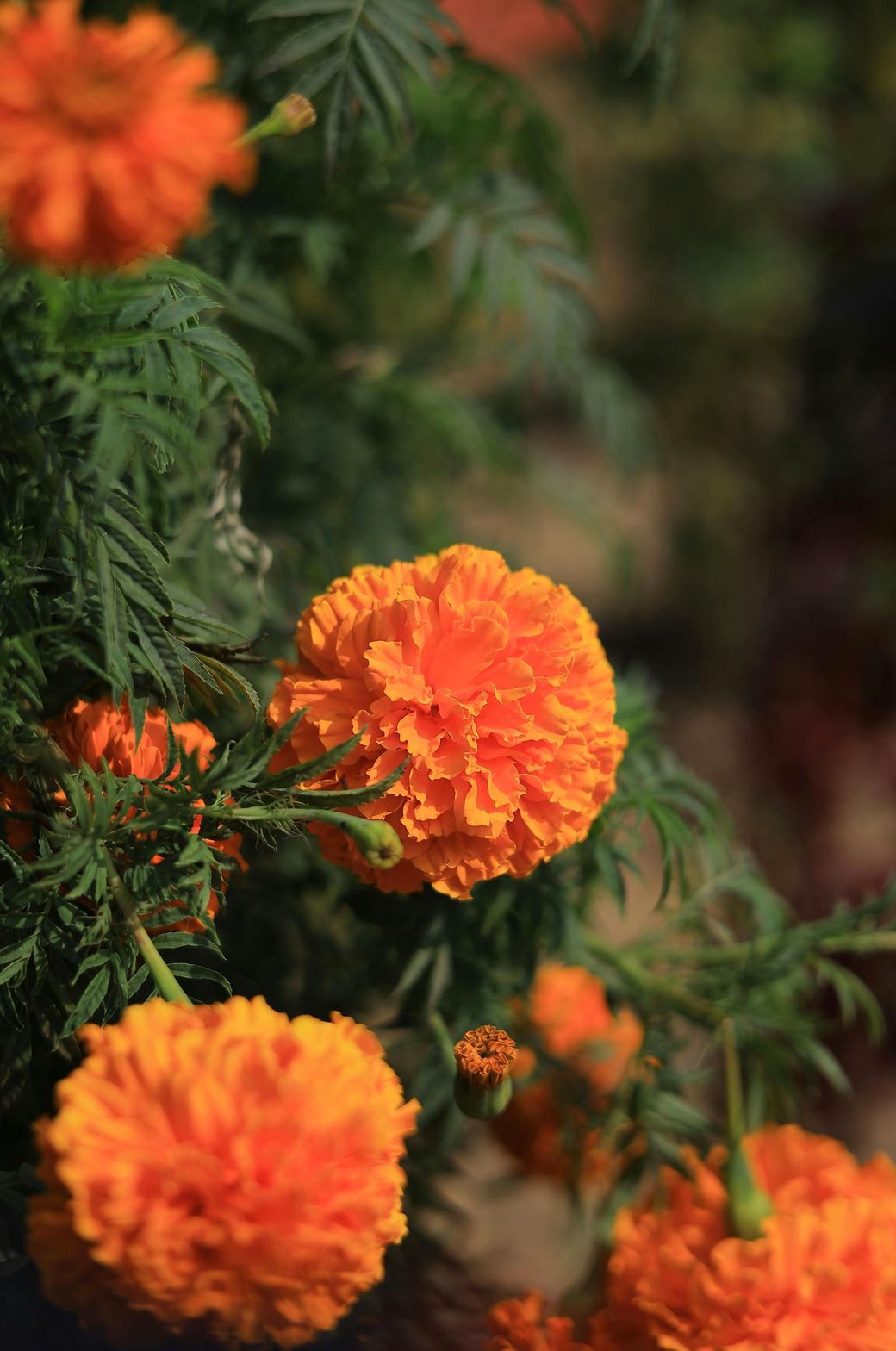
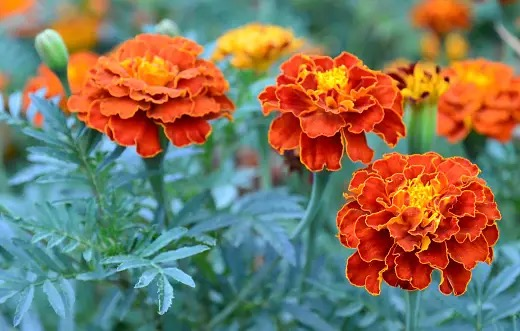
- Blooms: Big, ruffled “pom‑poms” or sometimes more open, daisy‑like heads, usually 5–12 cm across in bright yellow, gold, and orange (with occasional creamy or warm red tones).
- Season: A warm‑season performer that flowers from summer into fall—often from late spring to first frost in mild climates.
- Personality: Beginner‑friendly, container‑ready, and generous; a classic choice for mass bedding, cut flowers, and vegetable gardens.
Beyond beauty, Tagetes erecta is practical. Its roots and distinctive scent can help discourage certain pests (notably some nematodes), and its petals are a valued source of lutein for natural coloring—famously used to deepen the hue of egg yolks.
A quick grower’s guide
- Sunlight: Full sun is the secret to abundant bloom—aim for 6–8+ hours daily. In very hot regions, a sip of afternoon shade helps.
- Temperature: Loves warmth (about 18–27°C / 65–80°F). It’s frost‑tender; think annual almost everywhere, short‑lived perennial only in frost‑free zones.
- Soil: Well‑draining loam or potting mix; moderately fertile is ideal. Avoid soggy conditions.
- Water: Water deeply, then let the top of the soil dry slightly before the next drink. Containers dry faster in heat.
- Feeding: Light, regular feeding in active growth is plenty. Go easy on nitrogen—lush leaves can mean fewer flowers.
- Grooming: Pinch young plants to encourage branching; deadhead to keep the show rolling. If plants get lanky midseason, a cutback sparks a fresh flush.
- From seed: Sow after last frost once soil warms, or start indoors 6–8 weeks earlier. Warm soil usually means sprouting in about a week, with blooms following in roughly 2–3 months depending on type.

Companions, pests, and practical magic
- Great neighbors: Commonly paired with tomatoes, peppers, cucumbers, squash, melons, beans, and potatoes—one piece of a broader, healthy‑garden toolkit.
- Pests to watch: Aphids, spider mites, thrips, leafhoppers, plus snails and slugs.
- Diseases: Powdery mildew, botrytis, leaf spot, rust, aster yellows, and root/stem rots—often tied to wet foliage, soggy soil, or poor airflow.
- Prevention: Sun, spacing, and watering at the base. Rinse pests off or use insecticidal soap/horticultural oil if needed; promptly discard plants with viral issues like aster yellows.
Note on edibility and safety: Some regions use Tagetes petals as garnish or seasoning, but the flavor is strong and not everyone tolerates it. Only use unsprayed flowers grown for edible use and try a small amount first. Also, its sap can irritate sensitive skin. And don’t confuse it with Calendula officinalis (pot marigold), a different plant with a long culinary/herbal history.
Names, meanings, and misnamings: flower language decoded
Where did “marigold” come from? In Europe, the name is often linked to “Mary’s gold,” tying golden blooms to the Virgin Mary—though the common name also echoes older associations with Calendula, a different plant that Europeans already knew. As Tagetes erecta joined European gardens, it slipped under the marigold umbrella while retaining Indigenous names like cempasúchil in Mexico.
What about flower language (花语)? There isn’t a single, universal code. Meanings evolved across places and eras:
- Mexico and Central America: Remembrance, love for the departed, and guidance—rooted in centuries of practice during Día de los Muertos.
- South Asia: Purity, auspiciousness, and prosperity—visible in temple offerings and festival garlands.
- China: Longevity and honoring elders, fitting the plant’s Chinese name and frequent use in celebratory decor.
- Victorian‑era West: Depending on the source, marigolds could symbolize remembrance—and sometimes more somber notes like grief or jealousy.
Taken together, marigold’s “language” is a layered conversation between cultures: bright joy at the surface, profound memory and meaning beneath.
Fun detours for plant nerds and storytellers
- Despite the name “African marigold,” Tagetes erecta is native to Mexico and Central America.
- Petal pigments (especially lutein) color foods and feeds—and can give egg yolks that rich, golden glow.
- Some Tagetes roots release compounds that can help suppress certain root‑knot nematodes in thoughtful crop rotations.
- Marigolds are one of October’s birth flowers (often alongside cosmos).
- Their bold, resinous scent is a signature—half perfume, half protective charm in mixed plantings.
—
From sacred pathways of cempasúchil to the ebullient pompoms in today’s beds and bouquets, Tagetes erecta has always been more than a pretty face. It’s a traveler, a translator, and a torchbearer—carrying stories across centuries, then blooming them back into the present every time we give it sun, a bit of space, and our attention.