
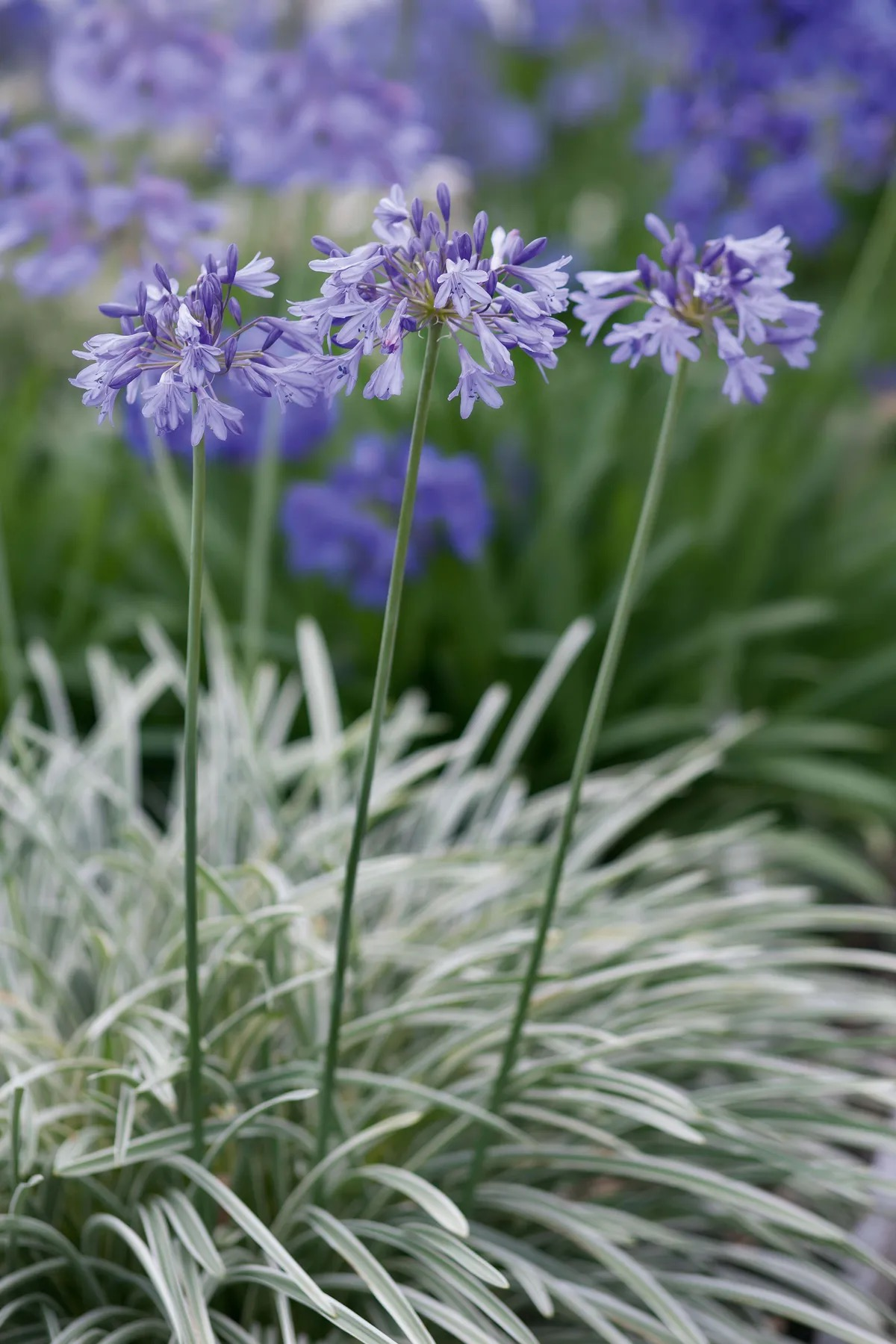
You know that moment in early summer when borders suddenly pop with blue “firework” globes on tall, elegant stems? That’s Agapanthus africanus—Lily of the Nile—equal parts poise and exuberance. On the design table it’s a workhorse: long, straight stems; sculptural, rounded umbels; and a procession of florets that keep opening in the vase. Here’s how to harvest, condition, and style it like a cut‑flower insider, plus ways to turn its dried seed heads into show‑stopping, sculptural accents.
The bloom you want to cut: harvest stage that pays you back
Timing is everything with Agapanthus. Cut too tight and some florets never wake up; too open and the head blows quickly.
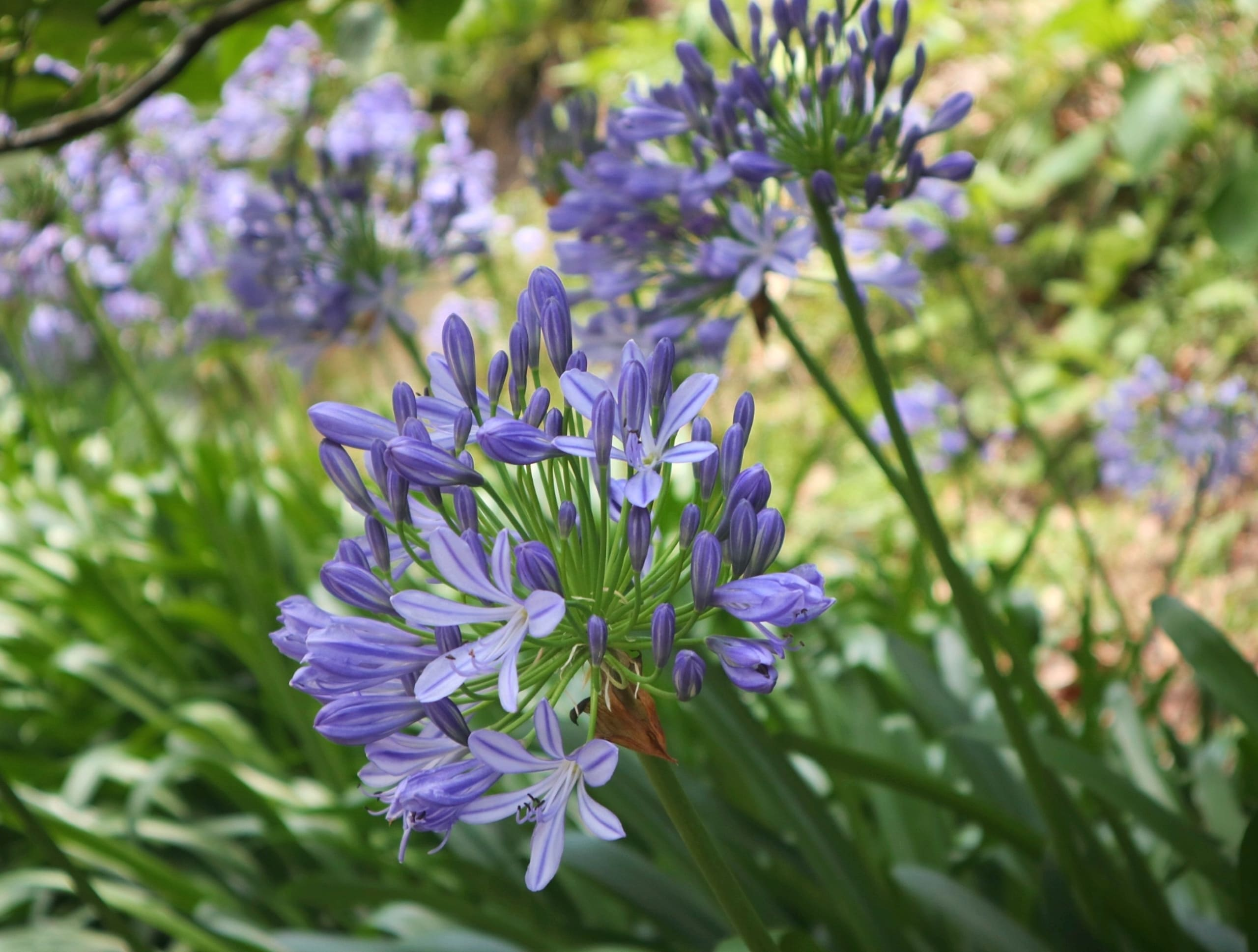
- Aim for first-flush open: harvest when the outer ring of florets is just opening (about 10–30% of the head in bloom) and the remaining buds are plump and well-colored.
- Cut cool: early morning or evening is best for peak hydration and minimal stress.
- Go long: take generous stem length—you can always shorten later.
- Strip smart: remove any foliage that would sit below the waterline.
- Handle with care: the sap can irritate skin; gloves are a good habit, especially for sensitive hands.
Pro note: Agapanthus umbels mature from the outside in. That’s why a just-opening ring lets the inner buds keep the show going for days.
Conditioning for long vase life
Immediate steps (farm or garden to bucket)
- Use a scrubbed, disinfected bucket; fill with lukewarm water and commercial flower food.
- Recut stems 1–2 cm (about ½–1 in) at a sharp angle. If possible, cut under water to prevent air embolisms.
- Give them a quiet, cool rest for a few hours (or overnight) before designing.
Anti‑ethylene insurance
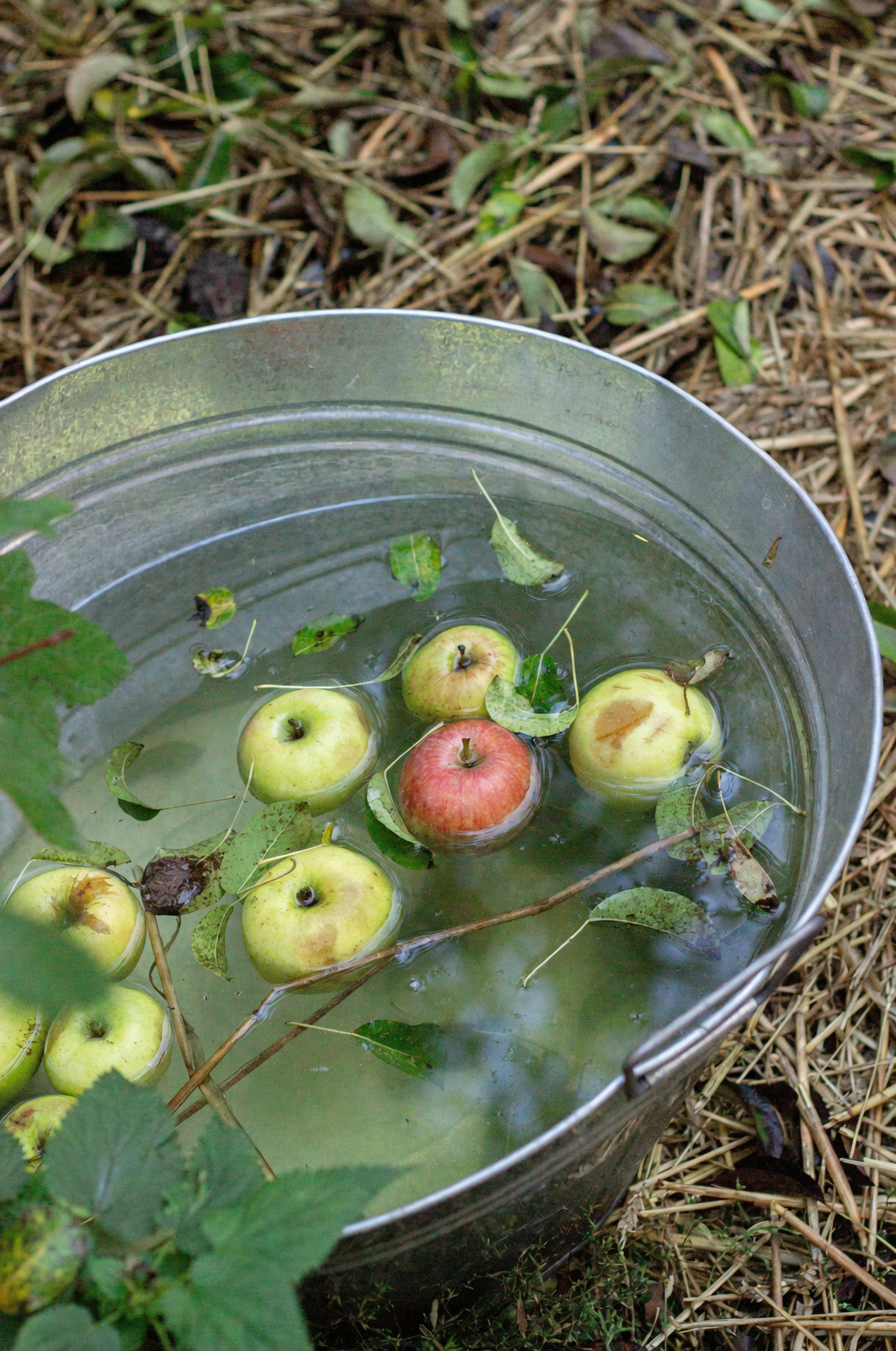
Agapanthus is sensitive to ethylene, the ripening gas that causes premature floret drop.
- Keep flowers away from ripening fruit, vehicle exhaust, or cigarette smoke.
- If you have access, use an anti‑ethylene treatment (e.g., 1‑MCP) at postharvest or on receipt.
Recuts and day‑to‑day care
- Every 3–5 days: clean the vase, refresh solution, and recut 1 in from the base.
- Remove fading outer florets to keep the head looking crisp; inner buds will continue to open.
- Display in a cool room out of direct sun and drafts. Tall cylinders or clear support grids help keep stems arrow‑straight.
How long do they last? With good handling, 5–10 days is common; certain cultivars such as Agapanthus ‘MidKnight Blue’ have clocked 10–11 days in high-quality water. Cleanliness is your biggest extender.
Water hygiene that actually works
- Start sterile: wash vases with hot soapy water, then sanitize (a brief dilute bleach soak is fine). Rinse well.
- Keep it clear: remove all leaves below the waterline. Cloudy water = bacteria bloom.
- Choose your solution:
- Best: commercial flower food, mixed exactly as directed.
- DIY in a pinch: per quart (liter) of water, 1 tablespoon sugar + about 1 teaspoon household bleach. Mix thoroughly.
- Water quality matters: if your tap water is very hard or heavily chlorinated, use filtered water for conditioning.
Design playbook: pairing Agapanthus like a pro
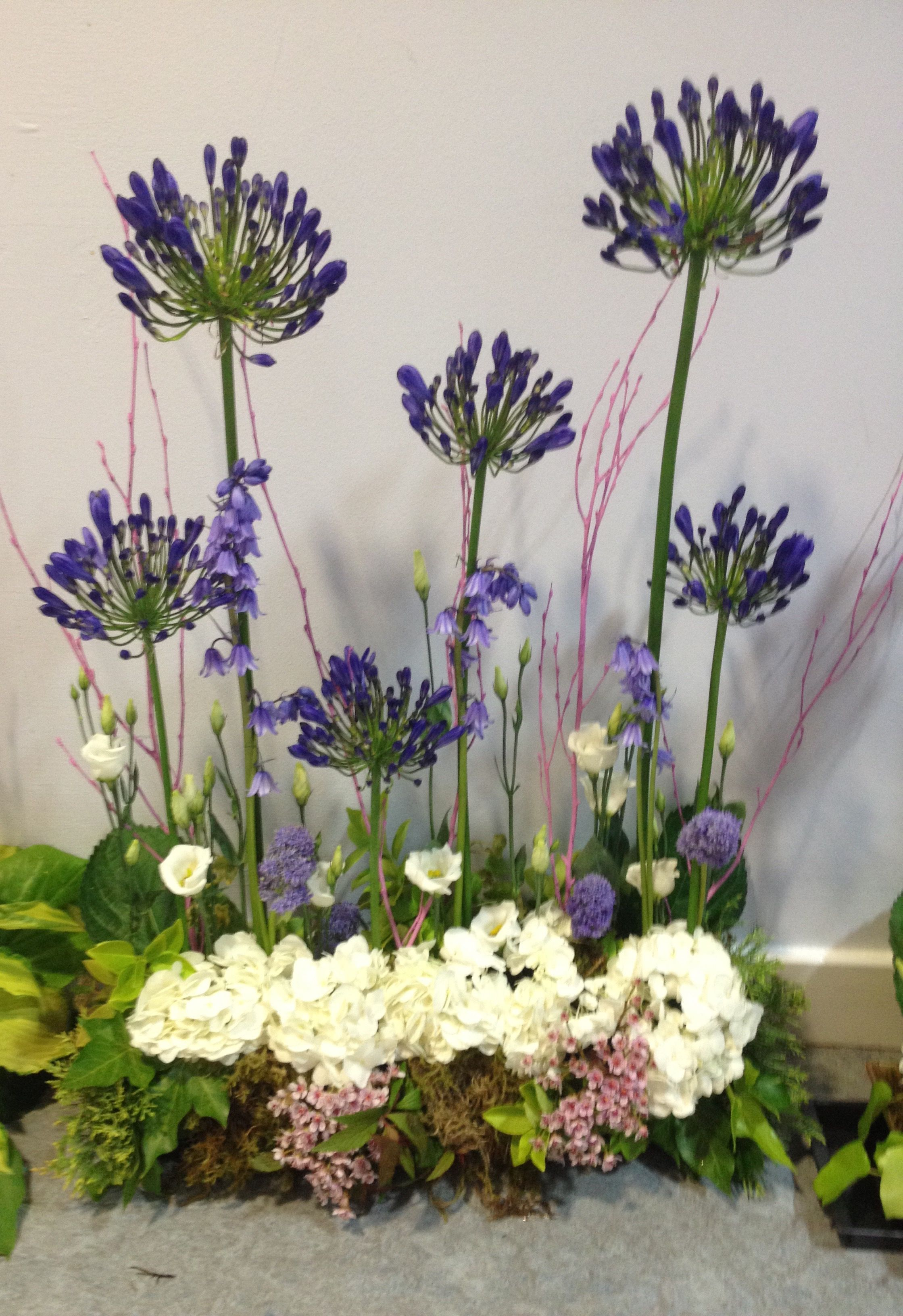
Agapanthus brings architecture and rhythm. Use the spherical umbels as focal notes, repeat them for cadence, and contrast with fine textures.
- Cool and collected (blue/white palettes)
- Partners: white roses or dahlias, pale lisianthus, snow-on-the-mountain, airy Alchemilla mollis, silvery eucalyptus.
- Result: crisp, coastal-modern elegance.
- Moody and textural
- Partners: Eryngium, deep plum scabiosa, black-stemmed smoke bush (Cotinus), preserved beech, and charcoal-hued grasses.
- Result: dramatic, gallery-ready structure.
- Sunny contrast
- Partners: golden yarrow (Achillea), rudbeckia, or buttery garden roses with pops of sky-blue Agapanthus.
- Result: joyous, sun-drenched energy.
- Echo the globe
- Partners: ornamental alliums, Billy buttons (Craspedia), or seed heads with spherical forms to reinforce geometry.
- Line and lift
- Use a trio of stems at varying heights to create a strong vertical “fan,” then weave in softer elements at the base for depth.
Mechanics tip: a loose chicken‑wire pillow or a reusable pin frog gives sturdy support without visually crowding those airy heads.
The art of recuts and recycles
- Groom and refresh: as the outer florets tire, pluck them and recut the stem to reset water uptake. You’ll often coax the unopened inner ring to keep blooming.
- Stage down: when stems get shorter, drop them into bud vases or cluster several in a low bowl to enjoy the final flush.
Dried seed heads: sculptural drama all year
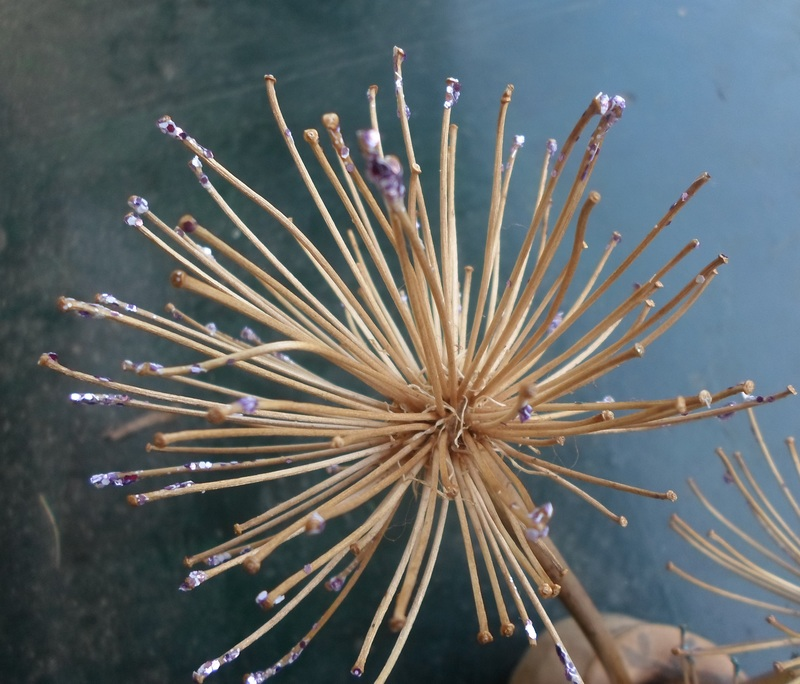
After flowering, the papery capsules form a striking, starburst skeleton—perfect for modern arrangements.
- When to harvest: wait until the head turns tan and the pods feel leathery and begin to dry on the plant. Cut on a dry day.
- How to dry:
- Strip any remaining soft tissue and hang stems upside down in a dark, dry, breezy place 1–2 weeks.
- For wide umbels, lay heads on a mesh rack to keep the dome shape intact.
- Finishing:
- Seal with a light mist of clear acrylic or matte hairspray to reduce shatter.
- Embrace color: metallic sprays (antique gold, pewter), inky blacks, or chalky mineral paints turn them into instant sculpture.
- Design uses:
- Minimalist ikebana with a single, wired head.
- Winter mantel arrangements with evergreen boughs and taper candles.
- Wreaths and shadow boxes for graphic, long‑lasting texture.
Pro tip: The central neck of the umbel takes wire well. Use a thin floral wire to reinforce or extend stem length for larger installations.
Safety notes for the studio
- Toxic if ingested; keep away from children and pets (cats and dogs included).
- Sap can irritate skin; wear gloves when harvesting and conditioning, and wash up after handling.
Flower language and lore
Agapanthus translates from Greek as “love” (agape) + “flower” (anthos), so it’s long been used to symbolize devotion and enduring affection. Designers often lean into color to nuance the message: blue for loyalty and steadfast love; white for sincerity and purity. It’s a poetic tradition rather than science, but it explains why Agapanthus shows up in weddings and anniversary arrangements—its very architecture reads as steadfast and true. And for the record, “Lily of the Nile” is a misnomer; this love flower hails from South Africa, not the Nile basin.
Quick field-to-vase checklist
- Harvest when the outer ring just opens; buds inside are colored and firm.
- Cut early morning/evening; strip lower leaves; glove up if you’re sensitive to sap.
- Condition in clean buckets with lukewarm water and flower food; rest cool.
- Keep away from ethylene sources; anti‑ethylene treatment if available.
- Every 3–5 days: clean vase, refresh solution, recut 1 in, groom spent florets.
- Save and dry seed heads for bold, sculptural accents later in the season.
Handled this way, Agapanthus africanus gives you double value—first as luminous summer fireworks in the vase, then as graphic seed‑head sculpture that carries your designs through fall and winter.